
If I only had a little humility, I'd be perfect.
Ted Turner
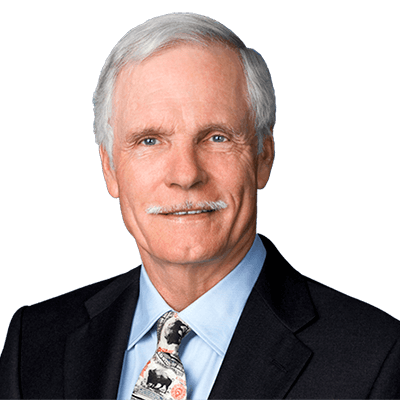 |
| Robert Edward Turner III November 19, 1938 – May 6, 2026 |
In 1976, Turner bought the Atlanta Braves, and in 1977, he bought the Atlanta Hawks, partially to provide programming for WTCG. Using the rechristened WTBS superstation's status to broadcast Braves games into nearly every home in North America, Turner turned the Braves into a household name even before their run of success in the 1990s and early 2000s. At one point, he suggested to pitcher Andy Messersmith, who wore number 17, that he change his surname to "Channel" to promote the television station.
In 1978, Turner struck a deal with a student-operated radio station at MIT, Technology Broadcasting System (now WMBR), to obtain the rights to the WTBS call sign for $50,000. Such a move allowed Turner to strengthen the branding of his "Super-Station" using the initials TBS. Turner Communications Group was renamed Turner Broadcasting System and WTCG was renamed WTBS.
In 1986, Turner founded the Goodwill Games with the goal of easing tensions between capitalist and communist countries. Broadcasting the events of these games also provided his superstation the ability to provide Olympic-style sports programming.
Turner Field, first used for the 1996 Summer Olympics as Centennial Olympic Stadium and then converted into a baseball-only facility for the Braves, was named after him.
In 1978, Turner contacted media executive Reese Schonfeld about his plans to launch a 24-hour news channel (Schonfeld had previously approached Turner with the proposition in 1977 but was rebuffed). Schonfeld responded that it could be done with a staff of 300 if they used an all electronic newsroom and satellites for all transmissions. It would require an initial investment of $15 million–$20 million and several million dollars per month to operate.
In 1979, Turner sold his North Carolina station, WRET, to fund the transaction and established its headquarters in lower-cost, non-union Atlanta. Schonfeld was appointed first president and chief executive of the then-named Cable News Network (CNN). CNN hired Jim Kitchell, former general manager of news at NBC as vice president of production and operations; Sam Zelman as vice president of news and executive producer; Bill MacPhail as head of sports, Ted Kavanau as director of personnel, and Burt Reinhardt as vice president of the network. In 1982, Schonfeld was succeeded as CEO by Turner after a dispute over Schonfeld's firing of Sandi Freeman; and was succeeded as president by CNN's executive vice president, Burt Reinhardt.
In 1981, Turner Broadcasting System acquired Brut Productions from Fabergé Cosmetics After a failed attempt to acquire CBS, Turner purchased the film studio MGM/UA Entertainment Co. from Kirk Kerkorian in 1986 for $1.5 billion. Following the acquisition, Turner had amassed enormous debt and sold parts of the acquisition; Kerkorian bought back MGM/UA Entertainment. The MGM/UA Studio lot in Culver City was sold to Lorimar/Telepictures. Turner kept MGM's pre-May 1986 and pre-merger film and television library.
Turner Entertainment Co. was established in August 1986 to oversee film and television properties owned by Turner thanks to the deal with Kerkorian.
Having acquired MGM's library of 2,200 films that were made before 1986, Turner syndicated them to television stations across the country. When broadcasting some older films originally filmed in black-and-white, he aired colorized versions of them. Opposition to Turner's colorization arose among cinephiles, film critics, actors, and directors. Film critic Roger Ebert wrote that broadcasting a colorized Casablanca "will be one of the saddest days in the history of the movies. It is sad because it demonstrates that there is no movie that Turner will spare, no classic however great that is safe from the vulgarity of his computerized graffiti gangs." Due in part to Turner's colorization, the Library of Congress established the National Film Registry with the aim to preserve American films in their original formats.
In 1988, Turner purchased Jim Crockett Promotions. He renamed it World Championship Wrestling (WCW), which became the main competitor to Vince McMahon's World Wrestling Federation (WWF). This rivalry became known as the Monday Night War, and would last throughout the 1990s. In 2001, under AOL Time Warner, WCW was sold to the WWF.
Also in 1988, Turner introduced Turner Network Television (TNT) with Gone with the Wind. TNT, initially showing older movies and television shows, added original programs and newer reruns. Turner would later create Turner Classic Movies (TCM) in 1994, airing Turner's library of pre-1986 MGM films, Warner Bros. films made before 1948, and all RKO films, as well as license to 1000 other films, though it has expanded its library since.
In 1989, Turner created the Turner Tomorrow Fellowship for fiction offering positive solutions to global problems. The winner, from 2500 entries worldwide, was Daniel Quinn's Ishmael.
In 1990, he created the Turner Foundation, which focuses on philanthropic grants concerning issues pertaining to the environment and overpopulation. In the same year he created Captain Planet, an environmental superhero. Turner produced the television series Captain Planet and the Planeteers and its later sequel series with Captain Planet as the featured character.
In 1992, the pre-May 1986 MGM library, which also included Warner Bros. properties including the early Looney Tunes and Merrie Melodies libraries and also the Fleischer Studios and Famous Studios Popeye cartoons from Paramount (and then United Artists), became the core of Cartoon Network. A year before, Turner's companies purchased Hanna-Barbera Productions (whose longtime parent, Taft/Great American Broadcasting, had been headquartered in Turner's original hometown of Cincinnati), beating out several other bidders including MCA Inc. (whose subsidiaries included Universal Pictures and Universal Destinations & Experiences) and Hallmark Cards. With the 1996 Time Warner merger, the channel's archives gained the later Warner Bros. cartoon library as well as other Time Warner-owned cartoons.
In 1993, Turner and Russian journalist Eduard Sagalajev founded the Moscow Independent Broadcasting Corporation (MIBC). This corporation operated the sixth frequency in Russian television and founded the Russian channel TV-6. Turner pulled out in 1994, at the insistence of local executives. He considered re-entering the market in 2001, during a challenging period of independent NTV.
In 1993, Turner also considered acquiring Paramount Pictures, but withdrew from this endeavor following a meeting with then-QVC head Barry Diller.
Time Warner merger
Turner Broadcasting System merged with Time Warner on October 10, 1996, with Turner as vice chairman and head of Time Warner and Turner's cable networks division. Turner was dropped as head of cable networks by CEO Gerald Levin but remained as Vice Chairman of Time Warner. He would be succeeded in March 2001 as head of Turner Broadcasting by Jamie Kellner, who was also greatly responsible for cancelling WCW's television contracts on networks which Turner previously ran. He resigned as AOL Time Warner vice chairman in 2003 and then from the Time Warner board of directors in 2006.
On January 11, 2001, Time Warner was purchased by America Online (AOL) to become AOL Time Warner, a merger which Turner initially supported. However, the burst of the dot-com bubble hurt the growth and profitability of the AOL division, which in turn dragged down AOL Time Warner's performance and stock price. At a board meeting in fall 2001, Turner's outburst against AOL Time Warner CEO Gerald Levin eventually led to Levin's announced resignation effective in early 2002, being replaced by Richard Parsons. In contrast to Levin, who as CEO isolated Turner from important company matters, Parsons invited Turner back to provide strategic advice, although Turner never received an operational role that he sought. Time Warner dropped "AOL" from its name in October 2003. In December 2009, AOL was spun off from the Time Warner conglomerate as a separate company.
Turner was Time Warner's biggest individual shareholder. It is estimated he lost as much as $7 billion when the stock collapsed in the wake of the merger. When asked about buying back his former assets, he replied that he "can't afford them now". In June 2014, Rupert Murdoch's 21st Century Fox made a bid for Time Warner valuing it at $80 billion. The Time Warner board rejected the offer and it was formally withdrawn on August 5, 2014.
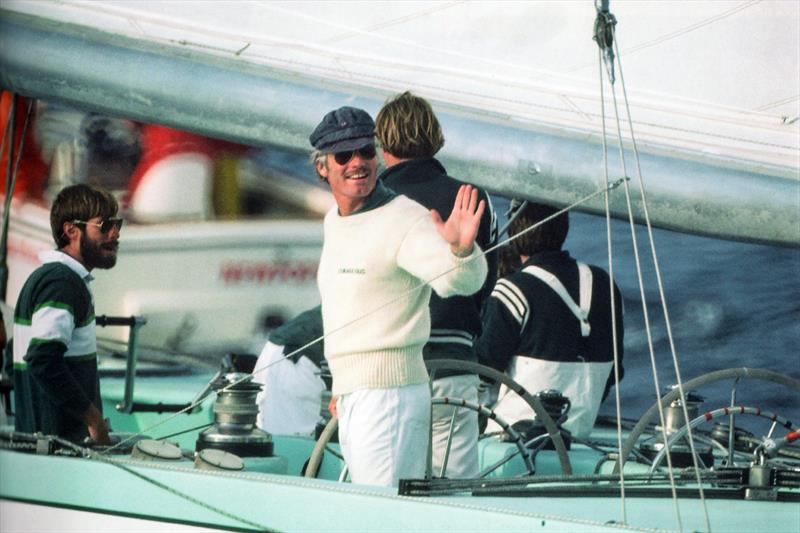
Turner had a long-running feud with fellow cable magnate Rupert Murdoch for years. This originated in 1983 when a Murdoch-sponsored yacht collided with the yacht skippered by Turner, Condor, during the Sydney to Hobart Yacht Race, causing it to run aground 6.2 miles (10.0 km) from the finish line. At the post-race dinner, a drunken Turner verbally assaulted Murdoch, afterward challenging him to a televised fistfight in Las Vegas.
Murdoch's Fox News, established in 1996, became a rival to Turner's CNN, a channel that Murdoch regarded with disdain for its "liberal slant" in news coverage. Time Warner declined to carry it on their New York City cable network in response, who in the midst of a merger, Turner said would "squash Rupert Murdoch like a bug."
In 2003, Turner challenged Murdoch to another fistfight, and later on accused Murdoch of being a "warmonger" for his support and backing of President George W. Bush's invasion of Iraq.
However, in an interview with Variety in 2019, Turner said he and Murdoch had since made amends.
For most of his first decade as owner of the Braves, Turner was a very hands-on owner. This peaked in 1977, his second year as owner.
Turner was suspended for one year by Commissioner of Baseball Bowie Kuhn on January 3, 1977, for his actions while pursuing the signing of free agent outfielder Gary Matthews from the San Francisco Giants. Matthews signed a five-year, $1.875 million contract with the Braves on November 18, 1976. Kuhn's actions stemmed from remarks made by Turner to then-Giants owner Bob Lurie during the 1976 World Series. In addition, the Braves were also stripped of their first-round selections in the June 1978 draft of high school and college players. Turner, however, successfully appealed the suspension and Kuhn relented and reinstated the draft selections, one of which would turn out to be Bob Horner from Arizona State University.
On May 11, 1977, with the team mired in a 16-game losing streak, Turner sent manager Dave Bristol on a 10-day "scouting trip" and Turner himself took over as interim manager – the first owner/manager in the majors since Connie Mack. He ran the team for one game (a loss to the Pittsburgh Pirates) before National League president Chub Feeney ordered him to stop running the team. Feeney cited major league rules which bar managers and players from owning stock in their clubs. Turner appealed to Commissioner of Baseball Bowie Kuhn, and showed up to manage the Braves when they returned home. However, Kuhn turned down the appeal, citing Turner's "lack of familiarity with game operations."
In the mid-1980s Turner began leaving day-to-day operations to the baseball operations staff, and the team (still under Turner's ownership) won the 1995 World Series.
The Atlanta Braves were sold by Time Warner (which had assumed control after the merger with Turner Broadcasting System) to Liberty Media in 2007.
Good Night Captain Outrageous

No comments:
Post a Comment