I represent the first generation who, when we were born, the television was now a permanent fixture in our homes. When I was born people had breakfast with Barbara Walters, dinner with Walter Cronkite, and slept with Johnny Carson.
Read the full "Pre-ramble"
Show No. 181 with guests Phil Cooke and Jennifer Armstrong Original Airdate: Week of Apr. 17-23, 2013 First hour: Greg Ehrbar (Mouse Tracks: The Story of Walt Disney Records) and Jennifer Armstrong (Why? Because We Still Like You: An Oral History of The Mickey Mouse Club)
help Ed pay tribute to the life and career of singer/actress Annette
Funicello. Also in this hour: A replay of Phil Gries’ 2008 interview
with Jonathan Winters that also features highlights from some of
Jonathan’s earliest work on television, including And Here’s the Show with Ransom Sherman and a guest-host appearance on The Tonight Show with Jack Paar. Second hour: Producer, author and media consultant Phil Cooke joins Ed and Tony Figueroa for a conversation about The Bible,
the epic ten-hour miniseries recently produced for The History Channel
that is part of a growing effort on the part of film and TV studios to
reach out to evangelical audiences. Phil’s latest book, Unique: Telling Your Story in the Age of Brands and Social Media,
not only discusses ways in which pastors and leaders can present their
own unique vision in a way that rises above the clutter, but offers
ideas that are viable for anyone working in broadcast communications
today.
Author, journalist and music historian Jon Burlingame and syndicated film critic Jane Boursaw will join us on the next edition of TV CONFIDENTIAL, airing Apr. 24-30 at the following times and venues:
WROM Radio Detroit, MI Wednesday 4/24 8pm ET, 5pm PT 2am ET, 11pm PT Sunday 4/28 8pm ET, 5pm PT 2am ET, 11pm PT Click on the Listen Live button at MediaCritic.net
Indiana Talks Marion, IN Wednesday 4/24 11pm ET, 8pm PT with replays at various times throughout the week Click on the player at IndianaTalks.com or use the Live365 app on your smartphone and type in Indiana Talks
Share-a-Vision Radio San Francisco Bay Area Friday 4/26 7pm ET, 4pm PT 10pm ET, 7pm PT Click on the Listen Live button at KSAV.org or use the TuneIn app on your smartphone and type in KSAV
Talktainment Radio Columbus, OH Thursday 4/25 2am ET, 11pm PT Friday 4/26 3am ET, Midnight PT Noon ET, 9am PT Click on the Listen Live button at TalktainmentRadio.com
The Coyote KKYT 93.7 FM Ridgecrest, CA Sunday 4/28 9pm PT Monday 4/29 Midnight ET Click on the Listen Live button at Coyote395.com or use the TuneIn app on your smartphone and type in KKYT
Passionate World Radio Ann Arbor, MI Tuesday 4/30 9:30pm ET, 6:30pm PT Click on the Listen Now button at PWRTalk.com Though many of us think of the James Bond movies for its gadgets, thrills and beautiful women, the music of each film has always played an important role in the success of the James Bond franchise while also setting trends in the composition of other film scores. Not only that, the backstories behind each Bond soundtrack are almost as compelling as 007’s adventures itself, including a lawsuit over the authorship of the iconic “James Bond theme,” the controversy over the lyrics to “Diamonds are Forever,” how Frank Sinatra almost sang the title song to Moonraker, and how producer Harry Saltzman wanted someone other than Paul McCartney to sing “Live and Let Die.”
These stories and more are captured in the pages of The Music of James Bond, an excellent book by renowned film and TV music historian Jon Burlingame. Jon’s book features a running commentary on the various scores of each Bond soundtrack, plus extensive interviews with virtually every major composer and recording artist who has contributed to the pantheon of Bond music, including John Barry, Monty Norman, Marvin Hamlisch, Paul Williams, Herb Alpert, and Hal David.
We’ll not only talk about the music of James Bond, but play highlights from the music of James Bond, when Jon Burlingame will joins us in our first hour.
Joining us in our second hour will be Jane Boursaw as we pay tribute to Roger Ebert, the Pulitzer Prize-winning columnist for the Chicago Sun-Times and longtime co-host of Sneak Previews, Siskel & Ebert, and Ebert & Roeper. A syndicated columnist and entertainment writer for such publications as TV Worth Watching and Reel Life with Jane, Jane Boursaw is also one of many film critics who was influenced by Roger Ebert.
Also this week: We will replay our conversation from October 2010 with actor Frank Bank, Lumpy Rutherford on Leave It to Beaver, and talk show host Stu Shostak. Plus: a brand new edition of This Week in TV History.
As always, the further we go back in Hollywood history, the more that fact and legend become intertwined. It's hard to say where the truth really lies.
April 22, 1978 The Blues Brothers make their world premiere
on Saturday Night Live.
The
characters and the band that Belushi and Aykroyd unveiled that night took more
than two years to evolve. The first incarnation came during SNL's first
season, in a January 17, 1976, appearance singing "I'm a King Bee" as "Howard
Shore and his All-Bee Band." There were no dark suits, skinny ties or Ray-Bans
at that point, but the appearance did feature Aykroyd on the harmonica and
Belushi on vocals belting out a blues classic very much in the style of the
future Elwood and "Joliet" Jake Blues, albeit while wearing bee costumes. The
Blues Brothers' look—and much of their repertoire—would come together after
Belushi's trip to Eugene, Oregon, during the hiatus between SNL seasons
two and three to film Animal House. It was there that Belushi, a
committed rock-and-roll fan, met a 25-year-old bluesman named Curtis Salgado,
future harmonica player for Robert Cray, frontman for Roomful of Blues and a
major figure on the burgeoning Pacific Northwest blues scene of the 1970s.
Belushi became a regular visitor to the Eugene Hotel to catch Salgado's act
during the filming of Animal House, and it was from that act and from
Salgado himself that he picked up a passion for the blues as well as the
inspiration for the Blues Brothers' sound and look. Back
in New
York for the third season of SNL, Belushi and Aykroyd honed
their concept for the Blues
Brothers Band and recruited an incredible roster of backing instrumentalists
drawn from among the finest blues and R&B session musicians in the
country. Even if their debut performance on this night in 1978 hadn't been a
huge hit, the band was far too good to break up after a single gig. Indeed, the
closing portion of Paul Shaffer's introduction that night—"Today they are no
longer an authentic blues act, but have managed to become a viable commercial
product"—ended up being borne out in real life, with the Blues Brothers earning
three top-40 hits ("Soul Man," "Rubber Biscuit" and "Gimme Some Lovin'"), a #1
pop album (Briefcase Full of Blues) and a piece of screen immortality via
their 1980 film, The Blues Brothers Steve Martin was the host of that episode and he previewed the novelty song "King Tut". Performed by and the Toot Uncommons (actually members of the Nitty Gritty Dirt Band). It was released as a single in 1978, sold over a million copies, and reached number 17 on the Billboard Hot 100 chart. The song was also included on Martin's album A Wild and Crazy Guy. "King Tut" paid homage to Egyptian pharaoh Tutankhamun and presents a caricature of the sensational Treasures of Tutankhamun
traveling exhibit that toured seven United States cities from 1976 to
1979. The exhibit attracted approximately eight million visitors. In the
Saturday Night Live performance of "King Tut," loyal subjects
appease a joyful King Tut with kitchen appliances. An instrumental solo
is delivered by saxophone player Lou Marini, who steps out of a sarcophagus to great laughter. In the book Saturday Night: A Backstage History of Saturday
Night Live, authors Doug Hill and Jeff Weingrad write that the sketch
was one of the most expensive productions the show had attempted up to
that point. Steve Martin had brought the song to the show and asked if
he could perform it, not expecting the production that occurred—producer
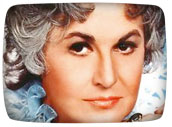
Lorne Michaels put everything behind it. Martin and the Steep Canyon Rangers recorded the song in a bluegrass version for their 2011 album, Rare Bird Alert. The song is the subject of in-depth analysis in Melani McAlister's Epic Encounters: Culture, Media, and U.S. Interests in the Middle East, 1945–2000. It is also referenced in a dialogue in the video game The Lost Vikings (1992) at the end of one of the Egyptian themed levels of the game. April 22, 1978 Maude aired its final episode after 6 seasons on the air.
"Maude's Big Move: Part 3"
Maude and Walter leave New York for Washington, D.C. to begin a new chapter in their lives. Final episode of the series.
April 24, 1936
A group of
firemen responding to an alarm in Camden, New Jersey, is televised. It was the first time an unplanned event was
broadcast on television, anticipating the development of live TV news coverage.
Fortunately, the event would not inspire anyone to create reality programming.
April 25, 1908
Edward R. Murrow was born Egbert Roscoe Murrow.
He first came to prominence with a series of radio news
broadcasts during World War II, which were followed by millions of
listeners in the United States.
Fellow journalists Eric
Sevareid, Ed
Bliss, and Alexander Kendrick considered Murrow one of
journalism's greatest figures, noting his honesty and integrity in delivering
the news. A pioneer of television
news broadcasting, Murrow produced a series of TV news reports that helped
lead to the censure
of Senator Joseph McCarthy.
A chain
smoker throughout his life, Murrow was almost never seen without his trademark
Camel cigarette. It was reported that he smoked
anywhere from sixty to sixty-five cigarettes a day, equivalent to roughly three
packs. See It Now was the first television program to have a report
about the connection between smoking and cancer; Murrow said during the show that "I doubt I could
spend a half hour without a cigarette with any comfort or ease." He
developed lung
cancer and lived for two years after an operation to remove his left lung.
Murrow died at his home on April 27, 1965, two days after his 57th birthday.
His colleague and friend Eric Sevareid said of him, "He was a shooting
star; and we will live in his afterglow a very long time." CBS carried a
memorial program, which included a rare on-camera appearance by Paley.
To quote the Bicentennial Minute, "And that's the way it was".

 Show No. 181 with guests Phil Cooke and Jennifer Armstrong