I represent the first generation who, when we were born, the television was now a permanent fixture in our homes. When I was born people had breakfast with Barbara Walters, dinner with Walter Cronkite, and slept with Johnny Carson.
Read the full "Pre-ramble"
Mel Blanc, the voice of Bugs Bunny, Daffy Duck, and
countless other Warner Bros. cartoon characters, was born in San Francisco.
His parents, who ran a women's clothing business,
moved with their son to Portland, Oregon, when Blanc was a child. Blanc began
performing as a musician and singer on local radio programs in Portland before
he was 20. In the late 1920s, he and his wife, Estelle, created a daily radio
show called "Cobwebs and Nuts," which became a hit. Blanc made many
other radio appearances and became a regular on Jack Benny's hit radio show,
providing the sounds of Benny's ancient car (The Maxwell) and playing several
other characters.
In 1937, Blanc made his
debut with Warner Bros., providing the voice for a drunken bull in a short
cartoon called "Picador Porky." Another actor provided the pig's
voice, but Blanc later replaced him. In 1940, Bugs Bunny debuted in a short
called "A Wild Hare." Blanc said he wanted the rabbit to sound tough
and streetwise, so he created a comic combination of Bronx and Brooklyn
accents. Other characters Blanc created for Warner Bros. included the Road
Runner, Sylvester, and Tweety Bird. He performed in some 850 cartoons for
Warner Bros. during his 50-year career. For other studios, he provided the
voices of Barney Rubble and Dino the dinosaur in The Flintstones, Mr.
Spacely for The Jetsons, and Woody Woodpecker's laugh.
In his 1988
autobiography, That's Not All Folks, Blanc described a nearly fatal
traffic accident that left him in a coma. Unable to rouse him by using his real
name, a doctor finally said, "How are you, Bugs Bunny?" and Mel
replied, in Bugs' voice, "Ehh, just fine, doc. How are you?"
Blanc
continued to provide voices until the late 1980s, most memorably voicing Daffy
Duck dueling with Donald Duck in Who Framed Roger Rabbit? (1988). After
Mel Blanc died of complications from heart disease, his son Noel, trained by
his father, provided the voices for the characters the elder Blanc had helped
bring to life.
It is the 177th and 178th episodes of the series overall. The title is derived
from the expression "All good things must come to an end",
a phrase used by the character "Q"
during the episode itself. Capt.Jean-Luc
Picard inexplicably finds his mind jumping between the present (stardate 47988)
and the past just prior to the USSEnterprise-D's first mission six
years earlier at Farpoint Station and over twenty-five
years into the future, where an aged Picard has retired to the family vineyard in Labarre, France. These jumps occur without
warning, and the resulting discontinuity in Picard's behavior frequently leaves
him and those around him confused.
In the future, he gains passage on the USS Pasteur, which is
under the command of his now ex-wife, Dr. Beverly
Picard, whom he convinces to find the anomaly.
In the past, despite having the Enterprise's mission to Farpoint
Station cancelled by Starfleet to investigate the anomaly, Picard insists
on continuing, believing the impending encounter with Q to
be more important. After reaching the place where he had first encountered the
Q in the form of a net near Farpoint Station and finding nothing there, Picard
enters his ready room, only to find himself once again in Q's courtroom. Q
reveals that the trial started seven years ago never concluded, and the current
situation is humanity's last chance to prove themselves to the Q Continuum,
but secretly reveals that he himself is the cause of Picard's time jumping. Q
challenges Picard to solve the mystery of the anomaly, cryptically stating that
Picard will destroy humanity.
As Jean-Luc Picard arrives at the anomaly in all three time periods, he
discovers that the anomaly is much larger in the past, but does not exist at
all in the future. As the past and present Enterprises scan
the anomaly with tachyon beams, the USS Pasteur is attacked
by Klingon ships,
but the crew is saved due to the timely arrival of the future Enterpriseunder
the command of Admiral William Riker. He fires
on several of the attacking Klingon warships, which causes them to flee the
neutral zone. It is revealed that Riker and Worf are in a feud over the
late Enterprise counselor Deanna Troi,
with whom both had a serious relationship and who had died years earlier. Q
once again appears to Picard and takes him to billions of years in the past
on Earth,
where the anomaly, growing larger as it moves backwards in time, has taken over
the whole of the Alpha Quadrant and has prevented the formation
of life on Earth. When Picard returns to the future, he discovers the anomaly
has appeared, created as a result of his orders, and the tachyon pulses from
the three eras are sustaining it. Data and
Geordi determine that they can stop the anomaly by having all three Enterprises fly
into the centre of it and create static warp shells. Picard relays the orders
to each Enterprise. Each ship suffers warp core breaches, with Q
telling the future Picard that "all good things must come to an end"
just before the future Enterpriseexplodes.
Picard finds himself facing Q in the courtroom as before. Q congratulates
Picard for being able to think in multiple timelines simultaneously to solve
the puzzle, which is proof that humanity can still evolve, much to the surprise
of the Q Continuum. Q admits to helping Picard to solve it with the time
jumping since he was the one that put them in this situation, and then goes on
to explain that the anomaly never actually existed and that his past and
present have been restored. He then withdraws from the courtroom and bids
farewell to Picard by saying "See you ... out there". Picard then
returns to the Enterprise of the present and no longer jumping
through time.
As the senior staff plays their regular poker game, they
reflect on the future the captain told them, to prevent them from drifting
apart. For the first time ever, Picard decides to join the game, expressing
regret he had not done so before, saying "...and the sky's the
limit," suggesting more adventures lay ahead for the crew.
Strike Force Five was a limited series podcast hosted by American comedians and talk show hosts Stephen Colbert, Jimmy Fallon, Jimmy Kimmel, Seth Meyers, and John Oliver. Each episode features conversations between the comedians on different subjects defined by an alternating leading host. Running 12 episodes from August 30 to October 10, 2023, it was created to support the five hosts' employees who were all temporarily out of work due to the 2023 Writers Guild of America strike, and its improvised nature aimed to demonstrate their importance to their shows.
On May 11, 2026 Stephen Colbert reunites with his Strike Force Five podcast co-hosts for a rowdy group interview that went far too long for one broadcast episode. Watch the entire segment here then keep an eye out for a special emergency episode of the Strike Force Five podcast dropping soon wherever you get your podcasts. Special thanks to Jimmy Kimmel, Jimmy Fallon, Seth Meyers and John Oliver!
In Los Angeles, California, police surround a home in Compton where the leaders
of the terrorist group known as the Symbionese Liberation Army (SLA) are hiding
out.
The SLA had kidnapped Patricia Hearst, of the fabulously wealthy Hearst
family publishing empire, months earlier, earning headlines across the country.
Police found the house in Compton when a local mother reported that her kids
had seen a bunch of people playing with an arsenal of automatic weapons in the
living room of the home.
The
LAPD's 500-man siege on the Compton home was only the latest event in a short,
but exceedingly bizarre, episode. The SLA was a small group of violent radicals
who quickly made their way to national prominence, far out of proportion to
their actual influence. They began by killing Oakland's superintendent of
schools in late 1973 but really burst into society's consciousness when they
kidnapped Hearst the following February.
Months
later, the SLA released a tape on which Hearst said that she was changing her
name to Tania and joining the SLA. Shortly thereafter, a surveillance camera in
a bank caught Hearst carrying a machine gun during an SLA robbery. In another
incident, SLA member General Teko was caught trying to shoplift from a sporting
goods store, but escaped when Hearst sprayed the front of the building with
machine gun fire.
Although
law enforcement officials began talking about the SLA as if they were a
well-established paramilitary terrorist organization, the SLA had only a
handful of members, most of who were disaffected middle class youths.
On
May 17, Los Angeles police shot an estimated 1,200 rounds of ammunition into
the tiny Compton home as six SLA members shot back. Teargas containers thrown
into the hideout started a fire, but the SLA refused to surrender. Autopsy
results showed that they continued to fire back even as smoke and flames were
searing their lungs; they clearly chose suicide and martyrdom over jail.
Randolph Hearst, Patty's father, remarked that the massive attack had turned
"dingbats into martyrs." The raid left six SLA members dead,
including leader Donald DeFreeze, also known as Cinque. Patty Hearst was not
inside the home at the time. She was not found until September 1975.
Patty
Hearst was put on trial for armed robbery and convicted, despite her claim that
she had been coerced, through repeated rape, isolation, and brainwashing, into
joining the SLA. Prosecutors believed that she actually orchestrated her own
kidnapping because of her prior involvement with one of the SLA members.
Despite any real proof of this theory, she was convicted and sent to prison.
President Carter commuted Hearst's sentence after she had served almost two
years. Hearst was pardoned by President Clinton in January 2001.
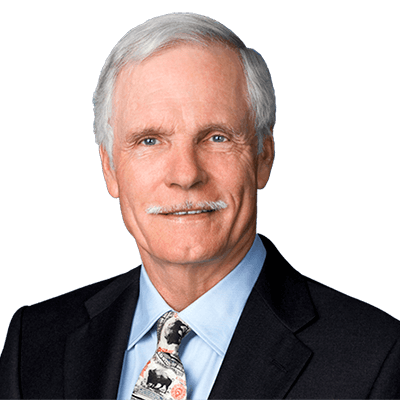
Robert Edward Turner III November 19, 1938 – May 6, 2026
In the late 1960s Turner began buying several Southern radio stations. In 1969, he sold his radio stations to buy a struggling television station in Atlanta, UHF Channel 17 WJRJ (now WPCH). At the time, UHF stations did well only in markets without VHF stations, like Fresno, California, or in markets with only one station on VHF. Independent UHF stations were not ratings winners or that profitable even in larger markets, but Turner concluded that this would change as people wanted more than several choices. He changed the call sign to WTCG, erroneously claimed to have stood for "Watch This Channel Grow" but in actuality stood for Turner Communications Group. Initially, the station ran old movies from prior decades, along with theatrical cartoons and bygone sitcoms and drama programs. As a better syndicated product fell off the VHF stations, Turner would acquire it for his station at a very low price. WTCG ran mostly second- and even third-hand programming of the time, including fare such as Gilligan's Island, I Love Lucy, Star Trek, Hazel, and Bugs Bunny. Other low-cost content included humorist Bill Tush reading the news at 3 a.m., prompting Turner to jokingly comment that, "we have a 100% share at this time". Tush once delivered the news with his "co-anchor" Rex, a German Shepherd. The dog (who belonged to an associate) was shown next to Tush on set, wearing a shirt and tie while eating a peanut butter sandwich. Rex appeared only on one episode, but a myth grew where many people thought the dog was a nightly guest.By 1972, WTCG had acquired the rights to telecast Atlanta Braves and Atlanta Hawks games.Turner would go on to purchase UHF Channel 36 WRET (now WCNC) in Charlotte, North Carolina, and ran it with a format similar to WTCG.
In 1976, the Federal Communications Commission (FCC) allowed WTCG to use a satellite to transmit content to local cable television providers around the nation. On December 17, 1976, the rechristened WTCG-TV Super-Station began to broadcast old movies, situation comedy reruns, cartoons, and sports nationwide to cable-television subscribers. As cable systems developed, many carried his station to free their schedules, which increased his viewers and advertising. The number of subscribers eventually reached 2 million and Turner's net worth rose to $100 million. He bought a 5,000-acre (2,000 ha) plantation in Jacksonboro, South Carolina, for $2 million.
In 1976, Turner bought the Atlanta Braves, and in 1977, he bought the Atlanta Hawks, partially to provide programming for WTCG. Using the rechristened WTBS superstation's status to broadcast Braves games into nearly every home in North America, Turner turned the Braves into a household name even before their run of success in the 1990s and early 2000s.At one point, he suggested to pitcher Andy Messersmith, who wore number 17, that he change his surname to "Channel" to promote the television station.
In 1978, Turner struck a deal with a student-operated radio station at MIT, Technology Broadcasting System (now WMBR), to obtain the rights to the WTBS call sign for $50,000. Such a move allowed Turner to strengthen the branding of his "Super-Station" using the initials TBS. Turner Communications Group was renamed Turner Broadcasting System and WTCG was renamed WTBS.
In 1986, Turner founded the Goodwill Games with the goal of easing tensions between capitalist and communist countries. Broadcasting the events of these games also provided his superstation the ability to provide Olympic-style sports programming.
In 1978, Turner contacted media executive Reese Schonfeld about his plans to launch a 24-hour news channel (Schonfeld had previously approached Turner with the proposition in 1977 but was rebuffed). Schonfeld responded that it could be done with a staff of 300 if they used an all electronic newsroom and satellites for all transmissions. It would require an initial investment of $15 million–$20 million and several million dollars per month to operate.
In 1979, Turner sold his North Carolina station, WRET, to fund the transaction and established its headquarters in lower-cost, non-union Atlanta. Schonfeld was appointed first president and chief executive of the then-named Cable News Network (CNN). CNN hired Jim Kitchell, former general manager of news at NBC as vice president of production and operations; Sam Zelman as vice president of news and executive producer; Bill MacPhail as head of sports, Ted Kavanau as director of personnel, and Burt Reinhardt as vice president of the network. In 1982, Schonfeld was succeeded as CEO by Turner after a dispute over Schonfeld's firing of Sandi Freeman; and was succeeded as president by CNN's executive vice president, Burt Reinhardt.
In 1981, Turner Broadcasting System acquired Brut Productions from Fabergé CosmeticsAfter a failed attempt to acquire CBS, Turner purchased the film studio MGM/UA Entertainment Co. from Kirk Kerkorian in 1986 for $1.5 billion. Following the acquisition, Turner had amassed enormous debt and sold parts of the acquisition; Kerkorian bought back MGM/UA Entertainment. The MGM/UA Studio lot in Culver City was sold to Lorimar/Telepictures. Turner kept MGM's pre-May 1986 and pre-merger film and television library.
Turner Entertainment Co. was established in August 1986 to oversee film and television properties owned by Turner thanks to the deal with Kerkorian.
Having acquired MGM's library of 2,200 films that were made before 1986, Turner syndicated them to television stations across the country. When broadcasting some older films originally filmed in black-and-white, he aired colorized versions of them.Opposition to Turner's colorization arose among cinephiles, film critics, actors, and directors. Film critic Roger Ebert wrote that broadcasting a colorized Casablanca "will be one of the saddest days in the history of the movies. It is sad because it demonstrates that there is no movie that Turner will spare, no classic however great that is safe from the vulgarity of his computerized graffiti gangs." Due in part to Turner's colorization, the Library of Congress established the National Film Registry with the aim to preserve American films in their original formats.
Also in 1988, Turner introduced Turner Network Television (TNT) with Gone with the Wind. TNT, initially showing older movies and television shows, added original programs and newer reruns. Turner would later create Turner Classic Movies (TCM) in 1994, airing Turner's library of pre-1986 MGM films, Warner Bros. films made before 1948, and all RKO films, as well as license to 1000 other films, though it has expanded its library since.
In 1989, Turner created the Turner Tomorrow Fellowship for fiction offering positive solutions to global problems. The winner, from 2500 entries worldwide, was Daniel Quinn's Ishmael.
In 1990, he created the Turner Foundation, which focuses on philanthropic grants concerning issues pertaining to the environment and overpopulation. In the same year he created Captain Planet, an environmental superhero. Turner produced the television series Captain Planet and the Planeteers and its later sequel series with Captain Planet as the featured character.
In 1992, the pre-May 1986 MGM library, which also included Warner Bros. properties including the early Looney Tunes and Merrie Melodies libraries and also the Fleischer Studios and Famous Studios Popeye cartoons from Paramount (and then United Artists), became the core of Cartoon Network. A year before, Turner's companies purchased Hanna-Barbera Productions (whose longtime parent, Taft/Great American Broadcasting, had been headquartered in Turner's original hometown of Cincinnati), beating out several other bidders including MCA Inc. (whose subsidiaries included Universal Pictures and Universal Destinations & Experiences) and Hallmark Cards. With the 1996 Time Warner merger, the channel's archives gained the later Warner Bros. cartoon library as well as other Time Warner-owned cartoons.
In 1993, Turner and Russian journalist Eduard Sagalajev founded the Moscow Independent Broadcasting Corporation (MIBC). This corporation operated the sixth frequency in Russian television and founded the Russian channel TV-6. Turner pulled out in 1994, at the insistence of local executives. He considered re-entering the market in 2001, during a challenging period of independent NTV.
In 1993, Turner also considered acquiring Paramount Pictures, but withdrew from this endeavor following a meeting with then-QVC head Barry Diller.
Time Warner merger
Turner Broadcasting System merged with Time Warner on October 10, 1996, with Turner as vice chairman and head of Time Warner and Turner's cable networks division. Turner was dropped as head of cable networks by CEO Gerald Levin but remained as Vice Chairman of Time Warner. He would be succeeded in March 2001 as head of Turner Broadcasting by Jamie Kellner, who was also greatly responsible for cancelling WCW's television contracts on networks which Turner previously ran. He resigned as AOL Time Warner vice chairman in 2003 and then from the Time Warner board of directors in 2006.
On January 11, 2001, Time Warner was purchased by America Online (AOL) to become AOL Time Warner, a merger which Turner initially supported. However, the burst of the dot-com bubble hurt the growth and profitability of the AOL division, which in turn dragged down AOL Time Warner's performance and stock price. At a board meeting in fall 2001, Turner's outburst against AOL Time Warner CEO Gerald Levin eventually led to Levin's announced resignation effective in early 2002, being replaced by Richard Parsons. In contrast to Levin, who as CEO isolated Turner from important company matters, Parsons invited Turner back to provide strategic advice, although Turner never received an operational role that he sought. Time Warner dropped "AOL" from its name in October 2003. In December 2009, AOL was spun off from the Time Warner conglomerate as a separate company.
Turner was Time Warner's biggest individual shareholder. It is estimated he lost as much as $7 billion when the stock collapsed in the wake of the merger. When asked about buying back his former assets, he replied that he "can't afford them now". In June 2014, Rupert Murdoch's 21st Century Fox made a bid for Time Warner valuing it at $80 billion. The Time Warner board rejected the offer and it was formally withdrawn on August 5, 2014.
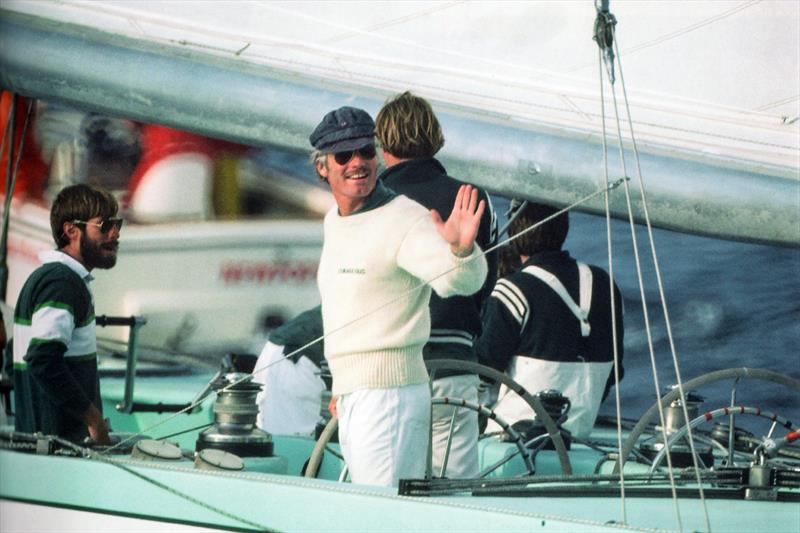
Turner had a long-running feud with fellow cable magnate Rupert Murdoch for years. This originated in 1983 when a Murdoch-sponsored yacht collided with the yacht skippered by Turner, Condor, during the Sydney to Hobart Yacht Race, causing it to run aground 6.2 miles (10.0 km) from the finish line. At the post-race dinner, a drunken Turner verbally assaulted Murdoch, afterward challenging him to a televised fistfight in Las Vegas.
Murdoch's Fox News, established in 1996, became a rival to Turner's CNN, a channel that Murdoch regarded with disdain for its "liberal slant" in news coverage. Time Warner declined to carry it on their New York City cable network in response, who in the midst of a merger, Turner said would "squash Rupert Murdoch like a bug."
In 2003, Turner challenged Murdoch to another fistfight, and later on accused Murdoch of being a "warmonger" for his support and backing of President George W. Bush's invasion of Iraq.
However, in an interview with Variety in 2019, Turner said he and Murdoch had since made amends.
For most of his first decade as owner of the Braves, Turner was a very hands-on owner. This peaked in 1977, his second year as owner.
Turner was suspended for one year by Commissioner of BaseballBowie Kuhn on January 3, 1977, for his actions while pursuing the signing of free agent outfielder Gary Matthews from the San Francisco Giants. Matthews signed a five-year, $1.875 million contract with the Braves on November 18, 1976. Kuhn's actions stemmed from remarks made by Turner to then-Giants owner Bob Lurie during the 1976 World Series. In addition, the Braves were also stripped of their first-round selections in the June 1978 draft of high school and college players. Turner, however, successfully appealed the suspension and Kuhn relented and reinstated the draft selections, one of which would turn out to be Bob Horner from Arizona State University.
On May 11, 1977, with the team mired in a 16-game losing streak, Turner sent manager Dave Bristol on a 10-day "scouting trip" and Turner himself took over as interim manager – the first owner/manager in the majors since Connie Mack. He ran the team for one game (a loss to the Pittsburgh Pirates) before National League president Chub Feeney ordered him to stop running the team. Feeney cited major league rules which bar managers and players from owning stock in their clubs. Turner appealed to Commissioner of BaseballBowie Kuhn, and showed up to manage the Braves when they returned home. However, Kuhn turned down the appeal, citing Turner's "lack of familiarity with game operations."
In the mid-1980s Turner began leaving day-to-day operations to the baseball operations staff, and the team (still under Turner's ownership) won the 1995 World Series.
The Atlanta Braves were sold by Time Warner (which had assumed control after the merger with Turner Broadcasting System) to Liberty Media in 2007.
The theme song from Welcome
Back, Kotter is the #1 song in America
In
1975, John Sebastian, former member of the beloved 60s pop group the Lovin'
Spoonful, was asked to write and record the theme song for a brand-new ABC
television show with the working title Kotter. As any songwriter would,
Sebastian first tried working that title into his song, but somehow the rhymes
he came up with for "Kotter"—otter, water, daughter, slaughter—didn't
really lend themselves to a show about a middle-aged schoolteacher returning to
his scrappy Brooklyn neighborhood to teach remedial students at his own former
high school. So Sebastian took a more thoughtful approach to the task at hand
and came up with a song about finding your true calling in a life you thought
you'd left behind. That song, "Welcome Back," not only went on to become
a #1 pop single on this day in 1976, but it also led the show's producers to
change its title to Welcome Back, Kotter.
What
Sebastian's sweet, wistful and playfully nostalgic tune did not do, however,
was influence the tone and content of the show. To listen to "Welcome
Back," you'd think that Welcome Back, Kotter was a seriocomic
slice-of-life program in the mold of, say, The Courtship of Eddie's Father—another
70s TV show with a theme song by a great 60s songwriter (Harry Nilsson).
Instead, Welcome Back, Kotter was little more than a flimsy platform for
catchphrase-spouting caricatures, albeit an insanely successful one. Arnold
Horshack's "Oooh, oooh, oooh," Freddie "Boom Boom"
Washington's "Hi therrre," Vinnie Barbarino's "What? What?"
and Gabe Kotter's "Up your nose with a rubber hose" were the
pop-cultural coin-of-the-realm in 1975-76, and though they bore little relation
in tone or spirit to the song that topped the charts on this day in 1976, the
disconnect did nothing to hinder the popularity of all things Kotter-related.
Indeed, if you weren't wearing an Uncle Sam or King Kong T-shirt in the summer
of America's bicentennial year, you were probably wearing one with a picture of
"the Sweathogs" and a colorful phrase like "Off my case, toilet
face" on it.
"Welcome
Back" was the first and only television theme song that John Sebastian
ever wrote, but it was far from the only television theme song of the mid-1970s to become a legitimate pop
hit. Only weeks earlier in 1976, the instrumental "Theme From
S.W.A.T." had topped the Billboard Hot 100, and the excellent Mike
Post-written theme The Rockford Files had made the top 10 the previous
summer.
May 9, 1971
Last Honeymooners
episode airs.
The last original
episode of the sitcom The Honeymooners, starring Jackie Gleason as
Brooklyn bus driver Ralph Kramden, airs.
Although a perennial rerun favorite in syndication, The Honeymooners
actually aired only 39 episodes in its familiar sitcom format, running for just
one season in 1955-56. The show debuted on October 5, 1951, as a six-minute
sketch on the variety show Cavalcade of Stars, hosted by Jackie Gleason.
Cavalcade of Stars evolved into The Jackie Gleason Show in 1952,
and Gleason continued the sketches, playing the blustery Ralph Kramden. Regular
cast member Audrey Meadows soon replaced the original casting choice, Pert
Kelton, as Ralph’s long-suffering wife, Alice, who deflated his get-rich-quick
schemes but often saved the day. Art Carney played Gleason’s friend and
sidekick, Ed Norton, from the beginning, and Joyce Randolph was the most
memorable incarnation of Ed’s wife, Trixie.
In 1955, Gleason had tired of the hour-long variety-show format and wanted
to try something new. He suggested creating two half-hour programs: TheHoneymooners
and Stage Show, a musical-variety show, which Gleason would produce.
Among Stage Show’s many musical guests was the first-time TV performer
Elvis Presley, who visited the show in January 1956.
In a departure from most TV shows of the time, The Honeymooners was
filmed in front of a live audience and broadcast at a later date. To allow
Gleason more time to pursue other producing projects, he taped two episodes a
week, leaving him free for several months at the end of the season. Shows were
taped at New York’s Adelphi Theatre in front of around 1,000 people.
Unfortunately, the two shows did not appeal to audiences as much as Gleason
had hoped. He soon returned to his hour-long variety format, occasionally
including Honeymooners skits. He sold the full Honeymooners episodes
to CBS for $1.5 million, and they would go on to earn the network a windfall in
syndication. In 1966, Gleason began creating hour-long Honeymooners
episodes, which he aired in lieu of his usual variety format. From 1966 to
1970, about half of Gleason’s shows were these hour-long episodes. In 1971, the
episodes were rebroadcast as their own series, until May 9, 1971, when the
final episode aired.
Despite its brief life as a traditional sitcom, The Honeymooners remains
one of the most memorable TV comedies of all time, rivaled only by I Love
Lucy in its pioneering role in television history. Its influence has
stretched into modern-day sitcom classics such as Roseanne (also a show
focused on a working-class American family) and Seinfeld (another sitcom
about wacky New York neighbors). The devotion of Honeymooners fans
throughout the years has bordered on cultish worship, including the formation
of a club known as RALPH: Royal Association for the Longevity and Preservation
of the Honeymooners.
May 9, 1991
Michael Landon appeared on the Tonight Show and talked about condition with cancer.