I represent the first generation who, when we were born, the television was now a permanent fixture in our homes. When I was born people had breakfast with Barbara Walters, dinner with Walter Cronkite, and slept with Johnny Carson.
Read the full "Pre-ramble"
Ed and Frankie welcome actor Richard Anderson as they discuss his role as Oscar Goldman on The Six Million Dollar Man and The Bionic Woman and the impact and appeal of both series, as well as his work with such legends as David Janssen, Burt Reynolds, John Frankenheimer and Stanley Kubrick. The interview begins 30 minutes into the first hour and continues into the second hour.
As always, the further we go back in Hollywood history, the more that fact and legend become intertwined. It's hard to say where the truth really lies.
November 16, 1946 Television Screen Magazine launches. The show, one of NBC's first network series, included a collection of features on news, lifestyles, fashion, and other topics. The show ran until 1949. In 1968, CBS revived the TV magazine concept with 60 Minutes, which became one of the country's Top 10 shows in 1977 and stayed in the Top 20 for more than 20 years.
November 17, 1925 Roy Harold Scherer-later known as Rock Hudson-is born in Winnetka, Illinois. As a child, Hudson auditioned for school plays but never landed a role. Later, he worked as a navy mechanic and a truck driver, then pursued an acting career after World War II. After extensive grooming, which included acting, dancing, and fencing lessons, Hudson became a leading actor with Universal. In the late 1940s and early 1950s, he frequently starred in action films and melodramas, including The Desert Hawk (1950) and The Iron Man (1951). Later, he shone in comedies like Pillow Talk (1959), the first of his three pictures with Doris Day. He later worked in television, starring in the series McMillan and Wife from 1971 to 1977 and appearing in Dynasty in 1984 and 1985.
Hudson died of AIDS in 1985, at the age of 59. As one of the first major celebrities to admit to having AIDS, Hudson boosted awareness about the epidemic.
November 17, 1944 Actor and director Danny DeVito is born in Neptune, New Jersey. A former hairdresser, DeVito made his stage debut in 1969. He began appearing in small movie roles, including One Flew Over the Cuckoo's Nest (1975). He spent five years playing cab dispatcher Louie De Palma on the TV sitcom Taxi.
By the mid 1980s, with comedy credits like Romancing the Stone (1984) and Ruthless People (1986), he was in high demand as a comic actor. He began directing in 1987, with Throw Mama from the Train, followed by the hit The War of the Roses (1989). Recent credits include L.A. Confidential (1997) and The Rainmaker (1997). In 1994, he began producing films with great success. His hits as producer have included, including Pulp Fiction (1994), Get Shorty (1995) and Erin Brockovich (2000). Married to actress Rhea Perlman, DeVito owns his own film company, Jersey Films.
November 19, 1959 The Rocky and Bullwinkle Show Premieres Jet Fuel Formula The Rocky and Bullwinkle Show is the collective name for two separate animated series: Rocky and His Friends (1959 – 1961) and The Bullwinkle Show (1961 – 1964).
Rocky & Bullwinkle enjoyed great popularity during the 1960s. Much of this success was a result of it being targeted towards both children and adults. The zany characters and absurd plots would draw in children, while the clever usage of puns and topical references appealed to the adult demographic. Furthermore, the strengths of the series helped it overcome the fact that it had choppy, limited animation; in fact, some critics described the series as a well-written radio program with pictures. The show was broadcast for the first time in the fall of 1959 on the ABC television network under the title Rocky and His Friends twice a week, on Tuesday and Thursday afternoons, at 5:30pm(et). In 1961, the series was moved to NBC where it was renamed The Bullwinkle Show, and first appeared on Sundays at 7pm(et), just before Walt Disney's Wonderful World of Color; eventually, it was rescheduled on late Sunday afternoons, and early Saturday afternoons in its final season. Subsequently, in 1964, the show returned to ABC, where it was canceled within a year. However, reruns of episodes were still continually aired on ABC's Sunday morning schedule [11am(et)] until 1973, at which time the series went into syndication. In addition, an abbreviated fifteen minute version of the series ran in syndication in the 1960s under the title The Rocky Show. This version was sometimes shown in conjunction with The King and Odie, a fifteen minute version of Total Television's King Leonardo and His Short Subjects. The King and Odie was similar to Rocky and Bullwinkle in that it was sponsored by General Mills and animated by Gamma Productions.
November 21, 1945 Actress Goldie Hawn is born in Washington, D.C. The daughter of a musician and a dance-studio owner, Hawn began training as an entertainer at age three, when she took her first dance lesson. By age 16, she was acting professionally, playing Juliet with a regional theater company. After studying briefly at American University, she went to New York to become an actress. She found dancing jobs-first as a can-can dancer with the World's Fair in 1964 and later as a go-go dancer-while playing small parts in movies and ill-fated TV shows.
In 1967, Hawn's career picked upthanks to the comedy-variety show Laugh-In, in which she played a ditzy blonde. In 1969, she won her first featured movie role, in Cactus Flower, for which she won a Best Supporting Actress Oscar. She starred in comedies with actor Chevy Chase, including Foul Play (1978) and Seems Like Old Times (1980). She produced the hit comedy Private Benjamin (1980), for which she received an Best Actress Academy Award nomination. Other films include Overboard (1987), Death Becomes Her (1992), The First Wives Club (1996), and The Banger Sisters (2002). Hawn has had a romantic relationship with actor Kurt Russell since 1982. Her daughter, Kate Hudson, is also a well-known actress.
To quote the Bicentennial Minute, "And that's the way it was".
TV CONFIDENTIAL promises to be better, faster and stronger when actor Richard Anderson joins Ed Robertson and Frankie Montiforte on the next edition of the program, which premieres Monday, Nov. 16 at 10pm ET, 7pm PT on Shokus Internet Radio, with a rebroadcast Tuesday, Nov. 17 at 11pm ET, 8pm PT on Share-a-Vision Radio, KSAV.org. Best known for playing Oscar Goldman on The Six Million Dollar Man and The Bionic Woman—a role that made him the first actor in TV history to play the same character on two series that ran at the same time on two different networks—Richard Anderson has been a fixture in movies and television for more than 60 years. He has appeared in such classic films as The Long Hot Summer, Forbidden Planet, Compulsion, Tora! Tora! Tora! and Paths of Glory, while his television career includes regular roles on Perry Mason, Dan August and Cover Up, featured roles in such acclaimed made-for-TV movies as Along Came a Spider, Say Goodbye, Maggie Cole and The Night Strangler, and guest appearances on such classic TV series as Bonanza, Gunsmoke, The F.B.I., Hawaii Five-O and The Fugitive. If you want to be part of our conversation, if you have a question for Richard Anderson about his career or any of the films and television series in which he’s appeared, we invite you to join us Monday, Nov. 16 at 10pm ET, 7pm PT on Shokus Internet Radio.
NOTE: The interview with Richard Anderson will be recorded earlier in the day for broadcast Monday night. Therefore, if you have a question for Mr. Anderson that you would like us to ask on the air, please be sure to send it by 3pm ET, Noon PT on Monday, Nov. 16. Our email address, as always, is mailto:talk@tvconfidential.net?subject=Question%20for%20Richard%20Anderson.
As always, the further we go back in Hollywood history, the more that fact and legend become intertwined. It's hard to say where the truth really lies.
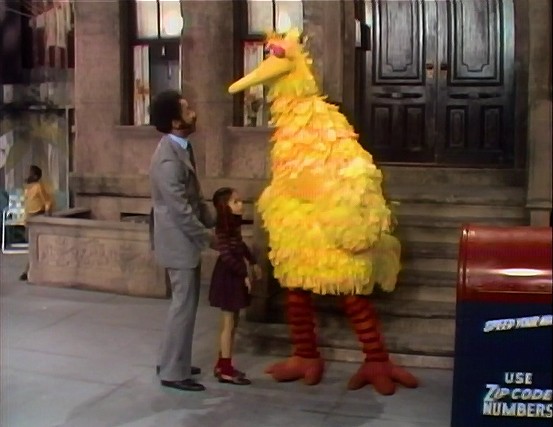
November 10, 1969 Sesame Street premiered on November 10, 1969, and is the longest running children's program on television. The show is produced by the non-profit organization Sesame Workshop, formerly known as the Children's Television Workshop (CTW), founded by Joan Ganz Cooney and Ralph Rogers.
As a result of its extensive influence, Sesame Street is one of the most highly regarded, and most watched, educational shows for children in the world. The original series has been televised in more than 120 countries, and 25 independent versions have been produced. The show has been called "perhaps the most vigorously researched, vetted, and fretted-over program". As of 2009, the series has received 118 Emmy Awards, more than any other television series. An estimated 77 million Americans watched the series as children. Sesame Street uses a combination of animation, puppets, and live actors to stimulate young children's minds, improve their letter and word recognition, basic arithmetic, geometric forms, classification, simple problem solving, and socialization by showing children or people in their everyday lives. Since the show's inception, other instructional goals have been basic life skills, such as how to cross the street safely, proper hygiene, healthy eating habits, and social skills; in addition, real-world situations are taught, such as death, divorce, pregnancy and birth, adoption, and even all of the human emotions such as happiness, love, anger, and hatred. Also, recently, the Sesame Street Muppets discussed the late-2000s recession with their latest prime-time special Families Stand Together: Feeling Secure in Tough Times.
The series has made many published lists, including greatest all-time show compilations by TV Guide and Entertainment Weekly. A 1996 survey found that 95% of American preschoolers have watched the show by the time they are three years old.
Sesame Street will celebrate its 40th anniversary and will include a segment with First Lady Michelle Obama interacting with the Muppets. Jon Stone was responsible for hiring the first cast of Sesame Street. He did not audition actors until Spring 1969, a few weeks before the five test shows were due to be filmed. He videotaped the auditions, and Ed Palmer took them out into the field to test children's reactions. The actors who received the "most enthusiastic thumbs up" were cast. For example, Loretta Long, was chosen to play Susan when the children who saw her audition stood up and sang along with her rendition of "I'm a Little Teapot". It was Stone's goal to cast white actors in the minority. As Stone said, casting was the only aspect of the show that was "just completely haphazard". Most of the cast and crew found jobs on Sesame Street through personal relationships with Stone and the other producers. Stone also hired Bob McGrath to play Bob, Will Lee to play Mr. Hooper, and Matt Robinson to play Gordon. Sesame Street's cast became more diverse in the 1970s. The cast members who joined the show during this time were Sonia Manzano (Maria), Northern Calloway (David), Emilio Delgado (Luis), Linda Bove (Linda), and Buffy Saint-Marie (Buffy). Roscoe Orman succeeded Matt Robinson, the original Gordon, and Hal Miller, in 1975. International co-productions
November 12, 1990 Actress Eve Arden, best known for playing the title role in the radio and TV series Our Miss Brooks, dies at age 78.
Arden was born in Mill Valley, California, and began acting as a teenager. By age 22, she was appearing in the Ziegfeld Follies. She made two films under her birth name-Eunice Quedens-before her first picture as Eve Arden (Oh, Doctor! in 1937). She frequently played the kind-but-sarcastic girlfriend of the lead female role. Her films included No, No, Nanette (1940), Mildred Pierce (1945), and Anatomy of a Murder (1959). Her last film was Grease II (1982). She published an autobiography, The Three Phases of Eve, in 1985.
November 13, 1949 Caryn Johnson, later known as Whoopi Goldberg, is born in New York City. Goldberg began acting at age eight in children's theater productions. She dropped out of high school during her freshman year, later citing a learning disability that teachers mistook for retardation.
She began using drugs but later cleaned up and resumed her interest in acting. She married her substance abuse counselor and had a daughter. She started winning small roles in Broadway shows including Jesus Christ Superstar and Hair. Her marriage ended, and she moved with her daughter to California, where she began performing with improv groups in San Diego and San Francisco while earning money as a bank teller, makeup artist, and other odd jobs. Goldberg launched a comedy act with comedian Don Victor but was soon performing a hit solo act called Spook Show. She toured the country with her comedy, eventually ending up on Broadway. In 1985, three days after her 36th birthday, she made her movie debut in The Color Purple, also starring Oprah Winfrey and Danny Glover. She earned an Academy Award nomination for Best Actress. She later appeared in numerous comedies, including Jumpin' Jack Flash (1986), and won the Best Supporting Actress Oscar for her role as a psychic in Ghost (1990). Her 1993 comedy, Sister Act, was such a phenomenal hit that she earned $8 million for Sister Act II, which made her one of the industry's highest-paid actresses. She briefly had her own talk show and guest-starred regularly on Star Trek: The Next Generation. She has been married several times and has several grandchildren.
November 15, 1926 NBC radio network's grand opening Radio network NBC debuts, celebrating its launch with one of the earliest remote musical broadcasts. The debut program featured nationally known bands playing at several different locations.
To quote the Bicentennial Minute, "And that's the way it was".
The official voice of Porky Pig since 1989 brings his unique talents to the show in a very special way: Bob will be teaching your genial host (Stuart Shostak), "Baby Boomer Favorites" host Jeanine Kasun, and the guys from the station's "TV Confidential" (Ed Robertson, FrankieMontiforte, and Tony Figueroa) how to do voiceovers for cartoons!
Bob conducts seminars all over the world and you'll have a front row seatto listen and even take part yourself to see how it's done!
Don't miss this rare opportunity to "enroll" for free in our 2-hour crash course!
As always, the further we go back in Hollywood history, the more that fact and legend become intertwined. It's hard to say where the truth really lies.
November 2, 1992 Producer, director, and screenwriter Hal Roach dies at the age of 100. Roach is best remembered for his silent comedies featuring Laurel and Hardy, Harold Lloyd, and the gaggle of mischievous kids who starred in the Our Gang comedies (who later became known as the Little Rascals). The silent-film maker, born in Elmira, New York, had worked as a mule skinner, stunt man, truck driver, and Alaska gold prospector when he came to Hollywood in the early 1900s. He started out as a stunt man and bit-part actor, then formed his own production company with D. Whiting, called The Rolin Company, after he inherited $3,000 in 1915 (he later bought Whiting out and changed the studio's name to Hal Roach Studios). Roach hired Harold Lloyd to play Willie Work in a series of comic shorts he hoped to produce. The series fell through until Roach changed Willie Work's name to Lonesome Luke, who became a much-beloved movie character known as "the man with the glasses." Regulars in the comic series, called "Phun-Philms," included Will Rogers, Edgar Kennedy, and Laurel and Hardy.
In the 1920s, Roach started making feature films and dramas along with the comedies and westerns that had occupied the bulk of his energy earlier in his career. He weeded out the least-popular shows and concentrated on his gems, including the Laurel and Hardy and Our Gang series. Actors who worked under Hal Roach contracts early in their careers included Jean Harlow, Mickey Rooney, and Zasu Pitts, along with directors Norman Z. McLeod, Leo McCarey, and George Stevens. Roach won Oscars for two shorts, The Music Box in 1932 and Bored of Education in 1936. When he shifted his focus to feature-length movies (in partnership with his son, Hal Roach Jr.), he sold the Our Gang rights to MGM and produced the acclaimed film Of Mice and Men, an adaptation of John Steinbeck's novel about a sweet, developmentally disabled man named Lennie and his protector, George.
In the 1940s, he turned his attention from the big screen to television production. A military colonel, Roach produced propaganda and training films for the armed forces during World War II, and when he returned to Hollywood after the war, he began working in television. His company collapsed in the 1950s, but in the 1960s he produced The Crazy World of Laurel and Hardy. The film proved to be his swan song: His studio was demolished in 1963 (a housing development is on Roach Ranch now). He received an honorary Academy Award in 1983 for his contributions to making movies. He died in 1992 at age 100.
November 3, 1956 The Wizard of Oz is broadcast on television for the first time. Some 45 million people tuned in to CBS to see the movie, which was broadcast on Ford Star Jubilee. Judy Garland's 10-year-old daughter, Liza Minnelli, introduced the program.
November 5, 1911
Leonard Slye, later known as Roy Rogers, is born in Cincinnati, Ohio. Rogers first came to Hollywood in the 1920s as a migrant fruit picker. In the early 1930s, he joined a singing group called Uncle Tom Murray's Hollywood Hillbillies, which first sang on the radio in 1931. Rogers went on to sing with other similar groups, including the Sons of the Pioneers, which recorded hits like "Tumbling Tumbleweeds." The Sons of the Pioneers group was recruited for low-budget western films, and Rogers was soon playing bit parts for Republic Pictures, the same studio where cowboy star Gene Autry worked. When Autry quit over a dispute with the studio in 1937, Rogers gained more exposure. Starring with his trick horse, Trigger, and his frequent co-star Dale Evans, Rogers soon became one of the Top 10 moneymakers in Hollywood. Rogers also followed Autry into the radio medium, launching The Roy Rogers Show in 1944. The show, a mix of music and drama, always closed with the song "Happy Trails," which became known as Rogers' theme song. After Rogers' wife died in 1946, he married co-star Dale Evans. His radio program ran until 1955. In 1951, a TV version of the program debuted and ran until 1957. Rogers became one of the wealthiest men in Hollywood by diversifying his money: His empire included a TV production studio, real estate, cattle, horses, a rodeo show, and a restaurant chain. Roy Rogers died in 1998. To quote the Bicentennial Minute, "And that's the way it was".

 Ed and Frankie welcome actor Richard Anderson as they discuss his role as Oscar Goldman on The Six Million Dollar Man and The Bionic Woman and the impact and appeal of both series, as well as his work with such legends as David Janssen, Burt Reynolds, John Frankenheimer and Stanley Kubrick. The interview begins 30 minutes into the first hour and continues into the second hour.