August 31, 1946
Foghorn J. Leghorn first appeared in
Walky Talky Hawky
 The character of Foghorn Leghorn was directly
inspired by the popular character of Senator Claghorn, a blustery Southern
politician played by Kenny Delmar who was a regular
character onThe Fred Allen Show, a popular radio show of the 1940s. The rooster
adopted many of Claghorn's catch phrases, such as "That's a joke, ah say,
that's a joke, son." Delmar had based the character of Claghorn upon a
Texas rancher who was fond of saying this.
The character of Foghorn Leghorn was directly
inspired by the popular character of Senator Claghorn, a blustery Southern
politician played by Kenny Delmar who was a regular
character onThe Fred Allen Show, a popular radio show of the 1940s. The rooster
adopted many of Claghorn's catch phrases, such as "That's a joke, ah say,
that's a joke, son." Delmar had based the character of Claghorn upon a
Texas rancher who was fond of saying this.September 3, 1966
The
Adventures of Ozzie and Harriet airs its last episode.
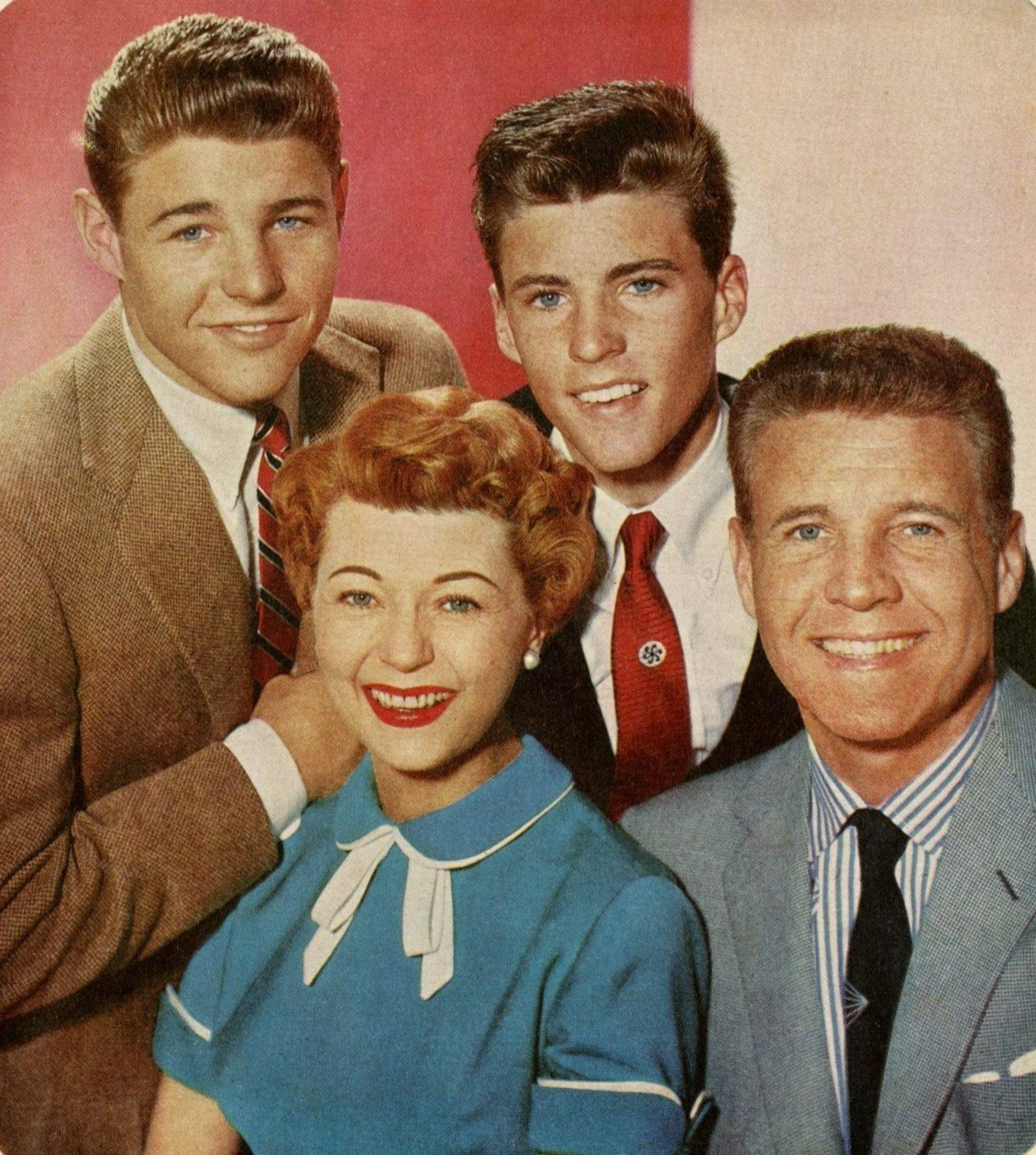 The sitcom focused on the comic antics of a young
family based on the real-life family of show founders and stars Ozzie and
Harriet Nelson. The show premiered as a radio comedy in 1944 and ran for 10
years. Even before the radio show ended, a TV version launched in 1952; the
television show ran until 1966. The Nelson's two sons, Ricky and David, played
themselves on the TV version.
The sitcom focused on the comic antics of a young
family based on the real-life family of show founders and stars Ozzie and
Harriet Nelson. The show premiered as a radio comedy in 1944 and ran for 10
years. Even before the radio show ended, a TV version launched in 1952; the
television show ran until 1966. The Nelson's two sons, Ricky and David, played
themselves on the TV version.September 3, 1991
August 31, 1946
Foghorn J. Leghorn first appeared in Walky Talky Hawky
September 3, 1966
The Adventures of Ozzie and Harriet airs its last episode.
September 3, 1991
It’s a Wonderful Life director Capra dies.
Capra was born in Sicily, on May 18, 1897, and as a young boy sailed to
America in steerage with his family, who settled in Los Angeles. After
graduating from the California Institute of Technology and serving in the U.S.
Army, Capra worked his way up through the movie industry; he had his first big
success as a director with 1933’s Lady for a Day, which received a Best
Picture Academy Award nomination. The following year, Capra helmed the comedy It
Happened One Night, starring Clark Gable and Claudette Colbert. The film
took home Oscars in five categories: Best Director, Best Picture, Best Adapted
Screenplay and Best Actor and Actress. Capra won a second Best Director Oscar
for Mr. Deeds Goes to Town (1936), which starred Gary Cooper as a man
who inherits a large fortune and wants to use it to help Depression-era
families. Capra received a third Best Director Oscar for You Can’t Take It
With You (1938), a movie about an eccentric family that starred James
Stewart, Jean Arthur and Lionel Barrymore and was based on the Pulitzer
prize-winning play of the same name by Moss Hart and George Kaufman.
In 1940, Capra took home a fourth Best Director Oscar for Mr. Smith Goes
to Washington (1939), which featured Stewart as an incorruptible U.S.
senator. After the attack on Pearl Harbor in 1941, Capra joined the Army again
and during his time in the service made several well-received propaganda films,
including Prelude to War (1943), which earned an Academy Award for Best
Documentary. Capra went on to co-write and direct 1946’s It’s a Wonderful
Life, perhaps his best-known work. The film again starred Stewart, this
time as George Bailey, a small-town man who is saved from suicide by a guardian
angel. Although the film was considered a box-office disappointment when it was
first released, it garnered five Oscar nominations, including one for Best
Picture, and eventually gained widespread appeal when it was broadcast annually
on TV around Christmastime, starting in the 1970s.
Capra’s final film was Pocketful of
Miracles (1961), a remake of Lady for a Day starring Bette Davis as
a street vendor who needs to remake herself into a society dame in order not to
disappoint her daughter.
September 4, 1951
President Harry S.
Truman’s opening speech before a conference in San Francisco is broadcast
across the nation, marking the first time a
television program was broadcast from coast to coast.
The speech focused on Truman’s acceptance of
a treaty that officially ended America’s post-World War II occupation
of Japan.The broadcast, via then-state-of-the-art
microwave technology, was picked up by 87 stations in 47 cities, according to
CBS. In his remarks, Truman lauded the treaty as one that would help “build a
world in which the children of all nations can live together in peace.” As
communism was threatening to spread throughout Pacific Rim nations such as
Korea and Vietnam, the U.S. recognized the need to create an ally in a strong,
democratic Japan.
Since the end of
World War II in 1945, Japan had been occupied and closely monitored by the
American military under the leadership of General Douglas MacArthur.
By 1951, six years later, Truman considered the task of rebuilding Japan
complete. Truman praised the Japanese people’s willingness to go along with the
plan and expressed his pride in having helped to rebuild Japan as a democracy.
Gone was the old militaristic police state; in its place was a country with a
new constitution, unions for protecting the rights of laborers and voting
rights for women, among many other positive changes.
The Multilateral Treaty of Peace with Japan,
as it was ultimately called, was ratified by the U.S. Congress on March 20,
1952.
September 4, 1966
The Jerry Lewis MDA Labor Day Telethon was an
annual telethon held
each Labor
Day in the United States to raise money for the Muscular Dystrophy Association (MDA).
The show was founded and hosted by actor and comedian Jerry
Lewis, who hosted the broadcast from its 1966 inception until 2010.
The history of MDA's telethon dated back to the 1950s, when the Jerry
LewisThanksgiving Party for MDA raised
funds for the organization's New
York City area operations. The telethon was held annually on Labor Day
weekend beginning in 1966, and would raise $2.45 billion for MDA from its
inception through 2009.The telethon aired up to 21½ hours, starting on the Sunday evening preceding
Labor Day and continuing until late Monday afternoon on the holiday itself. MDA
called its network of participating stations the "Love Network".
The show originated from Las
Vegas for 28 of the years it was broadcast.
Beginning in 2011, coinciding with Lewis's controversial departure, MDA
radically reformatted and shortened the telethon's format into that of a benefit
concert, shortening the length of the special each successive
year. The 2011 edition was seen exclusively on the Sunday evening
before Labor
Day for six hours; This edition, syndicated to approximately 160
television stations throughout the United States on September 4, 2011, Nigel
Lythgoe, Jann Carl, Alison
Sweeney and Nancy O'Dell were brought on as
co-hosts. shared hosting duties for the 2011 edition.
Successive telethons from 2012 to 2014 renamed the show as the MDA
Show of Strength and further cut its airtime. The 2012 edition
aired on Sunday, September 2, 2012; the job of renaming the new show was given
to MDA's advertising agency E.B. Lane (now LaneTerralever). Mark Itkowitz,
their Exec. Creative Director came up with the name MDA Show of Strength and it
quickly gained internal approval. The 2012 edition was reduced to three hours
as a primetime-only broadcast. The telethon aired at 8 p.m. Eastern and Pacific
Time, and was seen live in the Eastern and Central
time zones.
The 2012 edition did not refer itself as a "telethon". The
2013 Show of Strength discontinued the long-standing format of
being syndicated to individual stations of varying network
affiliation and aired on a major national network instead of being
syndicated to individual stations, airing on ABC on Sunday, September 1,
2013, and being reduced to two hours. While the 2012 edition did not refer
itself as a "telethon", it referred itself as such for the 2013
edition.
The final edition, for 2014, aired on ABC on August 31, again as a two-hour
special beginning at 9PM ET/PT. This was the final edition for the
telethon, as it was announced on May 1, 2015 that the MDA would be
discontinuing the annual event.
Capra was born in Sicily, on May 18, 1897, and as a young boy sailed to
America in steerage with his family, who settled in Los Angeles. After
graduating from the California Institute of Technology and serving in the U.S.
Army, Capra worked his way up through the movie industry; he had his first big
success as a director with 1933’s Lady for a Day, which received a Best
Picture Academy Award nomination. The following year, Capra helmed the comedy It
Happened One Night, starring Clark Gable and Claudette Colbert. The film
took home Oscars in five categories: Best Director, Best Picture, Best Adapted
Screenplay and Best Actor and Actress. Capra won a second Best Director Oscar
for Mr. Deeds Goes to Town (1936), which starred Gary Cooper as a man
who inherits a large fortune and wants to use it to help Depression-era
families. Capra received a third Best Director Oscar for You Can’t Take It
With You (1938), a movie about an eccentric family that starred James
Stewart, Jean Arthur and Lionel Barrymore and was based on the Pulitzer
prize-winning play of the same name by Moss Hart and George Kaufman.
In 1940, Capra took home a fourth Best Director Oscar for Mr. Smith Goes
to Washington (1939), which featured Stewart as an incorruptible U.S.
senator. After the attack on Pearl Harbor in 1941, Capra joined the Army again
and during his time in the service made several well-received propaganda films,
including Prelude to War (1943), which earned an Academy Award for Best
Documentary. Capra went on to co-write and direct 1946’s It’s a Wonderful
Life, perhaps his best-known work. The film again starred Stewart, this
time as George Bailey, a small-town man who is saved from suicide by a guardian
angel. Although the film was considered a box-office disappointment when it was
first released, it garnered five Oscar nominations, including one for Best
Picture, and eventually gained widespread appeal when it was broadcast annually
on TV around Christmastime, starting in the 1970s.
Capra’s final film was Pocketful of Miracles (1961), a remake of Lady for a Day starring Bette Davis as a street vendor who needs to remake herself into a society dame in order not to disappoint her daughter.
September 4, 1951
President Harry S.
Truman’s opening speech before a conference in San Francisco is broadcast
across the nation, marking the first time a
television program was broadcast from coast to coast.
The broadcast, via then-state-of-the-art
microwave technology, was picked up by 87 stations in 47 cities, according to
CBS. In his remarks, Truman lauded the treaty as one that would help “build a
world in which the children of all nations can live together in peace.” As
communism was threatening to spread throughout Pacific Rim nations such as
Korea and Vietnam, the U.S. recognized the need to create an ally in a strong,
democratic Japan.
Since the end of
World War II in 1945, Japan had been occupied and closely monitored by the
American military under the leadership of General Douglas MacArthur.
By 1951, six years later, Truman considered the task of rebuilding Japan
complete. Truman praised the Japanese people’s willingness to go along with the
plan and expressed his pride in having helped to rebuild Japan as a democracy.
Gone was the old militaristic police state; in its place was a country with a
new constitution, unions for protecting the rights of laborers and voting
rights for women, among many other positive changes.
The Multilateral Treaty of Peace with Japan, as it was ultimately called, was ratified by the U.S. Congress on March 20, 1952.
September 4, 1966
The Jerry Lewis MDA Labor Day Telethon was an annual telethon held each Labor Day in the United States to raise money for the Muscular Dystrophy Association (MDA).
The show was founded and hosted by actor and comedian Jerry Lewis, who hosted the broadcast from its 1966 inception until 2010. The history of MDA's telethon dated back to the 1950s, when the Jerry LewisThanksgiving Party for MDA raised funds for the organization's New York City area operations. The telethon was held annually on Labor Day weekend beginning in 1966, and would raise $2.45 billion for MDA from its inception through 2009.The telethon aired up to 21½ hours, starting on the Sunday evening preceding
Labor Day and continuing until late Monday afternoon on the holiday itself. MDA
called its network of participating stations the "Love Network".
The show originated from Las
Vegas for 28 of the years it was broadcast.
Beginning in 2011, coinciding with Lewis's controversial departure, MDA
radically reformatted and shortened the telethon's format into that of a benefit
concert, shortening the length of the special each successive
year. The 2011 edition was seen exclusively on the Sunday evening
before Labor
Day for six hours; This edition, syndicated to approximately 160
television stations throughout the United States on September 4, 2011, Nigel
Lythgoe, Jann Carl, Alison
Sweeney and Nancy O'Dell were brought on as
co-hosts. shared hosting duties for the 2011 edition.
Successive telethons from 2012 to 2014 renamed the show as the MDA
Show of Strength and further cut its airtime. The 2012 edition
aired on Sunday, September 2, 2012; the job of renaming the new show was given
to MDA's advertising agency E.B. Lane (now LaneTerralever). Mark Itkowitz,
their Exec. Creative Director came up with the name MDA Show of Strength and it
quickly gained internal approval. The 2012 edition was reduced to three hours
as a primetime-only broadcast. The telethon aired at 8 p.m. Eastern and Pacific
Time, and was seen live in the Eastern and Central
time zones.
The 2012 edition did not refer itself as a "telethon". The
2013 Show of Strength discontinued the long-standing format of
being syndicated to individual stations of varying network
affiliation and aired on a major national network instead of being
syndicated to individual stations, airing on ABC on Sunday, September 1,
2013, and being reduced to two hours. While the 2012 edition did not refer
itself as a "telethon", it referred itself as such for the 2013
edition.
The final edition, for 2014, aired on ABC on August 31, again as a two-hour special beginning at 9PM ET/PT. This was the final edition for the telethon, as it was announced on May 1, 2015 that the MDA would be discontinuing the annual event.




.JPG)