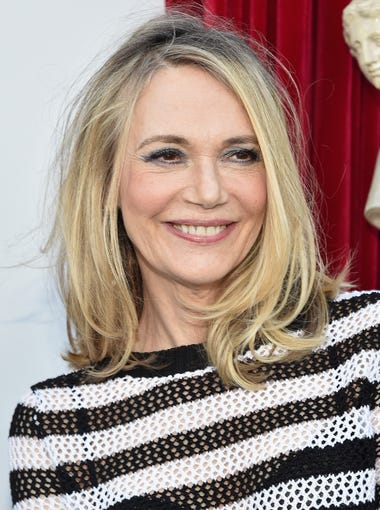
Monday, May 13, 2019

Doris Day "Que Sera, Sera"

If it's true that men are such beasts,
this must account for the fact that most women are animal lovers.
Doris Day
Doris Dayborn Doris Mary Ann KappelhoffApril 3, 1922 – May 13, 2019
Doris Day died on today after contracting pneumonia. Her death was announced by her charity, the Doris Day Animal Foundation.

Everything that Doris Day ever did eventually wound up on television but I wanted to focus on her TV show.


When her third husband Martin Melcher died on April 20, 1968, a shocked Day discovered that Melcher and his business partner Jerome Bernard Rosenthal had squandered her earnings, leaving her deeply in debt. Rosenthal had been her attorney since 1949, when he represented her in her uncontested divorce action against her second husband, saxophonist George W. Weidler. Day filed suit against Rosenthal in February 1969, won a successful decision in 1974, but did not receive compensation until a settlement in 1979.
Day also learned to her displeasure that Melcher had committed her to a television series, which became The Doris Day Show.
It was awful", Day told OK! Magazine in 1996. "I was really, really not very well when Marty [Melcher] passed away, and the thought of going into TV was overpowering. But he'd signed me up for a series. And then my son Terry [Melcher] took me walking in Beverly Hills and explained that it wasn't nearly the end of it. I had also been signed up for a bunch of TV specials, all without anyone ever asking me.
Day hated the idea of performing on television, but felt obligated to do it. The first episode of The Doris Day Showaired on September 24, 1968, and, from 1968 to 1973, employed "Que Sera, Sera" as its theme song. Day persevered (she needed the work to help pay off her debts), but only after CBS ceded creative control to her and her son. The successful show enjoyed a five-year run, and functioned as a curtain raiser for the popular Carol Burnett Show. It is remembered today for its abrupt season-to-season changes in casting and premise.

Season 1 (1968–1969)

Day portrays Doris Martin, a widowed mother of young sons Billy and Toby (Philip Brown and Todd Starke). When the series premieres, she has brought her boys home to her father's rural ranch in Cotina in Mill Valley, north of San Francisco, California, after living in New York City for most of her adult life.
Other characters during this initial phase of the program include Doris's father Buck Webb (Denver Pyle) and their naive hired ranch hand, LeRoy B. Simpson (James Hampton). Their housekeeper initially is Aggie Thompson (Fran Ryan, who left after the first 10 episodes to replace Barbara Pepper as Doris Ziffel in Green Acres). The character left without explanation and was replaced by Juanita (Naomi Stevens). Lord Nelson is also included in the opening credits cast as Lord Nelson, the family's sheepdog.

Season 2 (1969–1970)

Doris begins to commute from the ranch to San Francisco, where she starts working as an executive secretary at Today's World magazine. New workplace characters are added: McLean Stevenson (who would later leave the series to star in M*A*S*H) plays her boss, Today's World editor Michael Nicholson, who is often referred to as 'Nick' by the other magazine executives; Rose Marie plays Doris' friend Myrna Gibbons, a fellow secretary at the magazine; Paul Smith portrays Ron Harvey, the magazine's assistant-editor and Myrna's boss. Pyle, Brown, and Starke remain regular cast members, while Hampton appears in only one episode, his character now married and owning a gas station in Mill Valley. Lord Nelson still appears uncredited as the family sheepdog in most episodes this season. There is no longer any housekeeper at the ranch, and no ranch hand was hired to replace Leroy. 

Season 3 (1970–1971)

Doris tires of the commute between her work and the ranch and relocates herself, the boys, and the dog to San Francisco, where they rent an apartment above an Italian restaurant owned and operated by married couple Louie and Angie Pallucci (Bernie Kopell and Kaye Ballard). At first Louie is angry with Angie for renting the apartment to a widow with children and a large pet, but he eventually cherishes their new tenants after Billy and Toby praise his pizza. Angie also becomes one of Doris's best friends. Doris begins writing articles for the magazine under the auspices of Mr. Harvey, the assistant editor, but is still mainly a secretary. All of the regular characters from the previous season remain, with the exception of Pyle's Buck, who appears in only two episodes; no episodes from Season 3 onward take place on his ranch. (Pyle, however, remains on the show's staff behind the scenes, serving as a frequent episode director.) Hampton's character LeRoy appears in only one episode; he now lives in Montana and travels the rodeo circuit to raise the money to buy his own ranch. In this season Doris' nemesis, Willard Jarvis (Billy De Wolfe), moves in next door, causing trouble for her and her family in a few episodes. Lord Nelson again is not included in the opening credits cast list, but appears uncredited in a handful of episodes this season.

Seasons 4–5 (1971–1973)

The fourth season sees a radical change in the series. Day's character suddenly becomes a swinging single career woman who goes by Miss instead of Mrs.). The entire cast from previous seasons, other than Day herself, and occasionally the Palluccis, are gone; even Doris Martin's two sons are no longer in the cast, with no explanation given, and are never referred to again. Doris Martin, still working for Today's World, now has a new editor, Cy Bennett, played by character actor John Dehner, and she is now a full-time staff writer, and later an associate editor. Jackie Josephjoins the cast as Doris' friend and Cy's secretary at the magazine, Jackie Parker. Doris lives in the same apartment and the Palluccis, Angie in particular, are still on hand in the fourth season. In season 5, there is no mention of the Palluccis owning the building; the estate of the owner, an elderly man named Mr. Carter, sells the building after Carter's passing to Doris's sometimes-nemesis, Mr. Jarvis, which initially alarms Doris, but she and the other tenants eventually accept him. In Season 4, Doris begins a romance with Dr. Peter Lawrence (Peter Lawford), which lasts until late into Season 5. That relationship is followed by one with old boyfriend Jonathan Rusk (Patrick O'Neal). The series continued with this format until it was canceled in 1973.

By the end of its run in 1973, public tastes had changed and her firmly established persona was regarded as passé. She largely retired from acting after The Doris Day Show, but did complete two television specials, The Doris Mary Anne Kappelhoff Special (1971) and Doris Day Today (1975). She appeared on the John Denver TV show in 1974.

In the 1985–86 season, Day hosted her own television talk show, Doris Day's Best Friends, on CBN. The network canceled the show after 26 episodes, despite the worldwide publicity it received. Much of that came from her interview with Rock Hudson, in which a visibly ill Hudson was showing the first public symptoms of AIDS; Hudson would die from the syndrome a year later.


Good Night Ms. Day

Stay Tuned

Tony Figueroa

Sunday, May 12, 2019

Your Mental Sorbet: Peggy Lipton and Sammy Davis Jr.

Peggy Lipton 
born Margaret Ann Lipton
August 30, 1946 – May 11, 2019


Here is another "Mental Sorbet
that we could use to momentarily forget about those
things that leave a bad taste in our mouths
Hollywood Palace 3-15-69
Peggy Lipton (from the "Mod Squad," making her singing debut) - "Just A Little Lovin'"
and Peggy Lipton and Sammy Davis Jr. - "Little Green Apples"


Stay Tuned


Tony Figueroa

Monday, May 06, 2019

This Week in Television History: May 2019 PART I

The further we go back in Hollywood history,
the more that fact and legend become intertwined.
It's hard to say where the truth really lies.
Donna Allen-Figueroa

May 6, 1959
Raymond Burr wins the Best Actor in a Dramatic Series Emmy for Perry Mason, in which he plays a crime-solving attorney. 
The popular show, which debuted in 1957, ran for nine years. Derived from mystery novels by Earl Stanley Gardner, the character of Perry Mason had made his radio debut in 1943 and the show continued until 1955. The sleuthing Perry Mason character was revived in a series of TV movies from 1985 to 1993.


May 6, 1984
Spinal Tap stages a "comeback" at CBGB's in New York City
Almost 20 years and who knows how many drummers into their unique career in rock, the surviving members of one of England's loudest bands had reached yet another low point in the spring of 1984. Only two years removed from a disastrous 1982 world tour that not only failed to turn the album Smell The Glove into a comeback hit, but also led to the group's breakup, Spinal Tap now had to suffer the indignity of seeing the Marty DiBergi-helmed behind-the-scenes film of that tour gain widespread theatrical release. Would the numerous embarrassments catalogued in the hard-hitting rockumentary This Is Spinal Tap provoke public sympathy for and renewed interest in the band that Nigel Tufnel, David St. Hubbins and Derek Smalls began back in 1964 as The Originals? Or would the group behind such familiar classic-rock hits as "Give Me Some Money" and "Tonight I'm Gonna Rock You Tonight" be consigned once and for all to obscurity? In this atmosphere of uncertainty, Spinal Tap elected to go back to their roots, kicking off a tour of small American rock clubs with an appearance at New York City's legendary CBGB's on May 6, 1984.
Of course, almost none of the above is true, strictly speaking. A group calling itself Spinal Tap did play CBGB's on this day in 1984, but that group was the fictitious invention of director Rob Reiner and the comic actors Michael McKean, Christopher Guest and Harry Shearer—St. Hubbins, Tufnel and Smalls, respectively. Reiner's directorial debut was the aforementioned This Is Spinal Tap, a film that launched the mockumentary mini-genre as well as a thousand catchphrases, from "These go to 11" to "None more black." It was during the film's first week of release that McKean, Guest, Shearer and one of their many doomed drummers played their gig at CBGB's, which one attendee recalls as drawing "every professional musician in the city of New York."
This live appearance by Spinal Tap was the first, but certainly not the last step in an ongoing effort by the McKean et al. to blur the line between fiction and reality. In the years since their live debut, numerous bootleg recordings and early television appearances have "surfaced," and one full-length album—1992's Break Like The Wind—has been released. At last report, Nigel Tufnel was working on a pony farm, David St. Hubbins was producing hip-hop records out of a former colonic clinic and Derek Smalls was in rehab for an Internet addiction. But do not be surprised if one day you encounter a salesman resembling Christopher Guest on a visit to a hat shop, or if next year's lineup of Broadway openings includes the long-awaited St. Hubbins rock opera, Saucy Jack

May 6, 2004
Final episode of Friends airs on NBC
At 9:00 p.m. Eastern and Pacific times on this day in 2004, that familiar theme song (“I’ll Be There For You” by the Rembrandts) announces the beginning of the end, as an estimated 51.1 million people tune in for the final original episode of NBC’s long-running comedy series Friends.
Created and executive-produced (with Kevin S. Bright) by Marta Kauffman and David Crane, Friends debuted 10 years and 236 episodes earlier, on September 22, 1994. Shot at the Warner Brothers studios in Burbank, California, the show was set in New York City’s Greenwich Village, where six friends struggled with the ups-and-downs of young adult life in the big city--albeit while living in an impossibly large, cushy apartment, apparently without the burden of having to spend much time working actual jobs. Almost from the beginning of its decade-long run, Friends was a cultural phenomenon, winning six Emmy Awards (including one for Outstanding Comedy Series), sparking hairstyle trends (“the Rachel”), spawning catch phrases (“How you doin?”) and turning its six principal cast members into household names.
Preceded by a maelstrom of hype and publicity, the hour-long Friends finale drew approximately two-thirds of the audience garnered by the finales of two other long-running sitcoms, Cheers (80.4 million) in 1993 and Seinfeld (76.2 million) in 1998, according to a Fox News report. The most-watched TV series finale ever, M*A*S*H, was viewed by some 105 million people when it aired in 1983.  According to the New York Times, NBC charged advertisers an average of $2 million for every 30 seconds of ad time during the finale--a record amount for a sitcom and only $300,000 less than what CBS charged during that year’s Super Bowl.
In the finale, the long-running on-and-off relationship between Ross (David Schwimmer) and Rachel (Jennifer Aniston), which over the years included a drunken Las Vegas wedding and a baby, Emma, born in 2002, ended as most of the show’s fans hoped: They got back together, presumably for good. Meanwhile, Chandler (Matthew Perry) and Monica (Courtney Cox-Arquette) had become suburbanites and parents of twins, Phoebe (Lisa Kudrow) was married, and Joey (Matt LeBlanc) was headed off to L.A. to pursue his acting career. (A spin-off sitcom, Joey, followed LeBlanc’s character to Hollywood; the show failed to attract a significant audience, and was canceled in 2006.)
Throughout the show’s run, its six stars maintained a famously unified front, ensuring that no one of them emerged as a dominating force onscreen and even negotiating their salaries together. In the spring of 2000, each member of the cast signed a two-year, $40 million contract that netted them each a staggering $1 million per episode. Broadcast in some 100 countries, Friends continues to earn good ratings for its syndicated rerun episodes.


May 7, 1999
A jury ruled that The Jenny Jones Show and Warner Bros. were liable in the shooting death of Scott Amedure. 

He was killed by another guest on the show. The jury's award was $25 million. 


May 8, 1984
Soviets announce boycott of 1984 Olympics
Claiming that its athletes will not be safe from protests and possible physical attacks, the Soviet Union announces that it will not compete in the 1984 Olympics in Los Angeles. Despite the Soviet statement, it was obvious that the boycott was a response to the decision of the United States to boycott the 1980 games that were held in Moscow.
Just months before the 1984 Olympic games were to begin in Los Angeles, the Soviet government issued a statement claiming, "It is known from the very first days of preparations for the present Olympics the American administration has sought to set course at using the Games for its political aims. Chauvinistic sentiments and anti-Soviet hysteria are being whipped up in this country." Russian officials went on to claim that protests against the Soviet athletes were likely to break out in Los Angeles and that they doubted whether American officials would try to contain such outbursts. The administration of President Ronald Reagan responded to these charges by declaring that the Soviet boycott was "a blatant political decision for which there was no real justification."
In the days following the Soviet announcement, 13 other communist nations issued similar statements and refused to attend the games. The Soviets, who had been stung by the U.S. refusal to attend the 1980 games in Moscow because of the Russian intervention in Afghanistan in 1979, were turning the tables by boycotting the 1984 games in America. The diplomatic impact of the action was quite small. The impact on the games themselves, however, was immense. Without competition from the Soviet Union, East Germany, and other communist nations, the United States swept to an Olympic record of 83 gold medals.

May 8, 1984
"Well, what can I say? Both of our children are married now and they’re starting out to build lives of their own. And I guess when you reach a milestone like this you have to have to reflect back on, on what you’ve done and, and what you’ve accomplished. Marion and I have not climbed Mount Everest or written a great American novel. But we’ve had the joy of raising two wonderful kids, and watching them and their friends grow up into loving adults. And now, we’re gonna have the pleasure of watching them pass that love on to their children. And I guess no man or woman could ask for anything more. So thank you all for being, part of our family… To Happy Days."

To quote the Bicentennial Minute, "And that's the way it was".


Stay Tuned


Tony Figueroa

Friday, May 03, 2019

Monday, April 29, 2019

This Week in Television History: April 2019 PART V

The further we go back in Hollywood history,
the more that fact and legend become intertwined.
It's hard to say where the truth really lies.
Donna Allen-Figueroa

April 30, 1939
NBC began regular U.S. television broadcasts, with a telecast of President Franklin D. Roosevelt opening the New York World's Fair. 
Programs were transmitted from the NBC mobile camera trucks to the main transmitter, which was connected to an aerial atop the Empire State Building.
Ten days prior to the Roosevelt speech, David Sarnoff, President of RCA (The Radio Corporation of America and NBC's original parent company) made a dedication speech for the opening of the RCA Pavilion at the New York World's Fair. Staging this event prior to the World's Fair opening ceremonies ensured that RCA would capture its share of the newspaper headlines. The ceremony was televised, and watched by several hundred viewers on TV receivers inside the RCA Pavilion at the fairgrounds, as well as on receivers installed on the 62nd floor of Radio City in Manhattan. Back then, the programs included operas, cartoons, cooking demonstrations, travelogues, fashion shows, and skaters at Rockefeller Center along with numerous live telecasts relayed from within the fair itself.

April 30, 1964
The FCC ruled that all TV receivers should be equipped to receive both VHF and UHF channels. 
The majority of the 165 UHF stations to begin telecasting between 1952 and 1959 did not survive. Under the All-Channel Receiver Act, FCC regulations required all new TV sets sold in the U.S. after 1964 to have built-in UHF tuners that could receive channels 14–83. In spite of this, by 1971, only about 170 full-service UHF stations were in operation.

To quote the Bicentennial Minute, "And that's the way it was".


Stay Tuned


Tony Figueroa

Friday, April 26, 2019

Your Mental Sorbet: Avengers: Endgame Cast Sings "We Didn't Start the Fire"


Here is another "Mental Sorbet
that we could use to momentarily forget about those
things that leave a bad taste in our mouths
The cast of Avengers: Endgame recaps the entire Marvel franchise by singing their own superhero version of Billy Joel's "We Didn't Start the Fire."


Stay Tuned


Tony Figueroa

Monday, April 22, 2019

This Week in Television History: April 2019 PART IV

The further we go back in Hollywood history,
the more that fact and legend become intertwined.
It's hard to say where the truth really lies.
Donna Allen-Figueroa


April 23, 1939
Lee Majors is born Harvey Lee Yeary. 
Film and voice actor, best known for his roles as Heath Barkley in the TV series The Big Valley (1965–69), as Colonel Steve Austin in The Six Million Dollar Man (1973–78) and as Colt Seavers in The Fall Guy (1981–86).
In the late 1980s and 1990s, he reprised the role of Steve Austin in a number of TV movies, and appeared in a number of supporting, recurring and cameo roles in feature films and TV series, and lent his voice to a number of animated TV series andvideo games.

April 23, 1989
NBC aired the pilot episode of Baywatch
Baywatch premiered on NBC in 1989, but was cancelled after only one season, when it placed 73rd out of 103 shows in the seasonal ratings, and also because the studio, GTG, went out of business. Due to high production costs, GTG was unable to finance the series any further.
Feeling the series still had potential, David Hasselhoff, one of the principal actors, along with creators and executive producers Michael BerkDouglas Schwartz, and Gregory J. Bonann, revived it for the first-run syndication market in 1991. Hasselhoff was given the title of executive producer for his work on bringing the show back. The series was hugely successful, especially internationally.

April 26, 1989
Lucille Ball dies at age 78. 
During her career, she and husband Desi Arnaz transformed TV, creating the first long running hit sitcom.
Ball was born in 1911 near Jamestown, New York, to an electrician and a concert pianist. Her father died when Ball was two. By age 15, Ball had decided to become an actress and attended drama school. However, the shy, skinny teenager received little encouragement and was rejected at least four times from Broadway chorus lines, although she eventually joined one in 1926. In 1933, she was hired as the Chesterfield cigarette girl and was featured in all the company's advertisements. Attracting attention with her Chesterfield ads, she finally began playing bit parts in Hollywood movies in 1933. By the late 1930s, the starlet had graduated to comic supporting roles. In 1940, she met Cuban bandleader Desi Arnaz while shooting Too Many Girls. The couple married the following year.
Ball continued to land movie roles that didn't fully showcase her talent. Frustrated, she turned to radio and starred as a ditzy wife in My Favorite Husband from 1948 to 1951. CBS decided to launch the popular series on the relatively new medium of TV. Lucy insisted Desi be cast as her husband in the TV version, though the network executives said no one would believe the couple were married. Desi and Lucy performed before live audiences and filmed a pilot, convincing network executives that audiences responded well to their act, and CBS cast Desi for the show.
I Love Lucy became one of the most popular TV sitcoms in history, ranking in the top three shows for six years and turning the couple's production company, Desilu, into a multimillion-dollar business. Ball became president of the company in 1960, after she and Desi divorced. She also starred in several other "Lucy" shows, including The Lucy Show, which debuted in 1962 and ran for six seasons, and Here's Lucy, in which she starred with her two children until the show was cancelled in 1974. A later show, Life with Lucy, featuring Lucy as a grandmother, was cancelled after only eight episodes. Ball worked little in the last years of her life. She died of congestive heart failure following open-heart surgery earlier in the month.

April 29, 1944
Last "Our Gang" film released. Dancing Romeo, the last "Our Gang" film, is released on this day in 1944. 
The first film, featuring a band of mischievous youngsters, was produced in 1922 by Hal Roach. Roach produced the short films until 1938, when he sold the rights to MGM. In all, more than 100 Our Gang films were made. Later, they were shown as TV comedies under the name "The Little Rascals."
To quote the Bicentennial Minute, "And that's the way it was".


Stay Tuned


Tony Figueroa

Thursday, April 18, 2019

Your Mental Sorbet: "The Mary Tyler Moore Show" Ted's Wedding

Georgia Bright Engel
July 28, 1948 – April 12, 2019

Here is another 
"Mental Sorbet
that we could use to momentarily forget about those
things that leave a bad taste in our mouths
(First Aired: November 8, 1975) A luncheon Mary hosts for Ted and Georgette evolves into a spontaneous wedding.


Stay Tuned


Tony Figueroa