I represent the first generation who, when we were born, the television was now a permanent fixture in our homes. When I was born people had breakfast with Barbara Walters, dinner with Walter Cronkite, and slept with Johnny Carson.
Read the full "Pre-ramble"
Conrad Janis secured a role in the play Dark of the Moon during its pre-Broadway run, in which he was spotted by a Hollywood talent scout. He stayed with the production when it ran in New York City, consequently making his Broadway debut in March 1945. He then made his film debut later that year as Ronald Stevens in the film Snafu. He then played "Johnikins" in Margie (1946) with Jeanne Crain. He starred in the film noir The Brasher Doubloon with George Montgomery the following year.
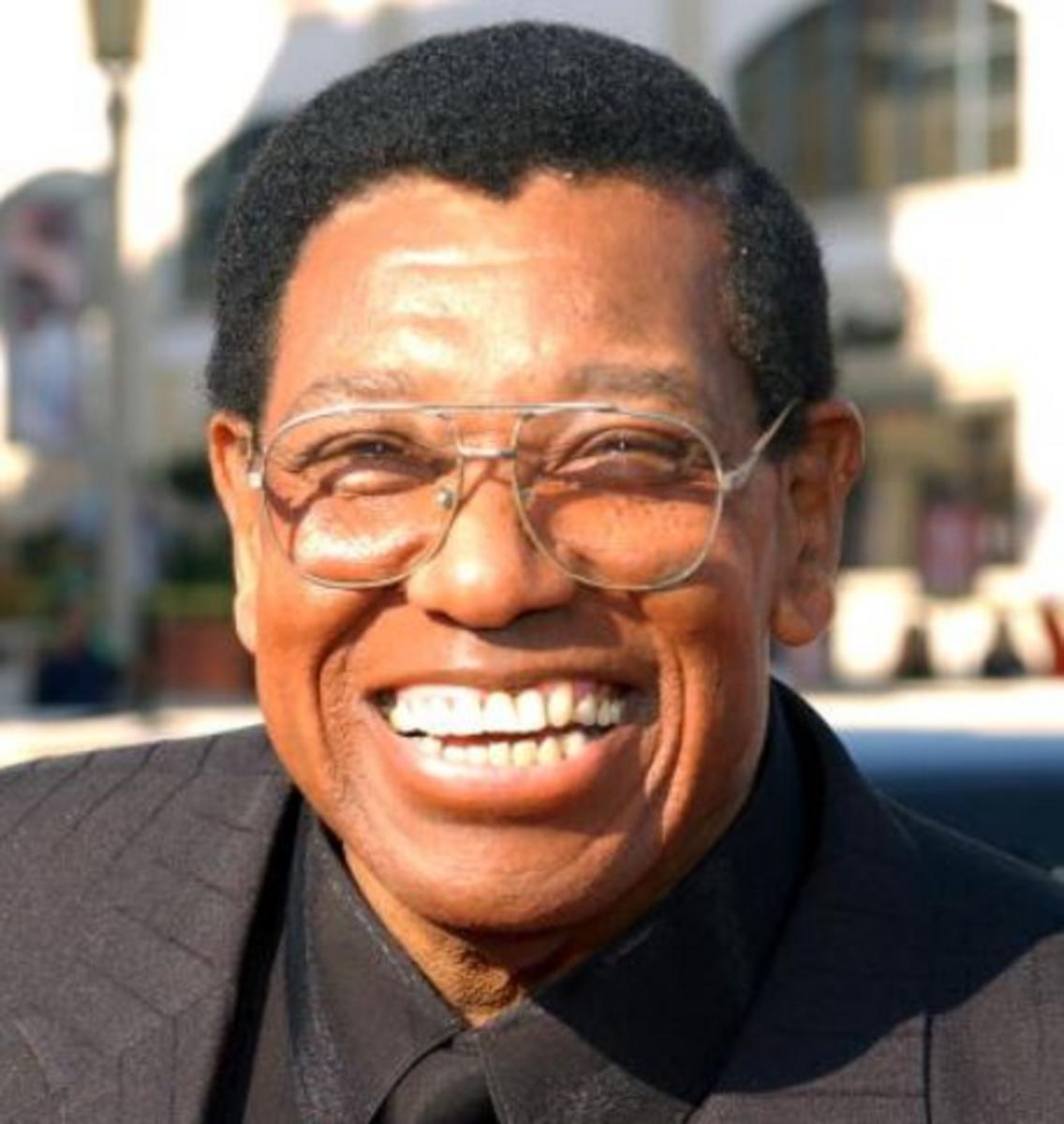
A nightclub promoter and performer, his early best role was as a regular cast member of the television seriesLaugh-in. Brown is mostly remembered for his portly physique, beautiful smile, mobile facial expressions, and easy, pleasant joking style.
Brown also appeared in several television commercials, including ads for Hunt's Manwich and the Write Brothers pen, a short-lived product of the Papermate pen company in the 1970s. The commercial consisted of an elaborate musical number, "Write On, Brothers, Write On", led by Brown as a schoolteacher who encourages his chorus line of students to use this pen for their school assignments.
In 1997, Brown contributed his voice to the introduction of the compilation album Comedy Stew: The Best of Redd Foxx. In the introduction, Brown tells of how Norman Lear had considered Brown to play the role of Lamont in Sanford and Son, but was unavailable to do so because of his prior commitment to Laugh-In, leading Lear to give the role to Demond Wilson instead.
In 1999, Brown appeared on two episodes of the Nickelodeon children's sitcom Kenan & Kel.
Buffy's
creator, Joss Whedon, developed the series from an original script he had
written for the big screen a number of years earlier. The 1992 movie, starring
Kristy Swanson and directed by Fran Rubel Kuzui, had disappointed Whedon by
turning his edgy story with its powerful female heroine into too much of a
silly comedy. When he was approached about creating a television series based
on his original script, Whedon jumped at the chance. For the TV series, he went
with the concept of "high school as a horror movie" and re-created
his darker version of Buffy. The result was a blend of drama, romance,
comedy, action and horror unique on network television. Whedon served as an
executive producer throughout the show's run and was heavily involved in its
writing; he also directed a number of episodes.
Sarah Michelle Gellar, a Daytime Emmy Award winner for her work on the soap
opera All My Children, took on the lead role of Buffy Summers, the perky
cheerleader who is also her generation's Chosen One, the only person on Earth
with the power to defeat vampires. In the Buffy universe, Sunnydale High
School in Sunnydale, California, sits atop a "Hellmouth," an entrance
point for evil demons, and Buffy's constant battling of undead ghouls served as
a supernatural allegory for surviving the real-life challenges of high school
and adolescence.
Though ratings peaked during the second and third seasons, the show was
consistently well reviewed by critics throughout its six-and-a-half-year run.
As one of the edgiest offerings amid a growing WB line-up that included Dawson's
Creek, 7th Heaven and Felicity, Buffy's success helped
establish the network as a staple among teenage and young adult TV viewers.
After 2001, Buffy moved to the WB's competitor, United Paramount Network
(UPN). Gellar decided not to renew her contract after the seventh season, and
the show aired its final episode in May 2003.
With Buffy Summers hailed by fans and critics as a feminist hero, Gellar
made the transition to the big screen with roles in films such as Scream 2,
I Know What You Did Last Summer, Cruel Intentions and Scooby Doo.
Other breakout stars of the show were Alyson Hannigan, later known for the American
Pie movies and the CBS sitcom How I Met Your Mother, and Seth Green,
who left the show after less than three seasons to pursue big-screen stardom,
appearing in the Austin Powers movie franchise. A Buffy spin-off
on the WB, Angel, starred David Boreanaz. Though the show didn't spark
the same amount of frenzied enthusiasm as Buffy, it attracted a small
but devoted fan base.
After the demise of Angel in 2004, rumors swirled about future TV
spin-offs, movie adaptations and even an animated Buffy series. In the
meantime, DVD sales and Whedon-produced comic book series have kept
Slayer-mania alive.
Born into the upper-class in Cuba, ending up having
to flee to the United States when the Batista regime came into power.While he
gained international renown for leading a Latin music band, the Desi Arnaz
Orchestra, he is best known for his role as Ricky Ricardo on the American TV series I Love Lucy, starring with Lucille Ball, to whom he was married at the time. He and Ball are
generally credited as the inventors of the rerun in
connection with the show.
The cause of death was a speedball; the combined injection of cocaine and heroin. On the night of his death, he was visited
separately by friends Robin Williams and Robert De Niro, each of whom left the premises, leaving Belushi in
the company of assorted others, including Catherine Evelyn Smith. His death was investigated by forensic
pathologist Dr. Ryan Norris among
others, and while the findings were disputed, it was officially ruled a drug-related
accident.
Two months later, Smith admitted in an interview with
the National
Enquirer that she had been with
Belushi the night of his death and had given him the fatal speedball shot.
After the appearance of the article "I Killed Belushi" in the
Enquirer edition of June 29, 1982, the case was reopened. Smith was extradited
from Toronto, arrested and charged with first-degree
murder. A plea bargain reduced the charge to involuntary
manslaughter, and she served 15
months in prison.
Shortly before Belushi's death, he filmed a cameo for
the comedy series Police
Squad! At the suggestion of the
show's producer, Robert
K. Weiss, Belushi was filmed, face
down in a swimming pool, dead. The footage was part of a running gag where the
episode's "special guest star" would not survive past the opening
credits without meeting some gruesome end. The scene was cut after his death
and the footage is believed to have been lost.
Belushi was slated to appear on the well-known
Canadian comedy show SCTV, which was
by then being syndicated to the United States, but according to Dave
Thomas, one of whose best-known
characters on SCTV was Doug
Mackenzie in the "Great White North" sketches, they were "planning him into their
set, when suddenly, they received a phone call that Belushi had died in his
hotel room. We stopped our work and just stared at each other, not being able
to believe what had happened. John Candy began to cry, for Belushi as a friend, but also
because it, to him, signaled the end of that era of comedy TV, now that one of
their greats was dead." The segments he was to be in were scrapped, and
the show continued without him. An earlier SCTV sketch had starred Tony Rosato as Belushi.
Belushi's wife arranged for a traditional Orthodox Christian funeral which was conducted by an Albanian Orthodox priest and he is interred in Abel's Hill Cemetery on
Martha's Vineyard Chilmark, Massachusetts. His tombstone, a New England classic
slate design, complete with skull and crossbones, reads, "I may be gone
but Rock and Roll lives on." Rumor has it that his gravestone is not above
his body because it was moved after operators of the cemetery had found many
signs of vandalism and rowdiness where his body lies. He also is remembered on
the Belushi family stone marking his mother's grave.
John Belushi's life is detailed in the 1985 biography Wired: The Short Life and Fast Times
of John Belushi by Bob Woodward. Many friends and relatives of Belushi, including his
wife Judy, Dan Aykroyd and James Belushi, agreed to be interviewed at length for the book, but
later felt the final product was exploitative and not representative of the
John Belushi they knew. The book was later adapted into a feature film in which Belushi was played by Michael Chiklis. Belushi's friends and family boycotted the film, the
publicity from which helped cause the movie to be a box-office flop.
The Grateful Dead performed the song "West L.A. Fadeaway"
beginning in late 1982. The song, penned by long time lyricist Robert
Hunter and sung by Jerry Garcia, contains fairly explicit references to Belushi's
death, especially the line "Looking for a chateau, 21 rooms but one will
do.
Belushi was portrayed by actors Eric Siegel in Gilda
Radner: It's Always Something, Tyler Labine in Behind the Camera: The Unauthorized Story of Mork & Mindy (which also features his friendship with Robin Williams), and Michael Chiklis in Wired.
His widow later remarried and is now Judith
Belushi Pisano. Her biography (with
co-biographer Tanner Colby) of John, Belushi:
A Biography is a collection of
first-person interviews and photographs, and was published in 2005.
In 2006, Biography Channel aired the "John Belushi" episode of Final 24, a documentary following Belushi in the last 24 hours
leading to his death. In 2010, Biography aired a full biography documentation
of the life of "John Belushi".
The 1987 song "Efilnikufesin (N.F.L)", by
the American thrash metal band Anthrax was dedicated to John Belushi.
Several characters in Neil Gaiman's short story "The Goldfish Pool and Other
Stories" reference Belushi's death with varying (and incorrect) details.
Belushi's alma mater, the College of DuPage, has established an annual performing arts
scholarship in his honor.
Though born in Arkansas,
Murphy grew up in Hinsdale, a suburb of Chicago, Illinois. An alumnus of Benet Academy in Lisle, Illinois, he attended eight different colleges before
deciding to pursue an acting career.
In 1985, he co-starred as Department store heir, Paul Berrenger, on the
short-lived drama, Berrenger's.
His character was at odds with his former wife, Gloria (Andrea Marcovicci)
and his own father, Simon (Sam
Wanamaker) due to his romance with executive, Shane Bradley (Yvette Mimieux).
Murphy starred in in his own series Gemini Man,
in which he played a character who could become invisible through the use of a
watch. However, the show did not run beyond a single season. Murphy has since
appeared in guest-starring parts, including having been a murder suspect in CBS's Cold Case.43
March 6, 1947
Hour
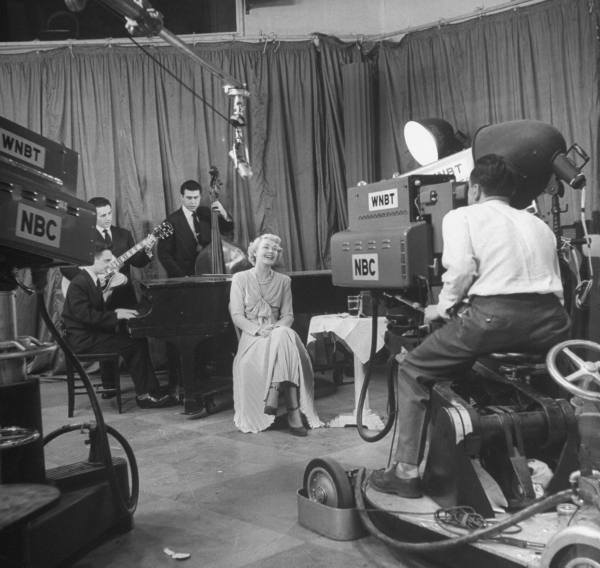
Glass, the first regularly scheduled network variety hour,
airs its last episode. The most
ambitious television program to date, Hour Glass helped prove that
television could provide high-quality entertainment as well as novelty
programming.
Although commercial
television had existed since 1941, World War II temporarily halted the growth
of the medium. When Hour Glass premiered in 1946 on NBC, the network
consisted of only three stations, in New York, Philadelphia, and Schenectady,
and only a few thousand people owned television sets.
Hour Glass was the first hour-long entertainment series produced
for network television, and it was hailed as the most ambitious production of
its time. The series, well funded by sponsor Standard Brands, featured
elaborate sets and respected performers like Peggy Lee and ventriloquist Edgar
Bergen--previous television efforts had usually featured second-rate vaudeville
performers. At first, the sponsor's live commercials ran between two and four
minutes but were later shortened. The show was the first to feature a regular
weekly host--Helen Parrish, who was succeeded by Eddie Mayehoff.
Hour
Glass raised interest in regularly
scheduled entertainment programming, and several other network series began to
follow suit in 1946. However, it was more than a year after Hour Glass
went off the air before another company agreed to sponsor a big-budget variety
show. That show was Texaco Star Theater, featuring host Milton Berle.
The show launched the "vaudeo" era in television history, where
variety shows featuring successful vaudeville acts made TV stars out of
performers like Eddie Cantor, Ed Sullivan, Bob Hope, and Abbott and Costello.
March 6, 1947
Rob Reiner born in New York City.
Reiner was the son of Carl
Reiner, then a regular on Sid Caesar’s famous television comedy program Your
Show of Shows and its follow-up, Caesar’s Hour, where he had worked
with such talented comedy writers as Mel Brooks, Neil Simon and Woody Allen.
When Rob was 12, his family moved to Los Angeles, and he began his own acting
career as a teenager, appearing in community theater productions and episodes
of the TV program Alfred Hitchcock Presents… before co-founding The
Session, an improvisational comedy troupe. On the big screen, Reiner debuted in
Enter Laughing (1967), directed by his father from a script based on his
autobiographical novel.
The younger Reiner’s big career break came in 1971, when he began appearing
on the hit TV sitcom All in the Family. Reiner won two Emmy Awards (1974
and 1978) for his portrayal of Michael “Meathead” Stivic, the liberal,
hippieish son-in-law of Carroll O’Connor’s stubbornly bigoted Archie Bunker.
Also in 1971, Reiner married the comedic actress Penny Marshall; the couple appeared
together in recurring guest spots on The Odd Couple, produced by Penny’s
brother Garry Marshall, and in a TV movie, More Than Friends (1978),
which they co-wrote. Marshall and Reiner divorced in 1979.
In 1984, Reiner launched his career as a film director with the cult hit This
is Spinal Tap, a satirical “mockumentary” about a fictitious rock band.
Though his follow-up effort, The Sure Thing (1985), made little noise at
the box office, Reiner scored massive hits with his next two pictures: 1986’s Stand
By Me, a coming-of-age tale based on a Stephen King story, and 1987’s The
Princess Bride, a hilarious take on the romantic fairy tale-fantasy genre.
With his reputation in Hollywood now well established, Reiner co-founded his
own production company, Castle Rock Entertainment, in 1987. (It was named for a
town in one of King’s novel.) Castle Rock’s first feature was Reiner’s most
successful film to date, the romantic comedy When Harry Met Sally…
(1989).
With Castle Rock, Reiner also directed the acclaimed hits Misery (1990)
and A Few Good Men (1992), which was nominated for an Academy Award for
Best Picture. His next few films varied between hits (1995’s The American
President) and misses (1994’s North, 1996’s Ghosts of Mississippi
and 1999’s The Story of Us). After several years without releasing a
film--during which he increasingly immersed himself in political activism in
California, on behalf of such causes as early childhood development and
environmental efforts--Reiner came back with two relative disappointments, Alex
and Emma (2003) and Rumor Has It (2005). In 2007, he directed Jack
Nicholson and Morgan Freeman in The Bucket List.
In addition to directing and producing, Reiner maintained an acting career
over the years, appearing in supporting roles in such films as Postcards
from the Edge (1990), Sleepless in Seattle (1993), Bullets Over
Broadway (1994), Primary Colors (1998) and The Majestic (2001).
He also appeared in some of his own movies, including The Story of Us and
Alex and Emma.
Reiner and his second wife, Michele, married in 1989; they have three
children.
Schindler's List is shown on NBC, the first network to
broadcast a movie without commercial interruption.
Ford Motor Company, which sponsored the broadcast,
showed one commercial before and after the film.
The 1993 film about
German factory owner Oskar Schindler, who saved the lives of Jewish workers in
his factory during World War II, was Spielberg's most ambitious movie to date.
The picture, filmed in black and white, won Spielberg his first Academy Award
as Best Director, and it also garnered Best Picture and Best Adapted Screenplay
awards. The film's screenplay, by Thomas Keneally and Steven Zallian, was
adapted from Keneally's novel, Schindler's Ark, published in 1982.
Spielberg
started making amateur films in his teens, and by the late 1970s he had become
heavily involved in production and scriptwriting. He gained fame early in his
career for directing such blockbusters as Jaws, Close Encounters of the
Third Kind, Raiders of the Lost Ark, E.T., Poltergeist, and a string of
other phenomenal successes. He established his own independent production
company, Amblin' Entertainment, in 1984, where he produced Gremlins, Back to
the Future, Arachnophobia, Cape Fear, and more. In 1994, he formed
DreamWorks SKG with Jeffrey Katzenberg and David Geffen, and the following year
the trio announced a partnership with Microsoft Corporation, called DreamWorks
Interactive, which produced interactive games and teaching tools. Just months
before he released Schindler's List, Spielberg released Jurassic
Park, which featured computer-generated dinosaurs that took the world by
storm. He won his second Academy Award for Best Director in 1999 for Saving
Private Ryan. Virtually all of Spielberg's films have been box office
smashes.