Saturday, September 12, 2009

Fall 2009

In the old days, I used to look forward to the TV Guide Fall Preview Issue. I used to love reading about the new shows (and my returning favorites). I would look at the picture a new show's cast, read the show's synopsis, and then decide if this is a show that I think I will like. I would always save that TV Guide Fall Preview Issue until after the first of the year and see what shows survived. As a child, I used to get upset when a favorite new show got canceled. I remember asking a grown up (Many of whom worked in the industry), "Why did they cancel that show?" The response was always the same, "Because nobody watched it.” Infuriated I would shout, "I watched it!" Back then, I thought shows got canceled because one family named Nielsen did not like the show. Then I became one of those grown ups who said, "Because nobody watched it” and that may no longer be the case. More and more people are setting their DVRs to record a bunch of episodes and then watch them all on a lazy weekend. Some people wait until the end of the season and get the shows entire season on DVD. When you also add all the people who can now download shows onto their iPhone, how do the Nielsen's really know whose watching what?

This year I am less than enthusiastic about the new fall season. Last year it was understandable that I was less than enthusiastic about that fall's season (FALL 2007 Part II). Many returning shows that fall got a second chance at a first impression and many good shows failed to find an audience. Some of those shows would disappear for weeks or even months then reappear with little fanfare. If I did not have those shows programmed into my DVR, I would never know that they came back.

Perhaps my lack of enthusiasm can be attributed to the fact that many of the new shows don't appeal to me. I'm not saying that they are bad, they just don't appeal to me. The above is a good reason for my lack of enthusiasm but I don't think that is the real reason. The real reason is that we may be looking at the end of scripted programing on network television. As a person who lives and works in Hollywood, I fear that our local economy is going to suffer a big hit and we wont get a bailout. That's enough to kill one's enthusiasm.

Reality and talent competition shows are taking over and it is not because the scripted shows are bad... well not all of them are bad. It’s not because viewers aren't watching them. It is because they cost too much (Meaning reality and talent competition shows are cheaper to produce). Shows are being canceled for purely economic reasons. Perhaps that why some shows would disappear then reappear with little fanfare. Then the network's bean counters can say, "Look, we put the show back on and nobody is watching it. CANCELED!"

I am sure that this topic will be revisited on my blog and in discussions on TV CONFIDENTIAL with Ed Robertson and Frankie Montiforte and I would apriciate your comments on this subject.

To quote Wes Mendell (the fictional character on Studio 60 on the Sunset Strip, played by Judd Hirsch), “A struggle between art and commerce. Well, there’s always been a struggle between art and commerce. And now I’m telling you art is getting its ass kicked. And its making us mean, and it’s making us bitchy.”

Stay Tuned


Tony Figueroa

Friday, September 11, 2009

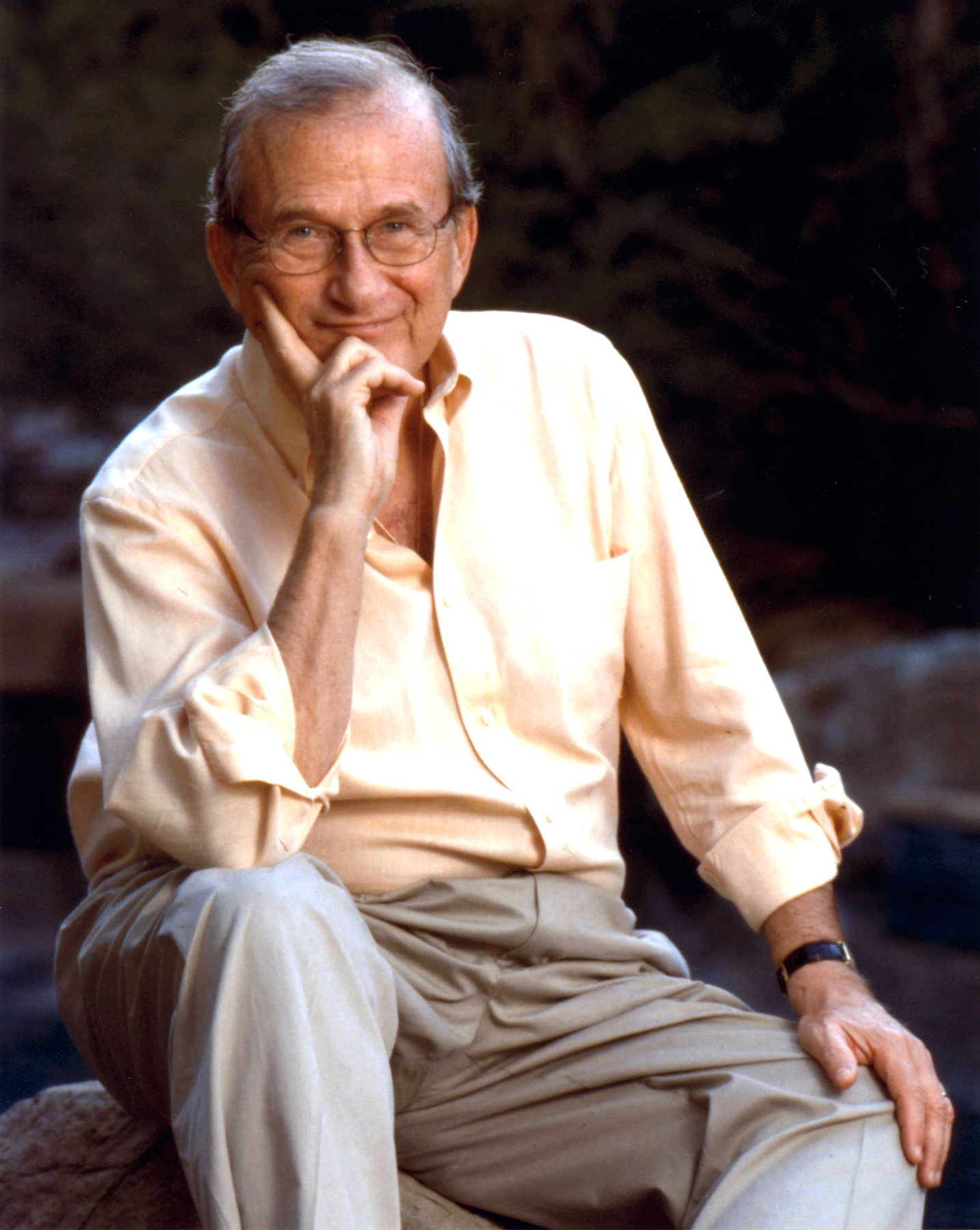
Larry Gelbart

Larry Gelbart died at his Beverly Hills home this morning after a long battle with cancer, he was 81. Gelbart was born in Chicago to Jewish immigrants Harry Gelbart ("a barber since his half of a childhood in Latvia") and Frieda Sturner, who hailed from Dombrowa, Poland.


During the 1940s, Gelbart began working as a writer at the age of sixteenfor Fanny Brice's radio show, and as a gag writer for Danny Thomas. After a brief stint in the army, where he wrote for Armed Forces Radio, Gelbart joined the writing staff of Duffy's Tavern, a popular radio program. He also wrote for Bob Hope, whom he followed to television. In the 1950s, he worked in television for Sid Caesar on Caesar's Hour, along with writers Neil Simon, Mel Brooks, Woody Allen, and Carl Reiner. Gelbart also wrote TV-movie Barbarians at the Gate.

Gelbart wrote the long-running Broadway musical farce A Funny Thing Happened on the Way to the Forum with Burt Shevelove and Stephen Sondheim. His Broadway credits include the musical City of Angels, which won him the Drama Desk Award for Outstanding Book of a Musical and an Edgar Award, and the Iran-contra satire Mastergate, as well as Sly Fox. In the early 1960s, he uttered the now-classic line, "If Hitler is alive, I hope he's out of town with a musical."

In 1962 and he collaborated with Shevelove on the screebnplay for The Wrong Box (1966), a British comedy film. Gelbart in 1982 co-wrote the Oscar-nominated screenplay for Tootsie. He also wrote the screenplays for Oh, God!, which starred George Burns, Blame It on Rio with Michael Caine and Demi Moore and the poorly-received 2000 film, Bedazzled with Elizabeth Hurley and Brendan Fraser.


In 1972, Gelbart was one of the main forces behind the creation of the television series M*A*S*H, writing and producing many episodes until leaving after the fourth season. As producer of M*A*S*H, Larry Gelbart provided numerous contributions to one of television's most innovative and socially aware sitcoms. But he has been a dynamic force in broadcasting for more than thirty years. Gelbart provided numerous innovations to an idea which had already made for a best-selling novel and box office hit. Recalling a Lenny Bruce bit on draft dodges, Gelbart created Corporal Klinger, a character who dressed in women's clothing in hopes of getting a "Section Eight" discharge. Written as a one-time character, Gelbart's Klinger, played by Jamie Farr, became central to the long-running series. When actor McLean Stevenson decided to leave the series, Gelbart was involved in the decision to "kill off" Stevenson's character, Colonel Henry Blake. This was the first time a series regular had met such a fate. Furthermore, Gelbart is credited with "The Interview" episode, an innovative script in which journalist Clete Roberts, playing himself, interviews the doctors of the M*A*S*H unit. Produced with a cold opening (no teaser, lead-in, or commercial), filmed in black and white, and shot in documentary style, it paved the way for the numerous innovations carried out by later M*A*S*H producers. After four seasons with M*A*S*H, Gelbart became worried he would grow repetitive and left the series.

Gelbart was a contributing blogger at The Huffington Post, and also was a regular participant on the alt.tv.mash newsgroup as "Elsig".

To Quote Mr. Gelbart:
On Television
“Today's audience knows more about what's on television than what's in life.”
“It was like electronic euthanasia.”
“Television is a weapon of mass distractrion.”
“If vaudeville had died, television was the box they put it in.”
On Comedy
“Most jokes state a bitter truth”
“One doesn't have a sense of humor. It has you.”

Goodnight Mr. Gelbart.

Stay Tuned

Tony Figueroa

Your Mental Sorbet: WKRP's Venus teaches the Atom

Here is Special Back to School "Mental Sorbet" that we could use to momentarily forget about those things that leave a bad taste in our mouths.

Venus Flytrap is played played by Tim Reid. In very popular episode Venus and the Man (originally called Venus Flytrap Explains the Atom), the station's cleaning woman, tells Venus that her son Arnold (Keny Long) is planning to drop out of high school, and Venus offers to talk to the boy. Arnold comes to the station to see Venus, and turns out to be the huge, muscular leader of a street gang. Venus has to figure out how to make him believe that education is worthwhile when Arnold is already making more money than he could at any "respectable" job. He explains to Arnold that everything in life is a matter of either "survival" or "conquest," and that Arnold, who is mostly interested in conquest, hates school because it has "conquered" him. Arnold admits that he hates the feeling of being weak and powerless that he gets when he can't understand something in school, but Venus offers to prove to him that it doesn't have to be that way: he bets that he can teach Arnold the basics of the atom in two minutes, and Arnold agrees to go back to school and finish out the year if he can.

In a memorable sequence, Venus explains the structure of the atom by pretending that the protons, neutrons and electrons are rival gangs competing for control of a neighborhood that consists of "block after block of nothing." Before Arnold realizes it, he is able to recite all the features of an atom. He then admits that it feels good to know something most other people don't, and Venus explains that the learning is itself a form of conquest. Arnold keeps his part of the bargain and goes back to school, but Venus warns Cora that the odds are against Arnold continuing in school after the year is out. The episode is also a moment of triumph for Venus, who proves himself as a teacher (a profession he failed at earlier) and earns the respect of a boy who had accused him of "sounding white" on the air.

Stay Tuned


Tony Figueroa

Tuesday, September 08, 2009

TV CONFIDENTIAL Aug. 24 edition


TV CONFIDENTIAL Aug. 24 edition, Hour 1: Emmy Forecast, The Dick Van Dyke Show and This Month in TV History
Ed and Frankie discuss the upcoming Emmy Awards telecast, David Krell remembers the orignal Dick Van Dyke Show, while Tony Figueroa covers a month's worth of milestones with This Week in TV History.<<>>


TV CONFIDENTIAL Aug. 24 edition: Hour 2 with guest Bob Mills
Ed and Frankie welcome television comedy writer Bob Mills, author of The Laugh Makers: A Behind the Scenes Tribute to Bob Hope's Incredible Gag Writers. Bob wrote for Bob Hope during the last 20 years of Hope’s career. His book not only looks fondly at the era of big-name television variety shows and slapstick sketch comedy, but provides insight into Hope's remarkable longevity as a performer.<<>>

Monday, September 07, 2009

This week in Television History: September 2009 PART I

Listen to me on TV CONFIDENTIAL with Ed Robertson and Frankie Montiforte Broadcast TONIGHT at 10pm ET, 7pm PT on Shokus Internet Radio. The program will then be repeated Tuesday through Sunday at the same time (10pm ET, 7pm PT) on Shokus Radio for the next two weeks, and then will be posted on line at our archives page at TVConfidential.net.
As always, the further we go back in Hollywood history, the more that fact and legend become intertwined. It's hard to say where the truth really lies.

September 1, 1922
Yvonne De Carlo, Canadian-born American film and television actress, dancer and singer was born. Her most prolific appearances in film came in the 1940s and 1950s and included her best-known film roles, such as Salome Where She Danced and The Ten Commandments, opposite Charlton Heston. In the 1960s, she gained a whole new generation of fans, playing "Lily Munster" on CBS television series The Munsters, opposite Fred Gwynne.

September 3, 1966
Popular TV sitcom The Adventures of Ozzie and Harriet airs its last episode after more than a decade on television. The sitcom focused on the comic antics of a young family based on the real-life family of show founders and stars Ozzie and Harriet Nelson.

The show premiered as a radio comedy in 1944 and ran for 10 years. Even before the radio show ended, a TV version launched in 1952; the television show ran until 1966. The Nelson's two sons, Ricky and David, played themselves on the TV version.

September 4, 1967
Gilligan's Island, The classic TV comedy about seven people stranded on a deserted island, airs its last episode.
The show starred:

Bob Denver as Gilligan, the bumbling, dimwitted, accident-prone crewman of the S.S. Minnow. None of the show's episodes ever specified Gilligan's full name, nor clearly indicated whether "Gilligan" was the character's first name or his last. On the DVD collection, series creator Sherwood Schwartz states that he preferred the full name of "Willie Gilligan" for the character. On Rescue from Gilligan's Island, the writers artfully dodge the recitation of Gilligan's full name, when the other names are announced.

Alan Hale, Jr. as Jonas Grumby, the "Skipper". A longtime actor in B-westerns and the lookalike son of Alan Hale, Sr., a legendary movie character actor, Hale so loved his role that, long after the show went off the air, he would still appear in character in his Los Angeles restaurant, Alan Hale's Lobster Barrel. Although the Skipper was a father figure to Gilligan, Hale was only 14 years older than Denver. It is alluded in one episode that Gilligan pushed the Skipper out of the way of a loose depth-charge when they were both serving in the United States Navy.

Jim Backus as Thurston Howell, III, the condescending millionaire. Backus was already a well-known actor when he took the part. He was perhaps best known as the voice of the cartoon character Mr. Magoo. He reused some of the voice inflections and mannerisms of Magoo in the role. He was well known for his ad-libs on the set.

Natalie Schafer as Eunice "Lovey" Wentworth Howell, Thurston's wife. Schafer had it written into her contract that there were to be no close-ups of her, perhaps due to her advanced age. Schafer was 63 when the pilot was shot although, reportedly, no one on the set or in the cast knew her real age, and she refused to divulge that information. Originally, she only accepted the role because the pilot was filmed on location in Hawaii. She looked at the job as nothing more than a free vacation, as she was convinced that a show this silly would "never go".

Tina Louise as Ginger Grant, the movie star. When regular shooting began, Louise clashed with the producers, because she believed that she was to be the main focus of the show (despite its title). Her character was originally written as a sarcastic and sharp-tongued temptress, but Louise argued that this was too extreme and refused to play it as written. A compromise was reached; Louise agreed to play her as a cross between Marilyn Monroe and Lucille Ball. The evening gowns and hair style used were designed to re-create the look of Myrna Loy. Louise continued to clash with producers and was the only cast member who refused to return for any of the TV movies that followed the series' cancellation, and the fourth season, which was later canceled to make room for Gunsmoke, saying that the role had destroyed her career as a serious actress. However, she did appear in a reunion of the cast on a late night TV talk show in 1988 and on an episode of Roseanne in 1995. In the first season, Ginger often wore gowns that looked as if they were tailored from S.S. Minnow tarps or similar ersatz cloth (some had the name of the vessel stenciled on them). Later on, she wore regular evening gowns with high heels, though it was never explained why she brought so many changes of clothing on a "three-hour tour".

Russell Johnson as Roy Hinkley (The Professor). Incongruously, "the Professor" was in fact a high school science teacher, not a university professor. In the first episode, the radio announcer described him as a research scientist and well-known Scoutmaster. Johnson stated that he had some difficulty remembering his more technically-oriented lines.

Dawn Wells as Mary Ann Summers. Wells was a former Miss Nevada when she auditioned for the role. Her competition included Raquel Welch and Pat Priest. She wrote The Gilligans Island Cookbook and starred as Lovey Howell in the musical stage adaption of the show.

Although the show ran for only three years, it aired in reruns for decades. The characters were resurrected in three TV movies.

September 5, 1929
George Robert "Bob" Newhart is born. Stand-up comedian and actor who is best known for playing psychologist Dr. Robert "Bob" Hartley on the popular 1970s sitcom The Bob Newhart Show and as innkeeper Dick Loudon on the popular 1980s sitcom Newhart was born.

Newhart's success in stand-up led to his own NBC variety show in 1961, The Bob Newhart Show. The show lasted only a single season but earned Newhart an Emmy Award nomination and a Peabody Award. The Peabody Board cited him as:
A person whose gentle satire and wry and irreverent wit waft a breath of fresh and bracing air through the stale and stuffy electronic corridors. A merry marauder, who looks less like St. George than a choirboy, Newhart has wounded, if not slain, many of the dragons that stalk our society. In a troubled and apprehensive world, Newhart has proved once again that laughter is the best medicine.

He also appeared in film roles such as Major Major in Catch-22, and Papa Elf in Elf. He provided the voice of Bernard in the Walt Disney animated films The Rescuers and The Rescuers Down Under.

September 6, 1947
Jane Therese Curtin actor, comedian and ignorant slut was born. First coming to prominence as an original cast member on Saturday Night Live in 1975, she would go on to win back-to-back Emmy Awards for Best Lead Actress in a Comedy Series on the 1980s sitcom Kate & Allie. Curtin later starred in the hit series 3rd Rock from the Sun. She recreated her SNL character for the film The Coneheads.


September 6, 1969
H.R. Pufnstuf the children's television series produced by Sid and Marty Krofft first aired.
It was the first Krofft live-action, life-size puppet, program.

The show centered on a shipwrecked boy named Jimmy (played by Jack Wild) and his friend, a talking flute named Freddy. Jimmy had been lured to the island with, by a magic boat that promised adventures across the sea. The boat was owned by a wicked witch named Wilhelmina W. Witchiepoo (played by Billie Hayes) who rode on a broomstick-like vehicle called the Vroom Broom. He washes ashore on Living Island, home of dancing trees and singing frogs. The Mayor of Living Island was a friendly and helpful dragon named H.R. Pufnstuf (voiced by the show's writer Lennie Weinrib with the costume worn by property master Albert F. Bentley).

The H.R. Pufnstuf character was originally created for the HemisFair '68 world's fair in 1968, where the Kroffts produced a show called Kaleidescope for the Coca-Cola pavilion. The character's name was Luther and he became the symbol of the fair.

September 7, 1950
Radio game show Truth or Consequences comes to television. The show required erring quiz show contestants to perform outrageous stunts as the consequence for wrong answers. As we mentioned in an earlier episode (This week in Television History: The Start of Something Big) the radio version of the show ran from 1940 to 1956. The TV version of the series launched on CBS in 1950, but the network dropped the show after only one season. In 1954, NBC revived the game show, running it in prime time until 1958.

Meanwhile, the network also created a daytime version of the show, hosted by Bob Barker, which ran from 1956 to 1965. NBC dropped the show altogether in 1965, but it continued as a syndicated series until 1974, with Barker staying on as host.

September 7, 1927
Philo Taylor Farnsworth (August 19, 1906March 11, 1971) best known for inventing the first completely electronic television.

In particular, he was the first to make a working electronic image pickup device (video camera tube), and the first to demonstrate an all-electronic television system to the public. Largely self-educated, Farnsworth grew up on farms in Utah and Idaho. As a boy he took an interest in electricity and electrons, and it's said he came up with the idea of electronically scanning images for transmission while he was in high school.
On September 7, 1927, Farnsworth's Image dissector camera tube transmitted its first image, a simple straight line, at his laboratory at 202 Green Street in San Francisco. The source of the image was a glass slide, backlit by an arc lamp. This was due to the lack of light sensitivity of the tube design, a problem Farnsworth never managed to resolve independently. On September 1, 1928, Farnsworth had developed the system sufficiently to hold a demonstration for the press—2 years after John Logie Baird had demonstrated his mechanical Television system in London. His backers had demanded to know when they would see dollars from the invention. The first image shown to them was a dollar sign. In 1929, the system was further improved by elimination of a motor-generator; the television system now had no mechanical moving parts. That year, Farnsworth transmitted the first live human images using his television system, including a three and a half-inch image of his wife, Pem—with her eyes closed because of the blinding light required.
Farnsworth spent the next decade arguing over patent rights in legal battles with David Sarnoff and engineer Vladimir Zworykin of RCA. In 1934 the U.S. Patent Office sided with Farnsworth, and in 1939 he sold his various patents to RCA. Although Farnsworth was awarded more than a hundred patents related to television, he did not become famous as "the inventor of television." Now it is generally agreed that the development of television involved many individuals, but it is also the consensus that Farnsworth deserves the lion's share of the credit.

To quote the Bicentennial Minute, "And that's the way it was".

Stay Tuned


Tony Figueroa

Saturday, September 05, 2009

William Schallert, Kay Kyser and More: This Week on TV CONFIDENTIAL

Character actor William Schallert, a familiar face (and voice) for anyone who’s grown up watching television, will be our special guest on the next edition of TV CONFIDENTIAL, premiering Monday, Sept. 7 at 10pm ET, 7pm PT on Shokus Internet Radio,with a rebroadcast Tuesday, Sept. 8 at 11pm ET, 8pm PT on Share-a-Vision Radio, KSAV.org. Though often remembered for his regular roles as Patty Duke’s dad, Dobie Gillis’ teacher or the Admiral on Get Smart, William Schallert has played a wide variety of characters on stage, screen and television, in comedies and in dramas, for more than 60 years, including recent appearances in such top shows as True Blood, According to Jim, How I Met Your Mother, Desperate Housewives and the HBO movie Recount. Along the way he has worked with some of the top names in the entertainment industry. We’ll be talking about that and more when Bill joins us in our second hour.

In our first hour, Andrew Lee Fielding will join us as we look back at the career of bandleader Kay Kyser. Andrew’s book, The Lucky Strike Papers, is a history of such early network TV variety programs as Your Hit Parade, The Freddy Martin Show and Kay Kyser’s College of Musical Knowledge (His mother, Sue Bennett, was a featured singer on the Kyser show, as well as other musical variety shows of that era).

Friday, September 04, 2009

Your Mental Sorbet: Archie Bunker Meets Sammy Davis Jr.

Here is another "Mental Sorbet" that we could use to momentarily forget about those things that leave a bad taste in our mouths.


Stay Tuned


Tony Figueroa

Monday, August 31, 2009

This week in Television History: August 2009 Part V

Listen to me on TV CONFIDENTIAL with Ed Robertson and Frankie Montiforte next week. We broadcast LIVE every other Monday at 10pm ET, 7pm PT on Shokus Internet Radio.
The program will then be repeated Tuesday through Sunday at the same time (10pm ET, 7pm PT) on Shokus Radio for the next two weeks, and then will be posted on line at our archives page at TVConfidential.net
As always, the further we go back in Hollywood history, the more that fact and legend become intertwined. It's hard to say where the truth really lies.

August 25, 1931
Regis Francis Xavier Philbin is born.


Media personality and occasional actor, known for fronting various talk and game shows. Appearing on television since the late 1950s. Philbin holds the Guinness World Record for the most time spent in front of a television camera. His trademarks include his excited manner, his New York Bronx accent, his wit, and irreverent ad-libs. He is most widely known for Live with Regis and Kelly, Who Wants to Be a Millionaire, Million Dollar Password, and for hosting the first season of America's Got Talent.


August 27, 1964
Comedian Gracie Allen, best known for her years of comic collaboration with husband George Burns, died.
Burns and Allen started performing a successful vaudeville act in the early 1920s and married in 1926. In 1932, they first appeared on the popular radio program The Guy Lombardo Show. Audiences loved Allen's gentle, ditzy character, and CBS launched a half-hour show, The Adventures of Gracie, in 1934. Renamed
The Burns and Allen Show in 1936, the radio show ran until 1950, achieving Top 10 ratings almost continually.


The pair launched a TV series that ran from 1950 to 1958, and they appeared in more than a dozen movies during their 35-year career together in what became one of the most successful and beloved comedy acts in history. Allen retired after a mild heart attack in 1958. After her death, Burns visited her grave once a month while continuing to work in TV, theater, nightclubs, and movies. He wrote many books, including Gracie: A Love Story, a tribute to his wife. Burns died in 1996 at the age of 100.


August 29, 1958
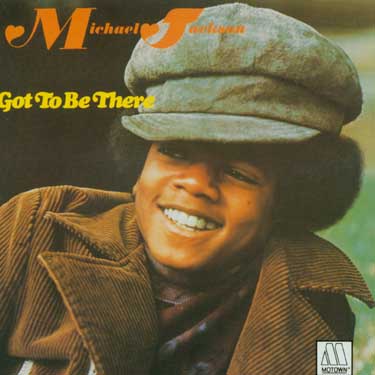
The King of Pop Michael Jackson is born in Gary, Indiana. Jackson began performing with his four brothers in the pop group the Jackson 5 when he was a child. The group scored its first No. 1 single in 1969, with "I Want You Back." By age 11, Jackson was appearing on TV, and by age 14 he had released his first solo album. A Jackson 5 TV cartoon series appeared in the early '70s, and in 1976 the Jackson family, including sister Janet Jackson, launched a TV variety show called The Jacksons that ran for one season. Throughout the 70s, media attention focused on Michael, who piped vocals in his high voice for "ABC," "I'll Be There," and many other Top 20 hits.
Jackson released several solo albums in the '70s, but his great breakthrough came in 1979 with Off the Wall. He became the first solo artist to score four Top 10 hits from one album, including "She's Out of My Life" and "Rock with You." His next album, Thriller (1983), became the biggest selling album up to that time, selling some 45 million copies around the world. This time, he scored seven Top 10 singles, and the album won eight Grammies. Although his next album, Bad (1987), sold only about half as many copies as Thriller, it was still a tremendous best-seller. In 1991, Jackson signed an unprecedented $65 million record deal with Sony. That year, he released Dangerous.
In the late 1980s and early 1990s, Jackson developed a reputation as an eccentric recluse. He moved to a 2,700-acre ranch called Neverland, which he outfitted with wild animals and a Ferris wheel. He underwent a facelift and nose job and was rumored to have lightened his skin through chemical treatment, though he claimed his increasing pallor was due to a skin disease. In 1993, scandal broke when Jackson was publicly accused of child molestation and underwent investigation. The case settled out of court. In 1994, Jackson married Lisa Marie Presley; the couple later divorced. Jackson married Deborah Rowe in 1996, and the couple had two sons, Prince and Paris, before divorcing in 1999.
On June 13, 2005, Jackson was acquitted of sexual molestation of a young boy, Gavin Arvizo, in criminal court.
Michael Jackson died on June 25, 2009, in Los Angeles, California, just weeks before a planned concert tour billed as his "comeback." He was 50 years old.


August 31, 1957
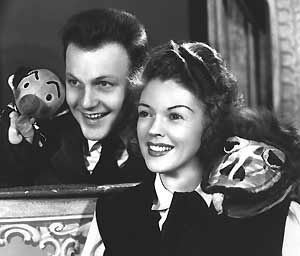
Children's show Kukla, Fran and Ollie airs its last episode on prime-time network TV. The show featured beloved puppets Kukla, Ollie (a dragon), and others.
Burr Tillstrom was the creator and only puppeteer on the show. Actress Fran Allison was the host. The show began as a local Chicago program and moved to NBC in 1948. It was one of the two most important series made in Chicago, along with Garroway at Large, during the city's brief period as an important production center for network programs in the late 1940s. After its network cancellation, PBS revived the series from 1969 to 1971.

To quote the Bicentennial Minute, "And that's the way it was".

Stay Tuned


Tony Figueroa

Friday, August 28, 2009

Your Mental Sorbet: The Making of a McDonalds Commercial 1973

Here is another "Mental Sorbet" that we could use to momentarily forget about those things that leave a bad taste in our mouths.

Behind the scenes with Ronald McDonald, the Hamburgler, and Mayor McCheese as a series of commercials are created. Also interviews with director Howard Morris.

You can watch the full video and learn more about the filmmakers here: http://mediaburn.org/Video-Preview.12...

I want to give special thanks to my friends Peter and Richard who both sent me this clip.

Stay Tuned


Tony Figueroa

Tuesday, August 25, 2009

TV Confidential Archives: Aug. 10, 2009

First hour
Author, journalist and educator Michael Davis joins Ed, Frankie and guest co-host Tony Figueroa in the first hour. Michael's book, Street Gang: The Complete History of Sesame Street, marks the 40th anniversary of the landmark children's television series.

Second hour
Then in the second hour, Emmy-winning writer, director and producer Joseph Dougherty (thirtysomething, Saving Grace) joins the guys for a conversation about new media, the current state of network television and other topics.