I represent the first generation who, when we were born, the television was now a permanent fixture in our homes. When I was born people had breakfast with Barbara Walters, dinner with Walter Cronkite, and slept with Johnny Carson.
Read the full "Pre-ramble"
Showing posts with label Archive of American Television. Show all posts
Showing posts with label Archive of American Television. Show all posts
I have loved hosting over the years, simply because I love working with people.
It's the perfect job.
-Wink Martindale
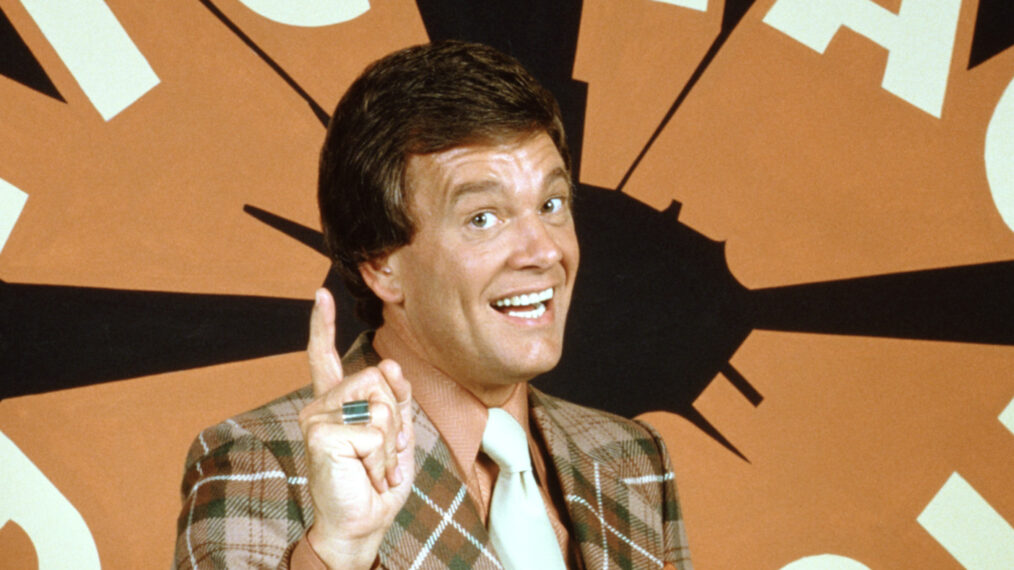
Winston Conrad "Wink" Martindale December 4, 1933 – April 15, 2025
Wink Martindale's first break into television was atWHBQ-TVin Memphis, as the host ofMars Patrol, a science-fiction themedchildren's television series. At his tenure with WHBQ, Martindale became the host of the TV showTeenage Dance Party, where his friendElvis Presleymade an appearance on June 16, 1956.Following Presley's death in 1977, Martindale aired a nationwide tribute radio special in his honor.
Martindale's first game-show hosting job was on the show What's This Song?, which he hosted for NBC (credited as "Win Martindale") from 1964 to 1965. From 1970 to 1971, he hosted a similar song-recognition game show, Words and Music, again on NBC. His first major success came in 1972, when he took the emcee position on a new CBS game show, Gambit. He spent four years hosting the original Gambit and later hosted a Las Vegas-based revival for 13 months in 1980–81.
The emcee role for which Martindale is most widely known is on Tic-Tac-Dough. He was tapped by Barry & Enright Productions to host the revived series in 1978 and stayed until 1985, presiding over one of the more popular game shows of the day. Coincidentally, Martindale died one day after the revival of Tic-Tac-Dough premiered on Game Show Network, which occurred on April 14, 2025. While hosting Tic-Tac-Dough, Martindale (along with fellow game show hosts Art James, Jack Clark, and Jim Perry) made a cameo appearance in the 1980 TV movie The Great American Traffic Jam in a scene where the quartet played golf. During that time, Martindale decided to branch out and form his own production company, Wink Martindale Enterprises, so he could develop and produce his own game shows. His first venture was Headline Chasers, a co-production with Merv Griffin that premiered in 1985; Martindale had left Tic-Tac-Dough to host his creation, but the show did not meet with any success and was cancelled after its only season in 1986. Martindale's next venture was more successful, as he created and, along with Barry & Enright, co-produced the Canadian game show Bumper Stumpers for Global Television Network and USA Network. This series aired on both American and Canadian television from 1987 until 1990. In 1986, he launched a partnership with producer Jerry Gilden, Martindale/Gilden Productions, and it started off with a game show development contract with CBS. In 1988, Martindale/Gilden Productions secured the licensing rights from Parker Brothers to develop game shows based on Parker-owned properties such as Boggle.
After hosting two short-lived Merrill Heatter-produced game shows (a revival of High Rollers and the Canadian The Last Word), Martindale went back into producing and launched The Great Getaway Game on Travel Channel in 1990. Two years after that program went off the air, Martindale teamed up with Bill Hillier and The Family Channel to produce a series of "interactive" game shows that put an emphasis on home viewers being able to play along from home and win prizes. Four series were commissioned and Martindale served as host for all four. The first to premiere, on June 7, 1993, was Trivial Pursuit, an adaptation of the popular trivia-based board game. On March 7, 1994, the list-based Shuffle and Boggle, another board-game adaptation, premiered and were very different from Trivial Pursuit, which was presented more in a traditional game-show style. These two programs, along with the Jumble-based show that replaced Shuffle on June 13, 1994, after its initial 14-week run ended, were played more like the interactive games for the home viewers that were the focus of the block. Except for Trivial Pursuit, none of the interactive games were much of a success; Boggle ended on November 18, 1994, while Jumble came to an end on December 30, 1994. Trivial Pursuit ended on the same day as Jumble, but continued to air in reruns for some time afterward, finally being removed from the Family Channel schedule in July 1995.
In June 1996, Martindale became host of Lifetime's highest-rated quiz show, Debt, which had debt-ridden contestants compete to try to eliminate their debts. Despite its popularity on cable, Debt was cancelled in 1998, for the reason more males were watching the show than females (the network's target audience). Martindale did not host another game show for over a decade.
Never thought acting was something you could make a living at. It wasn't until I was in college, and got a lead in a play, that I began to realize I might just be able to blunder into this profession.
-Ed Asner
When I go, I just wanna be stood outside in the garbage with my hat on.
-Lou Grant
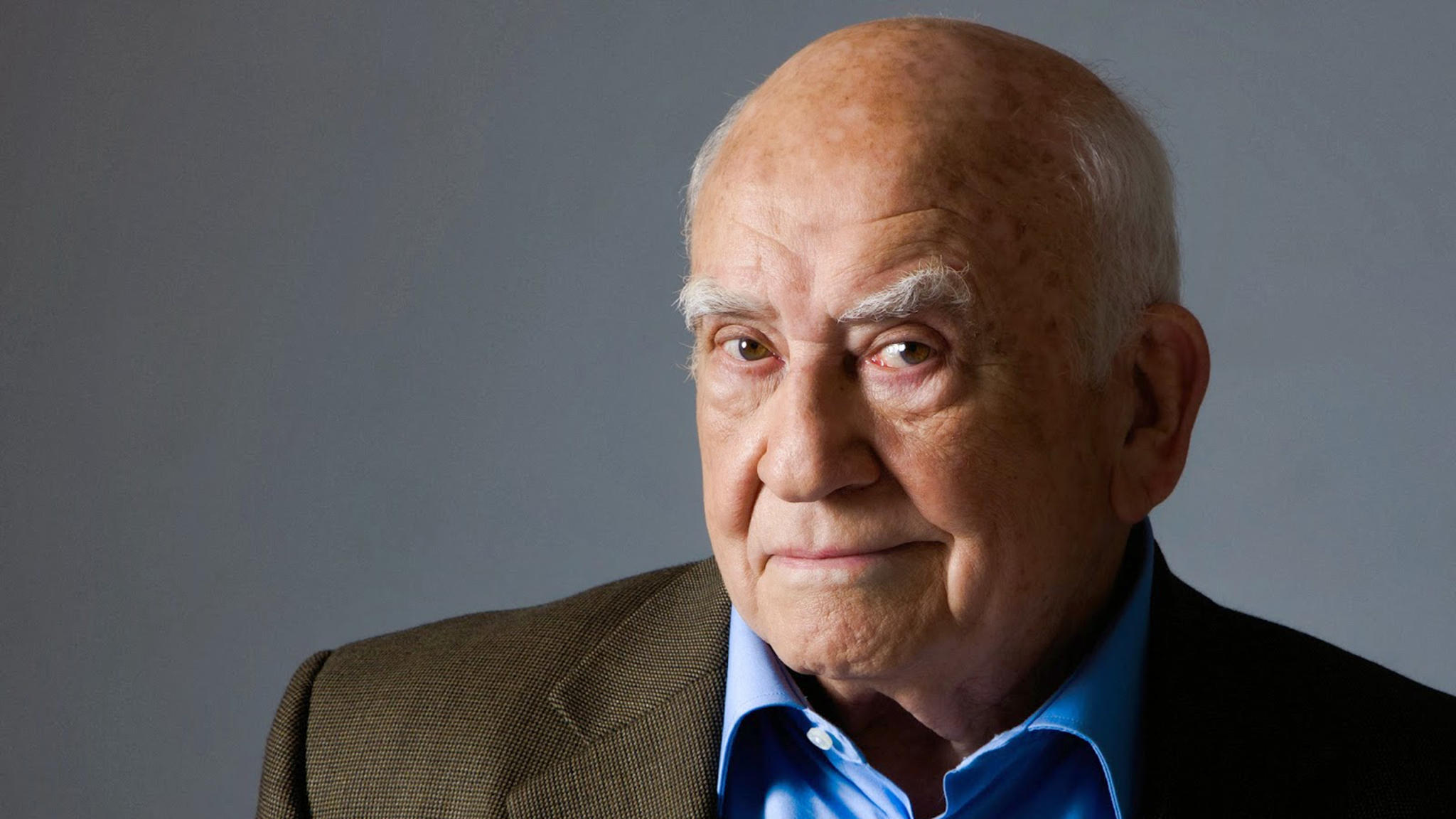
Eddie "Ed" Asner November 15, 1929 – August 29, 2021
Asner attended Wyandotte High School in Kansas City, Kansas, and the University of Chicago. He studied journalism in Chicago until a professor told him there was little money to be made in the profession. He quickly switched to drama, debuting as the martyred Thomas Becket in a campus production of T.S. Eliot's "Murder in the Cathedral." He eventually dropped out of school, going to work as a taxi driver, worked on the assembly line for General Motors, and other odd jobs before being drafted in the military in 1951. Asner served with the U.S. Army Signal Corps from 1951 to 1953 and appeared in plays that toured Army bases in Europe.
Following his military service, Asner helped found the Playwrights Theatre Company in Chicago, but left for New York City before members of that company regrouped as the Compass Players in the mid-1950s. He later made frequent guest appearances with the successor to Compass, The Second City. In New York City, Asner played Jonathan Jeremiah Peachum in the Off-Broadway revival of Threepenny Opera, scored his first Broadway role in Face of a Hero alongside Jack Lemmon in 1960, and began to make inroads as a television actor, having made his TV debut in 1957 on Studio One. In two notable performances on television, Asner played Detective Sgt. Thomas Siroleo in the 1963 episode of The Outer Limits titled "It Crawled Out of the Woodwork" and the reprehensible ex-premier Brynov in the 1965 Voyage to the Bottom of the Sea episode "The Exile." He made his film debut in 1962, in the Elvis Presley vehicle Kid Galahad. Before he landed his role with Mary Tyler Moore, Asner guest-starred in television series including the syndicatedcrime dramaDecoy, starring Beverly Garland, and Route 66 in 1962 (the episode titled "Welcome to the Wedding") as Custody Officer Lincoln Peers. He was cast on Jack Lord's ABC drama series Stoney Burke and in the series finale of CBS's The Reporter, starring Harry Guardino. He also appeared on Mr. Novak, Mission: Impossible, The Outer Limits, "The Fugitive", and The Invaders. Asner also played a minor character in children's television show W.I.T.C.H. (Napoleon – Cornelia's younger sister's cat).In 1963, Asner appeared as George Johnson on The Virginian in the episode "Echo of Another Day".Asner was best known for his character Lou Grant, who was first introduced on The Mary Tyler Moore Show in 1970. In 1977, after Moore's series ended, Asner's character was given his own show, Lou Grant (1977–82). In contrast to the Mary Tyler Moore series, a thirty-minute award-winning comedy about television journalism, the Lou Grant series was an hour-long award-winning drama about newspaper journalism (for his role as Grant, Asner was one of only two actors to win an Emmy Award for a sitcom and a drama for the same role, with the second being Uzo Aduba). In addition he made appearances as Lou Grant on two other shows: Rhoda and Roseanne. Other television series starring Asner in regular roles include Thunder Alley, The Bronx Zoo, and Studio 60 on the Sunset Strip. He also starred in one episode of the western series Dead Man's Gun (1997), as well as portraying art smuggler August March in an episode of the original Hawaii Five-O (1975) and reprised the role in the Hawaii Five-0 (2012) remake.[19] He also appeared as a veteran streetwise officer in an episode of the 1973 version of Police Story. Asner was acclaimed for his role in the ABC miniseries Roots, as Captain Davies, the morally conflicted captain of the Lord Ligonier, the slave ship that brought Kunta Kinte to America. The role earned Asner an Emmy Award, as did the similarly dark role of Axel Jordache in the miniseries Rich Man, Poor Man (1976). In contrast, he played a former pontiff in the lead role of Papa Giovanni: Ioannes XXIII (Pope John XXIII 2002), an Italian television film for RAI.Asner had an extensive voice acting career. In 1987, he played the eponymous character, George F. Babbitt, in the L.A. Classic Theatre Works' radio theatre production of Sinclair Lewis's novel, Babbitt. He also provided the voices for Joshua on Joshua and the Battle of Jericho (1986) for Hanna-Barbera, J. Jonah Jameson on the 1990s animated television series Spider-Man (1994–98); Hoggish Greedly on Captain Planet and the Planeteers (1990–95); Hudson on Gargoyles (1994–96); Jabba the Hutt on the radio version of Star Wars; Master Vrook from Star Wars: Knights of the Old Republic and its sequel; Roland Daggett on Batman: The Animated Series (1992–94); Cosgrove on Freakazoid!; Ed Wuncler on The Boondocks (2005–14); and Granny Goodness in various DC Comics animated series. Asner provided the voice of famed American orator Edward Everett in the 2017 documentary film The Gettysburg Address.Asner provided the voice of Carl Fredricksen in the Academy Award-winning Pixar film Up (2009). He received great critical praise for the role, with one critic going so far as to suggest "They should create a new category for this year's Academy Award for Best Vocal Acting in an Animated Film and name Asner as the first recipient." He appeared in the mid- to late-2000s decade in a recurring segment on The Tonight Show with Jay Leno, entitled "Does This Impress Ed Asner?" He was cast in a Country Music Television comedy pilot, Regular Joe.
Asner won more Emmy Awards for performing than any other male actor (seven, including five for the role of Lou Grant). In 1996, he was inducted into the Academy of Television Arts & Sciences Hall of Fame. In July 2010, Asner completed recording sessions for Shattered Hopes: The True Story of the Amityville Murders; a documentary on the 1974 DeFeo murders in Amityville, New York. Asner served as the narrator for the film, which covers a forensic analysis of the murders, the trial in which 23-year-old DeFeo son Ronald DeFeo Jr., was convicted of the killings, and the subsequent "haunting" story which is revealed to be a hoax. Also in 2010, Asner played the title role in FDR, a stage production about the life of Franklin Delano Roosevelt; he subsequently continued to tour the play throughout the country. In January 2011, Asner took a supporting role on CMT's first original sitcom Working Class. He made an appearance in the independent comedy feature Not Another B Movie, and had a role as billionaire Warren Buffett in HBO's economic drama Too Big to Fail (2011). In 2013, he guest starred as Mr. Finger in The Crazy Ones.
Asner also provided voice-over narration for many documentaries and films about social activism, including Tiger by the Tail, a documentary film detailing the efforts of Eric Mann and the Campaign to keep General Motors' Van Nuys assembly plant running. He also recorded for a public radio show and podcast, Playing On Air, appearing in Warren Leight's The Final Interrogation of Ceaucescu's Dog with Jesse Eisenberg, and Mike Reiss's New York Story. Asner was the voice-over narrator for the 2016 documentary Behind the Fear: The Hidden Story of HIV, directed by Nicole Zwiren, a controversial study on the AIDS debate.
A 2014 documentary titled My Friend Ed, directed by Sharon Baker, focused on the actor's life and career. It won Best Short Documentary at the New York City Independent Film Festival.
Beginning in 2016, Asner took on the role of Holocaust survivor Milton Salesman in Jeff Cohen's acclaimed play The Soap Myth in a reading at Lincoln Center's Bruno Walter Theatre in New York City.He subsequently toured for the next three years in "concert readings" of the play in more than a dozen cities across the United States. In 2019, PBS flagship station WNET filmed the concert reading at New York's Center for Jewish History for their All Arts channel. The performance, which is available for free, world-wide live-streaming, co-stars Tovah Feldshuh, Ned Eisenberg, and Liba Vaynberg.
From 2011 to 2015, Asner worked with filmmaker Nicole Zwiren on the feature-length documentary Behind the Fear which addresses HIV/AIDS denialism. The film was released in 2016 with Asner as the narrator.
Asner was on the Entertainment Board of Directors for The Survivor Mitzvah Project, a nonprofit organization dedicated to providing direct emergency aid to elderly and impoverished Holocaust survivors in Eastern Europe.Asner was a member of the Comic Book Legal Defense Fund, a free speech organization that is dedicated to protecting comic book creators and retailers from prosecutions based on content. He served as an advisor to the Rosenberg Fund for Children, an organization founded by the children of Julius and Ethel Rosenberg, which provides benefits for the children of political activists, and was a board member for the wildlife conservation organization Defenders of Wildlife. Asner also sat on the advisory board for Exceptional Minds, a non-profit school and a computer animation studio for young adults on the autism spectrum.
Asner was a supporter of Humane Borders, an organization based in Tucson, Arizona, which maintains water stations in the Sonoran desert for use by undocumented migrants, with the goal of preventing deaths by dehydration and exposure. He was the master of ceremonies at that organization's volunteer dinner in fall 2017.
In November 2017 The Ed Asner Family Center was founded by Asner's son, Matt Asner and daughter in law Navah Paskowitz Asner. The Center provides arts and vocational enrichments, counseling services, and support groups and camps to special needs individuals and their families.
On March 30, 2012, the Screen Actors Guild (SAG) and the American Federation of Television and Radio Artists (AFTRA) completed a merger of equals, forming a new union SAG-AFTRA. Asner was adamantly opposed to such a merger, arguing that the planned merger would destroy the SAG's health plan and disempower actors. Asner and a group of fellow actors and voice-actors, including Martin Sheen and Ed Harris, filed (but later dropped) a lawsuit against SAG president Ken Howard and several SAG vice presidents, seeking to have the merger overturned, and the two unions separated to their pre-merger organizations.
Asner was married to Nancy Sykes from 1959 to 1988. They had three children: twins Matthew and Liza, and Kate. In 1987, he had a son named Charles with Carol Jean Vogelman. Asner was a parent and a grandparent of a child with autism and was involved with the 501(c)(3)nonprofit organizationAutism Speaks. He also served as a board member and adviser for Aspiritech, a nonprofit organization that trains high-functioning autistic persons to test software and perform quality-assurance services to companies.
Asner became engaged to producer Cindy Gilmore in 1991. They married on August 2, 1998. She filed for legal separation on November 7, 2007. He filed for divorce in 2015.
Griffith was born in Mount Airy, North Carolina, the only child of Geneva (née Nunn) and Carl Lee Griffith. At a very young age,
Griffith had to live with relatives until his parents could afford to get a
home of their own. Without a crib or a bed, he slept in drawers for a few months. In
1929, when Griffith was three years old, his father took a job working as a carpenter and was finally able
to purchase a home in Mount Airy's "blue-collar" southside.
Like his mother, Griffith grew up listening to music.
His father instilled a sense of humor from old family stories. By the time he
entered school he was well aware that he was from what many considered the
"wrong side of the tracks". He was a shy student, but once he found a
way to make his peers laugh, he began to come out of his shell and come into
his own.
As a student at Mount Airy High School, Griffith
cultivated an interest in the arts, and he participated in the school's drama program. A growing love of music, particularly swing, would change his life.
Griffith was raised Baptist and
looked up to Ed Mickey, a minister at Grace Moravian Church, who led the brass band and taught him to
sing and play the trombone.
Mickey nurtured Griffith's talent throughout high school until graduation in
1944. Griffith was delighted when he was offered a role in The Lost Colony, a play still performed today on Roanoke Island. He performed as
a cast member of the play for several years, playing a variety of roles, until
he finally landed the role of Sir Walter Raleigh, the namesake of North Carolina's
capital.
After graduation, he taught English for a few years at
Goldsboro High School in Goldsboro, North Carolina, where he taught, among others, Carl Kasell. He also began to
write.
Griffith's early career was as a monologist, delivering long
stories such as What it Was, Was Football, which is told from the point of view of a rural backwoodsman trying to figure
out what was going on in a football game. Released as a single
in 1953 on the Colonial label, the monologue was a hit for Griffith, reaching
number nine on the charts in 1954.
In 1957 Griffith made his film début, starring in the film A Face in the Crowd. Although he plays a "country boy", this
country boy is manipulative and power-hungry, a drifter who becomes a television host and uses his
show as a gateway to political power. Co-starring Patricia Neal, Walter Matthau, Tony Franciosa, and Lee Remick (in her film début
as well), this now-classic film, directed by Elia Kazan, showcases
Griffith's powerful talents. Written by Budd Schulberg, and partly
based on the on-stage phoniness of Arthur Godfrey, the film
demonstrated, quite early on, the power that television can have upon the
masses. This prescient film was seldom run on television until the 1990s.
A 2005 DVD reissue of A Face in the Crowd includes a
mini-documentary on the film, with comments from Schulberg and
surviving cast members Griffith, Franciosa, and Neal. In his interview,
Griffith, revered for his wholesome image for decades, reveals a more complex
side of himself. He recalls Kazan prepping him to shoot his first scene with
Remick's teenaged baton twirler, who captivates Griffith's character on a trip to Arkansas. Griffith also
expresses his belief that the film was far more popular and respected in more
recent decades than it was when originally released.
Griffith's first appearance on television had been in
1955 in the one-hour teleplay of No Time for Sergeants on The United
States Steel Hour. That was the first of two appearances on that series.
Beginning in 1960, Griffith starred as Sheriff Andy Taylor in The Andy Griffith Show for the CBStelevision network. The show took place in the fictional town of Mayberry, North Carolina, where
Taylor, a widower, was the sheriff and town sage. The show was filmed at
Desilu Studios, with exteriors filmed at Forty Acres in Culver City, CA.
From 1960 to 1965, the show co-starred character actor and
comedian—and Griffith's longtime friend—Don Knotts in the role of DeputyBarney Fife, Taylor's best friend
and partner. He was also Taylor's cousin in the show. In the series première
episode, in a conversation between the two, Fife calls Taylor "Cousin
Andy", and Taylor calls Fife "Cousin Barney". The show also
starred child actorRon Howard (then known as Ronny
Howard), who played Taylor's only child, Opie Taylor.
It was an immediate hit. Although Griffith never
received a writing credit for the show, he worked on the development of every
script. While Knotts was frequently lauded and won multiple Emmy Awards for his comedic
performances (as did Frances Bavier in 1967), Griffith was never nominated for
an Emmy Award during the show's run.
In 1967, Griffith was under contract with CBS to do
one more season of the show. However, he decided to quit the show to pursue a
movie career and other projects. The series continued as Mayberry R.F.D., with Ken Berry starring as a widower
farmer and many of the regular
characters recurring, some regularly and some as guest appearances. Griffith
served as executive producer (according to Griffith, he came in once a week to
review the week's scripts and give input) and guest starred in five episodes
(the pilot episode involved his marriage to Helen Crump). He made final
appearances as Taylor in the 1986 reunion television film, Return to Mayberry, and in two reunion specials in 1993 and 2003.
After leaving his still-popular show in 1968, and
starting his own production company (Andy Griffith Enterprises) in 1972,
Griffith starred in less-successful television series such as Headmaster (1970), The New Andy Griffith Show (1971), Adams of Eagle Lake (1975) Salvage 1 (1979), and The
Yeagers (1980).
After spending time in rehabilitation for leg paralysis from Guillain–Barré syndrome in 1986, Griffith returned to television as the title
character, Ben Matlock, in the legal drama Matlock (1986–1995) on NBC and ABC. Matlock was a country lawyer in Atlanta, Georgia, who was known for his Southern drawl and for always winning his cases. Matlock also
starred unfamiliar actors (both of whom were childhood fans of Andy Griffith) Nancy Stafford as Michelle
Thomas (1987–1992) and Clarence Gilyard Jr. as Conrad
McMasters (1989–1993). By the end of its first season it was a ratings
powerhouse on Tuesday nights. Although the show was nominated for four Emmy
Awards, Griffith once again was never nominated. He did, however, win a
People's Choice Award in 1987 for his work as Matlock.
This show is mentioned on TV's longest animated show The Simpsons and is noted as Grandpa Simpson's favorite show as
well as Marge Simpson's mother Jacqueline Bouvier's as well.
Most of the TV movies Griffith starred in were also
attempts to launch a new series. 1974's Winter Kill launched the
short lived Adams of Eagle Lake which was canceled after only two episodes in 1975. A
year later, he starred as a New York City attorney for the DA's office in Street
Killing which also failed to launch a new series. Two television films for
NBC in 1977, The Girl in The Empty Grave
and Deadly Game, were attempts
for Griffith to launch a new series featuring him as Police Chief Abel Marsh, a
more hard-edged version of Andy Taylor; despite strong ratings for both films,
both were unsuccessful.
While appearing in television films and guest roles on
television series over the next 10 years, Griffith also appeared in two feature
films, both of which flopped at the box office. He co-starred with Jeff Bridges as a crusty old
1930s western actor in the comedy Hearts of the West (1975), and he appeared alongside Tom Berenger as a gay
villainous colonel and cattle baron in the
western comedy spoof Rustlers' Rhapsody (1985).
He also appeared as an attorney in the NBC mini-series
Fatal Vision in 1984, which
is considered a precursor to his role in Matlock.
Griffith stunned many unfamiliar with his A Face in
the Crowd work in the television film Crime of
Innocence (1985), where he
portrayed a callous judge who routinely sentenced juveniles to hard prison
time. He further stunned audiences with his role as a dangerous and mysterious
grandfather in 1995's Gramps,
co-starring the late John Ritter.
He also appeared as a comical villain in the spy movie spoof Spy Hard (1996) starring Leslie Nielsen. In the
television film A Holiday Romance (1999), Griffith played the role of "Jake
Peterson." In the film Daddy and Them (2001),
Griffith portrayed a patriarch of a dysfunctional southern family.
In the feature film Waitress (2007), Griffith played a crusty diner owner who takes a shine to Keri Russell's character. His
latest appearance was the leading role in the romantic comedy, independent filmPlay The Game (2009) as a lonely, widowed grandfather re-entering
the dating world after a 60-year hiatus. The cast of Play The Game also
included Rance Howard,
Ron Howard's real-life father, who made appearances in various supporting roles
on The Andy Griffith Show, and Clint Howard, Ron's younger
brother, who had the recurring role of Leon (the kid offering the ice
cream cone or peanut butter sandwich) on TAGS.
Griffith sang as part of some of his acting roles,
most notably in A Face In The Crowd and in many episodes of both The
Andy Griffith Show and Matlock. In addition to his recordings of
comic monologues in the 1950s, he made an album of upbeat country and gospel
tunes during the run of The Andy Griffith Show, which included a version
of the show's theme sung by Griffith under the title "The Fishin'
Hole". In recent years, he has recorded successful albums of classic Christianhymns for Sparrow Records. His most
successful was the 1996 release I Love to Tell the Story: 25 Timeless Hymns, which was certified platinum by the RIAA.


:max_bytes(150000):strip_icc():focal(599x0:601x2)/Wink-Martindale-03-041525-235df1cac0f64dcf9a2676703db5cb04.jpg)