I represent the first generation who, when we were born, the television was now a permanent fixture in our homes. When I was born people had breakfast with Barbara Walters, dinner with Walter Cronkite, and slept with Johnny Carson.
Read the full "Pre-ramble"
Cindy Mitchum Azbill, daughter of longtime film and TV character actor John Mitchum, will join us on the next edition of TV CONFIDENTIAL, airing July 6-11 at the following times and venues:
WROM Radio Detroit, MI Wednesday 7/6 8pm ET, 5pm PT 2am ET, 11pm PT Sunday 7/10 8pm ET, 5pm PT 2am ET, 11pm PT Click on the Listen Live button at WROMRadio.net
Share-a-Vision Radio San Francisco Bay Area Friday 7/8 7pm ET, 4pm PT 10pm ET, 7pm PT Click on the Listen Live button at KSAV.org Use the TuneIn app on your smartphone and type in KSAV or hear us on the KSAV channel on CX Radio Brazil
Indiana Talks Marion, IN Saturday 7/9 8pm ET, 5pm PT Sunday 7/10 6pm ET, 3pm PT Click on the player at IndianaTalks.com or use the TuneIn app on your smartphone and type in Indiana Talks
KSCO-AM 1080 San Jose, Santa Cruz and Salinas, CA KOMY-AM 1340 La Selva Beach and Watsonville, CA Sunday 7/10 9am ET, 6am PT Also streaming at KSCO.com
RadioSlot.com San Francisco, CA Monday 7/11 10pm ET, 7pm PT with replays Tuesday thru Friday at 10pm ET, 7pm PT Click on the Talk Slot button at RadioSlot.com
The younger brother of screen legend Robert Mitchum, John Mitchum was an accomplished character actor in his own right who appeared in sixty films and more than 800 television episodes in the course of his 60-year career, including such classic shows as The Twilight Zone, F Troop, Bewitched, Perry Mason, Batman, Maverick and The Rockford Files. He was a frequent co-star of John Wayne and Clint Eastwood (among others), while Robert Fuller once said that he shot John Mitchum [on film] “more than anyone else in Hollywood.”
What you may not know is that John Mitchum was also an accomplished singer, songwriter and poet who not only wrote the lyrics for America: Why I Love Her (a spoken-word album that was also the only album ever recorded by John Wayne), but collaborated with Dan Blocker on the album Our Land, Our Heritage, as well as wrote such songs as “Ode to a Mule,” a tribute to Ruth (Festus’ mule on Gunsmoke) that was eventually recorded by Ken Curtis (Festus on Gunsmoke).
John Mitchum died in 2001, but his accomplishments as a poet and songwriter will be honored as part of two events coming up in September―one of which is the release of The John (The Humble) Mitchum Legacy CD, a two-disc CD set featuring fifty recordings of Mitchum’s poetry. John’s daughter, Cindy Mitchum Azbill, is the producer of The John (The Humble) Mitchum Legacy CD; she will share some memories of her dad when she joins us in our second hour.
The John (The Humble) Mitchum Legacy CD features fifty recordings of such stars as Robert Duvall, James Drury, Ernest Borgnine, Andrew Prine, Wilford Brimley, Randy Boone, Morgan Woodward, James Hampton, Robert Fuller, Ann Rutherford, Dick Van Patten, Denny Miller, and The Sons of the Pioneers, all recording John’s poems or singing a song. Nearly all of the contributors knew and/or worked with John Mitchum one way or another. The John (The Humble) Mitchum LegacyCD is available as a two-disc CD set through Mitchum Media Productions for $35 (including shipping). To pre-order, email djw7749@yahoo.com.
If you listen to us in Southern California (or plan on being in Southern California during Labor Day Weekend), there will be an official CD release party on Sunday, Sept. 4 at Paramount State Park in Los Angeles. The event will feature many of the celebrities who appear on the John (The Humble) Mitchum Legacy CD. Tickets for the Sunday, Sept. 4 event are $150 (which includes a signed CD) or $100 (without CD). Space is limited. For more information on the Sept. 4 CD party, email mitchummedia@gmail.com.
The first hour of this week’s show will include This Week in TV History, our DVD report, plus a surprise feature.
If you listen to TV CONFIDENTIAL, and like what you’ve heard, please consider supporting our efforts by becoming a patron of our show through Patreon. For as little as a dollar a month, you will help offset the costs of production and receive some cool rewards. For more information, please visit www.Patreon.com/tvconfidential... and thanks!
ever had any unpleasant encounters with fans or autograph collectors.
I guess I just attract the mature, respectful fan.
- Noel Neill
Noel Neill died yesterday at her home in Tucson, Ariz., after a long illness. She was born Noel Darleen Neill was born in Minneapolis, Minnesota, the daughter of Mr. and Mrs. David Neill; her father was a journalist, and her mother a dancer on the stage. When she was 4 years old, she enrolled at "a school for aspiring performers." While still in her teens, "she danced, sang and even played the banjo at county fairs throughout the midwest." She graduated from high school in 1938. She earned her first money by writing articles for Women's Wear Daily.
In her teens, she was a popular photographic model. Betty Grable's pin-up was number one among GIs during World War II, and Neill was ranked number 2.
Signing a contract with Paramount Pictures led to appearances in many of the studio's feature films and short subjects. In the mid-1940s, Noel had a leading role in one of Monogram Pictures' wayward-youth melodramas, and she became a familiar face in Monogram features for the next several years, especially in the recurring role of Betty Rogers. She appeared in the last of the original Charlie Chan movies, Sky Dragon (1949), and also played damsels in distress in Monogram Westerns and Republic Pictures serials. Overall, Neill appeared in more than 40 films.
Neill sang with Bob Crosby and his orchestra. She also sang at the Del Mar Turf Club, which was owned by Bing Crosby.
In 1945, producer Sam Katzman gave Noel Neill the recurring role of Betty Rogers, aggressive reporter for a high-school newspaper, in his series of "Teen Agers" musical comedies, beginning with Junior Prom in 1946. When Katzman was casting his Superman serial for Columbia Pictures, he remembered Noel Neill's newshawk portrayals and signed her to play Lois Lane. She played the role in the film serials Superman (1948) and Atom Man vs. Superman (1950) with Kirk Alynportraying Superman/Clark Kent.
When Adventures of Superman came to television in 1951, veteran movie actors George Reeves and Phyllis Coates took the leading roles for the first season. By the time the series found a sponsor and a network time slot, Coates had committed herself to another production, so the producers called on Noel Neill, who had played Lois Lane in the movies. She continued in the role for five seasons until the series went off the air in 1958. She was scheduled to appear in the seventh season with co-star Jack Larson in 1960, but after Reeves's tragic and sudden death, the seventh season was cancelled, officially ending the show.
While Phyllis Coates generally distanced herself from the role, Neill embraced her association with Lois Lane, giving frequent talks on college campuses during the 1970s, when interest in the series was revived, endearing herself to audiences with her warmth and humor.
Neill has continued to appear in Superman-related productions. She originated the role of Lois Lane's mother, Ellen (alternatively, Ella) Lane, in a cameo for the 1978 film Superman, with Kirk Alyn as Lois' father, Sam Lane -- as was the case in reverse with the role of Lois in 1951, Phyllis Coates would later succeed Neill in the role of Ella in Lois & Clark: The New Adventures of Superman; Lois & Clark star Teri Hatcher continued the tradition when she made a guest appearance on Smallville as Ella Lane. In an episode of the TV series Superboy, Neill appeared alongside her former cast-mate Jack Larson, who had played Jimmy Olsen on TV.
In 2003, an authorized biography of Neill was published. It was entitled Truth, Justice, & The American Way: The Life And Times Of Noel Neill, The Original Lois Lane by Larry Thomas Ward (Nicholas Lawrence Books, softcover; ISBN 0-9729466-0-8). A limited-edition, expanded version of the book was released in 2006. Ward later wrote another book, Beyond Lois Lane (Nicholas Lawrence Books, hardcover, ISBN 978-09729466-1-2) in 2007 which focused on Neill's other acting work and modeling work presented in an array of rare publicity stills, studio press releases, film reviews, newspaper commentaries, and candid photographs.
Neill and Jack Larson donated their time to record commentaries for the DVD releases of the Superman TV episodes. On the documentary Look, Up in the Sky: The Amazing Story of Superman, Neill remarked that a frequent question she would get from children was, "Why don't you know that Clark Kent was Superman, just wearing a pair of those darn eyeglasses?" She replied to the children (and later to college audiences), "I don't want to lose my job!"
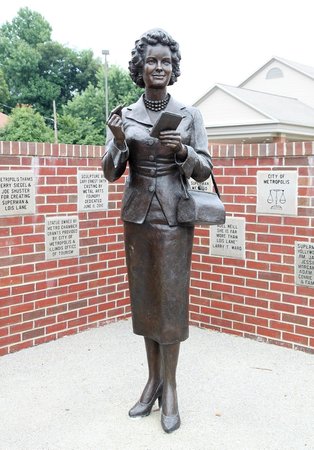
On June 15, 2010, the southern Illinois city of Metropolis (the city that calls itself the "official home of Superman"), unveiled a statue of Lois Lane. The Lois Lane statue is modelled on Noel Neill. Neill stated that she was honored to be memorialized with the statue.
As always, the further we go back in Hollywood history, the more that fact and legend become intertwined. It's hard to say where the truth really lies.
July 4, 1976
The Bicentennial Minute on was narrated by First Lady Betty Ford.
From July 4, 1976, here is some coverage of some Bicentennial events from ABC News and Harry Reasoner, beginning at 1 PM EST
This psychedelic cartoon was produced by the U.S. Government with taxpayer dollars in 1976 to mark two hundred years of independence.
Of course we cant forget "Fireworks" is a Schoolhouse Rock! segment, featuring a song of the same title written by Lynn Ahrens.
that we could use to momentarily forget about those things that leave a bad taste in our mouths.
Charlie's Angels careen onto the Venice Beach scene to solve a roller-disco kidnapping! Ed Begley, Jr. and Rene Auberjonois guest star.
On a slight personal note:
Some scenes were shot at Flipper's Roller Boogie Palace. It was only open for two years. This was where all the cool kids hung out and I spent many hours there. My friends and I missed that place for many years.
Chris Korman will join us for Part 2 of our tribute to actor Harvey Korman on the next edition of TV CONFIDENTIAL, airing June 29-July 4 at the following times and venues:
WROM Radio
Detroit, MI
Wednesday 6/29
8pm ET, 5pm PT
2am ET, 11pm PT
Sunday 7/3
8pm ET, 5pm PT
2am ET, 11pm PT
Click on the Listen Live button at WROMRadio.net
Share-a-Vision Radio
San Francisco Bay Area
Friday 7/1
7pm ET, 4pm PT
10pm ET, 7pm PT
Click on the Listen Live button at KSAV.org
Use the TuneIn app on your smartphone and type in KSAV
or hear us on the KSAV channel on CX Radio Brazil
Indiana Talks
Marion, IN
Saturday 7/2
8pm ET, 5pm PT
Sunday 7/3
6pm ET, 3pm PT
Click on the player at IndianaTalks.com
or use the TuneIn app on your smartphone and type in Indiana Talks
KSCO-AM 1080
San Jose, Santa Cruz and Salinas, CA KOMY-AM 1340
La Selva Beach and Watsonville, CA
Sunday 7/3
9am ET, 6am PT
Also streaming at KSCO.com
RadioSlot.com
San Francisco, CA
Monday 7/4
10pm ET, 7pm PT
with replays Tuesday thru Friday at 10pm ET, 7pm PT
Click on the Talk Slot button at RadioSlot.com
Chris Korman returns this week for Part 2 of our conversation about the life and career of his father, actor/comedian Harvey Korman. While everyone knows Harvey Korman as one of the stars of The Carol Burnett Show, he was also a gifted teacher and a mentor to many young actors and comedians (including John Ritter and Garry Shandling), as well as a loving father who instilled a lot of wisdom and life lessons that Chris still lives by today.
We’ll talk about Harvey’s work with Mel Brooks, how he approached the various characters he played every week The Carol Burnett Show, and a few other topics when Chris Korman joins us in our second hour.
The first hour of this week’s show will include a look at the life and legacy of Muhammad Ali as part of an expanded edition of This Week in TV History. Plus: A brand new DVD report.
If you listen to TV CONFIDENTIAL, and like what you’ve heard, please consider supporting our efforts by becoming a patron of our show through Patreon. For as little as a dollar a month, you will help offset the costs of production and receive some cool rewards. For more information, please visit www.Patreon.com/tvconfidential... and thanks!
As always, the further we go back in Hollywood history, the more that fact and legend become intertwined. It's hard to say where the truth really lies.
June 27, 1966
Dark Shadows, premiered on ABC
The gothicsoap opera that originally aired weekdays on the ABC television network, from June 27, 1966, to April 2, 1971. The show was created by Dan Curtis. The story bible, which was written by Art Wallace, does not mention any supernatural elements. It was unprecedented in daytime television when ghosts were introduced about six months after it began.
Dark Shadows was distinguished by its vividly melodramatic performances, atmospheric interiors, memorable storylines, numerous dramatic plot twists, unusually adventurous music score, and broad and epic cosmos of characters and heroic adventures. Now regarded as something of a classic, it continues to enjoy an intense cult following. Although the original series ran for only five years, its scheduling as a daily daytime drama allowed it to amass more single episodes during its run (1,225) than most other science-fiction/fantasy genre series produced for English-language television, including Doctor Who and the entire Star Trek television franchise. Only the paranormal soap opera Passions, with a total of 2,231 episodes, has more.
Directors Tim Burton and Quentin Tarantino, and pop singer Madonna have publicly stated they are fans of the series. As a child, Johnny Depp was so obsessed with Barnabas Collins that he wanted to be him; he collaborated with Tim Burton on a theatrical film adaptation which opened in 2012, in which he plays Barnabas.
In 2004 and 2007, Dark Shadows was ranked #19 and #23 on TV Guide's Top Cult Shows Ever.
June 28, 1926 Mel Brooks is born Melvin James Kaminsky
He is known as a creator of broad film farces and comic parodies. Brooks began his career as a comic and a writer for the early TV variety show Your Show of Shows. He became well known as part of the comedy duo with Carl Reiner in the comedy skit, The 2000 Year Old Man.
Radner was born in Detroit, Michigan, the daughter of Jewish parents Henrietta (née Dworkin), a legal
secretary, and Herman Radner, a businessman. She grew up in Detroit with a
nanny, Elizabeth Clementine Gillies, whom she called "Dibby" (and on
whom she based her famous character Emily Litella), and an older brother named Michael. She attended the University
Liggett School in Grosse Pointe.
Radner wrote in her autobiography It's Always Something that toward the
end of her life she, "coped with stress by having every possible eating
disorder from the time I was nine years old. I have weighed as much as 160
pounds and as little as 93. When I was a kid, I overate constantly. My weight
distressed my mother and she took me to a doctor who put me on Dexedrine
diet pills when I was ten years old."
Radner was close to her father, who operated Detroit's
Seville Hotel, where many nightclub performers and actors stayed while
performing in the city. He took her on trips to New York to see Broadway
shows. As Radner wrote in It's Always Something, when she was twelve her
father developed a brain tumor, and the symptoms began so suddenly that he told people
his eyeglasses were too tight. Within days he was bedridden and unable to
communicate, and he remained in that condition until his death two years later.
Radner enrolled at the University of
Michigan at Ann Arbor,
where she made a lifelong platonic friend of fellow student David Saltman, who
wrote a biography of her after her death. Radner joined Saltman and his
girlfriend on a trip to Paris in the summer of 1966. Saltman wrote that he was so
affectionate with his girlfriend that they left Radner to fend for herself
during much of their sightseeing. Twenty years later, when many details of
Radner's eating disorder were reported in a bestselling book about Saturday
Night Live by Doug Hill and Jeff Weingrad, Saltman realized she had been in
a quandary over the French cuisine, but had no one with whom she could discuss her
situation.
In Ann Arbor,
Radner began her broadcasting career as the weather girl for college radio
station WCBN, but
dropped out in her senior year to follow her then-boyfriend, a Canadian
sculptor named Jeffrey
Rubinoff, to Toronto,
Canada. In Toronto, she made her professional acting debut in the 1972
production of Godspell with future stars Eugene Levy,
Andrea Martin, Victor Garber
and Martin Short. Afterward, Radner joined the Toronto Second City
comedy troupe.
Radner gained name recognition as one of the original
"Not
Ready for Prime Time Players", a
member of the freshman group on the first season of Saturday Night Live.
She was the first performer cast for the show. Between 1975 and 1980, she
created such characters as obnoxious personal advice expert Roseanne
Roseannadanna, "Baba Wawa",
a parody of Barbara Walters, and Emily Litella,
an elderly hearing-impaired woman who gave angry and misinformed editorial
replies on "Weekend Update". Radner also parodied such celebrities as Lucille Ball,
Patti Smith,
and Olga Korbut in SNL sketches. She won an Emmy Award
in 1978 for her work on SNL.
Radner battled bulimia
during her time on the show. She once told a reporter that she had thrown up in
every toilet in Rockefeller Center. She had a relationship with SNL castmate Bill Murray,
with whom she had also worked at the National Lampoon, that ended badly.
Few details of their relationship or its end were made public at the time. When
Radner wrote It's Always Something, this is the only reference she made
to Murray in the entire book: "All the guys [in the National Lampoon
group of writers and performers] liked to have me around because I would laugh
at them till I peed in my pants and tears rolled out of my eyes. We worked
together for a couple of years creating The National Lampoon Show,
writing The National Lampoon Radio Hour, and even working on stuff for
the magazine. Bill Murray joined the show and Richard Belzer ..."
According to Bill Murray, last time Radner and he saw each other was at a party
thrown by Laraine Newman. Hearing she was leaving, Murray and Dan Akroyd
carried her around and around the house party, repeatedly saying goodbye to
everyone, and since all the guests were comedians, they all did comedy bits
with her, over and over.
Alan Zweibel,
who co-created the Roseanne Roseannadanna character and co-wrote all of
Roseanne's dialogue, recalled that Radner, one of three original SNL cast
members who stayed away from cocaine,
chastised him for using it.
Radner had mixed emotions about the fans and strangers
who recognized her in public. She sometimes became "angry when she was
approached, but upset when she wasn't."
In 1979, Radner appeared on Broadway in
a successful one-woman show entitled Gilda Radner - Live From New York.
The show featured material that was racier than what NBC censors allowed Saturday
Night Live to put on the television airwaves, such as the song Let's
Talk Dirty to the Animals. In 1979, shortly before Radner began her final
season on Saturday Night Live, her Broadway show was filmed by Mike Nichols
under the title Gilda Live!, co-starring Paul Shaffer
and Don Novello, and was released to theaters nationwide in 1980 with
poor results. A soundtrack album was also unsuccessful. During the production, she met
her first husband, G. E. Smith, a musician who also worked on the show. They were
married in a civil ceremony in 1980.
In the fall of 1980, after all original SNL
cast members departed from the show, Radner starred opposite Sam Waterston
in the Jean Kerr
play, Lunch Hour, as a pair whose spouses are having an affair, and in
response invent one of their own, consisting of trysts on their lunch hour. The
show ran for over seven months.
Radner met actor Gene Wilder
on the set of the Sidney Poitier film Hanky Panky, when the two appeared together. She described their
first meeting as "love at first sight." She was unable to resist her
attraction to Wilder as her marriage to guitarist G. E. Smith
deteriorated. Radner went on to make a second film, The
Woman in Red, released in 1984
with Wilder and their relationship grew. The two were married on September 18,
1984, in St. Tropez. The pair made a third film together, Haunted Honeymoon, released in 1986.
After experiencing severe fatigue and suffering from
pain in her upper legs on the set of Haunted Honeymoon in the United Kingdom
in 1985, Radner sought medical treatment. After 10 months of false diagnoses,
she learned that she had ovarian cancer
on October 21, 1986. She suffered extreme physical and emotional pain during chemotherapy
and radiotherapy treatment.
After Radner was told she had gone into remission, she wrote It's Always Something (a
catchphrase of her character Roseanne
Roseannadanna), which included many
details of her struggle with the illness. Life
magazine did a March 1988 cover story on her illness, entitled "Gilda
Radner's Answer to Cancer: Healing the Body with Mind and Heart." In 1988,
Radner guest-starred on It's
Garry Shandling's Show on Showtime, to great critical acclaim. When Shandling asked her
why she had not been seen in public for a while, she replied, "Oh, I had
cancer. What did you have?" Shandling's reply: "A very bad
series of career moves... which, by the way, there's no cure for
whatsoever." She also repeated on-camera Mark Twain's
apocryphal saying, "Reports of my death are greatly exaggerated."
Radner planned to host an episode of Saturday Night Livethat
year, but a writers'
strike caused the cancellation of the
rest of the network television season.
In the fall of 1988, after biopsies and a saline wash
of her abdomen showed no signs of cancer, Radner was put on a maintenance
chemotherapy treatment to prolong her remission, but later that same year, she
learned that her cancer had returned after a routine blood test showed her
levels of the tumor marker CA-125 had increased. She was admitted to Cedars-Sinai
Medical Center in Los Angeles on May
17, 1989 for a CAT scan. Despite being fearful that she would never wake up,
she was given a sedative but passed into a coma during the scan. She did not
regain consciousness and died three days later from ovarian cancer
at 6:20 am on May 20, 1989; Wilder was at her side.
Gene Wilder had this to say about her death:
She went in for the scan – but the people there could
not keep her on the gurney. She was raving like a crazed woman – she knew they
would give her morphine and was afraid she’d never regain consciousness. She
kept getting off the cart as they were wheeling her out. Finally three people
were holding her gently and saying, "Come on Gilda. We’re just going to go
down and come back up." She kept saying, "Get me out, get me
out!" She’d look at me and beg me, "Help me out of here. I’ve got to
get out of here." And I’d tell her, "You’re okay honey. I know. I
know." They sedated her, and when she came back, she remained unconscious
for three days. I stayed at her side late into the night, sometimes sleeping
over. Finally a doctor told me to go home and get some sleep. At 4 am on
Saturday, I heard a pounding on my door. It was an old friend, a surgeon, who
told me, "Come on. It's time to go." When I got there, a night nurse,
whom I still want to thank, had washed Gilda and taken out all the tubes. She
put a pretty yellow barrette in her hair. She looked like an angel. So
peaceful. She was still alive, and as she lay there, I kissed her. But then her
breathing became irregular, and there were long gasps and little gasps. Two
hours after I arrived, Gilda was gone. While she was conscious, I never said
goodbye.
Her funeral was held in Connecticut on May 24, 1989.
In lieu of flowers, her family requested that donations be sent to The Wellness
Community. Her gravestone reads:
"Gilda Radner Wilder - Comedienne - Ballerina 1946-1989". She was
interred at Long Ridge Union Cemetery in Stamford,
Connecticut.
By coincidence, the news of her death broke on early
Saturday afternoon (Eastern Daylight Time), while Steve Martin
was rehearsing as the guest host for that night's season finale of Saturday
Night Live. Saturday Night Live personnel—including Lorne Michaels,
Phil Hartman,
and Mike Myers
(who had, in his own words, "fallen in love" with Radner after
playing her son in a BC Hydro commercial on Canadian television and considered her
the reason he wanted to be on SNL)—had not known she was so close to
death. They scrapped Martin's planned opening monologue and instead, Martin, in
tears, introduced a video clip of a 1978 sketch in which he and Radner parodied
Fred Astaire
and Cyd Charisse in a well-known dance routine from The Band Wagon.
Wilder established the Gilda Radner Ovarian Detection
Center at Cedars-Sinai to screen high-risk candidates (such as women of Ashkenazi Jewish descent) and run basic diagnostic tests. He testified before
a Congressional committee that Radner's condition had been misdiagnosed and
that if doctors had inquired more deeply into her family background they would
have learned that her grandmother, aunt and cousin had all died of ovarian
cancer, and therefore they might have attacked the disease earlier.
Radner's death from ovarian cancer helped to raise
awareness of early detection and the connection to familial epidemiology. The
media attention in the two years after Radner's death led to registry of 450
families with familial ovarian cancer at the Familial Ovarian Cancer Registry,
a research database registry at the Roswell
Park Cancer Institute in Buffalo, New
York. The registry was later renamed the Gilda Radner Familial Ovarian Cancer
Registry (GRFOCR). In 1996, Gene Wilder and Registry founder Steven Piver, one
of Radner's medical consultants, published Gilda's Disease: Sharing Personal
Experiences and a Medical Perspective on Ovarian Cancer. Through Wilder's
efforts and those of others, awareness of ovarian cancer and its symptoms has
continued to grow.
In 1991, Gilda's Club,
a network of affiliate clubhouses where people living with cancer, their
friends and families, can meet to learn how to live with cancer, was founded.
The center was named for a quip from Radner, who said, "Having cancer gave
me membership in an elite club I'd rather not belong to." Many Gilda's
Clubs have opened across the United States and in Canada. In 2009, Gilda's Club
merged with another similar institution, The Wellness Community, under the new
name of Cancer Support Community, which was legally adopted in 2011.
In 2002, the ABC television network aired a television movie about her
life: Gilda Radner: It's Always Something, starring Jami Gertz
as Radner.
In 2007 she was featured in the film Making Trouble,
a tribute to female Jewish comedians, produced by the Jewish Women’s
Archive.
Radner won an Emmy Award
for "Outstanding Continuing or Single Performance by a Supporting Actress
in Variety or Music" for her performance on Saturday Night Live in 1977. She posthumously won a Grammy for "Best Spoken
Word Or Non-Musical Recording" in 1990.
In 1992, Radner was inducted into the Michigan
Women's Hall of Fame for her
achievements in arts and entertainment. On June 27, 2003, she received a star
on the Hollywood Walk of
Fame at 6801 Hollywood Blvd.
Parts of West Houston Street in New York City, Lombard
Street in Toronto, and Chester Street in White Plains, New York have been
renamed "Gilda Radner Way."
June 28, 1951
Amos ’n’
Andy moved to CBS-TV from radio.
Amos and Andy began as one of the first radio comedy
series, written and voiced by Freeman
Gosden and Charles Correll and originating from station WMAQ in
Chicago. After
the program was first broadcast in 1928, it grew to become a huge influence on
radio series that followed. The show ran as a nightly radio serial from 1928
until 1943, as a weekly situation comedy from 1943 until 1955, and as a nightly
disc-jockey program from 1954 until 1960. A television adaptation ran on CBS-TV
from 1951 until 1953, and continued in syndicated reruns from 1954 until 1966. The
Amos 'n Andy Show was produced from June 1951 to April 1953 with 78 filmed
episodes, sponsored by the Blatz Brewing Company.
The television series used African-American actors in the main roles, although
the actors were instructed to keep their voices and speech patterns as close to
Gosden and Correll's as possible. Produced at the Hal
Roach Studios for CBS, it was one of the first television series to be
filmed with a multicamera setup, four months
before the more famous I Love Lucy used the
technique. The lighting cameraman (Director of Photography) was Robert de
Grasse ASC. The operating cameramen (camera operators) were Robert de Grasse,
Lucien Andriot ASC, and Benjamin Kline ASC. The classic theme song was
"The Perfect Song." In the TV series, however, the theme became Gaetano
Braga's "Angel's Serenade", which sounded similar to
"The Perfect Song" (and because it was in the public domain),
performed by The Jeff Alexander Chorus. The
program went on the air June 28, 1951.
The main roles in the television
series were played by the following African-American actors:
This time, the NAACP mounted a formal protest almost as soon as the
television version began, and that pressure was considered a primary factor in
the video version's cancellation (the sponsor, Blatz Beer, was targeted as well,
finally discontinuing their advertising support in June 1953). It has been
suggested that CBS erred in its choice of having the program premiere during
the NAACP national convention for that year, as the timing may have increased
the objections to it. The show was widely repeated in syndicated reruns until
1966 when CBS acquiesced to pressure from the NAACP and the growing civil
rights movement and withdrew the program. Until recently, the
television show had been released only on bootleg
videotape versions, but by 2005, 72 of the 78 known TV episodes were available
in bootleg DVD sets. When the show was cancelled, 65 episodes had been produced. An additional 13
episodes were produced to be added to the syndicated rerun package. These
episodes were focused on Kingfish, with little participation from Amos 'n'
Andy. This is because these episodes were to be titled The Adventures of
Kingfish, but they premiered under the Amos 'n' Andy title instead.
The additional episodes first aired on CBS on January 4, 1955. Plans were made
for a vaudeville act of the television program in August 1953, with Tim Moore,
Alvin Childress and Spencer Williams playing the same roles. It is not known
whether there were any performances. Still eager for television success,
Gosden, Correll and CBS made initial efforts to give the series another try.
The plan was to begin televising Amos 'n' Andy in the fall of 1956, with
both of its creators appearing on television in a split screen with the
proposed African-American cast. A group of cast members began a "TV Stars of Amos 'n' Andy"
cross-country tour in 1956, which was halted by CBS; the
network considered it an infringement of their exclusive rights to the show and
its characters. A similar tour had been planned by some cast members in 1953
after cancellation of the series. Following the threatened legal action which
brought the 1956 tour to an end, Moore, Childress, Williams and Lee were able
to perform like this for at least one night in 1957 in Windsor,
Ontario. In 1978, a one-hour documentary film, Amos 'n' Andy: Anatomy of a
Controversy, aired in television syndication (and in
later years, on PBS).
It told a brief history of the franchise from its radio days to the CBS series,
and featured interviews with then-surviving cast members. The film also
contained a select complete episode of the classic TV series that had not been
seen since it was pulled from the air in 1966.
July 1, 1941
NBC broadcasts the first TV commercial to be
sanctioned by the Federal Communications Commission (FCC).
The FCC began licensing commercial television stations
in May 1941, granting the first license to NBC. During a Dodgers-Phillies game
that was broadcast July 1, NBC ran its first commercial. Advertiser Bulova paid
$9 to advertise its watches on the air.
Although the first TV
license was issued by the Federal Radio Commission (which later became the FCC)
in 1928, all licenses were noncommercial until 1941, meaning they were not
allowed to sell air time for advertisements or other commercial purposes.
However, several stations had already aired advertisements by the time the FCC
began issuing commercial licenses.
Although
the development of television had been eagerly pursued by radio companies for
decades, World War II slowed the development process. Only in the late 1940s
did the medium become widespread: Until 1947, no commercial TV stations were
licensed west of the Mississippi. Geographically Speaking, the first
commercially sponsored TV show, debuted in 1946 with the backing of
Bristol-Myers. Many other sponsored shows debuted in the early 1950s.
July 1, 1981
The U.S. Supreme
Court ruled that candidates for federal office had an "affirmative
right" to go on national television.
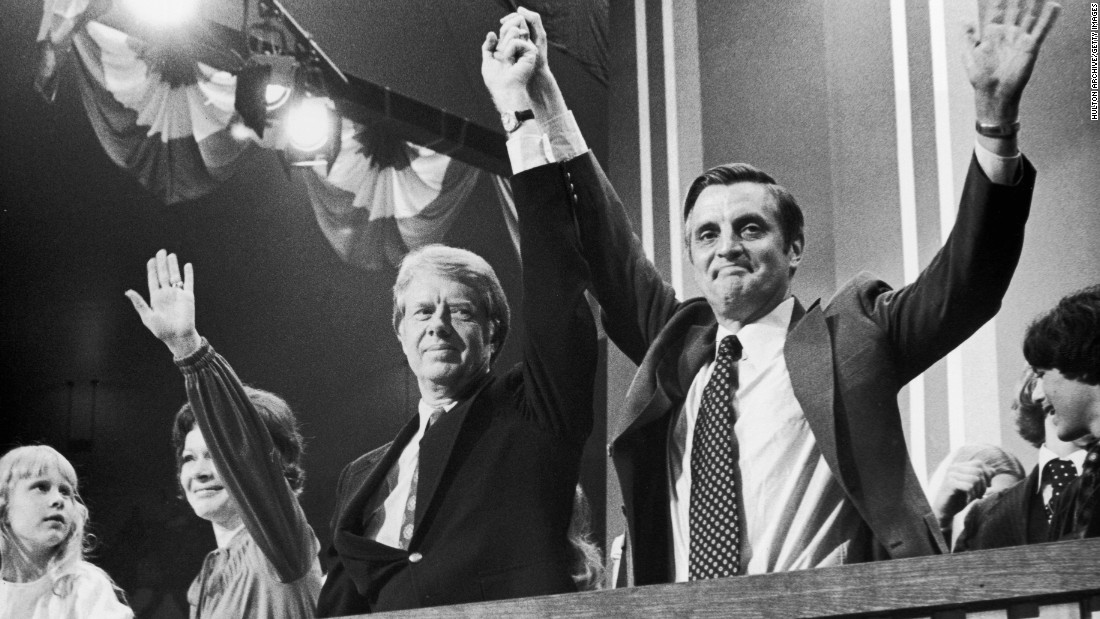
On October 11, 1979, the Carter-Mondale Presidential
Committee(Committee) requested each of the three major television networks
(petitioners) to provide time for a 30-minute program between 8 p. m. and 10:30
p.m. on any day from the 4th through the 7th of December, 1979. The Committee
intended to present, in conjunction with President Carter's formal announcement
of his candidacy, a documentary outlining the record of his administration. The
petitioners refused to make the requested time available. CBS emphasized the
large number of candidates for the Presidential nominations and the potential
disruption of regular programming to accommodate requests for equal treatment,
but offered to sell a 5-minute segment at 10:55 p.m. on December 8 and a
5-minute segment in the daytime; American Broadcasting Cos. replied that it had
not yet decided when it would begin selling political time for the 1980
Presidential campaign, but later indicated that it would allow such sales in
January, 1980; and National Broadcasting Co., noting the number of potential
requests for time from Presidential candidates, stated that it was not prepared
to sell time for political programs as early as December, 1979. The Committee
then filed a complaint with the FCC, charging that the networks had violated
their obligation to provide "reasonable access" under § 312(a)(7).
The FCC ruled that the networks had violated the statute, concluding that their
reasons for refusing to sell the time requested were "deficient"
under the FCC's standards
of reasonableness, and directing the networks to indicate by
a specified date how they intended to fulfill their statutory obligations. On
the networks' petition for review, the Court of Appeals affirmed the FCC's
orders, holding that the statute created a new, affirmative right of access to
the broadcast media for individual candidates for federal elective office, and
that the FCC has the authority to independently evaluate whether a campaign has
begun for purposes of the statute. The court approved the FCC's insistence
that, in responding to a candidate's request for time, broadcasters must weigh
certain factors, including the individual needs of the candidate (as expressed
by the candidate); the amount of time previously provided to the candidate;
potential disruption of regular programming; the number of other candidates
likely to invoke equal opportunity rights if the broadcaster granted the
request before it; and the timing of the request. The court determined that the
record supported the FCC's conclusion that the networks failed to apply the
proper standards, and had thus violated the statute's "reasonable
access" requirement. The court also rejected petitioners' First Amendment
challenge to § 312(a)(7) as applied.

 The younger brother of screen legend Robert Mitchum, John Mitchum was an accomplished character actor in his own right who appeared in sixty films and more than 800 television episodes in the course of his 60-year career, including such classic shows as The Twilight Zone, F Troop, Bewitched, Perry Mason, Batman, Maverick and The Rockford Files. He was a frequent co-star of John Wayne and Clint Eastwood (among others), while Robert Fuller once said that he shot John Mitchum [on film] “more than anyone else in Hollywood.”




 Chris Korman