I represent the first generation who, when we were born, the television was now a permanent fixture in our homes. When I was born people had breakfast with Barbara Walters, dinner with Walter Cronkite, and slept with Johnny Carson.
Read the full "Pre-ramble"
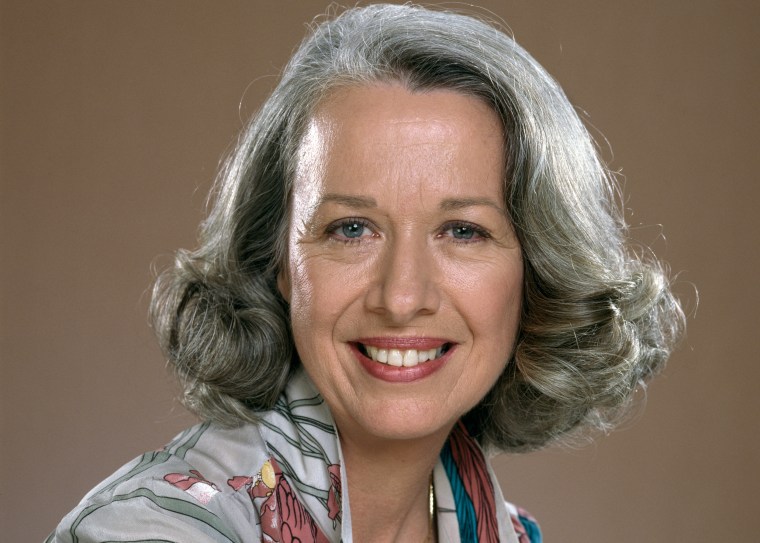
Polly Dean Holliday July 2, 1937 – September 9, 2025
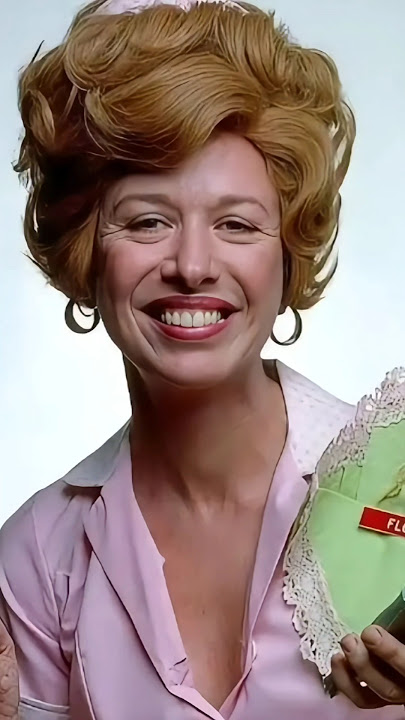
In 1976, Polly Holliday was cast—in what would be her major break—as sassy, man-hungry waitress Florence Jean "Flo" Castleberry on the U.S.CBSsitcomAlice.Her character coined the popularcatchphrase"Kiss my grits!" The phrase became part of the Americanvernacular. Holliday starred inAlicefrom 1976 to 1980, and then moved to her own short-livedspin-offshow, titledFlo, in which Flo leftArizonaand moved back home toTexas.The show was successful during its abbreviated first season, but ratings declined during the following season due to a time change, and it was canceled in 1981.
In 1983, Holliday joined the cast of the CBS-TV sitcomPrivate Benjaminas a temporary replacement for series regularEileen Brennan, who was recovering from serious injuries after being struck by a car.
Best most known for playing Alex Rieger on the
television comedy series Taxi, John Lacey on the NBC series Dear
John, and Alan Eppes on the CBS series Numb3rs.
He was born in The Bronxborough of New York City, New York, the son of Sally (née Kitzis) and Joseph Sidney Hirsch, an electrician. His father was also born in New York[2] where the family had lived since the mid-1800s. Sally
(Sarah) Kitzis was born in Russia. Hirsch was raised Jewish.
Hirsch's first major television appearance was in the
mini-series The Law (1974).
For his performance in Taxi, in 1981 and again in 1983, Judd Hirsch won the Emmy Award for Lead Actor In a Comedy Series. Hirsch went on to
play the title character on the modestly successful sitcom Dear
John and in 1989 won a Golden
Globe Award for Best Actor in a
Television Series in a Comedy or Musical for this role.[4] He later teamed with Bob Newhart in the short-lived comedy George and Leo. He had also previously starred for one season in the
series Delvecchio, playing a police detective (1976–1977).
After a three-month-long criminal trial in Los Angeles Superior Court, a
jury acquits Robert Blake, star of the 1970s television detective show Baretta,
of the murder of his 44-year-old wife, Bonny Lee Bakley.
Blake,
who was born Mickey Gubitosi in 1933 in New Jersey, made his movie debut at the
age of six, in MGM’s 1939 movie Bridal Suite; the studio soon featured him in
its Our Gang series of short films. After changing his name to Robert Blake, he
starred in the 1960 gangster movie The Purple Gang and numerous other films. In
1967, Blake memorably portrayed Perry Smith, one of two real-life murderers at
the center of Truman Capote’s In Cold Blood, when the book was adapted for the
big screen. As an actor, Blake was best known for his Emmy-winning work as the
street-smart plainclothes policeman Tony Baretta in the ABC series Baretta. The
show ran from 1975 to 1978, and Blake won an Emmy Award for Best Actor in a
Drama Series at the end of its first season.
During
his criminal trial, Blake’s defense team portrayed the aging actor as a rather
pathetic figure and argued that Bakley had a pattern of sending letters and
nude photos of herself to famous men and had trapped Blake into marrying her by
becoming pregnant. The couple’s daughter, Rose, was born in June 2000, and
though Bakley initially claimed that the child was fathered by Christian
Brando, son of the celebrated actor Marlon Brando, a paternity test proved the
baby was Blake’s. Blake and Bakley married that November. Their brief, unhappy
union lasted until May 4, 2001, when Bakley was shot to death as she sat in a
car outside a Los Angeles restaurant.
Blake
was arrested for the murder, and the prosecution produced two former stunt
doubles who claimed the actor had recruited them to kill his wife. During
cross-examination, the stuntmen were revealed to be cocaine and methamphetamine
users. In their acquittal of Blake, the jury made it clear they didn’t believe
the stuntmen’s statements, and also concluded that the prosecution had failed
to place the murder weapon in Blake’s hands.
In
November 2005, eight months after the criminal trial ended, Robert Blake was
found guilty in a civil trial of “intentionally” causing Bonny Lee Bakley’s
death; he was ordered to pay $30 million to Bakley’s children. Rose remained in
the care of Blake’s eldest daughter, Delinah. Though he did not testify in the
criminal trial, Blake did take the stand during his civil trial to deny the
accusations.
The story about me, apocryphal or not, is that I could sing before I spoke.
My parents went into bedroom one day and there I was standing in the crib singing God Bless America
-Linda Lavin
Linda Lavin October 15, 1937 – December 29, 2024
In 1967, Linda Lavin made an appearance as Gloria Thorpe in atelevision versionof the baseball musicalDamn YankeeswithPhil Silvers.In 1969, Lavin married actorRon Leibman,and by 1973, the couple had arrived inHollywood, California. After various guest appearances on episodic television series such asThe Nurses,Rhoda,Harry O, andKaz, Lavin landed a recurring role as Detective Janice Wentworth onBarney Millerduring the first and second seasons (1975–1976).
She leftBarney Millerto star in the lead role inAlice, which was a sitcom success that ran from 1976 to 1985 thru theCBSnetwork. The series was based on theMartin Scorsese–directedEllen BurstynfilmAlice Doesn't Live Here Anymore. Lavin portrayed Alice Hyatt, a waitress and singer, the character that Burstyn had played. Lavin performed the series' theme song, "There's a New Girl in Town," which was written byDavid ShireandAlan and Marilyn Bergmanand was updated for each of the first six seasons. During the series' nine-season run, Lavin earned twoGolden Globe Awardsand aPrimetime Emmy Awardnomination,[10]and gained experience directing, especially during the later seasons. Lavin also played a dual role inAlice, as Debbie Walden, the wizened and former landlady of the character Vera Louise Gorman-Novak.[11]Lavin also made numerous television appearances outside ofAlice, including hosting her own holiday special for CBS,Linda in Wonderland(1980). She acted in two sitcoms,Room for Two(1992–93)and 1998'sConrad Bloom.[12]InRoom for Two, she played a mother who moved in with her daughter, played byPatricia Heaton, who has a show on a local television station. The daughter gives Lavin's character her own segment, called "Just a Thought", at the end of her program.
She also appeared in many telefilms between 1967 and 1998, including: Damn Yankees!, Sadbird, The Morning After, Jerry, Like Mom, Like Me, The $5.20 an Hour Dream, Another Woman's Child, Maricela, Lena: My 100 Children, Whitewash, A Dream is a Wish Your Heart Makes: The Annette Funicello Story, Stolen Memories: Secrets from the Rose Garden, For the Future: The Irvine Fertility Scandal, The Ring, and Best Friends for Life. Lavin produced and starred in A Matter of Life and Death, the 1981 telefilm based on the work of nurse thanatologistJoy Ufema.[14] She directed the 1990 telefilm Flour Babies.
After working in theater for many years, Lavin was cast in the NBC television sitcom Sean Saves the World (2013–14) playing Sean Hayes' pushy, meddling mother Lorna. The Los Angeles Times interviewer noted: "A highlight of the show is the wonderful chemistry between Lavin and Hayes, who exchange repartee and quips with breezy ease. And the cast seems smitten with her."
In 2015, Lavin guest starred as a judge approached to stop an execution in the episode of Bones titled "The Verdict in the Victims."Actress Emily Deschanel said "Lavin was particularly fun to have on" the show.
Like Alice, 9JKL deals with family relationships–except it's a more sophisticated and edgier show. The people are more privileged and on a higher economic level than Alice. I love to go to work every day. I feel very grateful and fortunate for this role, the quality of work and good people at this stage of my life. Fun and creative are the operative words for me. I'm very committed to participating in projects where I can bring and exchange those qualities with like-minded people.
Playwright and screenwriter Neil Simon born in the
Bronx section of New York City.
In one of his earliest jobs, in the 1950s,
Simon wrote for Sid Caesar’s live comedy television program Your Show of
Shows, alongside other future greats such as Mel Brooks and Carl Reiner. As Simon went on to write for the stage and big
screen, humor would continue to play a major role in his work. Simon’s first
Broadway play, Come Blow Your Horn, opened in 1961. He went on to write
over 30 plays, including Barefoot in the Park (1963), The Odd Couple
(1965), The Last of the Red Hot Lovers (1969), The Sunshine Boys
(1972), Chapter Two (1977), the autobiographical trilogy of Brighton
Beach Memoirs (1983), Biloxi Blues (1985) and Broadway Bound
(1986), Lost in Yonkers (1991) and The Goodbye Girl (1993).Simon wrote the screenplay for many of his stage productions that were
adapted for the big screen. In 1967, Robert Redford and Jane Fonda starred in a
cinematic version of Barefoot in the Park, about a young newlywed couple
in Manhattan. Redford had also appeared in the original Broadway cast. In 1968,
Jack Lemmon and Walter Matthau starred in a film version of The Odd Couple,
about the mismatched roommates Felix Ungar, a neurotic neat freak, and Oscar
Madison, a slob. Matthau also played Oscar Madison in the original Broadway
production. The Odd Couple later became a popular TV sitcom that aired
from 1970 to 1975 and starred Tony Randall and Jack Klugman. In 1998, Lemmon
and Matthau reunited for The Odd Couple II. (The pair appeared in a
number of comedic films together, starting with 1966’s The Fortune Cookie
and including 1993’s Grumpy Old Men and its 1995 sequel.)
Simon has received four Academy Award nominations for Best Screenplay: for The
Odd Couple, The Sunshine Boys (1975), which starred Matthau and George
Burns, The Goodbye Girl (1977), which starred Richard Dreyfuss and
Marsha Mason (whom Simon was married to from 1973 to 1981) and California
Suite (1978), which featured Jane Fonda, Alan Alda, Michael Caine and
Richard Pryor.