I represent the first generation who, when we were born, the television was now a permanent fixture in our homes. When I was born people had breakfast with Barbara Walters, dinner with Walter Cronkite, and slept with Johnny Carson.
Read the full "Pre-ramble"
Show No. 219 with guests Josh Mills and Ron Simon Original Airdate: Week of Jan. 29-Feb. 4, 2014 First hour: Ed and Phil Gries welcome Ron Simon, longtime curator for The Paley Center for Media. One of the first true television archaeologists, Ron discovered such lost programs as the live Honeymooners and the only video performance of the Rat Pack. For our listeners in New York and Los Angeles, The Paley Center will celebrate the fiftieth anniversary of The Beatles arriving in New York with screenings of two essential programs for the Beatles fan: the documentary What’s Happening: The Beatles in the USA and the famous Feb. 9, 1964 edition of The Ed Sullivan Show that marked the first official appearance of the Beatles on American television.
Second hour: Josh Mills, owner of Ediad Productions
and the official archivist of both the Edie Adams estate and the estate
of Ernie Kovacs, joins Ed, Tony Figueroa and Donna Allen for a look at
the life and career of Edie Adams. Josh is also the executive producer of Here's Edie: The Edie Adams Television Collection, a new box set from MVD Visual that features 21 episodes of Here’s Edie,
the groundbreaking musical variety series (ABC, 1962-1964) that Edie
produced and headlined, and which provides an unique capsule of the
various changes in 1960s entertainment culture while also reflecting her
own eclectic musical tastes.
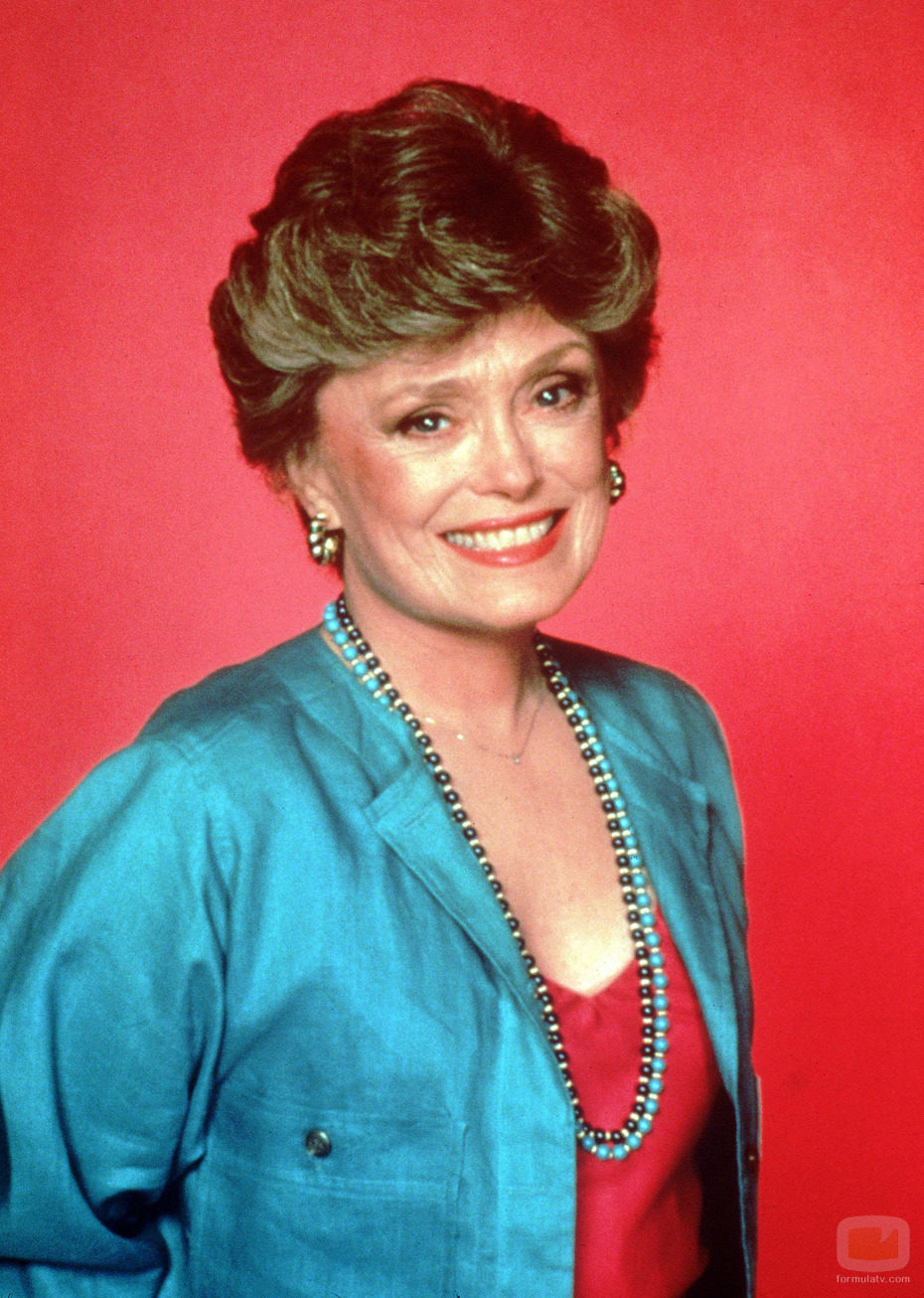
She was born Eddi-Rue McClanahan in Healdton, Oklahoma, the daughter of Dreda Rheua-Nell (née Medaris), a beautician, and William Edwin McClanahan, a building contractor. She began acting on Off-Broadway in New York City in 1957, but did not make her Broadway debut until 1969 when she portrayed Sally Weber in the original production of John Sebastian and Murray Schisgal's musical, Jimmy Shine, with Dustin Hoffman in the title role.
Her role as Caroline Johnson on Another World (from July 1970 - September 1971) brought her notoriety. On the show, while taking care of twins Michael and Marianne Randolph, Caroline fell in love with their father, John, and began poisoning their mother, Pat. The short-term role was extended to more than a year before Caroline was finally brought to justice after kidnapping the twins. Once her role on Another World ended, Rue joined the cast of the CBS soap Where the Heart Is, in which she played Margaret Jardin.
In Maude, broadcast from 1972 to 1978, McClanahan played Maude's (Bea Arthur) best friend, Vivian Harmon (Later Findlay). Vivian had been Maude's best friend since they both attended college together. Vivian began datingDr. Arthur Harmon (played by Conrad Bain) at the beginning of the second season and were married during the middle of it.
From 1983 to 1984 she played Fran Crowley,Thelma Harper's younger, uptight spinster sister on the sitcom Mama's Family. Fran worked as a newspaper reporter and free-lance writer. She later died by choking on a toothpick at The Bigger Jigger.
She also appeared as a leader of Al-Anon in a 1970's informational video called "Slight Drinking Problem," in which Patty Duke played the enabling and eventually self-empowered wife of an alcoholic. An animal welfare advocate and vegetarian, McClanahan was one of the first celebrity supporters of People for the Ethical Treatment of Animals (PETA).
Her autobiography, My First Five Husbands, was released nationwide in 2007. In June 2008, The Golden Girls was awarded the 'Pop Culture' award at the Sixth Annual TV Land Awards. Rue accepted the award with co-stars Bea Arthur and Betty White. McClanahan's last acting role was in the cable series Sordid Lives on the Logo network, which premiered July 23, 2008, playing Peggy Ingram, the older sister of Sissy Hickey and mother of Latrelle, LaVonda and Earl "Brother Boy".
She was diagnosed with breast cancer in June 1997, from which she completely recovered. On November 14, 2009, she was to be honored for her lifetime achievements at an event "Golden: A Gala Tribute To Rue McClanahan" at the Castro Theatre in San Francisco, California.[5] The event was postponed due to McClanahan's hospitalization. She had triple bypass surgery on November 4. It was announced on January 14, 2010 by Entertainment Tonight that while recovering from surgery she had suffered a minor stroke. In March 2010, Betty White reported on The Ellen DeGeneres Show that McClanahan was doing well, and that her speech had returned to normal.
To Quotes Rue McClanahan, "Cruelty is one fashion statement we can all do without".
Listen to me on TV CONFIDENTIAL with Ed Robertson and Frankie Montiforte Broadcast LIVE every other Monday at 9pm ET, 6pm PT (immediately following STU'S SHOW) on Shokus Internet Radio. The program will then be repeated Tuesday thru Sunday at the same time (9pm ET, 6pm PT)on Shokus Radio for the next two weeks, and then will be posted on line at our archives page at TVConfidential.net. We are also on Share-a-Vision Radio (KSAV.org) Friday at 7pm PT and ET, either before or after the DUSTY RECORDS show, depending on where you live.
As always, the further we go back in Hollywood history, the more that fact and legend become intertwined. It's hard to say where the truth really lies.
February 23, 1997 Schindler's List is shown on NBC, the first network to broadcast a movie without commercial interruption. Ford Motor Company, which sponsored the broadcast, showed one commercial before and after the film.
The 1993 film about German factory owner Oskar Schindler, who saved the lives of Jewish workers in his factory during World War II, was Spielberg's most ambitious movie to date. The picture, filmed in black and white, won Spielberg his first Academy Award as Best Director, and it also garnered Best Picture and Best Adapted Screenplay awards. The film's screenplay, by Thomas Keneally and Steven Zallian, was adapted from Keneally's novel, Schindler's Ark, published in 1982. Spielberg started making amateur films in his teens, and by the late 1970s he had become heavily involved in production and scriptwriting. He gained fame early in his career for directing such blockbusters as Jaws, Close Encounters of the Third Kind, Raiders of the Lost Ark, E.T., Poltergeist, and a string of other phenomenal successes. He established his own independent production company, Amblin' Entertainment, in 1984, where he produced Gremlins, Back to the Future, Arachnophobia, Cape Fear, and more. In 1994, he formed DreamWorks SKG with Jeffrey Katzenberg and David Geffen, and the following year the trio announced a partnership with Microsoft Corporation, called DreamWorks Interactive, which produced interactive games and teaching tools. Just months before he released Schindler's List, Spielberg released Jurassic Park, which featured computer-generated dinosaurs that took the world by storm. He won his second Academy Award for Best Director in 1999 for Saving Private Ryan. Virtually all of Spielberg's films have been box office smashes.
February 24, 1980 The U.S. Hockey Team won its “Do you believe in miracles?” gold medal during the 1980 Olympic Winter Games beating Finland (4-2) in their final medal round game. The Soviet Union took the Silver Medal by beating Sweden in their final game. Sweden took home the Bronze Medal, with Finland finishing fourth.
Two days prior on February 22, 1980 was the "Miracle on Ice". The U.S. men's ice hockey team, led by coach Herb Brooks, defeated the Soviet Union team, 4 - 3. The Soviet Union team, who were considered to be the best international hockey team in the world, they entered the Olympic tournament as heavy favorites, having won every ice hockey gold medal since 1964, and all but one gold medal since 1956. On February 9, the American and Soviet teams met for an exhibition match at Madison Square Garden in order to practice for the upcoming competition. The Soviet Union won (10-3) so the odds were in favor of the Russians.
The day before the match, columnist Dave Anderson wrote in the New York Times, "Unless the ice melts, or unless the United States team or another team performs a miracle, as did the American squad in 1960, the Russians are expected to easily win the Olympic gold medal for the sixth time in the last seven tournaments."
The game ended with Al Michaels delivering the most famous call in Hockey history, "Eleven seconds, you've got ten seconds, the countdown going on right now! Morrow, up to Silk...five seconds left in the game... Do you believe in miracles? YES!!!"
At the same time there was another international drama playing out. Despite President Carter’s initial refusal to admit the Shah of Iran into the United States, on October 22, 1979, he finally granted the Shah entry and temporary asylum for the duration of his cancer treatment. In response to the Shah's entry into the U.S., Iranian militants seized the American embassy in Tehran, taking 52 Americans hostage for 444 days from November 4, 1979 to January 20, 1981. The "Miracle on Ice" was a shot in the country’s morale during a time of great uncertainty.
February 25, 1928 The Federal Radio Commission issues the first television license. The license went to the Charles Francis Jenkins Laboratories for a television broadcast station on Connecticut Avenue in Washington, D.C. The station later moved to Maryland and operated until 1932. Government regulation of broadcasting has been in existence almost as long as the broadcast industry itself. The Wireless Act of 1910 required American ships to carry a broadcasting transmitter and qualified radio operator on all sea voyages. In the early 1920s, laws were passed governing transmission power, use of frequencies, station identification, and advertising. The Radio Act of 1927 shifted regulatory powers from the Department of Commerce to the new Federal Radio Commission, which became the Federal Communications Commission (FCC) in 1934. Today, the FCC still regulates broadcasting and communications. The U.S. president appoints its five commissioners with the Senate's consent. The commission licenses and regulates radio and TV broadcasters as well as other communications mediums, such as telephone and cable television. It assigns frequencies and call signs to radio stations and is responsible for ensuring rapid, efficient telephone and telegraph service. The FCC also operates the Emergency Broadcast System, which provides a vehicle for authorities to communicate with the public and disseminate critical information immediately when national disaster strikes (though the system can also be used to broadcast weather warnings and local emergencies). More expansive policy issues under the purview of the commission include deciding how much sex and violence is permissible on television. Deregulation of the industry in the 1980s reduced the FCC's size from seven to five commissioners and increased the term of radio and television station licenses. In the 1990s, the FCC developed a television rating system, much like the one used in movies, which helps people decide which shows are appropriate for the viewers in their household.
February 25, 1950 Comedy program Your Show of Shows, hosted by Sid Caesar and Imogene Coca, firstairs. Although the show lasted only four seasons, it became a classic of television's golden era, featuring comedy by future stars Carl Reiner, Mel Brooks, Neil Simon, Woody Allen, and others. The series was one of television's Top 20 hits for three of its four years.
February 27, 2003 Children’s Television Host Fred Rogers succumbs to stomach cancer at 74. The talented writer and puppeteer, known to generations of children simply as “Mr. Rogers,” hosted Mr. Rogers’ Neighborhood on public television for more than 30 years. A native of Latrobe, Pennsylvania, Rogers filmed the famed show in Pittsburgh, 30 miles east of his hometown. He studied early childhood development at the University of Pittsburgh and, in 1962, was ordained as Presbyterian minister with a mission to work with children and families through television. Beginning in 1954, he worked as a puppeteer on a show called The Children’s Corner, before beginning work on his own show, which first aired in 1968. Singing his well-known theme song, “It’s a Beautiful Day in the Neighborhood,” Rogers would enter his living-room-like set at the beginning of each episode, changing his shoes and sweater. He would then take his viewers on a magical trolley ride to the “Neighborhood of Make-Believe,” where he introduced them to characters such as King Friday XIII, his wife Queen Sara Saturday, Curious X the Owl, and Henrietta Pussycat. Even in an era of slick packaging and new technology in children’s programming, Rogers found continued success by sticking to his original message—that children should love each other and themselves. He aimed to help children deal with troubling emotions, like fear and anger, as well as everyday problems, like visiting the dentist. Rogers composed most of his show’s songs and did much of the puppeteering and voices himself. Despite countless awards and honors, including four Emmys® and a George Foster Peabody Award, Rogers once remarked, “I have never really considered myself a TV star. I always thought I was neighbor who just came in for a visit.” He taped his last show in December 2000, but came out of retirement briefly to film public service announcements helping parents and children deal with the September 11th tragedy. One of Rogers’ trademark red sweaters now hangs in the Smithsonian Institution in Washington, D.C.
February 28, 1983 Last episode of M*A*S*H airs.M*A*S*H, the cynical situation comedy about doctors behind the front lines of the Korean War, airs its final episode after 11 seasons.
The last episode drew 77 percent of the television viewing audience, the largest audience ever to watch a single TV show up to that time.
To quote the Bicentennial Minute, "And that's the way it was".
If you're going to be in New York on Monday, December 3rd check out.
An Evening with Holly Hunter and Saving Grace Monday, December 3; 6:00 pm
Join us for a conversation with Academy and Emmy Award–winning Holly Hunter as she discusses her acclaimed new TNT series Saving Grace. Hunter portrays fast-living Oklahoma City police detective Grace Hanadarko, who, tormented by demons both internal and external, nearly reaches her breaking point before redemption arrives in the form of an unconventional angel named Earl. A yet-to-be-aired episode of Saving Grace will be screened.
On Thanksgiving Day (November 22), a group of Writers Guild Of America members began posting Public Service Announcements featuring A-list Screen Actors Guild talent as part of an independent WGA membership’s “Speechless” campaign conceived by director/writer George Hickenlooper and writer Alan Sereboff. They can be found on SpeechlessWithoutWriters.com with links on UnitedHollywood.com. Ms. Hunter was in the first episode

 Show No. 219 with guests Josh Mills and Ron Simon