
I represent the first generation who, when we were born, the television was now a permanent fixture in our homes. When I was born people had breakfast with Barbara Walters, dinner with Walter Cronkite, and slept with Johnny Carson. Read the full "Pre-ramble"
Tuesday, October 05, 2021


Monday, October 04, 2021
This Week in Television History: October 2021 PART I

October 4, 1976
Barbara Walters joined
Harry Reasoner at the anchor desk of the "ABC Evening News" for the
first time.
Harry
Reasoner,
formerly of CBS
News and 60 Minutes, joined ABC News in 1970 to
co-anchor the relaunchedABC Evening News with Smith, beginning that
December, replacing Reynolds. In 1975, Howard K. Smith was moved to a
commentator role, and Reasoner briefly assumed sole-anchor responsibilities
until he was paired with Barbara Walters, who became the first
female network anchor when she joined the program in 1976.Ratings for the nightly news
broadcast declined shortly thereafter, possibly due in part to the lack of
chemistry between Reasoner and Walters. Reasoner would eventually return to CBS
and 60 Minutes, while Walters became a regular on the
newsmagazine 20/20.
October 4, 1981
October 4, 1986Two men mugged Dan Rather
in New York City, NY.
While
walking along Park
Avenue to
his apartment in Manhattan, Rather was attacked and
punched from behind by a man who demanded to know "Kenneth, what is the
frequency?" while a second assailant chased and beat him. As the assailant
pummeled and kicked Rather, he kept repeating the question. In describing the
incident, Rather said, "I got mugged. Who understands these things? I
didn't and I don't now. I didn't make a lot of it at the time and I don't now.
I wish I knew who did it and why, but I have no idea." Until the
crime was resolved years later, Rather's description of the bizarre crime led
some to doubt the veracity of his account, although the doorman and
building supervisor who rescued Rather fully confirmed his version of events.The
assault remained unsolved for some time, and was referenced multiple times in
popular culture. The phrase "What's the frequency, Kenneth?" became a
popular-culture reference over the years, such as in a scene in the graphic
novel Like a Velvet Glove Cast in Iron by cartoonist Daniel Clowes. In 1994, the band R.E.M. released the song
"What's the Frequency, Kenneth?" on their album Monster. Rather later sang with R.E.M. during a sound check prior to a gig at
New York's Madison Square Garden, which was shown the following night on the Late Show with David Letterman before their
performance of "Crush with Eyeliner".
In
1997, a TV critic writing in the New York Daily News solved the mystery, publishing a photo of the
alleged assailant, William Tager, who received a 12 1⁄2 to
25-year prison sentence for killing NBC stagehand Campbell Montgomery
outside The Today Show studio in 1994. Rather confirmed the story: "There's no
doubt in my mind that this is the person." New York District Attorney
Robert M. Morgenthau said, "William Tager's identity as the man who
attacked Mr. Rather was established in the course of an investigation by my
office." Tager claimed he thought television networks were beaming
signals into his brain when he murdered the stagehand, Tager was trying to
force his way into a CBS studio with a weapon, in order to find out the
frequency the networks were using to attack him, so that he could block it. As
to why he said "Kenneth", Tager was Jewish, and may have actually
been using the Yiddish word
"goniff", meaning "thief". Tager was paroled in
October 2010 and is believed to be living in New York City.
October 5, 1951
The Honeymooners was introduced during Jackie Gleason's first variety
series Cavalcade of Stars.
It
originally aired on the DuMont network's Cavalcade of Stars, Jackie Gleason's variety show and subsequently on the CBS network's The Jackie Gleason Show, which was filmed in front of a live audience.
It debuted as a half-hour series on October 1, 1955. Although initially a ratings success—becoming the #2 show in the
United States during its first season—it faced stiff competition from The Perry Como Show, and eventually
dropped to #19, ending its production after only 39 episodes (now referred
to as the "Classic 39"). The final episode ofThe Honeymooners aired
on September 22, 1956. Creator/producer Jackie Gleason revived the series
sporadically until 1978.The Honeymooners was one of the first U.S.
television shows to portray working-class married couples in a gritty,
non-idyllic manner (the show is set mostly in the Kramdens' kitchen, in a
neglected Brooklyn apartment building). The program is also popular
internationally, particularly in Canada, Poland and Scandinavian
countries Norway and Sweden.
October 5, 1986
Business World began airing on ABC-TV.
An ABC News Sunday-morning
review of economic and financial stories was the first regularly scheduled
weekly business series on network TV.
October 9, 1986
Joan Rivers debuted her
new The Late Show on the FOX network.
After
a moderate start, ratings for the talk show soon
sagged. The ratings struggles also made it hard for Fox to attract affiliates
for its primetime launch on April 5, 1987. Some prospective affiliates, such
as Milwaukee's WCGV-TV, would only sign with the
network if they did not have to carry The Late Show. KPTMin Omaha refused outright out of loyalty to Carson, who
hailed from Corning,
Iowa, east
of Omaha and started his career on local radio and television. The network
acquiesced to allow some stations out of that obligation so that the network
launched in primetime with as many affiliates as possible, at the cost of
ratings and access to The Late Show. For instance, at the time the
show launched Fox had not closed on its purchase of its Boston station, WXNE-TV (nowWFXT). That station's previous owners, the Christian Broadcasting Network, objected to the show's content
and refused to clear it. As a result, until Fox took control of the station in
January, its audio feed aired on a low-rated AM station.
The
behind-the-scenes relations between Rivers and network executives quickly
eroded, and Rivers was eventually fired in May 1987. For the final show, which
aired May 15, 1987, the set was vandalized with toilet paper, slime, and
shaving cream. Her guests were Howie Mandel, Pee-Wee Herman, then-fledgling
comedian Chris
Rock, Wendy O. Williams, and show stage manager
Michelle Aller as her alter-ego Mavis Vegas Davis. Soon afterward the
program was renamed The Late Show and featured rotating guest
hosts including Suzanne Somers, Richard Belzer, and Robert Townsend. After firing prospective guest host Frank Zappa, producer John Scura
replaced him with Arsenio Hall, who made his debut as a talk show host.
Eventually, Hall was named the permanent replacement host in mid-1987.
October 4, 1976
Barbara Walters joined
Harry Reasoner at the anchor desk of the "ABC Evening News" for the
first time.
Harry
Reasoner,
formerly of CBS
News and 60 Minutes, joined ABC News in 1970 to
co-anchor the relaunchedABC Evening News with Smith, beginning that
December, replacing Reynolds. In 1975, Howard K. Smith was moved to a
commentator role, and Reasoner briefly assumed sole-anchor responsibilities
until he was paired with Barbara Walters, who became the first
female network anchor when she joined the program in 1976.Ratings for the nightly news
broadcast declined shortly thereafter, possibly due in part to the lack of
chemistry between Reasoner and Walters. Reasoner would eventually return to CBS
and 60 Minutes, while Walters became a regular on the
newsmagazine 20/20.
October 4, 1981
Bruce Jenner and Harry
Belafonte debuted in their first dramatic roles in NBC-TV's Grambling's
White Tiger (also released as White Tiger in Europe)
The true story of Jim
Gregory (played by Bruce Jenner) the first white quarterback at Grambling College, a historically black college in 1962. The movie
covers Gregory's freshman
year. Harry Belafonte stars as Coach Eddie Robinson and LeVar Burton (already famous
from Roots and later to be known for Reading Rainbow and Star Trek: The Next Generation) appears as Charles 'Tank'
Smith, the first friend Jim Gregory makes on the team. The film is directed
by Georg Stanford Brown.
October 4, 1986
Two men mugged Dan Rather
in New York City, NY.
While
walking along Park
Avenue to
his apartment in Manhattan, Rather was attacked and
punched from behind by a man who demanded to know "Kenneth, what is the
frequency?" while a second assailant chased and beat him. As the assailant
pummeled and kicked Rather, he kept repeating the question. In describing the
incident, Rather said, "I got mugged. Who understands these things? I
didn't and I don't now. I didn't make a lot of it at the time and I don't now.
I wish I knew who did it and why, but I have no idea." Until the
crime was resolved years later, Rather's description of the bizarre crime led
some to doubt the veracity of his account, although the doorman and
building supervisor who rescued Rather fully confirmed his version of events.
The
assault remained unsolved for some time, and was referenced multiple times in
popular culture. The phrase "What's the frequency, Kenneth?" became a
popular-culture reference over the years, such as in a scene in the graphic
novel Like a Velvet Glove Cast in Iron by cartoonist Daniel Clowes. In 1994, the band R.E.M. released the song
"What's the Frequency, Kenneth?" on their album Monster. Rather later sang with R.E.M. during a sound check prior to a gig at
New York's Madison Square Garden, which was shown the following night on the Late Show with David Letterman before their
performance of "Crush with Eyeliner".
In
1997, a TV critic writing in the New York Daily News solved the mystery, publishing a photo of the
alleged assailant, William Tager, who received a 12 1⁄2 to
25-year prison sentence for killing NBC stagehand Campbell Montgomery
outside The Today Show studio in 1994. Rather confirmed the story: "There's no
doubt in my mind that this is the person." New York District Attorney
Robert M. Morgenthau said, "William Tager's identity as the man who
attacked Mr. Rather was established in the course of an investigation by my
office." Tager claimed he thought television networks were beaming
signals into his brain when he murdered the stagehand, Tager was trying to
force his way into a CBS studio with a weapon, in order to find out the
frequency the networks were using to attack him, so that he could block it. As
to why he said "Kenneth", Tager was Jewish, and may have actually
been using the Yiddish word
"goniff", meaning "thief". Tager was paroled in
October 2010 and is believed to be living in New York City.
October 5, 1951
The Honeymooners was introduced during Jackie Gleason's first variety
series Cavalcade of Stars.
It
originally aired on the DuMont network's Cavalcade of Stars, Jackie Gleason's variety show and subsequently on the CBS network's The Jackie Gleason Show, which was filmed in front of a live audience.
It debuted as a half-hour series on October 1, 1955. Although initially a ratings success—becoming the #2 show in the
United States during its first season—it faced stiff competition from The Perry Como Show, and eventually
dropped to #19, ending its production after only 39 episodes (now referred
to as the "Classic 39"). The final episode ofThe Honeymooners aired
on September 22, 1956. Creator/producer Jackie Gleason revived the series
sporadically until 1978.The Honeymooners was one of the first U.S.
television shows to portray working-class married couples in a gritty,
non-idyllic manner (the show is set mostly in the Kramdens' kitchen, in a
neglected Brooklyn apartment building). The program is also popular
internationally, particularly in Canada, Poland and Scandinavian
countries Norway and Sweden.
October 5, 1986
Business World began airing on ABC-TV.
An ABC News Sunday-morning
review of economic and financial stories was the first regularly scheduled
weekly business series on network TV.
October 9, 1986
Joan Rivers debuted her
new The Late Show on the FOX network.
After
a moderate start, ratings for the talk show soon
sagged. The ratings struggles also made it hard for Fox to attract affiliates
for its primetime launch on April 5, 1987. Some prospective affiliates, such
as Milwaukee's WCGV-TV, would only sign with the
network if they did not have to carry The Late Show. KPTMin Omaha refused outright out of loyalty to Carson, who
hailed from Corning,
Iowa, east
of Omaha and started his career on local radio and television. The network
acquiesced to allow some stations out of that obligation so that the network
launched in primetime with as many affiliates as possible, at the cost of
ratings and access to The Late Show. For instance, at the time the
show launched Fox had not closed on its purchase of its Boston station, WXNE-TV (nowWFXT). That station's previous owners, the Christian Broadcasting Network, objected to the show's content
and refused to clear it. As a result, until Fox took control of the station in
January, its audio feed aired on a low-rated AM station.
The behind-the-scenes relations between Rivers and network executives quickly eroded, and Rivers was eventually fired in May 1987. For the final show, which aired May 15, 1987, the set was vandalized with toilet paper, slime, and shaving cream. Her guests were Howie Mandel, Pee-Wee Herman, then-fledgling comedian Chris Rock, Wendy O. Williams, and show stage manager Michelle Aller as her alter-ego Mavis Vegas Davis. Soon afterward the program was renamed The Late Show and featured rotating guest hosts including Suzanne Somers, Richard Belzer, and Robert Townsend. After firing prospective guest host Frank Zappa, producer John Scura replaced him with Arsenio Hall, who made his debut as a talk show host. Eventually, Hall was named the permanent replacement host in mid-1987.

 Stay Tuned
Tony Figueroa

 Stay Tuned
Tony Figueroa
Monday, September 27, 2021
This Week in Television History: September 2021 PART IV
September 28, 1901
Ed Sullivan is born in New York City.
During the peak of its popularity in the 1950s and
1960s, Sullivan’s program showcased a wide range of entertainers,
including Elvis Presley, the Beatles, Rudolf Nureyev, Jerry Lewis and Bob Hope.Sullivan worked as a newspaper reporter and columnist in New York during the
1920s and 1930s and also hosted and produced vaudeville shows and benefits. In
1948, he became the master of ceremonies of a weekly TV variety show dubbed Toast
of the Town. In 1955, the program, which aired Sunday nights on CBS, was
renamed The Ed Sullivan Show. Although Sullivan was often awkward and
self-conscious on camera, he was a hit with audiences and his program had broad
appeal. In addition to big-name entertainers, the show featured animal acts,
athletes, comedians, dancers and opera singers, along with such regulars as
Topo Gigio, a mouse puppet with an Italian accent, and a ventriloquist named
Senor Wences.
Notable moments in the history of The Ed Sullivan Show include its
broadcast on January 6, 1957, when Elvis Presley appeared on the program and
the cameras shot him from the waist up because his gyrating hips were
considered too scandalous for family television. On February 9, 1964,
more than 70 million viewers tuned in to the show for the American TV debut of
the Liverpool-based rock quartet The Beatles.
Sullivan was also notable for featuring African-American performers on his
program. According to the Museum of Broadcast Communications: “At a time when
virtually all sponsors balked at permitting black performers to take the stage,
Sullivan embraced Pearl Bailey over the objections of his sponsors. He also
showcased black entertainers as diverse as Nat “King” Cole, Leontine Price,
Louis Armstrong, George Kirby, Richard Pryor, Duke Ellington, Richie Havens and
the Supremes.”
The Ed Sullivan Show was cancelled in 1971. Sullivan died of cancer
at the age of 73 on October 13, 1974. In 1967, CBS renamed the Billy Rose
Theater, from which Sullivan broadcast his show, the Ed Sullivan Theater. Since
1993, David Letterman has hosted his late-night talk show from the Ed Sullivan
Theater, which is located at Broadway and 53rd Street in Manhattan.
September 28, 1961
Dr. Kildare premiered on NBC-TV.
Dr. Kildare is an NBC medical
drama television series which originally ran from September 28, 1961
until August 30, 1966, for a total of 191 episodes over five
seasons. Produced by MGM
Television, it was based on fictional
doctor characters originally created by author Max Brand in
the 1930s and previously used by MGM in a
popular film series and radio
drama. The TV series quickly achieved success and made a star of Richard Chamberlain, who played the title
role. Dr. Kildare (along with an ABC medical drama, Ben Casey,
which premiered at the same time) inspired or influenced many later TV shows
dealing with the medical field.
September 28, 1961Hazel premiered on NBC-TV.
Hazel is an American sitcom about a
fictional live-in maid named
Hazel Burke (Shirley Booth) and her employers, the Baxters. The
five-season, 154-episode series aired in prime time from September 28, 1961, to
April 11, 1966, and was produced by Screen
Gems. The show aired on NBC for its first four seasons. Season 1 was broadcast
in black-and-white for all but one episode and
seasons 2–4 were aired in color. The fifth and final season was broadcast in
color on CBS.
The show was based on the
popular single-panel comic strip by cartoonist Ted Key, which
appeared in the Saturday Evening Post.
September 29, 1986
The first episode of Designing Women aired on CBS.
Designing
Women is an
American sitcom created by Linda
Bloodworth-Thomason that
aired on CBS from September 29, 1986, until May 24, 1993, producing seven
seasons and 163 episodes. The comedy seriesDesigning Women was a
joint production of Bloodworth/Thomason Mozark Productions in association withColumbia
Pictures Television for
CBS.
The series
centers on the lives of four women and one man working together at an interior
designing firm inAtlanta,
Georgia called
Sugarbakers & Associates. It originally starred Dixie Carter as president of the design firm Julia
Sugarbaker, Delta Burke as her ex-beauty queen sister Suzanne
Sugarbaker, Annie Potts as head designer Mary Jo Shively,
and Jean Smart as office manager Charlene Frazier.
Later in its run, the series received recognition for its well-publicized
behind-the-scene conflicts and cast changes. Julia Duffy and Jan Hooksreplaced Burke and Smart for season six, but
Duffy was not brought for the seventh and final season, and she was replaced
by Judith Ivey.
October 1, 2006
The pilot episode of Dexter aired.
Dexter is an American
television crime drama mystery series that aired
on Showtime from October 1, 2006, to September 22, 2013. Set in Miami, the series centers on Dexter Morgan (Michael C. Hall), a forensic technician
specializing in blood spatter pattern analysis for the fictional Miami Metro Police
Department, who leads a secret parallel life as a vigilante serial killer, hunting down murderers who
have slipped through the cracks of the justice system. The show's first season was derived from the
novel Darkly Dreaming Dexter (2004), the first of the Dexter series novels by Jeff Lindsay. It was adapted for television by screenwriter James Manos, Jr., who wrote the first
episode. Subsequent seasons evolved independently of Lindsay's works.In
February 2008, reruns (edited down to a TV-14 rating) began to air on CBS, although the reruns on CBS ended after one run of
the first season. The series has enjoyed mostly positive reviews throughout its
run and popularity, including four consecutive Primetime Emmy nominations for
Best Drama Series starting in season 2. Season 4 aired its season finale on December 13, 2009, to a record-breaking audience of 2.6 million
viewers, making it the most-watched original series episode ever on Showtime at
that time.
In
April 2013, Showtime announced that Season 8 would be the final season of Dexter. The
Season 8 premiere was the most watched Dexter episode with
more than 3 million viewers total for all airings that night. The original
broadcast of the series finale—shown at 9 p.m. on September 22, 2013—drew 2.8
million viewers, the largest overall audience in Showtime's history.
October 3, 1961
The Dick Van Dyke Show premiered on CBS.
The
Dick Van Dyke Show is an American television
sitcom
that initially aired on the Columbia Broadcasting System from October 3, 1961,
until June 1, 1966. The show was created by Carl
Reiner
and starred Dick Van Dyke and Mary
Tyler Moore. It was produced by Reiner with Bill Persky and Sam Denoff. The music for
the show's theme song was written by Earle
Hagen. A
three-camera/studio audience format was used during
production.
The series won 15 Emmy Awards. In 2002, it was ranked
#13 on TV Guide's 50
Greatest TV Shows of All Time.
The two main settings
show the work and home life of Rob Petrie (Dick Van
Dyke),
the head writer of a comedy variety show filmed in Manhattan. Viewers are given
an "inside look" at how a television show (the fictitious The Alan Brady Show) was
written and produced. Many of the show's plots were inspired by
Reiner's experiences as a writer for Your Show of Shows, but though he based the
character of Rob Petrie on himself, Rob's egocentric boss Alan Brady is less Sid
Caesar
(host of Your Show of Shows) than a combination of the more abrasive Milton
Berle
and Jackie Gleason, according to Reiner himself.[3] Many scenes deal with
Rob and his coworkers, writers Buddy Sorrell (Morey
Amsterdam) and Sally Rogers (Rose Marie). Mel Cooley (Richard Deacon), a balding straight man and
recipient of numerous insulting one-liners from Buddy, was the show's producer
and the brother-in-law of the show's star, Alan Brady (Carl
Reiner).
As Rob, Buddy, and Sally write for a comedy show, the premise provides a
built-in forum for them to be making jokes constantly. Other scenes focus on
the home life of Rob, his wife Laura (Mary
Tyler Moore), and son Richie (Larry
Mathews),
who live at 148 Bonnie Meadow Road in suburban New Rochelle, New York. Also often seen are
their next-door neighbors and best friends, Jerry Helper (Jerry
Paris),
a dentist, and his wife Millie (Ann Morgan Guilbert).
Carl Reiner originally
planned to produce and star in the series, which was going to be titled Head
of the Family. The pilot episode was written by Reiner in 1960, but it was
unsuccessful.
September 28, 1901
Ed Sullivan is born in New York City.
During the peak of its popularity in the 1950s and
1960s, Sullivan’s program showcased a wide range of entertainers,
including Elvis Presley, the Beatles, Rudolf Nureyev, Jerry Lewis and Bob Hope.
Sullivan worked as a newspaper reporter and columnist in New York during the
1920s and 1930s and also hosted and produced vaudeville shows and benefits. In
1948, he became the master of ceremonies of a weekly TV variety show dubbed Toast
of the Town. In 1955, the program, which aired Sunday nights on CBS, was
renamed The Ed Sullivan Show. Although Sullivan was often awkward and
self-conscious on camera, he was a hit with audiences and his program had broad
appeal. In addition to big-name entertainers, the show featured animal acts,
athletes, comedians, dancers and opera singers, along with such regulars as
Topo Gigio, a mouse puppet with an Italian accent, and a ventriloquist named
Senor Wences.
Notable moments in the history of The Ed Sullivan Show include its
broadcast on January 6, 1957, when Elvis Presley appeared on the program and
the cameras shot him from the waist up because his gyrating hips were
considered too scandalous for family television. On February 9, 1964,
more than 70 million viewers tuned in to the show for the American TV debut of
the Liverpool-based rock quartet The Beatles.
Sullivan was also notable for featuring African-American performers on his
program. According to the Museum of Broadcast Communications: “At a time when
virtually all sponsors balked at permitting black performers to take the stage,
Sullivan embraced Pearl Bailey over the objections of his sponsors. He also
showcased black entertainers as diverse as Nat “King” Cole, Leontine Price,
Louis Armstrong, George Kirby, Richard Pryor, Duke Ellington, Richie Havens and
the Supremes.”
The Ed Sullivan Show was cancelled in 1971. Sullivan died of cancer
at the age of 73 on October 13, 1974. In 1967, CBS renamed the Billy Rose
Theater, from which Sullivan broadcast his show, the Ed Sullivan Theater. Since
1993, David Letterman has hosted his late-night talk show from the Ed Sullivan
Theater, which is located at Broadway and 53rd Street in Manhattan.
September 28, 1961
Dr. Kildare premiered on NBC-TV.
Dr. Kildare is an NBC medical
drama television series which originally ran from September 28, 1961
until August 30, 1966, for a total of 191 episodes over five
seasons. Produced by MGM
Television, it was based on fictional
doctor characters originally created by author Max Brand in
the 1930s and previously used by MGM in a
popular film series and radio
drama. The TV series quickly achieved success and made a star of Richard Chamberlain, who played the title
role. Dr. Kildare (along with an ABC medical drama, Ben Casey,
which premiered at the same time) inspired or influenced many later TV shows
dealing with the medical field.
September 28, 1961
Hazel premiered on NBC-TV.
Hazel is an American sitcom about a
fictional live-in maid named
Hazel Burke (Shirley Booth) and her employers, the Baxters. The
five-season, 154-episode series aired in prime time from September 28, 1961, to
April 11, 1966, and was produced by Screen
Gems. The show aired on NBC for its first four seasons. Season 1 was broadcast
in black-and-white for all but one episode and
seasons 2–4 were aired in color. The fifth and final season was broadcast in
color on CBS.
The show was based on the
popular single-panel comic strip by cartoonist Ted Key, which
appeared in the Saturday Evening Post.
September 29, 1986
The first episode of Designing Women aired on CBS.
Designing
Women is an
American sitcom created by Linda
Bloodworth-Thomason that
aired on CBS from September 29, 1986, until May 24, 1993, producing seven
seasons and 163 episodes. The comedy seriesDesigning Women was a
joint production of Bloodworth/Thomason Mozark Productions in association withColumbia
Pictures Television for
CBS.
The series
centers on the lives of four women and one man working together at an interior
designing firm inAtlanta,
Georgia called
Sugarbakers & Associates. It originally starred Dixie Carter as president of the design firm Julia
Sugarbaker, Delta Burke as her ex-beauty queen sister Suzanne
Sugarbaker, Annie Potts as head designer Mary Jo Shively,
and Jean Smart as office manager Charlene Frazier.
Later in its run, the series received recognition for its well-publicized
behind-the-scene conflicts and cast changes. Julia Duffy and Jan Hooksreplaced Burke and Smart for season six, but
Duffy was not brought for the seventh and final season, and she was replaced
by Judith Ivey.
October 1, 2006
The pilot episode of Dexter aired.
Dexter is an American
television crime drama mystery series that aired
on Showtime from October 1, 2006, to September 22, 2013. Set in Miami, the series centers on Dexter Morgan (Michael C. Hall), a forensic technician
specializing in blood spatter pattern analysis for the fictional Miami Metro Police
Department, who leads a secret parallel life as a vigilante serial killer, hunting down murderers who
have slipped through the cracks of the justice system. The show's first season was derived from the
novel Darkly Dreaming Dexter (2004), the first of the Dexter series novels by Jeff Lindsay. It was adapted for television by screenwriter James Manos, Jr., who wrote the first
episode. Subsequent seasons evolved independently of Lindsay's works.
In
February 2008, reruns (edited down to a TV-14 rating) began to air on CBS, although the reruns on CBS ended after one run of
the first season. The series has enjoyed mostly positive reviews throughout its
run and popularity, including four consecutive Primetime Emmy nominations for
Best Drama Series starting in season 2. Season 4 aired its season finale on December 13, 2009, to a record-breaking audience of 2.6 million
viewers, making it the most-watched original series episode ever on Showtime at
that time.
In April 2013, Showtime announced that Season 8 would be the final season of Dexter. The Season 8 premiere was the most watched Dexter episode with more than 3 million viewers total for all airings that night. The original broadcast of the series finale—shown at 9 p.m. on September 22, 2013—drew 2.8 million viewers, the largest overall audience in Showtime's history.
October 3, 1961
The Dick Van Dyke Show premiered on CBS.
The
Dick Van Dyke Show is an American television
sitcom
that initially aired on the Columbia Broadcasting System from October 3, 1961,
until June 1, 1966. The show was created by Carl
Reiner
and starred Dick Van Dyke and Mary
Tyler Moore. It was produced by Reiner with Bill Persky and Sam Denoff. The music for
the show's theme song was written by Earle
Hagen. A
three-camera/studio audience format was used during
production.
The series won 15 Emmy Awards. In 2002, it was ranked
#13 on TV Guide's 50
Greatest TV Shows of All Time.
The two main settings
show the work and home life of Rob Petrie (Dick Van
Dyke),
the head writer of a comedy variety show filmed in Manhattan. Viewers are given
an "inside look" at how a television show (the fictitious The Alan Brady Show) was
written and produced. Many of the show's plots were inspired by
Reiner's experiences as a writer for Your Show of Shows, but though he based the
character of Rob Petrie on himself, Rob's egocentric boss Alan Brady is less Sid
Caesar
(host of Your Show of Shows) than a combination of the more abrasive Milton
Berle
and Jackie Gleason, according to Reiner himself.[3] Many scenes deal with
Rob and his coworkers, writers Buddy Sorrell (Morey
Amsterdam) and Sally Rogers (Rose Marie). Mel Cooley (Richard Deacon), a balding straight man and
recipient of numerous insulting one-liners from Buddy, was the show's producer
and the brother-in-law of the show's star, Alan Brady (Carl
Reiner).
As Rob, Buddy, and Sally write for a comedy show, the premise provides a
built-in forum for them to be making jokes constantly. Other scenes focus on
the home life of Rob, his wife Laura (Mary
Tyler Moore), and son Richie (Larry
Mathews),
who live at 148 Bonnie Meadow Road in suburban New Rochelle, New York. Also often seen are
their next-door neighbors and best friends, Jerry Helper (Jerry
Paris),
a dentist, and his wife Millie (Ann Morgan Guilbert).
Carl Reiner originally
planned to produce and star in the series, which was going to be titled Head
of the Family. The pilot episode was written by Reiner in 1960, but it was
unsuccessful.
Stay Tuned
Tony Figueroa
Stay TunedTony Figueroa
Friday, September 24, 2021
Monday, September 20, 2021
This Week in Television History: September 2021 PART III
September 21, 2001
America: A Tribute to Heroes was shown
on 35 separate broadcast and cable networks simultaneously.
The telethon raised $150 million in pledges to
benefit families of the World Trade Center and Pentagon attacks that occurred
on September 11, 2001. The pledges were made from September 21 through
September 24, 2001. September 22, 1986
The TV show ALF
debuted on NBC.
ALF is
an American science fiction sitcom that
aired on NBC from
September 22, 1986 to March 24, 1990. It was the first television series to be
presented in Dolby Surround.The title character is Gordon
Shumway, a friendly extraterrestrial nicknamed ALF (an acronym for Alien Life Form),
who crash lands in the garage of the suburban middle-class Tanner
family. The series stars Max Wrightas
father Willie Tanner, Anne Schedeen as
mother Kate Tanner, and Andrea Elson and Benji Gregory as
their children, Lynn and Brian Tanner. ALF was performed by
puppeteer/creator Paul Fusco.
Produced by Alien Productions, ALF originally
ran for four seasons and produced 99 episodes, including three one-hour
episodes that were divided into two parts for syndication totaling 102
episodes.September 23, 1956
Mickey Dolenz began his
television career in NBC's Circus Boy
series. He
later became a member of the Monkees.
September 23, 1961Weekly TV movie program Saturday Night at the
Movies debuts on NBC, starting with the 1953 film How to Marry a
Millionaire.
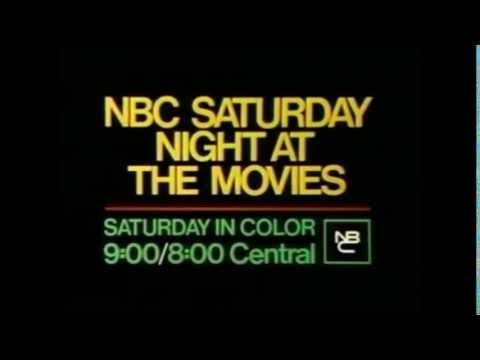 The program was the
first major network initiative to broadcast recent movies on the air. Although
movies from the 1930s and '40s had appeared on TV, the networks had resisted
showing more recent films. Until the 1960s, a fierce rivalry existed between
the television and movie industries, and neither wanted to promote the other.
However, with the success of Saturday Night at the Movies, relatively
recent films became a staple of TV programming.
The program was the
first major network initiative to broadcast recent movies on the air. Although
movies from the 1930s and '40s had appeared on TV, the networks had resisted
showing more recent films. Until the 1960s, a fierce rivalry existed between
the television and movie industries, and neither wanted to promote the other.
However, with the success of Saturday Night at the Movies, relatively
recent films became a staple of TV programming.September 23, 1976
The first season of Black Sheep Squadron began on NBC under
the name Baa Baa Black Sheep.
Baa Baa Black Sheep (later syndicated
as Black Sheep Squadron) is a period military television series that aired
on NBC from 1976 until 1978.
Its premise was based on the experiences of United States Marine Corpsaviator Greg Boyington and his World War II "Black Sheep Squadron". The series was
created and produced byStephen J. Cannell. The opening credits read: "In World War II, Marine Corps Major
Greg 'Pappy' Boyington commanded a squadron of fighter pilots. They were a
collection of misfits and screwballs who became the terrors of the South
Pacific. They were known as the Black Sheep."
September 23, 1986The first season of Matlock began on NBC.
Matlock is an American television legal
drama, starring Andy Griffith in the title role of criminal-defense attorneyBen Matlock. The show, produced by
Intermedia Entertainment Company (first season only), The Fred Silverman Company, Dean Hargrove Productions, Viacom Productions, and Paramount Television (season 9 only), originally aired from March 3, 1986, to May 8,
1992, on NBC; and from November 5, 1992,
until May 7, 1995, on ABC.
The
show's format is similar to that of CBS's Perry Mason (with both Matlock and the later Perry
Mason TV movies in the 1980s created by Dean Hargrove), with Matlock identifying
the perpetrators and then confronting them in dramatic courtroom scenes. One
difference, however, was that whereas Mason usually exculpated his clients at a
pretrial hearing, Matlock usually secured an acquittal at trial, from the jury.
September 24, 1936
Muppet creator Jim Henson is born in Greenville,
Mississippi.
Henson joined a puppet
club in high school and used his skills to land a job at a local TV station
between high school and college. His homemade puppets delighted audiences, and
during his freshman year at the University of Maryland the TV station gave him
his own five minute show, called Sam and Friends. The show ran twice a
day, just before popular news show the Huntley-Brinkley Report and again
before the Tonight Show with Steve Allen. Henson's program ran for eight
years and won a local Emmy in 1958.In 1955, Henson took an
old green coat of his mother's, attached two halves of a ping-pong ball for
eyes, and created a lizard-like character named Kermit, who later evolved into
Kermit the Frog. Other familiar characters took shape on Sam and Friends,
as Henson's Muppets multiplied. In 1957, Henson made the first of more than 300
TV commercials for Wilkins Coffee. In 1963 Rowlf the Dog became a regular on
variety program The Jimmy Dean Show, which ran until 1966.
Henson showed an
interest in filmmaking in the mid 1960s, making a short film called Timepiece
in 1965, which was nominated for an Oscar. A few years later, he met Joan Ganz
Cooney, a TV producer heading up a study of children and television at a
seminar for educators in Boston. Ganz was formulating an idea for a kids' TV
program she called The Preschool Educational Television Show, and she
quickly persuaded Henson and his Muppets to join her. The show, with its new,
snappier title, Sesame Street, was launched in 1969, and generations of
children fell in love with Big Bird, Kermit the Frog, Ernie and Bert, Oscar the
Grouch, Grover, Cookie Monster, and many other Henson creations.
After seven years of
children's television, Henson wanted to explore more sophisticated possibilities
for his Muppets. He shopped around an idea for a variety show starring Kermit,
but none of the networks were interested. Undeterred, Henson created The
Muppet Show as a syndicated series, which became the world's most watched
TV show, with 235 million viewers in more than 100 countries. The program ran
from 1976 to 1981 and won three Emmys. Meanwhile, the Muppets launched a movie
career in 1979 with The Muppet Movie, followed by The Great Muppet
Caper (1981) and The Muppets Take Manhattan (1984).
Other,
less familiar Henson creatures appeared in The Dark Crystal (1982) and Labyrinth
(1986) with David Bowie, as well as in two cable TV series, Fraggle Rock
and The Ghost of Faffner Hall. His Saturday morning cartoon, Jim
Henson's Muppet Babies, was launched in 1984 and won four Emmys. Henson
died of pneumonia in 1990.
September 24, 1961
The Bullwinkle Show premiered in
prime time on NBC-TV. The show was originally on ABC in the afternoon as Rocky and His
Friends.
September 24, 1966
"Last
Train to Clarksville" gives the made-for-TV Monkees a real-life pop hit.
When
producers Bert Schneider and Bob Rafelson conceived a situation comedy called The
Monkees in 1965, they hoped to create a ratings success by blurring the
line between pop music and television. Instead, they succeeded in obliterating
that line entirely when the pop group that began as a wholly fictional creation
went on to rival, however briefly, the success of its real-life inspiration,
the Beatles. On this day in 1966, the made-for-television Monkees knocked down
the fourth wall decisively when their first single, "Last Train To
Clarksville" entered the Billboard Top 40."Last
Train To Clarksville" was written by the team that was also responsible
for the theme song of The Monkees, songwriters Tommy Boyce and Bobby
Hart. Though Boyce and Hart had been working together in Los Angeles for
several years before being asked to write and record the soundtrack for
Schneider and Rafelson's A Hard Day's Night-inspired pilot, their
biggest success to date had been in writing minor hits for Chubby Checker and Paul
Revere and the Raiders and in being
commissioned to write the theme song for Days Of Our Lives. Their
association with The Monkees would end up launching Boyce and Hart on a
moderately successful career as performers in the late 1960s and early 1970s. By far their best-known hits, however, were the ones
they wrote for the Monkees, including "(I'm Not Your) Steppin' Stone"
and "Last Train To Clarksville."
Just
as producers Schneider and Rafelson had reached out to a pair of industry
professionals to create the music for the pilot episode of The Monkees,
they engaged numerous others to create the other memorable songs in the
Monkees' catalog. Under the musical direction of Don Kirshner, The Monkees featured
hits by some of the era's greatest songwriters, including Neil Diamond, who
wrote "I'm A Believer" and "A Little Bit Me, A Little Bit
You" (both 1967) and the great husband-and-wife team of Gerry Goffin and
Carole King, who wrote "Daydream Believer" (1967). Numerous other
Monkees songs were written by such songwriting luminaries as Cynthia Mann and
Barry Weill, Harry Nilsson and Carole Bayer Sager and Neil Sedaka.
By
the time their third album was released, the real-life Monkees—Davy Jones,
Michael Nesmith, Mickey Dolenz and Peter Tork—had taken over creative control
of their musical output, including taking on much of the songwriting. Although
they would release seven more studio albums, none would contain hits as
successful or memorable as the one that gave the group its breakthrough on
September 24, 1966.
September 21, 2001
America: A Tribute to Heroes was shown on 35 separate broadcast and cable networks simultaneously.
The telethon raised $150 million in pledges to benefit families of the World Trade Center and Pentagon attacks that occurred on September 11, 2001. The pledges were made from September 21 through September 24, 2001.
September 22, 1986
The TV show ALF
debuted on NBC.
ALF is
an American science fiction sitcom that
aired on NBC from
September 22, 1986 to March 24, 1990. It was the first television series to be
presented in Dolby Surround.
The title character is Gordon
Shumway, a friendly extraterrestrial nicknamed ALF (an acronym for Alien Life Form),
who crash lands in the garage of the suburban middle-class Tanner
family. The series stars Max Wrightas
father Willie Tanner, Anne Schedeen as
mother Kate Tanner, and Andrea Elson and Benji Gregory as
their children, Lynn and Brian Tanner. ALF was performed by
puppeteer/creator Paul Fusco.
Produced by Alien Productions, ALF originally
ran for four seasons and produced 99 episodes, including three one-hour
episodes that were divided into two parts for syndication totaling 102
episodes.
September 23, 1956
Mickey Dolenz began his
television career in NBC's Circus Boy
series.
He
later became a member of the Monkees.
September 23, 1961
Weekly TV movie program Saturday Night at the Movies debuts on NBC, starting with the 1953 film How to Marry a Millionaire.
September 23, 1976
The first season of Black Sheep Squadron began on NBC under
the name Baa Baa Black Sheep.
Baa Baa Black Sheep (later syndicated as Black Sheep Squadron) is a period military television series that aired on NBC from 1976 until 1978. Its premise was based on the experiences of United States Marine Corpsaviator Greg Boyington and his World War II "Black Sheep Squadron". The series was created and produced byStephen J. Cannell. The opening credits read: "In World War II, Marine Corps Major Greg 'Pappy' Boyington commanded a squadron of fighter pilots. They were a collection of misfits and screwballs who became the terrors of the South Pacific. They were known as the Black Sheep."
September 23, 1986
The first season of Matlock began on NBC.
Matlock is an American television legal
drama, starring Andy Griffith in the title role of criminal-defense attorneyBen Matlock. The show, produced by
Intermedia Entertainment Company (first season only), The Fred Silverman Company, Dean Hargrove Productions, Viacom Productions, and Paramount Television (season 9 only), originally aired from March 3, 1986, to May 8,
1992, on NBC; and from November 5, 1992,
until May 7, 1995, on ABC.
The
show's format is similar to that of CBS's Perry Mason (with both Matlock and the later Perry
Mason TV movies in the 1980s created by Dean Hargrove), with Matlock identifying
the perpetrators and then confronting them in dramatic courtroom scenes. One
difference, however, was that whereas Mason usually exculpated his clients at a
pretrial hearing, Matlock usually secured an acquittal at trial, from the jury.
September 24, 1936
Muppet creator Jim Henson is born in Greenville,
Mississippi.
Henson joined a puppet club in high school and used his skills to land a job at a local TV station between high school and college. His homemade puppets delighted audiences, and during his freshman year at the University of Maryland the TV station gave him his own five minute show, called Sam and Friends. The show ran twice a day, just before popular news show the Huntley-Brinkley Report and again before the Tonight Show with Steve Allen. Henson's program ran for eight years and won a local Emmy in 1958.
In 1955, Henson took an
old green coat of his mother's, attached two halves of a ping-pong ball for
eyes, and created a lizard-like character named Kermit, who later evolved into
Kermit the Frog. Other familiar characters took shape on Sam and Friends,
as Henson's Muppets multiplied. In 1957, Henson made the first of more than 300
TV commercials for Wilkins Coffee. In 1963 Rowlf the Dog became a regular on
variety program The Jimmy Dean Show, which ran until 1966.
Henson showed an
interest in filmmaking in the mid 1960s, making a short film called Timepiece
in 1965, which was nominated for an Oscar. A few years later, he met Joan Ganz
Cooney, a TV producer heading up a study of children and television at a
seminar for educators in Boston. Ganz was formulating an idea for a kids' TV
program she called The Preschool Educational Television Show, and she
quickly persuaded Henson and his Muppets to join her. The show, with its new,
snappier title, Sesame Street, was launched in 1969, and generations of
children fell in love with Big Bird, Kermit the Frog, Ernie and Bert, Oscar the
Grouch, Grover, Cookie Monster, and many other Henson creations.
After seven years of children's television, Henson wanted to explore more sophisticated possibilities for his Muppets. He shopped around an idea for a variety show starring Kermit, but none of the networks were interested. Undeterred, Henson created The Muppet Show as a syndicated series, which became the world's most watched TV show, with 235 million viewers in more than 100 countries. The program ran from 1976 to 1981 and won three Emmys. Meanwhile, the Muppets launched a movie career in 1979 with The Muppet Movie, followed by The Great Muppet Caper (1981) and The Muppets Take Manhattan (1984).
Other, less familiar Henson creatures appeared in The Dark Crystal (1982) and Labyrinth (1986) with David Bowie, as well as in two cable TV series, Fraggle Rock and The Ghost of Faffner Hall. His Saturday morning cartoon, Jim Henson's Muppet Babies, was launched in 1984 and won four Emmys. Henson died of pneumonia in 1990.
September 24, 1961
The Bullwinkle Show premiered in
prime time on NBC-TV.
The show was originally on ABC in the afternoon as Rocky and His
Friends.
September 24, 1966
"Last
Train to Clarksville" gives the made-for-TV Monkees a real-life pop hit.
When
producers Bert Schneider and Bob Rafelson conceived a situation comedy called The
Monkees in 1965, they hoped to create a ratings success by blurring the
line between pop music and television. Instead, they succeeded in obliterating
that line entirely when the pop group that began as a wholly fictional creation
went on to rival, however briefly, the success of its real-life inspiration,
the Beatles. On this day in 1966, the made-for-television Monkees knocked down
the fourth wall decisively when their first single, "Last Train To
Clarksville" entered the Billboard Top 40.
"Last
Train To Clarksville" was written by the team that was also responsible
for the theme song of The Monkees, songwriters Tommy Boyce and Bobby
Hart. Though Boyce and Hart had been working together in Los Angeles for
several years before being asked to write and record the soundtrack for
Schneider and Rafelson's A Hard Day's Night-inspired pilot, their
biggest success to date had been in writing minor hits for Chubby Checker and Paul
Revere and the Raiders and in being
commissioned to write the theme song for Days Of Our Lives. Their
association with The Monkees would end up launching Boyce and Hart on a
moderately successful career as performers in the late 1960s and early 1970s. By far their best-known hits, however, were the ones
they wrote for the Monkees, including "(I'm Not Your) Steppin' Stone"
and "Last Train To Clarksville."
Just
as producers Schneider and Rafelson had reached out to a pair of industry
professionals to create the music for the pilot episode of The Monkees,
they engaged numerous others to create the other memorable songs in the
Monkees' catalog. Under the musical direction of Don Kirshner, The Monkees featured
hits by some of the era's greatest songwriters, including Neil Diamond, who
wrote "I'm A Believer" and "A Little Bit Me, A Little Bit
You" (both 1967) and the great husband-and-wife team of Gerry Goffin and
Carole King, who wrote "Daydream Believer" (1967). Numerous other
Monkees songs were written by such songwriting luminaries as Cynthia Mann and
Barry Weill, Harry Nilsson and Carole Bayer Sager and Neil Sedaka.
By the time their third album was released, the real-life Monkees—Davy Jones, Michael Nesmith, Mickey Dolenz and Peter Tork—had taken over creative control of their musical output, including taking on much of the songwriting. Although they would release seven more studio albums, none would contain hits as successful or memorable as the one that gave the group its breakthrough on September 24, 1966.
Stay Tuned
Tony Figueroa

Stay Tuned
Tony Figueroa
Subscribe to:
Posts (Atom)