Tony Figueroa

I represent the first generation who, when we were born, the television was now a permanent fixture in our homes. When I was born people had breakfast with Barbara Walters, dinner with Walter Cronkite, and slept with Johnny Carson. Read the full "Pre-ramble"

Thomas Bolyn Smothers III was born on February 2, 1937, at the Fort Jay army post hospital on Governors Island in New York City, the son of Ruth (née Remick), a homemaker; and Major Thomas B. Smothers, an army officer who died a POW, of the Japanese, in April 1945. After moving to California, he graduated from Redondo Union High School in Redondo Beach, California. He was a competitive unicyclist, and a state champion gymnast in the parallel bars. Smothers later attended San José State University, then known as San José State College. At SJSC, Smothers participated both in gymnastics and pole vault for the track team.

The Smothers Brothers next appeared on the CBS sitcom The Smothers Brothers Show from 1965 to 1966. Tom felt that the show did not play to the brothers' strengths and wanted creative control over their next venture.
Tom Smothers negotiated creative control over their next CBS show, a variety show entitled The Smothers Brothers Comedy Hour in 1967.
The documentary Smothered describes how the brothers (particularly Tom) fought CBS censors to sneak in references to religion, recreational drugs, sex, and the Vietnam War. Smothers is widely quoted as saying: "The only valid censorship of ideas is the right of people not to listen." The brothers' oppositional politics led to their show's demise, with David Steinberg later claiming "The most innovative variety show on television shut down because of political pressure". During the same years, Tom wrote and recorded mainstream songs, such as "Can't Help Falling in Love with You." Tom has since stated, "When the Smothers Brothers came on the air we had no political point of view or social consciousness, it just evolved as the show was on the air."
Smothers introduced some musical acts at the Monterey Pop Festival in 1967. As he became more politically active, he befriended similarly inclined celebrities like John Lennon.In 1969, Smothers and Lennon played acoustic guitars on Lennon's recording of his single "Give Peace a Chance" (Smothers' name was also mentioned in the song). The song was written and performed during Lennon's and Yoko Ono's 'Bed-In' honeymoon on June 1, 1969, in Room 1742 at the Queen Elizabeth Hotel in Montreal, Quebec, Canada. Smothers can be seen in the hotel room in the 1988 documentary film Imagine: John Lennon.
After the show was canceled, Smothers became more strident in his politics.
In the 1970s, Smothers chided popular comedian Bill Cosby for not taking a stand on political issues of the day such as civil rights.
In October 1976, both Cosby and Smothers were in attendance at a Playboy Mansion party. The tension between the two culminated in Cosby's punching Smothers in the head.
Tom Smothers's politics were in marked contrast to those of his brother Dick, whom Tom describes as "more conservative". Tom openly protested Democratic president Lyndon B. Johnson and his involvement in and perpetuation of the Vietnam war. Tom stated in 2006 that the duo's real-life political and philosophical differences were a key part of their ability to maintain their act for as long as they did.
In motion pictures, Tom Smothers portrayed corporate-executive-turned-tap-dancing-magician Donald Beeman in one of Brian De Palma's earlier films, Get to Know Your Rabbit (1972). He also played a banker in Silver Bears. He later portrayed Spike in Serial (1980).
In 1973, he voiced Ted E. Bear (Theodore Edward Bear) in the DePatie-Freleng NBC animated Christmas special The Bear Who Slept Through Christmas. Ten years later, he voiced Ted E. Bear again for its Halloween sequel The Great Bear Scare.
In 1980 Smothers starred in the film There Goes the Bride. In 1982 he played with an ensemble cast in Pandemonium in which he was a brave Canadian Mountie chasing down a serial killer at a cheerleader camp. In 1983 he appeared in an episode of the UK TV series Tales Of The Unexpected. He also voiced one of the characters in the cartoon Christmas movie Precious Moments: Timmy's Special Delivery in 1993.
In 2007, Tom and Dick Smothers filmed a series of 30-second commercials and promotional spots for the River Rock Casino in Geyserville, California.
To augment their act in recent years, "Yo-Yo Man" became part of their shows. Tom Smothers had created the mostly non-speaking character in the late '60s, a comedic performer of tricks using a yo-yo. The term "Yo-Yo Man" is registered in his name. In their 2008 tour, Yo-Yo Man was listed as the group's opening act.
In 2008, during the 60th Primetime Emmy Awards, Smothers was awarded a special Emmy. In 1969, when he was head writer of The Smothers Brothers Comedy Hour, the writing staff was awarded the Emmy for Outstanding Writing in a Comedic Series. Smothers had refused to let his name be on the list of writers nominated for the Emmy, because he felt his name was too volatile. The award at the 2008 ceremony was presented by Steve Martin, who was one of the writers who originally won the award.
In December 2009, Tom and Dick both guest starred in a 21st-season episode of The Simpsons that also featured Cooper, Peyton, and Eli Manning.
On May 6, 2011, the American Civil Liberties Union's Sonoma County chapter honored Smothers with its Jack Green Civil Liberties Award for his work against television censorship and for speaking out for peace and civil liberties.Tom and Dick Smothers reunited in 2019 to mark the 50th anniversary of The Smothers Brothers Comedy Hour's abrupt cancellation.
On the December 11, 2022, episode of CBS News Sunday Morning, the brothers announced that they would be going on tour in 2023.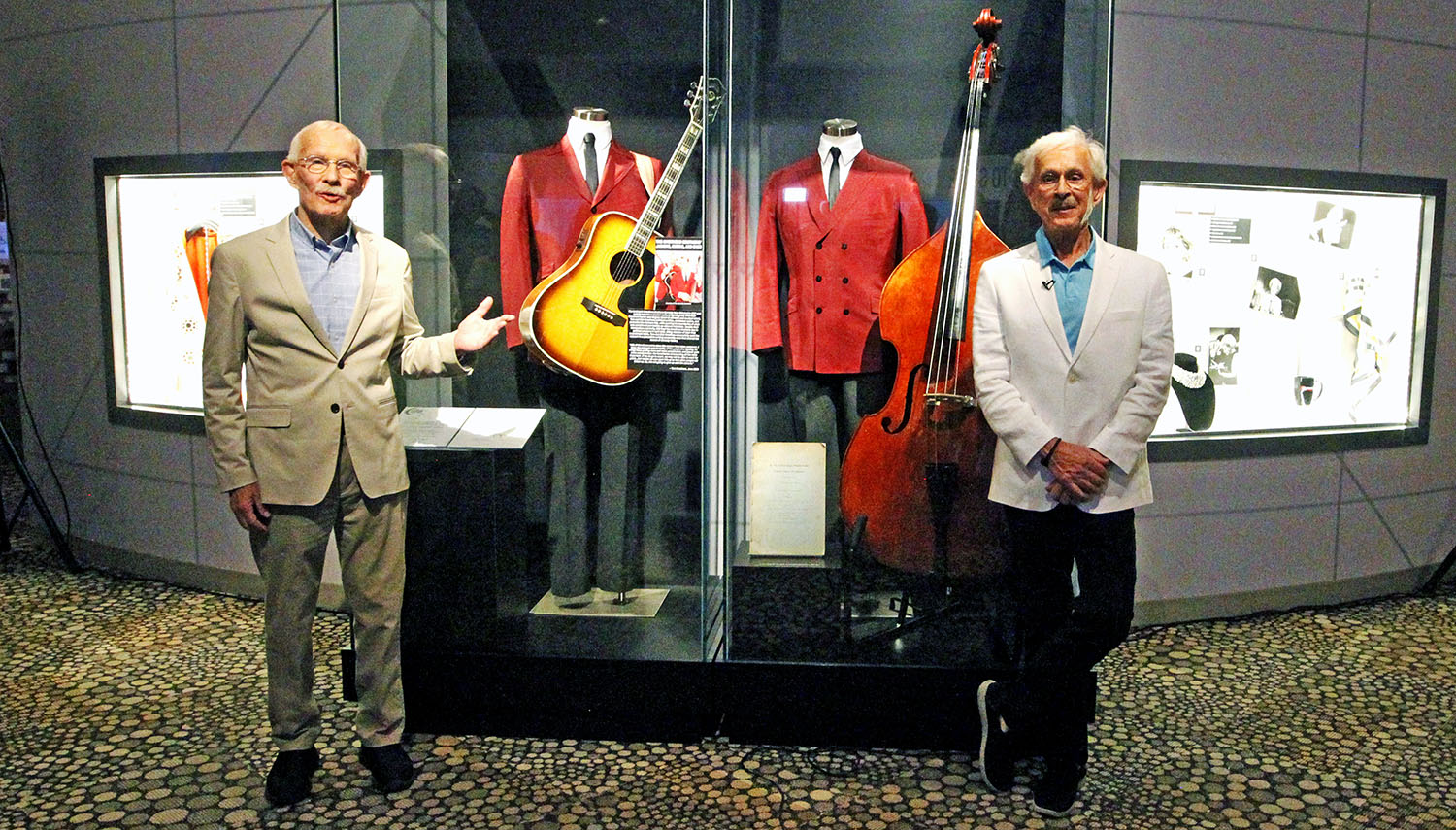
 |
| Stay Tuned Tony Figueroa |


April
4, 1967
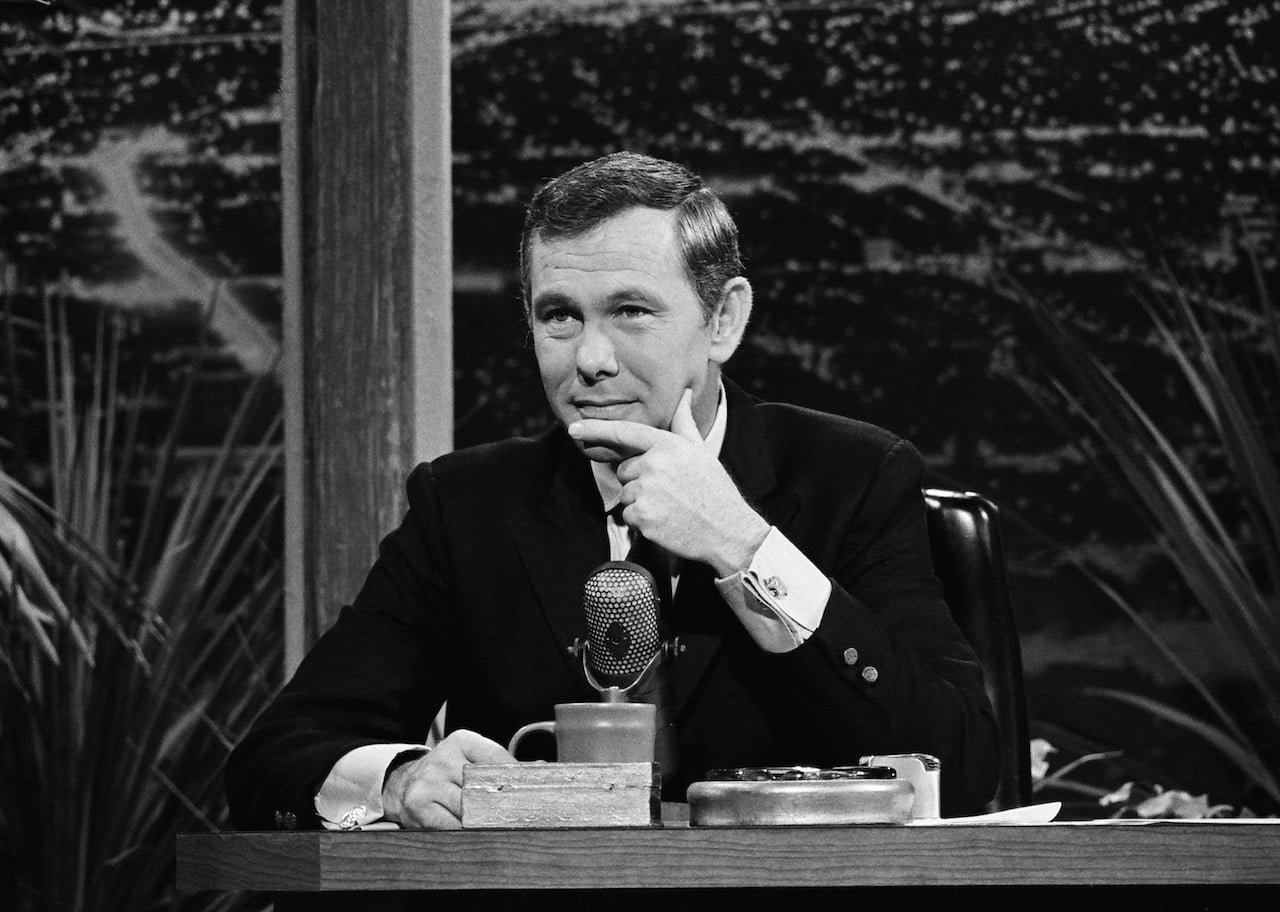
Johnny Carson quit "The Tonight Show."
April
5, 1987
Married... with Children first aired.
The show aired for 11 seasons and featured a dysfunctional family living in Chicago, Illinois. The show, notable for being the first prime time television series to air on Fox, ran from April 5, 1987, to June 9, 1997. The series was created by Michael G. Moye and Ron Leavitt. The show was known for handling non-standard topics for the time period, which garnered the then-fledgling Fox network a standing among the Big Three television networks.The
series' 11-season, 259-episode run makes it the longest-lasting live-action
sitcom on the Fox network. The show's famous theme song is "Love and
Marriage"
by Sammy Cahn and Jimmy Van
Heusen,
performed by Frank Sinatra from the 1955 television production Our
Town.
The
first season of the series was videotaped at ABC Television Center in Hollywood. From season
two to season eight, the show was taped at Sunset Gower Studios in Hollywood and the
remaining three seasons were taped at Sony Pictures Studios in Culver
City. The
series was produced by Embassy Communications on its first season and
the remaining seasons by ELP Communications under the studio Columbia Pictures Television (and eventually Columbia TriStar Television).
In
2007, it was listed as one of Time Magazine's "100 Best
TV Shows of All-Time." In 2008, The show placed #94 on Entertainment
Weekly's
"New TV Classics" list.
The show follows the lives of Al Bundy, a once-glorious high school football player (who scored four touchdowns in a single game for Polk High School) turned hard luck salesman of women's shoes; his tartish, obnoxious wife Peg; their attractive but dimwitted and promiscuous daughter Kelly; and Bud, their unpopular, girl crazy, oily but comparatively smart son (and the only Bundy who ever attended college). Their neighbors are the upwardly mobile Steve Rhoades and his wife Marcy, who later gets remarried to Jefferson D'Arcy, a white-collar criminal who becomes Marcy's "trophy husband" and Al's sidekick. Most storylines involve a scheming Al being foiled by his cartoonish dim wit and bad luck. His rivalry with and loathing for Marcy play a significant role in most episodes.
April
5, 1987
The Tracey Ullman Show
first aired.
The Tracey Ullman Show is known for
producing a series of shorts featuring the Simpson family, which was adapted into the TV series The Simpsons, which is also produced by Gracie Films and 20th
Century Fox Television (now 20th Television).
April 7, 1927
The first simultaneous telecast of image and sound takes place.

April
7, 2012
Longtime “60 Minutes” journalist Mike Wallace dies at age 93 in New Canaan, Connecticut.
Myron Leon Wallace was born on May 9, 1918, in Brookline, Massachusetts. His parents were Russian Jewish immigrants and his
father worked as a wholesale grocer and insurance broker. After graduating from
the University of Michigan in 1939, Wallace was a
radio news writer and announcer in Michigan and Chicago. He then enlisted in the Navy, serving as a communications
officer during World War II.
In the 1950s, Wallace worked on TV talk
shows and game shows in New York City, and also appeared in commercials and acted on
Broadway. He developed his style as a tenacious interrogator on the TV
interview show "Night Beat," which aired from 1956 to 1957. In 1962,
the eldest of Wallace's two sons died at age 19 in a hiking accident in Greece,
a tragedy that inspired Wallace to focus his career on serious journalism. In
1963, he became a correspondent for CBS News, and went on to report about theVietnam War, among other stories.
"60 Minutes" premiered on CBS on September 24, 1968, and was
co-hosted by Wallace and Harry Reasoner. The show, with its trademark
opening sequence featuring a ticking stopwatch, became hugely popular and
influential, spawning a slew of other newsmagazine programs, such as
"20/20" and "Primetime Live," and ranking among the top 10
programs in the United States from 1977 to 2000.
Wallace became known for investigative pieces in which he used ambush
interviews and hidden cameras to uncover corruption and scams. He also
conducted scores of memorable interviews with newsmakers ranging from Clint
Hill, the former U.S. Secret Service agent who was in President John Kennedy's motorcade
when he was assassinated, to Iran's Ayatollah Khomeini during the 1979 American
hostage crisis.
Some of Wallace's reporting proved controversial. In the 1980s, he and CBS were embroiled in a $120 million libel
lawsuit brought against them by General William Westmoreland for the way he was
portrayed in a 1982 documentary about the Vietnam War. The general dropped the
lawsuit in 1985, but Wallace later revealed that the pressure of the situation
caused him to suffer a deep depression and attempt suicide. In another
incident, Wallace's 1995 interview for "60 Minutes" with tobacco industry whistleblower Jeffrey Wigand and
CBS's controversial handling of the story served as the basis of the 1999 movie
"The Insider."
Wallace retired from "60 Minutes" in 2006 at age 88, but continued to
contribute occasionally to the program. His final piece aired in 2008--an
interview with baseball pitcher Roger Clemens, who was accused of using
performance-enhancing drugs.
April 10, 1972
After a 20-year exile in Europe, Charlie Chaplin returned to Hollywood to receive an honorary Oscar.
Chaplin, then 82, received probably the longest standing ovation in the history of the Oscar telecast as he walked slowly to the podium to pick up his Academy Award for his "incalculable effect in making motion pictures the art form of the century." Chaplin was quite literally speechless as he looked at the throng of stars whose cheers kept getting louder. He finally uttered "thank you so much," referring to the audience as "sweet people." And there wasn't a dry eye in the house when Jack Lemmon gave him his famous Little Tramp hat and cane.