I represent the first generation who, when we were born, the television was now a permanent fixture in our homes. When I was born people had breakfast with Barbara Walters, dinner with Walter Cronkite, and slept with Johnny Carson.
Read the full "Pre-ramble"
Family Feud is an American television game show created by Mark Goodson where two families compete
to name the most popular responses to survey questions in order to win cash and
prizes.
The program premiered on ABC on July 12, 1976, and ran
as part of its daytime schedule until June 14, 1985. The program was
re-launched by CBS on July 4, 1988, and ran
until September 10, 1993. Three separate editions for syndication were also produced. The
first aired from September 19, 1977 to September 6, 1985. The second aired from
September 19, 1988 to September 8, 1995. The current syndicated series
premiered on September 20, 1999.
The ABC network version of the show and the first syndicated series were
hosted by Richard Dawson. Ray Combs hosted the CBS series and the first six
seasons of the accompanying syndicated version, then was replaced by Dawson for
the final season. The 1999 syndicated series has been hosted by Louie Anderson(1999–2002), Richard Karn (2002–06), John O'Hurley (2006–10), and Steve Harvey (2010–present). Announcers
for the series have included Gene Wood (1976–95), Burton
Richardson (1999–2010), Joey Fatone(2010–15), and Rubin Ervin (2015–present).
The program has spawned multiple regional adaptations in over 50 international markets outside the United States. Within
a year of its debut, the original version became the number one game show in
daytime television; however, as viewing habits changed, the ratings declined.
Harvey's takeover in 2010 increased Nielsen ratingssignificantly and eventually
placed the program among the top five most popular syndicated television shows
in the country. In 2013, TV Guide ranked Family Feud third
in its list of the 60 greatest game shows of all time.
The last episode of
"I Dream of Jeannie" aired on NBC-TV.
Jeannie and Tony's cousin
want to make Tony the chili king even though NASA forbids its astronauts to
make commercial endorsements.The show premiered was on September 18,
1965.
September 7, 1950
Radio game
show Truth or Consequences comes to television.
The show required erring quiz show contestants to
perform outrageous stunts as the consequence for wrong answers. As we mentioned
in an earlier episode (This week in Television History: The
Start of Something Big) the radio
version of the show ran from 1940 to 1956. The TV version of the series
launched on CBS in 1950, but the network dropped the show after only one
season. In 1954, NBC revived the game show, running it in prime time until
1958. Meanwhile, the network also created a daytime version of the show, hosted
by Bob Barker, which ran from 1956 to 1965. NBC dropped the show altogether in
1965, but it continued as a syndicated series until 1974, with Barker staying
on as host.
September 7, 1950
Julie Kavner, voice of Marge Simpson, is born.
Best known as the voice of Marge Simpson on The
Simpsons, the longest-running animated show in TV history, is born in Los
Angeles. Before taking on the role of the famously blue-haired housewife,
Kavner played Brenda Morgenstern on Rhoda, a spin-off of The Mary
Tyler MooreShow that originally aired from 1974 to 1978. In 1978,
Kavner won an Emmy Award for Best Supporting Actress in a Comedy Series for her
portrayal of Brenda, the younger sister of the show’s lead character, played by
Valerie Harper. She won another Emmy in 1992, for Outstanding Voice-over
Performance, for an episode of The Simpsons. On the big screen, Kavner
has been a frequent performer in the films of the writer-director Woody Allen,
including Hannah and Her Sisters (1986), Radio Days (1987) and Shadows
and Fog (1992). Among her other film credits are Awakenings (1990)
and Judy Berlin (1999).
The Simpsons began as a series of animated shorts created by
cartoonist Matt Groening (who reportedly based some of the main characters on
members of his family) that aired on The Tracey Ullman Show starting in
1987. On December 17, 1989, The Simpsons debuted as primetime program on
Fox with a Christmas special titled “Simpsons Roasting on an Open Fire.”
Set in the fictional town of Springfield, The Simpsons skewers
American culture and society with its chronicles of a middle-class family
comprised of the buffoonish husband and father Homer Simpson, a safety
inspector at a nuclear power plant; his well-meaning, sometimes gullible wife
Marge; and their troublemaker son Bart, precocious daughter Lisa and baby
Maggie. The Simpsons is known for its sharp writing (Conan O’Brien used
to write for the show before he became a late-night TV host) and features a
large cast of supporting characters, including Homer’s boss and nemesis, Mr.
Burns; the Simpsons’ neighbor Ned Flanders, a devout Christian; and Krusty the
Clown. In addition to providing the voice of Marge Simpson, Julie Kavner also
voices the characters Patty and Selma, Marge’s chain-smoking twin sisters. A
long list of celebrities, including Kelsey Grammer, Larry King, Sting, Hugh
Hefner, Ringo Starr, J.K. Rowling, Tony Blair, Stephen Hawking, 50 Cent and Mel
Gibson have made guest appearances on the show as themselves or fictional
characters.
The Simpsons has been an enormous commercial and critical hit--in
1999, Time dubbed it the greatest TV show of the 20th century--and
images of the yellow-skinned Simpson characters have appeared on everything
from T-shirts to video games. As a pop phenomenon, the show paved the way for
other popular animated comedies, including Beavis and Butt-head and South
Park, and has been a source of popular catchphrases,
including Homer’s “D’oh!” which was added to the Oxford English
Dictionary in 2001. A big-screen version of the show, The Simpsons
Movie, debuted July 27, 2007, and was a box-office hit.
TV
game show The $64,000 Question debuts on this day in 1955. The show was
a spin-off of radio game show The $64 Question and spun off The $64,000
Challenge. The show started with contestants answering a
question worth $64, with each subsequent question worth double the amount of
the previous one. The show was an instant hit, knocking I Love Lucy out
of first place in the ratings. Rumors of rigging plagued this and other
big-money game shows in the mid-1950s causing The $64,000 Question and The
$64,000 Challenge to be yanked off the air within three months of the quiz show scandal's eruption. Challenge went first, in September 1958, with Question –
once the emperor of Tuesday night television – taking its Sunday night
time slot, until it was killed in November, 1958.
June
8, 2010
The
pilot episode of Pretty Little Liars aired on ABC
Family.
Pretty
Little Liars premiered on June
8, 2010 the United States, becoming ABC Family's highest-rated series debut on
record across the network's target demographics. It
ranked number one in key 12–34 demos and teens, becoming the number-one
scripted show in Women 18–34, and Women 18–49. The premiere was number two in
the hour for total viewers, which generated 2.47 million unique viewers, and
was ABC Family's best delivery in the time slot since the premiere of The Secret Life of the American Teenager.
The
second episode retained 100% of its premiere audience with 2.48 million
viewers, despite the usual downward trend following a premiere of a show, and
built on its premiere audience. It was the dominant number one of its time slot
in Adults 18–49, and the number one show in female teens. Subsequent
episodes fluctuated between 2.09 and 2.74 million viewers. The August 10,
2010 "Summer Finale" episode drew an impressive 3.07 million viewers.
Set
in the fictional town of Rosewood, Pennsylvania, the series follows the lives
of four girls, Aria Montgomery, Hanna Marin, Emily Fields,
and Spencer Hastings, whose clique falls apart after the disappearance of
their leader, Alison DiLaurentis. One year later, the estranged friends are reunited
as they begin receiving messages from a mysterious figure named A who threatens
to expose their deepest secrets, including ones they thought only Alison knew.
At first, they think it's Alison herself, but after her body is found, the
girls realize that someone else is planning on ruining their perfect lives.
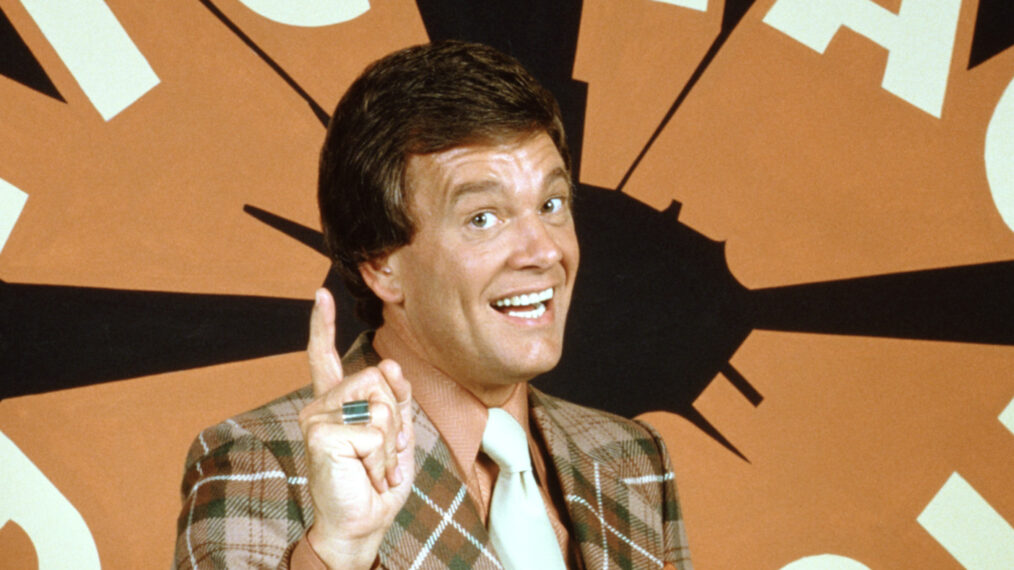
I have loved hosting over the years, simply because I love working with people.
It's the perfect job.
-Wink Martindale
Winston Conrad "Wink" Martindale December 4, 1933 – April 15, 2025
Wink Martindale's first break into television was atWHBQ-TVin Memphis, as the host ofMars Patrol, a science-fiction themedchildren's television series. At his tenure with WHBQ, Martindale became the host of the TV showTeenage Dance Party, where his friendElvis Presleymade an appearance on June 16, 1956.Following Presley's death in 1977, Martindale aired a nationwide tribute radio special in his honor.
Martindale's first game-show hosting job was on the show What's This Song?, which he hosted for NBC (credited as "Win Martindale") from 1964 to 1965. From 1970 to 1971, he hosted a similar song-recognition game show, Words and Music, again on NBC. His first major success came in 1972, when he took the emcee position on a new CBS game show, Gambit. He spent four years hosting the original Gambit and later hosted a Las Vegas-based revival for 13 months in 1980–81.
The emcee role for which Martindale is most widely known is on Tic-Tac-Dough. He was tapped by Barry & Enright Productions to host the revived series in 1978 and stayed until 1985, presiding over one of the more popular game shows of the day. Coincidentally, Martindale died one day after the revival of Tic-Tac-Dough premiered on Game Show Network, which occurred on April 14, 2025. While hosting Tic-Tac-Dough, Martindale (along with fellow game show hosts Art James, Jack Clark, and Jim Perry) made a cameo appearance in the 1980 TV movie The Great American Traffic Jam in a scene where the quartet played golf. During that time, Martindale decided to branch out and form his own production company, Wink Martindale Enterprises, so he could develop and produce his own game shows. His first venture was Headline Chasers, a co-production with Merv Griffin that premiered in 1985; Martindale had left Tic-Tac-Dough to host his creation, but the show did not meet with any success and was cancelled after its only season in 1986. Martindale's next venture was more successful, as he created and, along with Barry & Enright, co-produced the Canadian game show Bumper Stumpers for Global Television Network and USA Network. This series aired on both American and Canadian television from 1987 until 1990. In 1986, he launched a partnership with producer Jerry Gilden, Martindale/Gilden Productions, and it started off with a game show development contract with CBS. In 1988, Martindale/Gilden Productions secured the licensing rights from Parker Brothers to develop game shows based on Parker-owned properties such as Boggle.
After hosting two short-lived Merrill Heatter-produced game shows (a revival of High Rollers and the Canadian The Last Word), Martindale went back into producing and launched The Great Getaway Game on Travel Channel in 1990. Two years after that program went off the air, Martindale teamed up with Bill Hillier and The Family Channel to produce a series of "interactive" game shows that put an emphasis on home viewers being able to play along from home and win prizes. Four series were commissioned and Martindale served as host for all four. The first to premiere, on June 7, 1993, was Trivial Pursuit, an adaptation of the popular trivia-based board game. On March 7, 1994, the list-based Shuffle and Boggle, another board-game adaptation, premiered and were very different from Trivial Pursuit, which was presented more in a traditional game-show style. These two programs, along with the Jumble-based show that replaced Shuffle on June 13, 1994, after its initial 14-week run ended, were played more like the interactive games for the home viewers that were the focus of the block. Except for Trivial Pursuit, none of the interactive games were much of a success; Boggle ended on November 18, 1994, while Jumble came to an end on December 30, 1994. Trivial Pursuit ended on the same day as Jumble, but continued to air in reruns for some time afterward, finally being removed from the Family Channel schedule in July 1995.
In June 1996, Martindale became host of Lifetime's highest-rated quiz show, Debt, which had debt-ridden contestants compete to try to eliminate their debts. Despite its popularity on cable, Debt was cancelled in 1998, for the reason more males were watching the show than females (the network's target audience). Martindale did not host another game show for over a decade.
J.R. Ewing (Larry Hagman), the
character millions loved to hate on TV’s popular nighttime drama Dallas, was shot.
The shooting made the season finale, titled A House Divided, one of television’s
most famous cliffhangers and left America wondering “Who shot J.R.?” Dallas fans waited for the next eight
months to have that question answered because the season premiere of Dallas was delayed due to a Screen
Actors Guild strike. That summer, the question “Who Shot J.R.?” entered the
national lexicon. Fan’s wore T-shirts printed with "Who Shot J.R.?" and "I
Shot J.R.". A session of the Turkish parliament was suspended to allow legislators a chance to get
home in time to view the Dallas
episode. Betting parlors worldwide took bets as to which one of the 10 or so
principal characters had actually pulled the trigger. J.R. had many enemies and
audiences were hard-pressed to guess who was responsible for the shooting.
The person who pulled the
trigger was revealed to be J.R.’s sister in law/mistress Kristin Shepard (Mary
Crosby) in the "Who
Done It?"
episode which aired on November 21, 1980. It was, at the time, the highest rated television episode in US history. It had a Nielsen
rating of 53.3 and a 76% share, and
it was estimated that 83,000,000 people watched the episode. The previous
record for a TV episode, not counting the final installment of the miniseries Roots, had been the 1967 finale for The Fugitive. "Who Shot J.R.?" now sits second on the
list, being beaten in 1983 by the final episode of M*A*S*H but still remains the highest rated non-finale
episode of a TV series.
March 21, 1995
The first episode of NewsRadio aired on NBC.
Focusing on the work lives of
the staff of an AM news station. The series was created by executive
producer Paul Simms, and was filmed in front of a studio audience
at CBS Studio Center and Sunset Gower
Studios. The show's theme tune was
composed by Mike Post, who also scored the pilot (Ian Dye and Danny Lux did
subsequent episodes).
The show placed #72 on Entertainment
Weekly 's "New TV
Classics" list. The series is set at WNYX, a fictional AMnews radio station
in New York City, populated by an eccentric station owner and staff.
The show begins with the arrival of a new news director, level-headed Dave
Nelson (Dave Foley). While Dave turns out to be less naive than his
youthful appearance suggests, he never fully gains control of his co-workers.
The fast-paced scripts and
ensemble cast combined physical humor and sight gags with
smart dialogue and absurd storylines. Plots often involved satirical takes on
historical events, news stories, and pop culturereferences.
The third- and fourth-season finales took the absurdity to the extreme,
setting the characters in outer space and aboard the Titanic.
There are a total of 97 episodes. Reruns continued in syndication for several years
before disappearing in most markets, but the show has aired on A&E Network, Nick at Nite and TBS network
in the United States, andTVtropolis and
the Comedy Network in Canada. In the United States, the show occasionally airs
as a filler onWGN America and runs regularly on Reelz Channel.
The program became available in syndication to local stations again starting in
July 2007 through The Program
Exchange. NBC briefly canceled NewsRadio in
May 1998, after its fourth season, but the decision was reversed two weeks later, with
an order of 22 episodes placed for afifth season. Ten days after its renewal, Phil Hartman was
killed by his wife, and his absence cast a pall over the fifth season. NBC left
the series "on the bubble" until the day the final episode of the
fifth season aired, months after production had wrapped. The fifth season
ending storyline where Jimmy James buys a radio station in a small New
Hampshire town was intended to provide a new setting for a potential sixth
season, but NBC later decided to officially cancel the series after poor
ratings and reviews.
A decade later it moved to television on CBS. Contestants on the show were asked trick questions
which they almost always failed to answer correctly. If they answered
incorrectly, or failed to come up with any answer in a short time, Beulah the
Buzzer went off. The host then told them that since they had failed to tell the
truth, they would have to pay the consequences. Consequences consisted of
elaborate stunts, some done in the studio and others done outside, some
completed on that week's episode and others taking a week or more and requiring
the contestant to return when the stunt was completed. Some of the stunts were
funny, but more often they were also embarrassing, and occasionally they were
sentimental like the reunion with a long-lost relative or a relative/spouse
returning from military duty overseas, particularly Vietnam. Sometimes, if that
military person was based in California, his or her spouse or parents were
flown in for that reunion.
The spa city of "Hot Springs" in Sierra
County, New Mexico took the name Truth or Consequences in1950, when host Ralph Edwards announced that he
would do the program from the first town that renamed itself after the show.
Ralph Edwards came to the town during the first weekend of May for the next
fifty years.
The original TV version of this series, with Edwards as host, lasted only a
single season.
When in returned three years later on NBC, Jack
Bailey was the host, later replaced
by Steve Dunne.
NBC aired a daytime version of the show from 1956 to 1965, first with Jack
Bailey again as host, succeeded by Bob
Barker. Barker remained with the show
through the rest of the daytime run and on into the original syndicated run
from 1966 to 1974. During Barker's run as host, "Barker's Box" was
played. Barker's Box was a box with four drawers in it. A contestant able to
pick the drawer with money in it won a bonus prize. Bob Hilton hosted a
short-lived syndicated revival from 1977 to1978 and in the fall of 1987, comic
Larry Anderson became the host of another short-lived version.
March 23, 1950
Beat the Clock premiered on
CBS-TV.
Beat
the Clock is a Goodson-Todmangame show that
aired on American television in several versions since 1950.
The original show, hosted
by Bud Collyer, ran on CBS from 1950 to 1958 and ABC from 1958 to 1961. The show was revived in
syndication as The New Beat the Clock from 1969 to 1974,
with Jack Narz as host until 1972, when he was replaced by the
show's announcer, Gene Wood. Another version ran on CBS from 1979 to 1980
(as The All-New Beat the Clock, and later as All-New
All-Star Beat the Clock), with former Let's Make a Deal host Monty Hall as
host and Narz as announcer. The most recent version aired in 2002 on PAX (now
ION) with Gary Kroeger and Julielinh Parker as co-hosts. The series was
also featured as the third episode ofGameshow
Marathon in 2006. Ricki Lake hosted
while Rich Fields announced.
In 2013, the show appeared
in TV Guide's list of the 60 greatest game shows ever.
A spin-off from the original Battlestar
Galactica television series.
It was first broadcast on the ABC
network in the United States from
January 27 to May 4, 1980, lasting for 10 episodes. Set during the year 1980,
and a generation after the original series, the Galactica and
its fleet of 220 civilian ships have finally discovered Earth, only to find that its
people are not as scientifically advanced and that the planet can neither
defend itself against the Cylons nor
help the Galactica as originally hoped. Therefore, teams of
Colonial warriors arecovertly sent to the planet to work incognito
with various members of the scientific community, hoping to advance Earth's
technology.
Commander Adama and Colonel Boomer —
now second-in-command — on the advice of Doctor Zee, a teenage prodigy
serving as Adama's counsellor, sends Captain Troy,
who is the adopted son of Adama's own son Apollo, and
Lieutenant Dillon to North America,
where they become entangled with TV journalist Jamie Hamilton. After an
initial, epictime travel adventure to Nazi Germany in
the 1940s (to stop rebel Galactican Commander Xavier, trying to change the future to improve Earth's technology level), the
three friends devise ways to help Earth's scientists and outwit the Cylons in
the present day. Meanwhile, Adama sends a group of children from the Galactica fleet
(the Super Scouts) to Earth in order to begin the process of
integrating with the population. However, due to differences in gravity and
physiology, the children must deal with the fact they have nearly super-human
powers on Earth.
The
fates of several characters from the original series are explained during the
course of the series. Apollo is apparently dead, the cause of his seeming death
not addressed. Starbuck was marooned on a desert planet, although the script
for the episode "The Wheel of Fire" (unfilmed at the time of
cancellation) indicated that Starbuck was eventually rescued from the planet by
the inhabitants of the Ships of Light and became one of their inhabitants. Captain Troy is revealed to be Boxey, and Lt. Boomer has
risen to the rank of Colonel and has become Adama's second in command. Baltar
was apparently rescued from the planet he was marooned on in "Hand of
God", and is now Commandant Baltar of the Cylon fleet pursuing the
Galacticans. The fates of several other characters, including Adama's
daughter Athena, Colonel Tigh,
Starbuck's girlfriend Cassiopeia, and Muffit the robot dog are not revealed. These
characters are absent from the second series.
January 27, 1980
Tenspeed and Brown Shoe preimered
on the ABC network.
The series was created and executive
produced by Stephen J. Cannell. The one-hour program revolved around two detectives who
had their own detective agency in Los Angeles. E. L. ("Early Leroy") "Tenspeed"
Turner (Ben Vereen) was a hustler who worked as a detective to satisfy
his parole requirements. His partner Lionel "Brownshoe" Whitney (Jeff Goldblum)
was an archetypal accountant, complete with button-down collars and a nagging
fiancee (at least for the pilot episode), who had always wanted to be a
1940s-style Bogart P.I. A running joke was his penchant for reading
a series of hard-boiled crime novels, sub-titled, "A Mark Savage
Mystery", written by Stephen J. Cannell (though he never wrote such a
series of novels), with Goldblum reading particularly purple passages in
voice-over. He was sharper than he seemed, although a little naïve and more
reasonable than his career path demanded, and had picked up karate to Black Belt
standard.
This
was the first series to come from Stephen J. Cannell Productions as an
independent company (it was distributed throughParamount
Television, one of only two such
collaborations - the other was Riptide) and is also the only one not to carry the famed
Cannell logo on any episodes, having "A Stephen J. Cannell
Production" appearing in-credit (the logo was introduced in 1981 whenThe
Greatest American Hero began
airing). It was heavily promoted by ABC at the time it premiered in late
January 1980. The series attracted a substantial audience for its first few
episodes (indeed, the series was the 29th most-watched program of the 1979–80
U.S. television season, according to Nielsen ratings),
but viewership dropped off substantially after that and the series was not
renewed for the 1980–81 season.
January 28, 1985
American recording artists gather to
record "We Are the World"
After its cancellation by CBS in 1967, it returned in syndication as a daily
production which ran from 1968 until 1975. There have been several
international versions, radio versions, and a live stage version.In 2013, TV Guide ranked
it #9 in its list of the 60 greatest game shows ever.


:max_bytes(150000):strip_icc():focal(599x0:601x2)/Wink-Martindale-03-041525-235df1cac0f64dcf9a2676703db5cb04.jpg)