I represent the first generation who, when we were born, the television was now a permanent fixture in our homes. When I was born people had breakfast with Barbara Walters, dinner with Walter Cronkite, and slept with Johnny Carson.
Read the full "Pre-ramble"
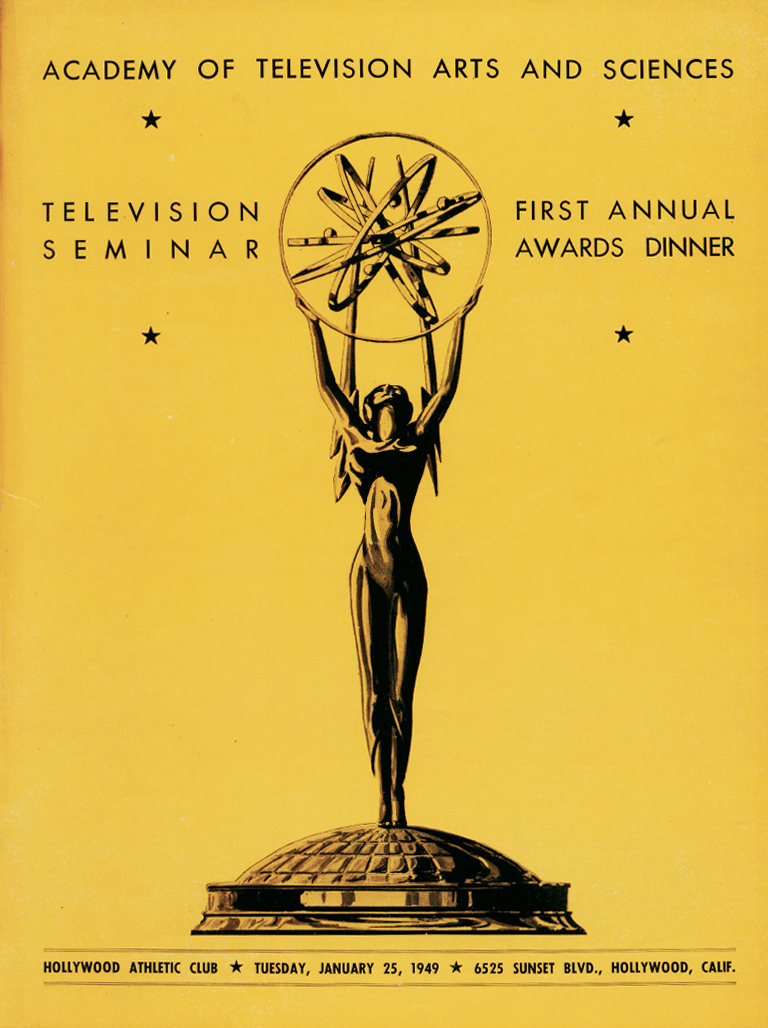
The National Academy of Television Arts and Sciences
presents its first industry award at the Hollywood Athletic Club in Los
Angeles. The Emmy for most popular
program went to Pantomime Quiz Time, and puppeteer Shirley Dinsdale and
her puppet Judy Splinters won an award for Outstanding TV Personality. Most of
the awards were for programs produced by TV station KTLA. The station also won
an award for Outstanding Overall Achievement.
Raymond Burr wins
the Best Actor in a Dramatic Series Emmy for Perry Mason, in which he
plays a crime-solving attorney.
The popular show, which debuted in 1957,
ran for nine years. Derived from mystery novels by Earl Stanley Gardner, the
character of Perry Mason had made his radio debut in 1943 and the show
continued until 1955. The sleuthing Perry Mason character was revived in a
series of TV movies from 1985 to 1993.
May 6, 1984
Spinal Tap stages a "comeback" at CBGB's in
New York City
Almost
20 years and who knows how many drummers into their unique career in rock, the
surviving members of one of England's loudest bands had reached yet another low
point in the spring of 1984. Only two years removed from a disastrous 1982
world tour that not only failed to turn the album Smell The Glove into a
comeback hit, but also led to the group's breakup, Spinal Tap now had to suffer
the indignity of seeing the Marty DiBergi-helmed behind-the-scenes film of that
tour gain widespread theatrical release. Would the numerous embarrassments
catalogued in the hard-hitting rockumentary This Is Spinal Tap provoke
public sympathy for and renewed interest in the band that Nigel Tufnel, David
St. Hubbins and Derek Smalls began back in 1964 as The Originals? Or would the
group behind such familiar classic-rock hits as "Give Me Some Money"
and "Tonight I'm Gonna Rock You Tonight" be consigned once and for
all to obscurity? In this atmosphere of uncertainty, Spinal Tap elected to go
back to their roots, kicking off a tour of small American rock clubs with an
appearance at New York City's legendary CBGB's on May 6, 1984.
Of
course, almost none of the above is true, strictly speaking. A group calling
itself Spinal Tap did play CBGB's on this day in 1984, but that group was the
fictitious invention of director Rob Reiner and the comic actors Michael
McKean, Christopher Guest and Harry Shearer—St. Hubbins, Tufnel and Smalls,
respectively. Reiner's directorial debut was the aforementioned This Is
Spinal Tap, a film that launched the mockumentary mini-genre as well as a
thousand catchphrases, from "These go to 11" to "None
more black." It was during the film's first week of release that
McKean, Guest, Shearer and one of their many doomed drummers played their gig
at CBGB's, which one attendee recalls as drawing "every professional
musician in the city of New York."
This
live appearance by Spinal Tap was the first, but certainly not the last step in
an ongoing effort by the McKean et al. to blur the line between fiction and
reality. In the years since their live debut, numerous bootleg recordings and
early television appearances have "surfaced," and one full-length
album—1992's Break Like The Wind—has been released. At last report,
Nigel Tufnel was working on a pony farm, David St. Hubbins was producing
hip-hop records out of a former colonic clinic and Derek Smalls was in rehab
for an Internet addiction. But do not be surprised if one day you encounter a
salesman resembling Christopher Guest on a visit to a hat shop, or if next
year's lineup of Broadway openings includes the long-awaited St. Hubbins rock
opera, Saucy Jack
May 6, 2004
Final episode of Friends
airs on NBC
At 9:00 p.m. Eastern and
Pacific times on this day in 2004, that familiar theme song (“I’ll Be There For
You” by the Rembrandts) announces the beginning of the end, as an estimated
51.1 million people tune in for the final original episode of NBC’s long-running
comedy series Friends.
Created and executive-produced (with Kevin S. Bright) by Marta Kauffman and
David Crane, Friends debuted 10 years and 236 episodes earlier, on
September 22, 1994. Shot at the Warner Brothers studios in Burbank, California,
the show was set in New York City’s Greenwich Village, where six friends
struggled with the ups-and-downs of young adult life in the big city--albeit
while living in an impossibly large, cushy apartment, apparently without the
burden of having to spend much time working actual jobs. Almost from the
beginning of its decade-long run, Friends was a cultural phenomenon,
winning six Emmy Awards (including one for Outstanding Comedy Series), sparking
hairstyle trends (“the Rachel”), spawning catch phrases (“How you doin?”)
and turning its six principal cast members into household names.
Preceded by a maelstrom of hype and publicity, the hour-long Friends finale
drew approximately two-thirds of the audience garnered by the finales of two
other long-running sitcoms, Cheers (80.4 million) in 1993 and Seinfeld
(76.2 million) in 1998, according to a Fox News report. The most-watched TV
series finale ever, M*A*S*H, was viewed by some 105 million people when
it aired in 1983. According to the New York Times, NBC charged
advertisers an average of $2 million for every 30 seconds of ad time during the
finale--a record amount for a sitcom and only $300,000 less than what CBS
charged during that year’s Super Bowl.
In the finale, the long-running on-and-off relationship between Ross (David
Schwimmer) and Rachel (Jennifer Aniston), which over the years included a
drunken Las Vegas wedding and a baby, Emma, born in 2002, ended as most of the
show’s fans hoped: They got back together, presumably for good. Meanwhile,
Chandler (Matthew Perry) and Monica (Courtney Cox-Arquette) had become
suburbanites and parents of twins, Phoebe (Lisa Kudrow) was married, and Joey
(Matt LeBlanc) was headed off to L.A. to pursue his acting career. (A spin-off
sitcom, Joey, followed LeBlanc’s character to Hollywood; the show failed
to attract a significant audience, and was canceled in 2006.)
Throughout the show’s run, its six stars maintained a famously unified
front, ensuring that no one of them emerged as a dominating force onscreen and
even negotiating their salaries together. In the spring of 2000, each member of
the cast signed a two-year, $40 million contract that netted them each a
staggering $1 million per episode. Broadcast in some 100 countries, Friends continues
to earn good ratings for its syndicated rerun episodes.
May
8, 1984
Soviets announce boycott of
1984 Olympics
Claiming
that its athletes will not be safe from protests and possible physical attacks,
the Soviet Union announces that it will not compete in the 1984 Olympics in Los
Angeles. Despite the Soviet statement, it was obvious that the boycott was a
response to the decision of the United States to boycott the 1980 games
that were held in Moscow.
Just
months before the 1984 Olympic games were to begin in Los
Angeles, the Soviet government issued a statement claiming, "It is known
from the very first days of preparations for the present Olympics the American
administration has sought to set course at using the Games for its political
aims. Chauvinistic sentiments and anti-Soviet hysteria are being whipped up in
this country." Russian officials went on to claim that protests against
the Soviet athletes were likely to break out in Los Angeles and that they
doubted whether American officials would try to contain such outbursts. The
administration of President Ronald Reagan responded to these charges
by declaring that the Soviet boycott was "a blatant political decision for
which there was no real justification."
In
the days following the Soviet announcement, 13 other communist nations issued
similar statements and refused to attend the games. The Soviets, who had been
stung by the U.S. refusal to attend the 1980 games in Moscow because of the
Russian intervention in Afghanistan in 1979, were turning the tables by
boycotting the 1984 games in America. The diplomatic impact of the action was
quite small. The impact on the games themselves, however, was immense. Without
competition from the Soviet Union, East Germany, and other communist nations,
the United States swept to an Olympic record of 83 gold medals.
May 8, 1984
"Well,
what can I say? Both of our children are married now and they’re starting out
to build lives of their own. And I guess when you reach a milestone like this
you have to have to reflect back on, on what you’ve done and, and what you’ve
accomplished. Marion and I have not climbed Mount Everest or written a great
American novel. But we’ve had the joy of raising two wonderful kids, and
watching them and their friends grow up into loving adults. And now, we’re
gonna have the pleasure of watching them pass that love on to their children.
And I guess no man or woman could ask for anything more. So thank you all for
being, part of our family… ToHappy Days."
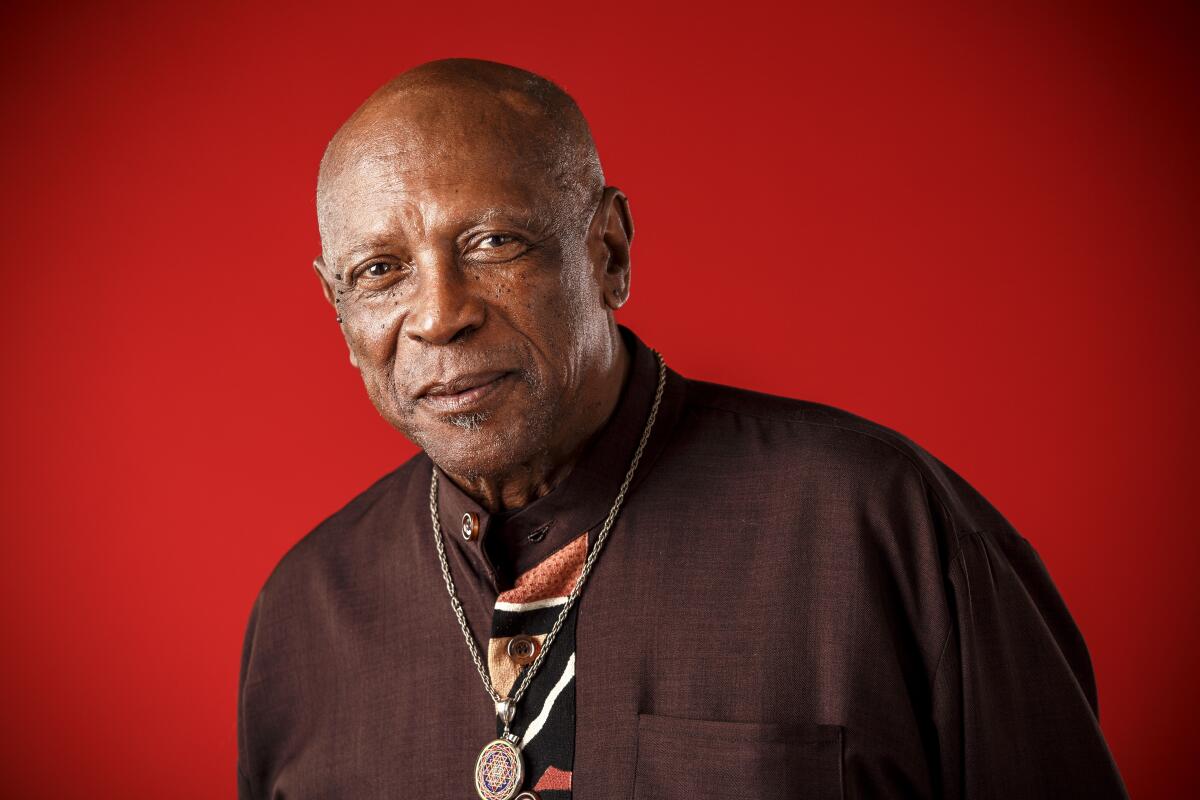
I believe the gift of acting is a gift from God, my oath to God, and I want to make sure on a daily basis that it is honed and deeply spiritual... I want to believe that the audience believes that my acting comes from this special place.
-Louis Gossett, Jr.
Louis Cameron Gossett Jr. May 27, 1936 – March 29, 2024
I never did go back to acting class. I was too busy working.
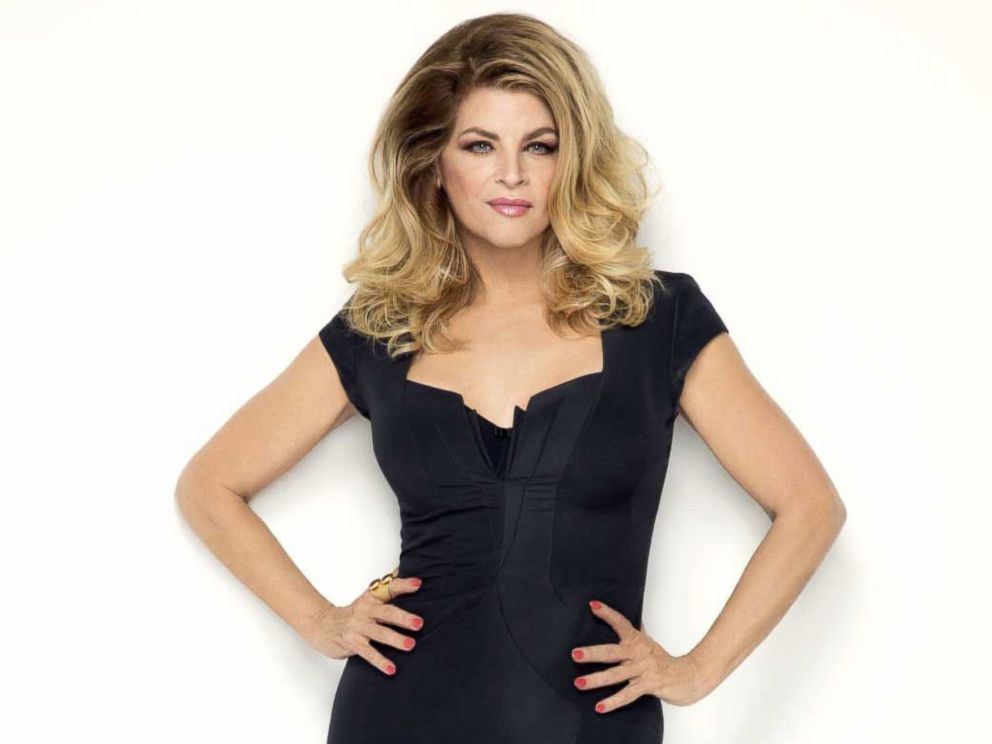
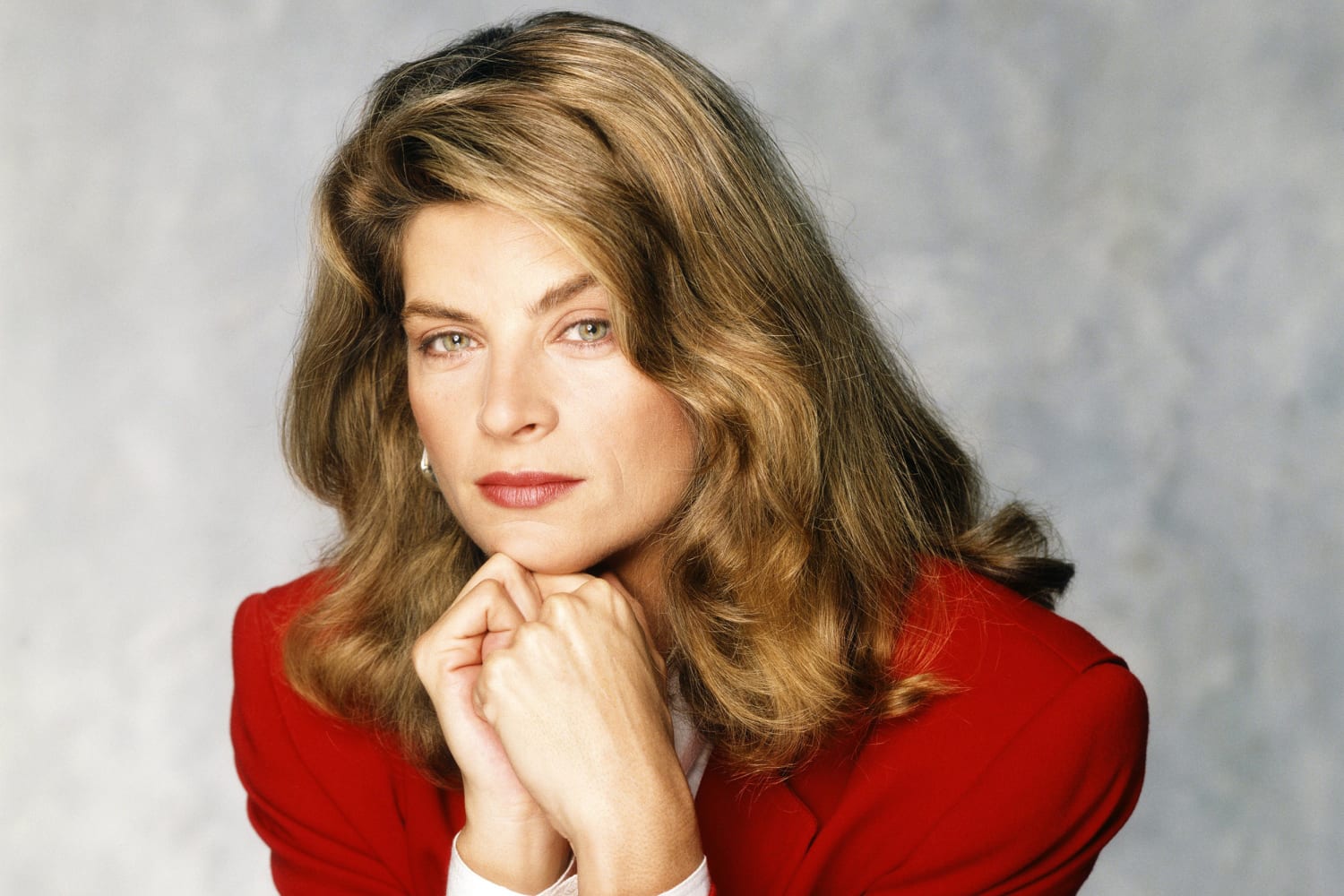
-Kirstie Alley
Kirstie Louise Alley January 12, 1951 – December 5, 2022
Kirstie Alley died on December 5, 2022, following a short battle with cancer at age 71.
Alley made her film debut in 1982 inStar Trek II: The Wrath of Khan, playing theVulcanStarfleetofficer LieutenantSaavik,but chose not to reprise that role in the next two sequels, later saying she was offered less money than forStar Trek II.In the years following, she starred in a number of smaller films, includingOne More Chance,Blind DateandRunaway. In 1985, she starred in theABCminiseriesNorth and South.In 1987, Alley starred alongsideMark Harmonin the comedy filmSummer School. The film was a box office success, grossing over $35 million in the United States.
Later in 1987, Alley joined the cast of NBC sitcomCheers, replacingShelley Longand remaining with the show until its eleventh and final season.In 1989, Alley starred withJohn TravoltainLook Who's Talking. The film grossed over $295 million worldwide. They then went on to make two other films centered on the same theme,Look Who's Talking TooandLook Who's Talking Now.After twoEmmy Awardnominations for her work onCheers, in 1988 and 1990, she won the Emmy on her third nomination, in 1991.
Alley earned her second Emmy for the 1994 television filmDavid's Mother.For her contributions to the film industry, Alley received amotion pictures staron theHollywood Walk of Fameat 7000Hollywood Boulevardin 1995.From 1997 to 2000, Alley played the title character in the NBC sitcomVeronica's Closet, as well as serving as executive producer on the show. She served as the spokesperson forPier Onefrom 2000 to 2004, and forJenny Craigfrom 2004 to 2007.TV Landaired a sitcom that centered on Alley as aBroadwaystar and a new parent. It was titledKirstie, and reunited her with formerCheersco-starRhea PerlmanandSeinfeldstarMichael Richards. The series premiered on December 4, 2013,and ran for one season before it was canceled, five months after ending its freshman run. In February 2011, Alley was announced as a contestant onDancing with the Stars. She was partnered withMaksim Chmerkovskiy. She also took part in the15th seasonofDancing with the Stars.In 2022, Alley competed inseason sevenofThe Masked Singeras "Baby Mammoth" of Team Cuddly.
Alan Hale Jr., the Skipper on Gilligan's Island,
dies of cancer at age 68.
Hale was
born in Los
Angeles, California. His father was character actor Alan Hale, Sr. and his mother was Gretchen Hartman
(1897–1979), a silent film actress. His father (whom his son greatly
resembled), had an extremely successful career in movies both as a leading man
in silent films and as a supporting actor in sound movies, appearing in many Errol Flynn films, acting in 235 movies altogether, and playing Little John in Robin
Hood films three times over a
28-year span, beginning with the silent Douglas Fairbanks version. While his father was adapting to sound
films, Hale, Jr. began his career while still a baby.
After the death of his father in 1950, Alan stopped using
"Junior".
Hale's first important roles were as a member of Gene Autry's recurring cast of players.
During the late 1940s and early 1950s, he frequently appeared in Autry movies
and The Gene Autry
Show on TV. He also starred in television series, such as
1952–53's Biff Baker U.S.A.. He guest starred in the NBCwesternanthologyFrontier.
He later appeared in the classic syndicated
western series Wanted Dead or
Alive opposite Steve McQueen in episode No. 5 as Shawnee
Bill, and played the titular lead in the television series Casey Jones
(32 black and white episodes of 25 minutes from 1957 to 1958). In 1961, he
appeared in Audie Murphy's
short-lived NBC western detective series, Whispering
Smith, as the witness to a murder. In 1962, Hale also appeared
on The Andy
Griffith Show as Jeff Pruitt, a rough, back-woods bachelor who comes to Mayberry to find a
bride. In the episode, he refers to Barney Fife more than once as "little
buddy," a nickname he would later use in his most famous and beloved role,
that of the Skipper on Gilligan's Island,
which ran from 1964 to 1967. He appeared in an episode of CBS's The New
Phil Silvers Show in the 1963–1964 season.
The Skipper on Gilligan's Island (1964–1967) proved to be the most
prominent role for Hale, as the show continued to be popular for later
generations of viewers due to syndicated re-runs. The popularity of the show typecast
its actors, making it difficult for them to successfully pursue diversified
acting opportunities. They received no substantial residual payments for their
roles, and the difficulty in finding roles often created financial hardship and
resentment. However, Hale often said he did not mind being so closely
identified with the Skipper. He co-owned a restaurant in the West Hollywood
area (Alan Hale's Lobster Barrel) and would often greet customers in his
"Skipper" hat.
During the weekends of 1974 to 1977, a new generation enjoyed the cartoon
version of The
New Adventures of Gilligan and by 1978, they brought back the
original crew for a TV movie named Rescue
From Gilligan's Island. Hale also portrayed the Skipper in two
more TV reunion movies in 1979 and 1981, and participated in numerous reunions
with the cast throughout the 1980s. His final appearances as the Skipper were
on a 1988 episode of the sitcom ALF, and for several 1989 clips
promoting Gilligan's Island reruns on TBS (TV network), both alongside his old
friend Bob Denver. He also made a cameo appearance
with Denver in the film Back to the Beach.
Hale was known for his great love of children. When he was dying of cancer, he learned there was a sick child in the same
hospital who loved the Gilligan's Island show. He went to see the boy
and said "The Skipper's here, son, everything is going to be all
right." The child, having noticed all the weight Hale had lost due to
cancer, inquired about it. Hale made up a story on the spot about how there was
a new version of the show in the works, and he was going to play Gilligan.
In 1974, she was cast in the disaster filmEarthquake. Although the role had been
narrowed down to three actresses, Principal won the role when she showed up for
the third audition having cut off her waist-length brown hair, dyed it black,
and put it into an afro. The producer was stunned and
impressed by Principal's risky transformation in order to look more closely
like the Italian character Rosa. Principal won the part in that moment. She
continued to act in lesser-known films such as I Will, I
Will... for Now and Vigilante Force with Kris Kristofferson.
She was given a three-picture deal with Brute Productions. However, Principal
decided to stop acting and became an agent, which was her profession from 1975
to late 1977.
In 1977, Aaron Spelling
offered her a role in the pilot of his television series Fantasy Island, which she accepted.
Soon after, in 1978, she landed her most famous role, playing Pamela Barnes
Ewing in the evening soap opera
television series Dallas.
In 1983, she earned a Golden Globe Nomination as Best Actress in a Television
Series for her role on Dallas.
After nine years, Principal left Dallas in 1987. She went on to star
in various made-for-television movies such as Mistress, Blind Witness,
Naked Lie, Sparks: The Price of Passion, and Don't Touch My
Daughter, a few of which she co-produced. In 1994, she appeared in an
episode of the hit sitcom Home
Improvement.
Principal returned to primetime soap operas in 2000, when she appeared in
another Aaron Spelling production, the short-lived NBC
television series Titans.
January 5, 1970
All My Children Preimered
All My Children (often shortened to AMC) is an
American television soap opera that aired on ABC for 41 years, from January
5, 1970, to September 23, 2011, and on The Online Network (TOLN) from April 29 to
September 2, 2013, via Hulu, Hulu Plus, and iTunes. Created
by Agnes
Nixon, All My Children is set in Pine Valley,
Pennsylvania, a fictional suburb of Philadelphia,
which is modeled on the actual Philadelphia suburb of Rosemont. The original series featured Susan
Lucci as Erica Kane, one of daytime television's most popular
characters. The title of the series refers to the bonds of humanity. All
My Children was the first new network daytime drama to debut in the
1970s. Originally owned by Creative Horizons, Inc., the company created by
Nixon and her husband, Bob, the show was sold to ABC in January 1975. The
series started at a half-hour in per-installment length, then was expanded to a
full hour on April 25, 1977. Earlier, the show had experimented with the
full-hour format for one week starting on June 30, 1975, after which Ryan's
Hope premiered.
January 6, 1975
ABC-TV debuted A.M.
America. AM America was a morning news program produced by ABC in an attempt to compete with the highly
rated Today on NBC.
The show never found an audience after its premiere
on January 6, 1975. Lasting just under ten months, its final installment
aired on October 31.
One notable episode of AM
America aired on April 25, 1975, when members of the British comedy
troupe Monty Python (with the exception of John Cleese,
who had temporarily left the group) made one of their earliest appearances on
American television.
Edwards quit the show by the
end of May, and Beutel followed her out a few months later. On November 3,
the Monday following its final broadcast, AM America was
replaced by Good Morning
America. Theme music written by
William Goldstein.
January
10, 1980
The
final episode of The Rockford Files aired on NBC. Jim meets John Traynor while on a fishing trip in
Parma. When John takes ill Jim takes him to hospital where John gives Jim his
Proxy for the upcoming vote on the town’s Proposition 46D. Not knowing
what it is Jim registers the proxy with Mayor Sindell, the pharmacist. Jim is
then escorted out to see Henry Gersch at his mobile home. Gersch wants Jim to
vote “for” the proposition, so Jim agrees. Jim returns to his motel and is
visited by a mysterious figure who tells him to get out of town. This proves
difficult as the Firebird is stolen and later found at the Parma Mechanic’s who
believed Jim called and requested it fixed. Jim meets with Carrie Osgood, a
journalist, who saw Jim fishing and again at the pharmacy. Jim is taken to the
bus stop by the Sheriff, in an effort to have him leave town, but when the bus
stops at Santa Barbara, Jim is collected by Gersch’s goons and taken back to
Parma. Carrie recognises the mysterious figure as Stan Belding, a businessman
from Las Vegas. Jim and Carrie manage to read Proposition 46D, which is
identical to the previous legalisation which legalised gambling. Jim then finds
out that John Traynor discharged himself from hospital. Jim now realises that
John set him up, and figures out that John must be hiding out under canvas in
the hills. Using the local pizza boy as a distraction, Jim leaves his motel
room disguised as the pizza man to evade Gersch’s goons who are watching him.
Jim finds John in his tent – murdered, which cancels the proxy. Jim reports
this to the police, who find nothing, so arrest Jim for filing a false report –
without a body, the proxy is still valid. Jim is in a cell, while outside the
police hounds are barking at the trunk of the sheriff’s vehicle. Lee Melvin –
an official – grants Jim an amnesty so that he can vote. Jim works out where
Traynor’s body is, and goes to vote while Carrie calls the state police. They
enter just in time to arrest Sindell, the Sherriff, Belding and Gersch’s goons,
but Jim must lead the chase to catch Gersch himself, sitting in his mobile home
on the outskirts of town.
January 12, 1955
Rod Serling’s career began
with the TV production of Patterns.
Directed
by Fielder
Cook, the
intense big-business drama starred Richard Kiley as up-and-coming
vice-president Fred Staples. Ruthless corporate boss Walter Ramsey (Everett Sloane) attempts to edge out aging
employee Andy Sloane (Ed
Begley) to
make room for newcomer Staples. Ramsey uses every opportunity to humiliate the
fragile Sloane, while Staples sees Sloane as a professional who makes valuable
contributions to the firm.[1]
Serling's
celebrated script tore apart the dynamics of the business world and earned
Serling his first of his six Emmys for dramatic writing.
There was a rave review from Jack Gould of The New York Times who suggested it be repeated:
Nothing
in months has excited the television industry as much as the Kraft
Television Theatre's production of Patterns, an original play
by Rod Serling. The enthusiasm is justified. In writing, acting and
direction, Patterns will stand as one of the high points in
the TV medium's evolution.Patterns is a play with one point of view
toward the fiercely competitive world of big business and is bound to be
compared with the current motion picture Executive Suite. By comparison, Executive
Suite might be Babes in Toyland without a score. For
sheer power of narrative, forcefulness of characterization and brilliant
climax, Mr. Serling's work is a creative triumph that can stand on its own. In
one of those inspired moments that make the theater the wonder that it
is, Patterns was an evening that belonged to the many, not
only to Mr. Serling. The performances of Everett Sloane, Ed Begley and Richard
Kiley were truly superb. The production and direction of Fielder Cook
constituted a fluid use of video's artistic tools that underscore how little
the TV artistic horizons really have been explored. Patterns was
seen from 9 to 10pm Wednesday over the National Broadcasting Company's network;
a repeat performance at an early date
should be mandatory.
Gould's request for a repeat
was an unusual suggestion, since in that pre-videotape era, live shows were not
repeated. Surprisingly, NBC took Gould's suggestion seriously and made plans
for another production.
Some of the programs in the
series were videotaped at NBC Studios in Burbank, California. Most were taped inNew York City either at NBC's Studio
8H (built for Arturo Toscanini and the NBC Symphony Orchestra and which would later house Saturday Night Live), or in NBC's color studio in the Midwood section of Brooklyn. Much of the series' color
videotaped footage was later transferred over to kinescope on film - as such
copied in black and white. Only three half-hour episodes are known to exist in
their original color videotaped form.




)