Showing posts with label Oscar. Show all posts

Monday, March 02, 2026

This Week in Television History: March 2026 PART I


March 3, 1986

The pilot episode of Matlock aired on NBC.

The show centers on widower Benjamin Leighton "Ben" Matlock, a renowned, folksy and popular though cantankerous attorney. Usually, at the end of the case, the person who is on the stand being questioned by Matlock is the actual perpetrator, and Matlock will expose him, despite making clear that his one goal is to prove reasonable doubt in the case of his client's guilt or to prove his client's innocence.

Matlock studied law at Harvard, and after several years as a public defender, established his law practice inAtlanta, living in a modest farmhouse in a neighboring suburb. He is known to visit crime scenes to discover clues otherwise overlooked and come up with viable, alternative theories of the crime in question (usually murder). Matlock also has conspicuously finicky fashion sense; he generally appears in court wearing a trademark light gray suit and, over the series' entire run, owned three generations of the Ford Crown Victoria—always an all-gray model (Griffith's character had always driven Ford products in his 1960s series, The Andy Griffith Show). Some Mayberry alumni—Don KnottsAneta CorsautBetty LynnJack Dodson and Arlene Golonka—made guest appearances on Matlock.

Matlock is noted for his thrift and a fondness for hot dogs. After the series ended, his penchant for hot dogs was explained in the 1997 episode "Murder Two" of Joyce Burditt's Diagnosis: Murder. Matlock blames Dr. Mark Sloan (Dick Van Dyke) for recommending a disastrous investment in 8-track cartridges, in which he lost his savings of $5,000 in 1969, forcing him into wearing cheap suits and living on hot dogs. Despite his thrift, Matlock's standard fee is $100,000, usually paid up front, but if he or his staff believe strongly enough in the innocence of a client, or if the client is unable to pay immediately (if at all), he will have them pay over time, or will reduce the fee significantly or waive it entirely, albeit reluctantly in some cases. He will also, reluctantly, take a pro bono case occasionally, and at least on one occasion, he has worked as the prosecuting attorney in a trial.

These traits, and the demands he placed upon his investigators, were often points of comic relief in the series. Andy Griffith's prior career as a comic often showed through in things Matlock did or said.

Matlock generally defended his clients in the Fulton County Courthouse, which was actually the Second Church of Christ, Scientist located at 948 West Adams Boulevard in Los Angeles.

March 4, 1996

Minnie Pearl dies. 

A longtime fixture of Nashville's Grand Ole Opry, comedian Minnie Pearl dies on this day. Pearl was famous for her comic monologues about hillbilly life, and was featured on the long-running syndicated show Hee Haw from 1970 to 1990.

March 5, 2006

Jon Stewart hosts 78th annual Academy Awards ceremony.

By early 2006, Jon Stewart, the irreverent host of The Daily Show, a fake television news program on Comedy Central, had seen the ratings for his show jump dramatically as a result of its coverage of the 2004 presidential election. The show spawned a popular spin-off, The Colbert Report, starring Daily Show regular Stephen Colbert, and a best-selling parody of a social studies textbook, America (The Book). On March 5, 2006, however, Stewart took on his highest-profile gig to date--hosting the 78th annual Academy Awards ceremony at the Kodak Theatre in Los Angeles.

In preparation for the Oscars, Stewart enlisted a team of writers from The Daily Show led by Ben Karlin, a former editor of the satirical newspaper The Onion and the then-executive producer of both The Daily Show and The Colbert Report. After the stars swanned down the red carpet, the ceremony began with a filmed segment suggesting Stewart was the last possible choice for the hosting gig and showing a series of former hosts refusing the job.

While Stewart’s deadpan humor might have had audiences laughing at home, his constant poking fun at Hollywood and the stars themselves seemed to meet with a less friendly reception from the Kodak Theatre audience. Jokes about Scientology and Hollywood’s liberal politics fell flat, but the audience did warm up to Daily Show-style fake ads mocking Oscar-campaigning tactics and Stewart’s ad-libbed running joke about the exuberant acceptance speech given by the rap group Three 6 Mafia, who won an Oscar for Best Song for “It’s Hard Out There For a Pimp” (from Hustle & Flow).

In the post-show media analysis the next morning, the consensus seemed to be that Stewart struggled; his hosting performance and its reception by the audience was compared with less-successful hosts from the past, such as David Letterman and Chris Rock, as opposed to Oscar favorites like Billy Crystal and Whoopi Goldberg. He was praised, however, for poking fun at the bloated, self-important nature of the Academy Awards ceremony itself, with its often-overdone production numbers and political posturing by the stars themselves. Stewart earned a second Oscars hosting gig--and better reviews--in 2008, in the wake of Hollywood’s writers’ strike and in the midst of the presidential campaign season.

The 78th annual Oscars were also memorable for the surprising upset victory of the ensemble drama Crash in the Best Picture category. After the Taiwanese filmmaker Ang Lee took home the Best Director Oscar for Brokeback Mountain, that film’s string of awards seemed to have given it the front-runner’s momentum to win Best Picture, the last statuette of the night. The New York Times called Crash’s selection as Best Picture a “stunning twist” to the evening, while Kenneth Turan of the Los Angeles Times observed that some Academy voters may have been uncomfortable with the subject matter of Brokeback Mountain, which starred Heath Ledger and Jake Gyllenhaal as sheepherders who fall in love while working in Wyoming in the early 1960s. Acting awards went to Rachel Weisz (Best Supporting Actress for The Constant Gardener), George Clooney (Best Supporting Actor for Syriana), Reese Witherspoon (Best Actress for Walk the Line) and Philip Seymour Hoffman (Best Actor for Capote).

March 7, 1986

The final episode of Different Strokes was aired.

Arnold's feature story about his high school football team threatens to turn into a controversial expose for the school newspaper when he witnesses team members buying steroids.

Stay Tuned
Tony Figueroa

Monday, April 01, 2024

This Week in Television History: April 2024 PART I

        April 2, 1974

The 46th Academy Awards Streaker. 

While David Niven was introducing Elizabeth Taylor to present the award for Best Picture, a streaker named Robert Opel ran out from backstage, causing spontaneous laughter. David Niven tookcontrol of the situation by saying, “Isn't it fascinating to think that probably the only laugh that man will ever get in his life is by stripping off and showing his shortcomings?”

April 3, 1924

Doris Day is born Doris Mary Ann Kappelhoff. 

Day began her career as a big band singer in 1939. Her popularity began to rise after her first hit recording, “Sentimental Journey“, in 1945. After leaving Les Brown & His Band of Renown to try a solo career, she started her long-lasting partnership with Columbia Records, which would remain her only recording label. The contract lasted from 1947 to 1967, and included more than 650 recordings, making Day one of the most popular and acclaimed singers of the 20th century. In 1948, after being persuaded by Sammy CahnJule Styne and her agent at the time, Al Levy, she auditioned for Michael Curtiz, which led to her being cast in the female lead role in Romance on the High Seas.

 When third husband Martin Melcher died on April 20, 1968, a shocked Day discovered that Melcher and his business partner Jerome Bernard Rosenthal had squandered her earnings, leaving her deeply in debt. Rosenthal had been her attorney since 1949, when he represented her in her uncontested divorce action against her second husband, saxophonist George W. Weidler. In February 1969, Day filed suit against Rosenthal and won the then-largest civil judgment (over $20 million) in the state of California. (She later settled for about one-quarter of the amount originally awarded.)

Day also learned that Melcher had committed her to a television series, which became The Doris Day Show.

Day hated the idea of doing television, but felt obliged to it. ”There was a contract. I didn’t know about it. I never wanted to do TV, but I gave it 100 percent anyway. That’s the only way I know how to do it.” The first episode of The Doris Day Show aired on September 24, 1968, and, from 1968 to 1973, employed “Que Sera, Sera” as its theme song. Day grudgingly persevered (she needed the work to help pay off her debts), but only after CBS ceded creative control to her and her son. The successful show enjoyed a five-year run (its second season finished in the Top 10 of the Nielsen ratings), and functioned as a curtain-raiser for The Carol Burnett Show. It is remembered today for its abrupt season-to-season changes in casting and premise. It was not widely syndicated as many of its contemporaries were, and was re-broadcast very little outside the United States, Australia and the UK. By the end of its run in 1973, public tastes had changed and her firmly established persona regarded as passé. She largely retired from acting after The Doris Day Show, but did complete two television specials, The Doris Mary Anne Kappelhoff Special (1971) and Doris Day to Day (1975). 


April 3, 1944

Tony Orlando is born Michael Anthony Orlando Cassavitis. 

Born to a Greek father and a Puerto Rican mother, he spent his earliest years in Manhattan, New York’s then-notorious Hell’s Kitchen. In his teenage years, the family moved to Union City and later, Hasbrouck Heights in New Jersey.

Best known as the lead singer of the group Tony Orlando and Dawn in the early 1970s.

Discovered by producer Don Kirshner, Orlando had songs on the charts in 1961 when he was 16, “Halfway to Paradise” and “Bless You”. Orlando then became a producer himself, and at an early age was promoted to a vice-president position at CBS Records, where he was in charge of the April-Blackwood Music division. He sang under the name “Dawn” in the 1970s, and when the songs became hits, he went on tour and the group became “Tony Orlando and Dawn”. They had several songs which were major hits including “Candida“, “Knock Three Times“, and “Tie a Yellow Ribbon Round the Ole Oak Tree“.


April 3, 1949

Dean Martin and Jerry Lewis debuted on radio in an NBC program that ran until 1952. 


April 4, 1969

The CBS Television Network fired The Smothers Brothers because the brothers failed to submit an episode of The Smothers Brothers Comedy Hour to network executives before its broadcast. 

The network claimed the second to last show of the season was turned in late, and claimed that their tardiness constituded a breach of contract justifying their dropping of the series. The network ultimately refused to run the episode anyway because they said it "would be considered irreverent and offensive by a large segment of our audience". That episode is on the Smothers Brothers: The Best of Season 3 DVD.

The variety show was well known for its censorship battles with the network. The network executives often objected to the brothers' selection of controversial, outspoken, left wing, and antiwar guests, including:

Pete Seeger, who had been invited to appear on the Smothers' second season premiere to sing his anti-war song, "Waist Deep in the Big Muddy.” Seeger would later apear on the show and sang that song.

Harry Belafonte was scheduled to do a calypso song called "Don't Stop the Carnival" with images from the riots at the 1968 Chicago Democratic Convention behind him. The Song was cut and the time was sold to the Nixon campaign but can now be seen on the season 3 DVD.

Joan Baez wanted to dedicate a song to her draft-resisting husband who was about to go to prison for his stance. The dedication to her husband made the air but the reason for the dedication did not.

Dr. Benjamin Spock, noted baby doctor and anti-war activist, was prevented from appearing as a guest of the show because, according to the network, he was a "convicted felon."

Under the category of irreverent and offensive, we have:

David Steinberg’s satirical sermonettes caused controversy for being sacrilegious. His second sermonette was in the episode that never aired.

Leigh French created the recurring hippie character, Goldie O'Keefe, whose parody of afternoon advice shows for housewives, "Share a Little Tea with Goldie," was actually one long celebration of mind-altering drugs. (Tea" was a counter culture code word for marijuana, but the CBS censors seemed to be unaware of the connection). Goldie would open her sketches with, "Hi(gh)– and glad of it!"

Elaine May wrote a skit about censorship that featured Tom and Elaine who playing motion picture censors trying to find a more acceptable substitution for unacceptable dialogue. The skit ended up being censored.


Tom and Dick Smothers assembled the old Smothers Brothers Comedy Hour gang in February 1988 for a 20th reunion special on CBS. Now the network wanted the brothers and company to be edgy and controversial but no one associated with the show was interested. After all when the establishment tells you something is cool... It's no longer cool.

In 1968 when it came time to submit the names of the writers for Emmy considerations, Tom refused to include his name for fear that he had become too controversial and it would hurt the show’s chances of winning. The show won the Emmy for outstanding Writing Achievement in Comedy Variety that year.

Almost 40 Years later (Sunday, September 21st 2008) during the live television broadcast of the 60th Annual Emmy Awards, Tom Smothers received an Emmy acknowledging his contributions as a writer on “The Smothers Brothers Comedy Hour”. Steve Martin, who was one of the Emmy winning writers on The Smothers Brothers Comedy Hour, presented Tom with a commemorative Emmy acknowledging his role in the writing of a variety show.

 April 5, 1949

Fireside Theatre starts. Fireside Theatre, one of TV's first dramatic series to be filmed rather than broadcast live, debuts.

The show ran until 1958 and was revived for one year in 1963. For the first year, each film was only 15 minutes long, but later the time slot expanded to 30 minutes. Jane Wyman, who was married to Ronald Reagan between 1940 and 1948, served as host from 1955 to 1958 and during the 1963 revival.


Stay Tuned


Tony Figueroa

Friday, March 29, 2024

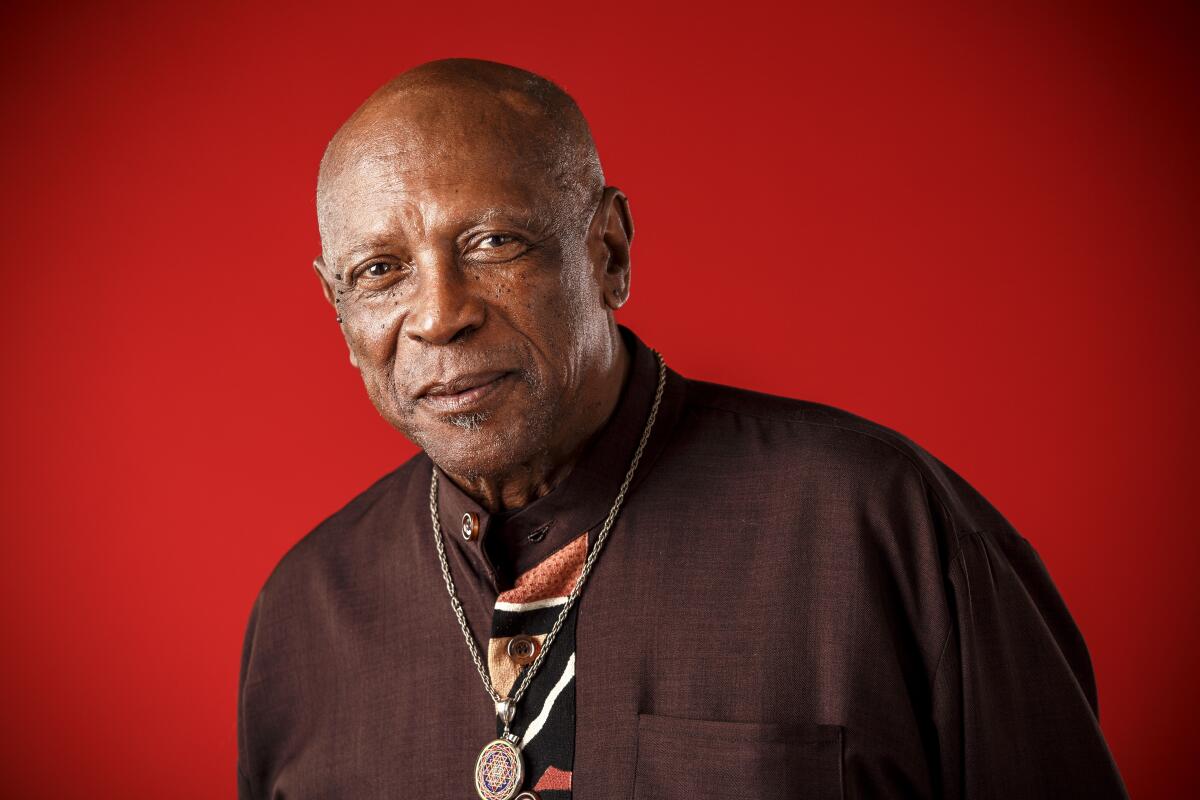
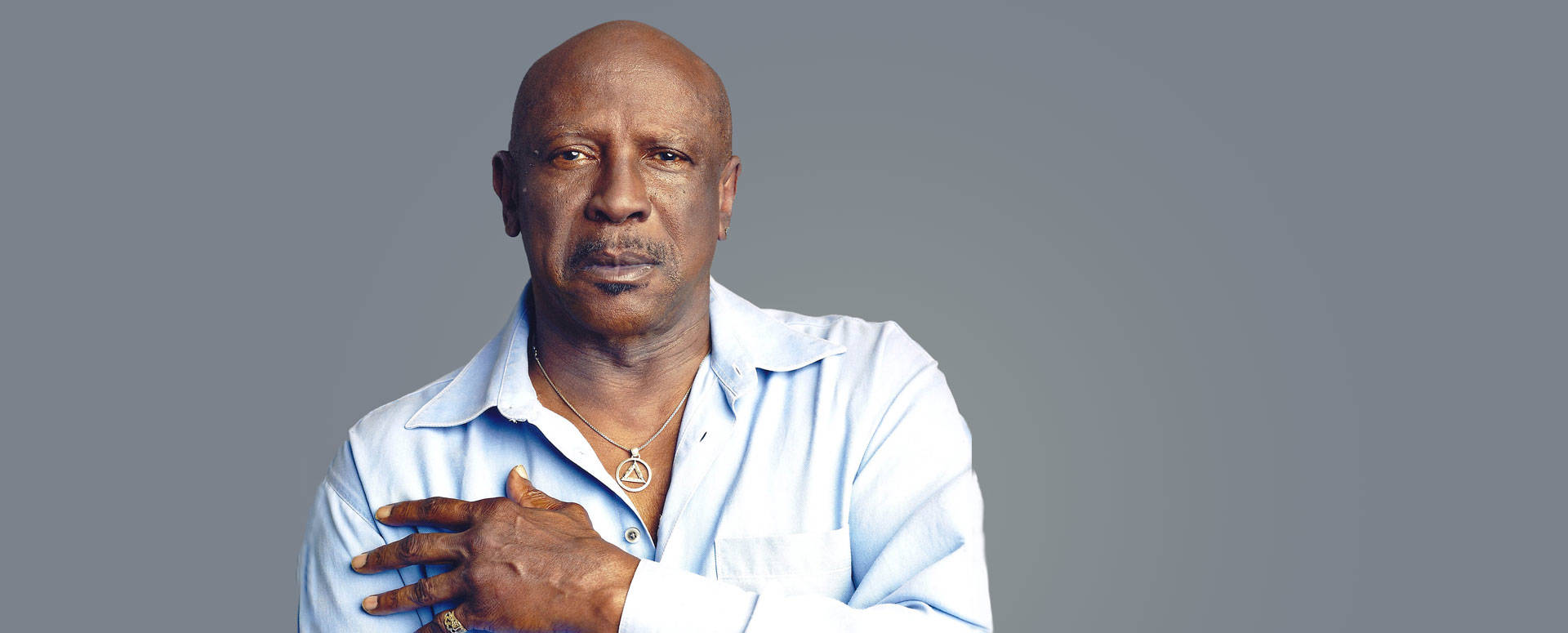
Louis Gossett Jr.

I believe the gift of acting is a gift from God, my oath to God, and I want to make sure on a daily basis that it is honed and deeply spiritual... I want to believe that the audience believes that my acting comes from this special place. 

-Louis Gossett, Jr.
Louis Cameron Gossett Jr.

May 27, 1936 – March 29, 2024

Good Night Mr. Gossett

Stay Tuned

Tony Figueroa

Monday, March 27, 2023

This Week in Television History: March 2023 PART V


March 27, 1973

Marlon Brando declines Best Actor Oscar. 

Marlon Brando declines the Academy Award for Best Actor for The Godfather. The Native American actress Sacheen Littlefeather attended the ceremony in Brando’s place, stating that the actor “very regretfully” could not accept the award, as he was protesting Hollywood’s portrayal of Native Americans in film.

Now revered by many as the greatest actor of his generation, Brando earned his first Oscar nomination for his portrayal of the brutish Stanley Kowalski in A Streetcar Named Desire (1951). The role was a reprisal of Brando’s incendiary performance in the 1947 stage production of Tennessee Williams’ play, which first brought him to the public’s attention. Nominated again for roles in Viva Zapata! (1952) and Julius Caesar (1953), he won his first Academy Award for On the Waterfront (1954).

Brando’s career went into decline in the 1960s, with expensive flops such as One-Eyed Jacks (1961), which he also directed, and Mutiny on the Bounty (1962). Aside from his preternatural talent, the actor had become notorious for his moodiness and demanding on-set behavior, as well as his tumultuous off-screen life. Francis Ford Coppola, the young director of The Godfather, had to fight to get him cast in the coveted role of Vito Corleone. Brando won the role only after undergoing a screen test and cutting his fee to $250,000--far less than what he had commanded a decade earlier. With one of the most memorable screen performances of all time, Brando rejuvenated his career, and The Godfather became an almost-immediate classic.

On the eve of the 1972 Oscars, Brando announced that he would boycott the ceremony, and would send Littlefeather in his place. After Brando’s name was announced as Best Actor, the presenter Roger Moore (star of several James Bond films) attempted to hand the Oscar to Littlefeather, but she brushed it aside, saying that Brando could not accept the award. Littlefeather read a portion of a lengthy statement Brando had written, the entirety of which was later published in the press, including The New York Times. “The motion picture community has been as responsible as any,” Brando wrote, “for degrading the Indian and making a mockery of his character, describing his as savage, hostile and evil.”

Brando had been involved in social causes for years, speaking publicly in support of the formation of a Jewish state in the 1940s, as well as for African-American civil rights and the Black Panther Party. His Oscar statement expressed support for the American Indian Movement (AIM) and referenced the ongoing situation at Wounded Knee, the South Dakota town that had been seized by AIM members the previous month and was currently under siege by U.S. military forces. Wounded Knee had also been the site of a massacre of Native Americans by U.S. government forces in 1890.

Brando was the second performer to turn down a Best Actor Oscar; the first was George C. Scott, who politely declined to accept his award for Patton in 1971 and reportedly said of the Academy Awards hoopla: “I don’t want any part of it.” Scott had previously declined a Best Supporting Actor nomination for The Hustler (1961).

March 31, 2003

The first season of American Chopper began. 


April 1, 1963

Soap operas General Hospital and The Doctors premiere. The ABC television network airs the premiere episode of General Hospital, the daytime drama that will become the network’s most enduring soap opera and the longest-running serial program produced in Hollywood. On the same day, rival network NBC debuts its own medical-themed soap opera, The Doctors.

By setting their new shows in a hospital, both networks were attempting to capitalize on the popularity of prime-time medical dramas such as Dr. Kildare and Ben Casey. Set in the fictional upstate New York town of Port Charles, General Hospital focused on the lives of the doctors, nurses and patients of the town’s General Hospital, including Dr. Steve Hardy (John Beradino) and Nurse Audrey March (Rachel Ames). The central character of The Doctors was Dr. Matthew Powers (James Pritchett), chief of staff of Hope Memorial Hospital, located in the fictional New England town of Madison.

In contrast to General Hospital, The Doctors first ran as an anthology series, with each episode focusing on a single plotline. It later ran as a weekly serial and became a full-fledged daily soap in March 1964. For most of its run, the show was largely sponsored by the Colgate-Palmolive Company, makers of Fab detergent, Palmolive dish liquid and Irish Spring soap, among many other products. The tagline of The Doctors, announced at the beginning of each episode, was “a daytime drama series dedicated to the brotherhood of healing.” The Doctors won numerous Emmy Awards, including Best Daytime Drama in 1972 and 1974, Best Actress for Elizabeth Hubbard (who played Dr. Althea Davis) in 1974 and Best Actor for Pritchett in 1978. Some of the notable actors that have appeared on The Doctors include Ellen Burstyn, Alec Baldwin, Kathleen Turner and Armand Assante. With ratings declining steadily after 1975, The Doctors was canceled in 1982, just months before its 30th anniversary.

For its part, General Hospital has remained on the air for more than four decades, making it ABC’s longest-running soap opera. Though falling ratings in the late 1970s threatened the show’s existence, it turned things around and become a hit with younger audiences in the early 1980s. Some of its more popular ongoing storylines involved the “super couple” Luke Spencer (Anthony Geary) and Laura Webber (Genie Francis), whose 1981 wedding was the most-watched event in daytime television history. In June 2008, the show won a record-breaking 10th Emmy Award for Best Daytime Drama.

April 2, 1978

Dallas first aired


Stay Tuned


Tony Figueroa

Monday, March 13, 2023

This Week in Television History: March 2023 PART III


March 14, 1948

Billy Crystal is born in Long Beach, California. 

Crystal began performing in comedy clubs as a teenager; after graduating from New York University's film school, he formed his own comedy troupe, 3's Company. As a young stand-up comic, Crystal opened for acts like the singer Barry Manilow and was particularly known for his impression of the sportscaster Howard Cosell interviewing Muhammad Ali. After setting off for Hollywood, Crystal landed the role of Jodie Dallas, one of the first openly gay characters on television, on Soap (1977-81). Though his first film, Rabbit Test (1978)--in which he played the world's first pregnant man--flopped, Crystal's star kept rising. His popular live performances and regular appearances on TV's Saturday Night Live landed him roles in a string of movies, including Rob Reiner's This is Spinal Tap (1984), Running Scared (1986) and The Princess Bride (1987), and Throw Momma From the Train (1987). In 1989, he made his highest-profile star turn yet, playing opposite Meg Ryan in the hit romantic comedy When Harry Met Sally..., also directed by Reiner.

In 1990, Crystal won over audiences with his first Oscar hosting gig, performing silly songs based on the nominated films and popping up in film-clip montages. He would host the ceremony seven more times (1991, 1992, 1993, 1997, 1998, 2000 and 2004), along with a number of other events, including the Grammy Awards and the HBO benefit series Comic Relief, alongside Whoopi Goldberg and Robin Williams. Crystal scored his biggest movie hit to date in 1991, playing a radio executive going through a mid-life crisis in City Slickers (1991), which he also executive-produced. The film's success led to a memorable moment at the 1992 Oscars, when Crystal's 73-year-old co-star, Jack Palance, dropped to the stage to perform one-armed pushups when accepting his statuette for Best Supporting Actor. As emcee that night, Crystal wrung maximum comedic potential about the incident with his follow-up jokes. The film's sequel, City Slickers 2: The Legend of Curly's Gold, came out in 1994.

Crystal had less success with his next producing and acting effort, the ambitious 1992 film Mr. Saturday Night, which he also directed. In the film, Crystal played the stand-up comedian Buddy Young Jr., a character he had originated in 1984 and later portrayed on Saturday Night Live, among other shows. Mr. Saturday Night received mixed reviews, and was a failure at the box office. In 1995, Crystal wrote, directed, produced and starred in Forget Paris, a romantic comedy co-starring Debra Winger; the film was a critical and commercial disappointment.

Crystal appeared in Kenneth Branagh's Hamlet (1996) and Woody Allen's Deconstructing Harry (1997), but another producing effort, 1998's My Giant, also flopped. He came back strong, however, with 1999's blockbuster hit Analyze This, as a therapist who counsels a mob boss, played by Robert De Niro. A sequel, Analyze That, was released in 2002. In between those big-screen successes, Crystal earned an Emmy Award nomination for directing the HBO movie 61*, about the home run race between Roger Maris and Mickey Mantle in 1961; the project was driven by Crystal's longtime love of baseball. He also wrote and co-starred in the Hollywood-skewering comedy America's Sweethearts and provided the voice of one of the lead characters in the animated hit Monsters, Inc., all in 2001.

After a three-year absence, Crystal returned to his Oscar hosting duties in 2004, for the eighth time. He was reportedly offered the Oscar hosting gig for the 2006 ceremony but turned it down to concentrate on his autobiographical one-man show, 700 Sundays, on Broadway. Attendance was so good that the show's run was extended past its original booking; it also won a Tony Award for Best Theatrical Event. That same year, Crystal became a best-selling children's book author with the release of I Already Know I Love You (2006), based on his experiences with the birth of his first granddaughter.

March 14, 1968

The original Batman series concluded its short run.


March 19, 1953

First Academy Awards program on network TV (NBC). 

The first network broadcast of the Academy Awards takes place on this day in 1953. Some 174 stations across the country carried the awards. Gary Cooper won Best Actor for his performance in High Noon, and Shirley Booth won Best Actress for her role in Come Back, Little Sheba. The Greatest Show on Earth won Best Picture. for the first time, audiences are able to sit in their living rooms and watch as the movie world’s most prestigious honors, the Academy Awards, are given out at the RKO Pantages Theatre in Hollywood, California.

Organized in May 1927, the Academy of Motion Picture Arts and Sciences was envisioned as a non-profit organization dedicated to the advancement of the film industry. The first Academy Awards were handed out in May 1929, in a ceremony and banquet held in the Blossom Room of the Hollywood Roosevelt Hotel. The level of suspense was nonexistent, however, as the winners had already been announced several months earlier. For the next 10 years, the Academy gave the names of the winners to the newspapers for publication at 11 p.m. on the night of the awards ceremony; this changed after one paper broke the tacit agreement and published the results in the evening edition, available before the ceremony began. A sealed envelope system began the next year, and endures to this day, making Oscar night Hollywood’s most anticipated event of the year.

Public interest in the Oscars was high from the beginning, and from the second year on the ceremony was covered in a live radio broadcast. The year 1953 marked the first time that the Academy Awards were broadcast on the fledgling medium of television. The National Broadcasting Company (NBC) TV network carried the 25th annual awards ceremony live from Hollywood’s RKO Pantages Theatre. Bob Hope was the master of ceremonies, while Fredric March, a two-time Academy Award winner for Best Actor (for 1932’s Dr. Jekyll and Mr. Hyde and 1946’s The Best Years of Our Lives), presented the awards. The statuette for Best Picture went to Cecil B. DeMille’s The Greatest Show on Earth, while John Ford won Best Director for The Quiet Man. Winners in the top two acting categories were Gary Cooper (High Noon) and Shirley Booth (Come Back, Little Sheba).

Hope, a star of stage and screen who tirelessly performed in United Service Organization (USO) shows for American troops during World War II, would become a mainstay of the new TV medium. He was also the most venerated Academy Awards host, playing MC no fewer than 18 times between 1939 and 1977. NBC broadcast the Oscars until 1961, when the American Broadcasting Company (ABC) took over for the next decade, including the first awards broadcast in color in 1966. Although NBC briefly regained the show in the early 1970s, ABC came out on top again in 1976 and has broadcast every Academy Awards show since. The network is under contract to continue showing the Oscars until 2014.

Ratings for the Academy Awards have been notoriously uneven, with larger audiences tending to tune in when box-office hits are nominated for high-profile awards such as Best Picture. When Titanic won big in 1998, for example, the Oscar telecast drew 55 million viewers; the triumph of The Lord of the Rings: The Return of the King in 2004 drew 44 million. The 80th Academy Awards ceremony, held in February 2008, drew the lowest ratings since 1953, with a total of about 32 million viewers--just 18.7 percent of America’s homes--tuned in to the telecast. Analysts blamed the relative obscurity of the Best Picture nominees--the winner, No Country For Old Men, made a relatively puny $64 million at the box office--and the lingering effects of a Hollywood writers’ strike for the poor viewer turnout.

March 19, 1983

Diff'rent Strokes - The Reporter (Season 5: Episode 22).

Determined to prove he didn't fabricate a story about drug abuse in his grade school just to win a journalism contest, Arnold takes his article to the New York City newspaper sponsoring the competition, and when


Stay Tuned


Tony Figueroa

Monday, August 30, 2021

This Week in Television History: August 2021 PART V

August 31, 1946

Foghorn J. Leghorn first appeared in Walky Talky Hawky

The character of Foghorn Leghorn was directly inspired by the popular character of Senator Claghorn, a blustery Southern politician played by Kenny Delmar who was a regular character onThe Fred Allen Show, a popular radio show of the 1940s. The rooster adopted many of Claghorn's catch phrases, such as "That's a joke, ah say, that's a joke, son." Delmar had based the character of Claghorn upon a Texas rancher who was fond of saying this.

September 3, 1991

It’s a Wonderful Life director Frank Capra dies. 

On this day in 1991, Frank Capra, a leading Hollywood director in the 1930s and 1940s whose movies include the now-classic You Can’t Take It With You, Mr. Smith Goes to Washington and It’s a Wonderful Life, dies at the age of 94 at his home in La Quinta, California. According to his obituary in the New York Times: “Capra movies were idealistic, sentimental and patriotic. His major films embodied his flair for improvisation and spontaneity, buoyant humor and sympathy for the populist beliefs of the 1930s.”

Capra was born in Sicily, on May 18, 1897, and as a young boy sailed to America in steerage with his family, who settled in Los Angeles. After graduating from the California Institute of Technology and serving in the U.S. Army, Capra worked his way up through the movie industry; he had his first big success as a director with 1933’s Lady for a Day, which received a Best Picture Academy Award nomination. The following year, Capra helmed the comedy It Happened One Night, starring Clark Gable and Claudette Colbert. The film took home Oscars in five categories: Best Director, Best Picture, Best Adapted Screenplay and Best Actor and Actress. Capra won a second Best Director Oscar for Mr. Deeds Goes to Town (1936), which starred Gary Cooper as a man who inherits a large fortune and wants to use it to help Depression-era families. Capra received a third Best Director Oscar for You Can’t Take It With You (1938), a movie about an eccentric family that starred James Stewart, Jean Arthur and Lionel Barrymore and was based on the Pulitzer prize-winning play of the same name by Moss Hart and George Kaufman.

In 1940, Capra took home a fourth Best Director Oscar for Mr. Smith Goes to Washington (1939), which featured Stewart as an incorruptible U.S. senator. After the attack on Pearl Harbor in 1941, Capra joined the Army again and during his time in the service made several well-received propaganda films, including Prelude to War (1943), which earned an Academy Award for Best Documentary. Capra went on to co-write and direct 1946’s It’s a Wonderful Life, perhaps his best-known work. The film again starred Stewart, this time as George Bailey, a small-town man who is saved from suicide by a guardian angel. Although the film was considered a box-office disappointment when it was first released, it garnered five Oscar nominations, including one for Best Picture, and eventually gained widespread appeal when it was broadcast annually on TV around Christmastime, starting in the 1970s.

Capra’s final film was Pocketful of Miracles (1961), a remake of Lady for a Day starring Bette Davis as a street vendor who needs to remake herself into a society dame in order not to disappoint her daughter.

September 4, 1966

The Jerry Lewis MDA Labor Day Telethon was an annual telethon held each Labor Day in the United States to raise money for the Muscular Dystrophy Association (MDA). 


The show was founded and hosted by actor and comedian Jerry Lewis, who hosted the broadcast from its 1966 inception until 2010.  The history of MDA's telethon dated back to the 1950s, when the Jerry LewisThanksgiving Party for MDA raised funds for the organization's New York City area operations. The telethon was held annually on Labor Day weekend beginning in 1966, and would raise $2.45 billion for MDA from its inception through 2009.

The telethon aired up to 21½ hours, starting on the Sunday evening preceding Labor Day and continuing until late Monday afternoon on the holiday itself. MDA called its network of participating stations the "Love Network". The show originated from Las Vegas for 28 of the years it was broadcast.

Beginning in 2011, coinciding with Lewis's controversial departure, MDA radically reformatted and shortened the telethon's format into that of a benefit concert, shortening the length of the special each successive year. The 2011 edition was seen exclusively on the Sunday evening before Labor Day for six hours; This edition, syndicated to approximately 160 television stations throughout the United States on September 4, 2011, Nigel LythgoeJann CarlAlison Sweeney and Nancy O'Dell were brought on as co-hosts. shared hosting duties for the 2011 edition.

Successive telethons from 2012 to 2014 renamed the show as the MDA Show of Strength and further cut its airtime. The 2012 edition aired on Sunday, September 2, 2012; the job of renaming the new show was given to MDA's advertising agency E.B. Lane (now LaneTerralever). Mark Itkowitz, their Exec. Creative Director came up with the name MDA Show of Strength and it quickly gained internal approval. The 2012 edition was reduced to three hours as a primetime-only broadcast. The telethon aired at 8 p.m. Eastern and Pacific Time, and was seen live in the Eastern and Central time zones.

The 2012 edition did not refer itself as a "telethon". The 2013 Show of Strength discontinued the long-standing format of being syndicated to individual stations of varying network affiliation and aired on a major national network instead of being syndicated to individual stations, airing on ABC on Sunday, September 1, 2013, and being reduced to two hours. While the 2012 edition did not refer itself as a "telethon", it referred itself as such for the 2013 edition.

The final edition, for 2014, aired on ABC on August 31, again as a two-hour special beginning at 9PM ET/PT. This was the final edition for the telethon, as it was announced on May 1, 2015 that the MDA would be discontinuing the annual event.


Stay Tuned


Tony Figueroa