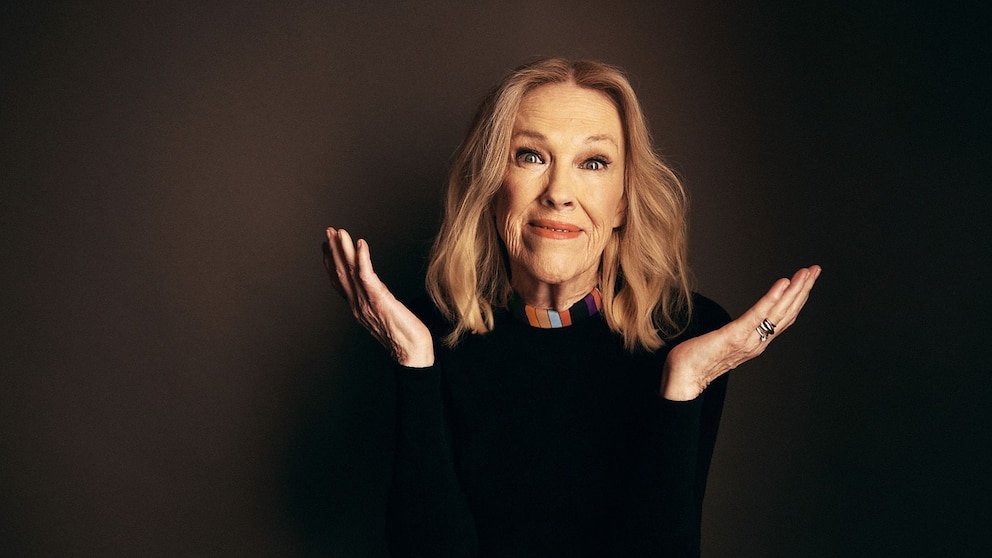
I represent the first generation who, when we were born, the television was now a permanent fixture in our homes. When I was born people had breakfast with Barbara Walters, dinner with Walter Cronkite, and slept with Johnny Carson.
Read the full "Pre-ramble"
The 1971 San Fernando earthquake (also known as the Sylmar earthquake).
The
quake occurred in the early morning of in the foothills of the San Gabriel
Mountains in southern
California. The unanticipated thrust earthquake had a moment magnitude of 6.5 or 6.7 (as determined by several
independent institutions) and had a maximum Mercalli
intensity of XI (Extreme).
The event was one in a series that affected the Los Angeles area in the late
20th century, and a study of the Sierra Madre Fault during that time indicated
that more substantial thrust earthquakes had occurred near the Transverse Ranges in the past. Damage was locally severe in the northernSan Fernando Valley, and surface faulting was extensive to the south of
the epicenter in the mountains, as well as urban settings along city streets
and neighborhoods. Uplift and other effects affected private homes and
businesses.
February 10, 2006
Final episode of Arrested Development airs on Fox.
Celebrated by critics and beloved by its relatively
small but devout fan base, the Fox television series Arrested Development airs
its last episode on this day in 2006. Arrested Development, created by
Mitchell Hurwitz, premiered in November 2003. It was almost universally
acclaimed by critics, who praised its sharp, complicated writing and stellar
acting, as well as the multi-layered plotlines and interesting camera work that
set it apart from run-of-the-mill network sitcoms.
Arrested Development was narrated by Ron Howard, the former Happy
Days star-turned-Oscar-winning movie director (2001’s A Beautiful Mind),
in an uncredited performance. Jason Bateman starred as Michael Bluth, by far
the most responsible member of a madcap family whose patriarch, George Bluth
Sr. (Jeffrey Tambor), has been sent to jail for dubious accounting procedures.
With George Sr. in prison, Michael is forced to take over management of the
Bluth Company and provide a much-needed stabilizing force for the rest of the
Bluth clan: his manipulative mother (Jessica Walter); his magician older
brother (Will Arnett); his self-obsessed sister (Portia de Rossi) and her
aspiring actor husband (David Cross); and his child-like youngest brother (Tony
Hale), who still clings to the hem of his mother’s fur coat. Rounding out the
comedy, Michael’s sensitive son (Michael Cera) harbors a crush on his cousin
(Alia Shawkat), with whom he is forced to share a room after the clan starts
sharing a model home on one of the Bluth Company’s developments.
At the 2004 Emmy Awards, Arrested Development won no fewer than four
statuettes-- for directing, writing, casting and for Outstanding Comedy Series.
Bateman also won a Golden Globe Award in 2005 for Best Actor in a Television
Series--Musical or Comedy. Despite critics’ rapture and the enthusiasm of its
fan base, the series earned low ratings from the beginning. While Fox renewed Arrested
Development for a second season, it shortened its run to only 18
episodes--a fact that was worked into the jokes on the show, along with jokes
about its corporate sponsor, Burger King, and jokes about its much higher-rated
Sunday-night competition (ABC’s Desperate Housewives). A few of the
memorable guest stars during the show’s three-year run included Liza Minnelli,
Julia Louis-Dreyfus, Henry Winkler, Scott Baio and Charlize Theron.
During its third season, Arrested Development’s audience averaged
around 4 million viewers, compared with 6 million during the previous season.
With the threat of cancellation hovering, rumors flew that Arrested
Development might be picked up by HBO or Showtime--either of which might
have been a better fit for its offbeat, often racy humor. References to these
rumors were also worked into the script.
In February 2006, to the dismay of fans, Fox pulled the plug on Arrested
Development for good. The following month, it was reported that Hurwitz had
closed long-running negotiations with Showtime and determined that Arrested
Development as a TV series was over. With the program named as one of the
100 Best Shows of All Time by Time magazine, buzz began to grow about an
Arrested Development movie--exciting news for the show’s loyal fans.
Nielsen appeared in over 100 films and 1,500
television programs over the span of his career beginning with dramatic roles
on television appearing in almost 50 live programs in 1950 alone during what is
now known as "The Golden Age".
Although Nielsen's acting career crossed a variety of genres in both television
and films, his deadpan delivery as a doctor in Airplane! (1980) marked a turning point in his career, one that
would make him, in the words of film critic Roger Ebert,
"the Olivier of spoofs." Nielsen enjoyed further success with
The Naked Gun film series,
based on his short-lived television series Police Squad!.
His portrayal of serious characters seemingly oblivious to (and complicit in)
their absurd surroundings gave him a reputation as a comedian. He was
recognized with a variety of awards throughout his career and was inducted into
both the Canada and Hollywood Walk of Fame. Nielsen married four times and had
two daughters from his second marriage. Nielsen died in his sleep in a Fort Lauderdale, Florida
hospital of complications from pneumonia.
Wilbur
pleads with Ed to stick to being a horse, especially when Ed wants to go to
college to become a Doctor.
February
8,1996
The
U.S. Telecommunications Bill was signed into law.
The bill included provisions that required TV
manufacturers to install V-chip devices in all television sets with a 13 inch
screen or larger. The chips would allow consumers to block "sexual,
violent, and other material about which parents should be informed before it is
displayed to children".
February
8, 2006
Kelly
Clarkson became the first participant on "American Idol" to win a
Grammy.
The
awards were for Best Female Pop Vocal Performance for "Since U Been
Gone" and Best Pop Vocal Album for "Breakaway". She also
performed "Because of You" at the show.
It was a show about a son and a father who have a love-hate relationship but yet need one another to get by in life.
-Demond Wilson
Grady Demond Wilson October 13, 1946 – January 30, 2026
Demond Wilson was born inValdosta, Georgia, on October 13, 1946,and grew up inNew York City, where he studied tap dance and ballet.He made his Broadway debut at age four and danced at Harlem'sApollo Theaterat age 12.Wilson was raised as aCatholicand served as analtar boy. He would spend summers with his grandmother Ada Mitchell, who wasPentecostal. Wilson briefly considered becoming aCatholic priest.At age 13, Wilson'sappendixruptured, almost killing him, but he vowed to serve God as an adult in some ministerial capacity.
He served in the United States Army from 1966 to 1968 and was in the 4th Infantry Division in Vietnam, where he was wounded. Upon returning home in the late 1960s, Wilson was featured in several Broadway and off-Broadway stage productions before moving to Hollywood, where he performed guest roles on several television series such as Mission: Impossible and All in the Family and acted in films such as The Organization (1971) and Dealing: Or the Berkeley-to-Boston Forty-Brick Lost-Bag Blues (1972).Later in 1971, after appearing as a robber on All in the Family with Cleavon Little, Wilson won the role of Lamont Sanford in the NBC sitcom Sanford and Son. Johnny Brown was considered for that role, but because of his commitment to Laugh-In, Wilson got the role instead. Wilson played Lamont through the run of the series, and became the star when Redd Foxx walked off the show in 1974 over a salary dispute with the producers and his character was written out for the rest of the season. Foxx returned the following year, and the pair worked together until 1977 when the show was cancelled. In 1980–1981, Foxx attempted to revive the show with the short-lived sitcom Sanford, but Wilson refused to reprise his role for the new series.
When asked in 2014 if he kept in touch with anybody from Sanford & Son, especially Foxx (who died on October 11, 1991), he responded:
No. I saw Redd Foxx once before he died, circa 1983, and I never saw him again. At the time I was playing tennis at the Malibu Racquet Club and I was approached by some producers about doing a Redd Foxx 50th Anniversary Special. I hadn't spoken to him since 1977, and I called the club where (Redd) was playing. And we met at Redd's office, but he was less than affable. I told those guys it was a bad idea. I never had a cross word with him. People say I'm protective of Redd Foxx in my book (Second Banana, Wilson's memoir of the Sanford years). I had no animosity toward Foxx (for quitting the show in 1977) because I had a million dollar contract at CBS to do Baby... I'm Back!. My hurt was that he didn't come to me about throwing the towel in - I found out in the hallway at NBC from a newscaster. I forgave him and I loved Redd, but I never forgot that. The love was there. You can watch any episode and see that.
Wilson wrote several Christian books concerning the New Age Movement and the hidden dangers he believed it holds for society. New Age Millennium was released by CAP Publishing & Literary Co. LLC on December 1, 1998. Wilson, who also authored children's books, called the book an "exposé" of certain New Age "symbols and slogans".
His memoir Second Banana: The Bittersweet Memoirs of the Sanford & Son Years was released on August 31, 2009. Wilson said, "It's just a documented truth, behind the scenes factual account of what happened during those years. Redd (Foxx) and I were making history back in those days. We were the first Blacks to be on television in that capacity and we opened the door for all those other shows that came after us."
In the summer of 2011, Wilson started appearing with actress Nina Nicole in a touring production of the play The Measure of a Man by playwright Matt Hardwick. The play is described as "a faith-based production" and is set in a small town in south Georgia.
Wilson began work in 2010 to produce and act in a melodramatic family film based on the play Faith Ties. Says Wilson of the project: "I play a broken down old drunk whose wife and daughter are killed and he's given up on life. The protagonist is a pastor who is in the middle while he watches the lives of people crumbling around him."
John
Logie Baird gave the world's first
demonstration of true television before 50 scientists in an attic room in
central London.
In 1927, his television was demonstrated over
438 miles of telephone line between London and Glasgow, and he formed the Baird
Television Development Company. (BTDC). In 1928, the BTDC achieved the first
transatlantic television transmission between London and New York and the first
transmission to a ship in mid-Atlantic. He also gave the first demonstration of
both colour and stereoscopic television.
January 27, 1976
The Happy Days spin-off Laverne and Shirley, featuring two
Milwaukee women who work on a brewery assembly line preimers.
The show starred Penny Marshall, sister of producer
Garry Marshall, and Cindy Williams. Fierce rivalry erupted between the two
stars, and Williams left the show in 1982. The show lasted only one more season
before its cancellation in 1983.
Alda was born Alphonso Joseph D'Abruzzo in The Bronx,
New York City. His father, Robert Alda
(born Alphonso Giuseppe Giovanni Roberto D'Abruzzo), was an actor and singer,
and his mother, Joan Browne, was a former showgirl. His father was of Italian
descent and his mother was of Irish
ancestry. His adopted surname, "Alda," is a portmanteau
of ALphonso and D'Abruzzo. When Alda was seven years old, he
contracted poliomyelitis. To combat the disease, his parents administered a
painful treatment regimen developed by Sister Elizabeth Kenny that consisted of applying hot woollen blankets to
his limbs and stretching his muscles. Alda attended Archbishop Stepinac High
School in White Plains, New York. In 1956, he received his Bachelor of
Science degree in English from Fordham College of Fordham University in the Bronx, where he was a student staff member of
its FM radio station, WFUV. Alda's half-brother, Antony Alda,
was born the same year and would also become an actor.
During Alda's junior year, he studied in Paris, acted in a play in Rome, and performed with his
father on television in Amsterdam. In college, he was a member of the ROTC, and after graduation, he served for a year at Fort
Benning, Georgia, then joined the U.S. Army
Reserve, and served for six months as
a gunnery officer.
A year after graduation, he married Arlene Weiss,
with whom he has three daughters: Eve, Elizabeth,
and Beatrice. Two of his 7 grandchildren are aspiring actors. The
Aldas have been longtime residents of Leonia, New Jersey. Alda frequented Sol & Sol Deli on Palisade
Avenue in the nearby town of Englewood, New
Jersey—a fact mirrored in his
character's daydream about eating whitefish from the establishment, in an
episode of M*A*S*H in which Hawkeye sustains a head injury.
Career
Early acting
Alda began his career in the 1950s, as a member of the
Compass Players comedy revue. In 1966, he starred in the musical The Apple Tree on Broadway; he was nominated for the Tony Award
as Best Actor in a Musical for that role.
Alda made his Hollywood acting debut as a supporting
player in Gone are the Days! – a film version of the highly successful
Broadway play Purlie Victorious, which co-starred veteran actors Ruby Dee and
her husband, Ossie Davis. Other film roles would follow, such as his portrayal
of author, humorist, and actor George Plimpton
in the film Paper Lion (1968),[4] as
well as The
Extraordinary Seaman (1969), and
the occult-murder-suspense thriller The
Mephisto Waltz, with actress Jacqueline Bisset. During this time, Alda frequently appeared as a panelist on the 1968
revival of What's My Line?. He also appeared as a panelist on I've Got a Secret during its 1972 syndication revival.
M*A*S*H Series (1972–83)
In early 1972, Alda auditioned for and was selected to
play the role of "Hawkeye Pierce" in the TV adaptation of the 1970
film MASH.[4] He
was nominated for 21 Emmy Awards, and won five. He took part in writing 19 episodes,
including the finale, and directed 32. When he won his first Emmy Award for
writing, he was so happy that he performed a cartwheel before running up to the stage to accept the award.
He was also the first person to win Emmy Awards for acting, writing, and
directing for the same series. Richard Hooker, who wrote the novel on which M*A*S*H was
based, did not like Alda's portrayal of Hawkeye Pierce (Hooker, a Republican, had based Hawkeye on himself, whereas Alda and the
show's writers took the character in a more liberal
direction).[citation
needed] Alda also directed the show's 1983 2½-hour series
finale "Goodbye,
Farewell and Amen", which
remains the
single most-watched episode of any
television series.[4]
Alda is the only series regular to appear in all 251 episodes.
Alda commuted from Los Angeles to his home in New
Jersey every weekend for 11 years while starring in M*A*S*H. His wife
and daughters lived in New Jersey, and he did not want to uproot his family to
L.A., especially because he did not know how long the show would last.
Alan Alda, father Robert Alda, and half-brother Antony
Alda appeared together in an episode of M*A*S*H, "Lend a
Hand", during Season 8. Robert had previously appeared in "The
Consultant" in Season 3.
During the first five seasons of the series, the tone
of "M*A*S*H" was largely that of a traditional "service
comedy", in the vein of shows like "McHale's Navy".
However, as the original writers gradually left the series, Alda gained
increasing control, and by the final seasons had become a producer and creative
consultant. Under his watch, M*A*S*H retained its comedic foundation,
but gradually assumed a somewhat more serious tone, openly addressing political
issues. As a result, the 11 years of M*A*S*H are generally split into
two eras: the Larry Gelbart/Gene Reynolds
"comedy" years (1972–1977), and the Alan Alda "dramatic"
years (1977–1983).
In his 1981 autobiography, Jackie Cooper
(who directed several early episodes) wrote that Alda concealed a lot of
hostility beneath the surface, and that the two of them barely spoke to each
other by the time Cooper’s directing of M*A*S*H ended.
During his M*A*S*H years, Alda made several
game-show appearances, most notably in The $10,000
Pyramid and as a frequent
panelist on To Tell the Truth.
His favorite episodes of M*A*S*H are "Dear
Sigmund" and "In Love and War".
In 1996, Alda was ranked #41 on TV Guide's "50 Greatest TV Stars of All Time".
Writing and Directing
Credits
The following is a list of M*A*S*H episodes
written and/or directed by Alda.
Season One
Episode 19: "The Long John Flap" (Written)
Season Two
Episode 5: "Dr. Pierce and Mr. Hyde" (Written with
Robert Klane)
Episode 23: "Mail Call" (Directed)
Season Three
Episode 16: "Bulletin Board" (Directed)
Season Four
Episode 4: "The Late Captain Pierce" (Directed)
Episode 7: "Dear Mildred" (Directed)
Episode 8: "The Kids" (Directed)
Episode 16: "Dear Ma" (Directed)
Season Five
Episode 2: "Margaret's Engagement" (Directed)
Episode 7: "Dear Sigmund (Written and Directed)
Episode 12: "Exorcism" (Directed)
Episode 19: "Hepatitis" (Written and Directed)
Season Six
Episode 2: "Fallen Idol" (Written and Directed)
Episode 4: "War of Nerves" (Written and Directed)
Episode 7: "In Love and War" (Written and Directed)
Episode 12: "Comrades in Arms, Part 1" (Written;
Directed with Burt Metcalfe)
Episode 13: "Comrades in Arms, Part 2" (Written;
Directed with Burt Metcalfe)
Season Seven
Episode 5: "The Billfold Syndrome" (Directed)
Episode 8: "Major Ego" (Directed)
Episode 14: "Dear Sis" (Written and Directed)
Episode 16: "Inga" (Written and Directed)
Episode 25: "The Party" (Written with Burt Metcalfe)
Season Eight
Episode
3: "Guerilla My Dreams" (Directed)
Episode
11: "Life Time" (Written with Walter D. Dishell, M.D.; Directed)
Episode
15: "Yessir, That's Our Baby" (Directed)
Episode
20: "Lend a Hand" (Written and Directed)
Episode
22: "Dreams" (Teleplay; Story with James Jay Rubinfier;
Directed)
Season Nine
Episode 4: "Father's Day" (Directed)
Episode 12: "Depressing News" (Directed)
Episode 15: "Bottoms Up" (Directed)
Episode 20: "The Life You Save" (Written with John
Rappaport; Directed)
Season Ten
Episode
6: "Communication Breakdown" (Directed)
Episode
10: "Follies of the Living—Concerns of the Dead" (Written and
Directed)
Episode
16: "Where There's a Will, There's a War" (Directed)
Season Eleven
Episode 1: "Hey, Look Me Over" (Written with Karen Hall)
Episode 16: "Goodbye, Farewell and Amen" (Written with
Burt Metcalfe, John Rappaport, Dan Wilcox, Thad Mumford, Elias Davis,
David Pollock and Karen Hall; Directed)
During M*A*S*H's run and continuing through the
1980s, Alda embarked on a successful career as a writer and director, with the
ensemble dramedyThe Four
Seasons being perhaps his most
notable hit. Betsy's Wedding is his last directing credit to date. After M*A*S*H,
Alda took on a series of roles that either parodied or directly contradicted
his "nice guy" image.[4]
His role as a pompous celebrity television producer in Crimes and
Misdemeanors was widely seen as a
self-parody, although Alda has denied this.
In 1993, he co-starred with Woody Allen
(also the director), Diane Keaton, and Anjelica Huston
in the comedy/mystery Manhattan
Murder Mystery. The four play a
quartet of amateur crime solvers who become entangled in a murder plot possibly
perpetrated by Keaton and Allen's neighbor. Alda's character is Ted, a
playwright secretly in love with Keaton's character Carol, but who eventually
falls for Huston's character Marcia.
Beginning in 2004, Alda was a regular cast member on
the NBC program The West Wing, portraying RepublicanU.S. Senator and presidential candidate Arnold Vinick,
until the show's conclusion in May 2006. He made his premiere in the sixth
season's eighth episode, "In The Room," and was added to the opening
credits with the thirteenth episode, "King Corn." In August 2006,
Alda won an Emmy for his portrayal of Arnold Vinick in the final
season of The West Wing. Alda had been a serious candidate, along with Sidney Poitier
for the role of President Josiah Bartlet, before Martin Sheen
was ultimately cast in the role.
Alda starred in the original Broadway production of
the play 'Art',
which opened on March 1, 1998, at the Bernard B.
Jacobs Theatre. The play won the Tony
Award for best original play.
Alda also had a part in the 2000 romantic comedy What Women Want, as the CEO of the advertising firm where the main characters worked.
In the spring of 2005, Alda starred as Shelly Levene
in the Tony Award-winning Broadway revival of David Mamet'sGlengarry Glen
Ross, for which he received a Tony Award
nomination for Best Featured Actor in a Play. Throughout 2009 and 2010, he
appeared in three episodes of 30 Rock
as Milton Greene, the biological father of Jack Donaghy
(Alec Baldwin).
In 2011, Alda was scheduled to guest star on Law & Order: LA, portraying former police and naval officer John
Winters, the father of the former main character Rex Winters. It is unknown
whether he filmed his role before the series was redesigned and Rex Winters
written off.
After the release of the movie Tower Heist,
Alda was devastated when on December 7, 2011, he lost his idol and decades-long
friend Harry Morgan, who played opposite Alda as Colonel
Sherman T. Potter on M*A*S*H.
Upon Morgan's death, Alda released a statement: "We had just a wonderful
time reminiscing. That was the last time I saw Harry."
Charitable work and
other interests
Alda has done extensive charity work. He helped
narrate a 2005 St.
Jude's Children's Hospital produced
one-hour special TV show Fighting for Life.[15]
He and his wife, Arlene, are also close friends of Marlo Thomas,
who is very active in fund-raising for the hospital her father
founded. The special featured Ben Bowen as
one of six patients being treated for childhood cancer at Saint Jude. Alda and
Marlo Thomas had also worked together in the early 70s on a critically
acclaimed children's album entitled Free to Be You
and Me, which featured Alda,
Thomas and a number of other well-known character actors. This project remains
one of the earliest public signs of his support of women's rights.
In 2005, Alda published his first round of memoirs, Never
Have Your Dog Stuffed: and Other Things I've Learned. Among other stories,
he recalls his intestines becoming strangulated while on location in Chile for his PBS show Scientific
American Frontiers, during which
he mildly surprised a young doctor with his understanding of medical
procedures, which he had learned from M*A*S*H. He also talks about his
mother's battle with schizophrenia. The title comes from an incident in his childhood,
when Alda was distraught about his dog dying and his well-meaning father had
the animal stuffed. Alda was horrified by the results, and took from
this that sometimes we have to accept things as they are, rather than
desperately and fruitlessly trying to change them.
In 2006, Alda contributed his voice to a part in the
audio book of Max Brooks' World War Z.
In this book, he voiced Arthur Sinclair Jr., the director of the United States
Government's fictional "Department of Strategic Resources (DeStRes)".
His second memoir, Things I Overheard While Talking
to Myself, weaves together advice from public speeches he has given with
personal recollections about his life and beliefs.
Alda also has an avid interest in cosmology,
and participated in BBC coverage of the opening of the Large Hadron
Collider, at CERN, Geneva, in September
2008.
In Things I Overheard While Talking to Myself,
Alda describes how as a teen he was raised as a Roman Catholic and eventually
he realized he had begun thinking like an agnostic or atheist:
For a while in my teens, I was sure I had it. It was
about getting to heaven. If heaven existed and lasted forever, then a mere
lifetime spent scrupulously following orders was a small investment for an
infinite payoff. One day, though, I realized I was no longer a believer, and
realizing that, I couldn’t go back. Not that I lost the urge to pray.
Occasionally, even after I stopped believing, I might send off a quick memo to
the Master of the Universe, usually on a matter needing urgent attention, like Oh,
God, don’t let us crash. These were automatic expulsions of words, brief SOS
messages from the base of my brain. They were similar to the short prayers that
were admired by the church in my Catholic boyhood, which they called
“ejaculations.” I always liked the idea that you could shorten your time in
purgatory with each ejaculation; what boy wouldn’t find that a comforting idea?
But my effort to keep the plane in the air by talking to God didn’t mean I
suddenly was overcome with belief, only that I was scared. Whether I’d wake up
in heaven someday or not, whatever meaning I found would have to occur first on
this end of eternity.
Speaking further on agnosticism, Alda goes on to say:
I still don't like the word agnostic. It's too fancy.
I'm simply not a believer. But, as simple as this notion is, it confuses some
people. Someone wrote a Wikipedia entry about me, identifying me as an
atheist because I'd said in a book I wrote that I wasn't a believer. I guess in
a world uncomfortable with uncertainty, an unbeliever must be an atheist, and
possibly an infidel. This gets us back to that most pressing of human
questions: why do people worry so much about other people's holding beliefs
other than their own?
Alda made these comments in an interview for the 2008
question section of the Edge Foundation website.
January 28, 1956
Young country-rock singer Elvis Presley makes his
first-ever television appearance on the TV musical-variety program Stage
Show.
Presley
sang "Heartbreak Hotel," which quickly became a hit single. In total,
Elvis appeared on six shows. The program was hosted by swing band leaders Tommy
and Jimmy Dorsey. Elvis went on to appear on Ed Sullivan's immensely popular
variety show, Toast of the Town, in the fall of 1956. The appearance
made Elvis a household name.
January 28, 1986
Challenger explodes
The Space Shuttle Challenger disaster occurred
on January 28, 1986, when the NASASpace Shuttle
orbiterChallenger (OV-099) (mission STS-51-L)
broke apart 73 seconds into its flight, leading to the deaths of its seven crew
members, which included five NASA astronauts and
two Payload Specialists. The spacecraft disintegrated over the Atlantic Ocean,
off the coast of Cape Canaveral, Florida, at
11:39 EST (16:39 UTC). Disintegration of the vehicle began after an O-ring seal
in its right solid
rocket booster (SRB) failed at
liftoff. The O-ring failure caused a breach in the SRB joint it sealed,
allowing pressurized burning gas from within the solid rocket motor to reach
the outside and impinge upon the adjacent SRB aft field joint attachment
hardware and external
fuel tank. This led to the separation
of the right-hand SRB's aft field joint attachment and the structural failure of the external tank.Aerodynamic forces
broke up the orbiter.
January 28, 1996
Jerry Siegel, creator of Superman, dies at age 81.
Writer Sisgel created Superman with artist friend Joe
Shuster when they were both teenagers in the 1930s. All the major newspaper
syndicates rejected the character, who was born on the doomed planet Krypton
and bundled off by his parents in a space capsule to Smallville USA, where he's
raised by kindly earthlings. In 1938, however, Seigel and Shuster finally
landed a comic book deal, and Superman's adventures as mild-mannered reporter
Clark Kent moonlighting as the Man of Steel became an instant hit. The comic
book spawned a newspaper strip that ran for 28 years, as well as a radio series
that ran from 1940 to 1951.
The character, along
with his friends cub reporter Jimmy Olson and ace newswoman Lois Lane, who
never seem to penetrate Superman's Clark Kent disguise, appeared in movie
serials from 1948 to 1950, and in a feature film in 1951. A popular Superman TV
series ran from 1951 to 1957. Filmed on a shoestring budget, the show's special
effects were limited to Superman crashing through walls, flying around, and
witnessing fiery explosions. The same flying sequences were used repeatedly.
Actor George Reeves was so well-known as Superman that he couldn't find other
work when the series ended.
The
Man of Steel reappeared on the big screen in 1978, with Christopher Reeves in
the role. The hit film launched three follow-ups. In 1993, Superman appeared
again in the TV comedy Lois and Clark.
February 1, 1951
TV Shows Atomic Blast, Live.
For the first time,
television viewers witness the live detonation of an atomic bomb blast, as KTLA
in Los Angeles broadcasts the blinding light produced by a nuclear device
dropped on Frenchman Flats, Nevada. One of a hundred above-ground nuclear tests conducted between 1951 and 1962 in
the Nevada desert, the A-bomb telecast found its way into the history books
(and blogs) when cameramen secretly positioned on top of a Las Vegas hotel
focused on the blast. The images were relayed to the station’s transmitter on
Mount Wilson Observatory about 200 miles away, and early-bird viewers saw their
television screens fill with white light at 5:30 in the morning.
Witnessing the blast telecast first-hand was KTLA reporter Stan Chambers.
In a YouTube interview, Chambers described how station manager Klaus
Landsberg pulled off the unauthorized broadcast. “We couldn’t get near the
field, because it was all top secret. Klaus sent a crew to Las Vegas and put
them on top of one of the hotels…. They kept the camera open for the flash of
light that would come on when the blast went off.”
Los Angeles viewers tuned in for the one-off event. “We had a rating that
was very large for 5:30 in the morning,” Chambers recalled. In the
pre-videotape era, there were of course no replays as newsmen Gil Martin,
anchoring from Las Vegas, and station staffer Robin Lane at Mount Wilson
reported the incident. Chambers continued:
We stayed on the air, they waited for the right time, and all of a sudden
there was the flash. The people watched it, Gil described it, Lane talked about
it, and that was our telecast. That one flash. You just see this blinding white
light. It didn’t seem real. We didn’t have videotape. You couldn’t say, “Let’s
look at it again.”
1951’s Ranger Easy bomb was designed to test compression against critical
mass in the Demon core,
so-called because the plutonium mass became unstable and caused the
radiation-poisoning death of a Los Alamos scientist. A B-50 bomber plane
dropped the test weapon above the Nevada Test Site about 65 miles northwest of
Las Vegas. Part of the Department of Energy’s Operation Ranger
program, “Easy” delivered a 1-kiloton payload.
In the decade that followed Operation Ranger, A-bomb tests from
Buster-Jangle, Tumbler-Snapper, Upshot-Knothole, Plumbbob, Nougat, Sunbeam and
other programs became so commonplace that watching mushroom clouds turned into
a Las Vegas tourist attraction.
In 1952, KTLA set up the first live, national feed for a Nevada atomic bomb
explosion. That one was carried by the major networks.
February 1, 1976
Sonny and Cher resumed on TV despite a real life
divorce.
In February 1976, the
bitterness of their divorce behind them, the couple reunited for one last try
with The Sonny and Cher Show. This incarnation of the series was produced by
veteran musical variety-show writers, Frank Peppiatt and John Aylesworth.
It was basically the same as their first variety series but with different
writers to create new sketches and songs. The duo's opening conversations were
markedly more subdued and made humbled references to the couple's divorce and
Cher's subsequent marriage to Gregg Allman (during
production Cher was pregnant with and eventually bore Allman's son, Elijah). (Some jokes would get awkward. In one opening
segment Cher gave Sonny a compliment and Sonny jokingly replied "That's
not what you said in the courtroom.") Despite these complications, the
revived series garnered enough ratings to be renewed for a second season,
finally ending its run in 1977. (By this time, the variety show genre
was already in steep decline, and Sonny and Cher was one of the few successful
programs of the genre remaining on the air at the time.)