I represent the first generation who, when we were born, the television was now a permanent fixture in our homes. When I was born people had breakfast with Barbara Walters, dinner with Walter Cronkite, and slept with Johnny Carson.
Read the full "Pre-ramble"
I was offered some film roles, and I did not do them.
It would have been interesting, but I have no regrets.
I am where I am; I accept and embrace the mistakes because they're character-building and they build perspective and talent.
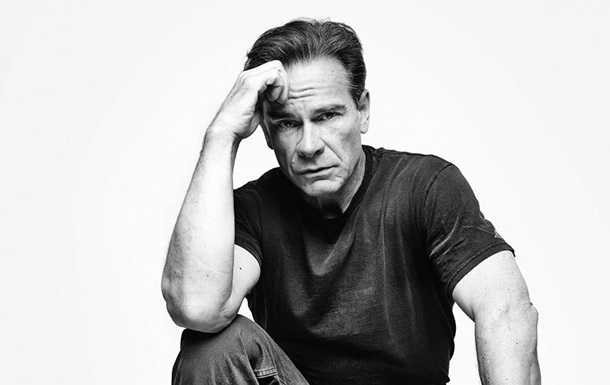
-Peter Scolari
Peter Thomas Scolari September 12, 1955 – October 22, 2021
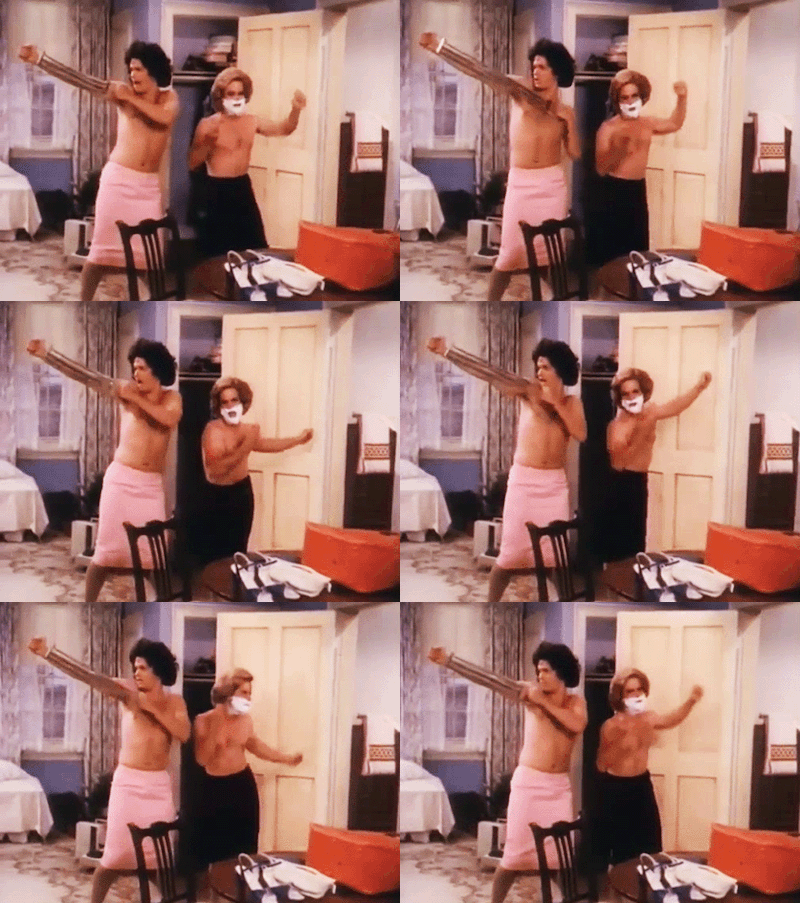
Peter Scolari's first ongoing role was in his first short-lived 1980 sitcom Goodtime Girls, as the juggling neighbor of the title characters. He was then cast co-starring with then-unknown Tom Hanks in another sitcom, Bosom Buddies, as one of two creative professionals who disguise themselves as women to get an affordable apartment in a women's-only residence. After Bosom Buddies was cancelled in 1982 and still struggling as an actor, Scolari joined the cast of Newhart opposite Bob Newhart in 1984, where he played Michael Harris, the yuppie local TV producer, until the series' conclusion in 1990.
Following central roles in the unsuccessful series Family Album and Dweebs, Scolari spent three seasons playing inventor Wayne Szalinski, a role originated on film by Rick Moranis, in the TV adaptation of the Disney film Honey, I Shrunk the Kids. He later had a recurring role as the father of Lena Dunham's character on HBO's Girls, for which he won an Emmy in 2016. He also portrayed Gotham City’s corrupt police commissioner, Gillian B. Loeb, in Fox’s superhero crime drama Gotham.
Scolari appeared on Broadway in Wicked, Sly Fox, Hairspray, and Lucky Guy, which reunited him with his Bosom Buddies co-star Tom Hanks. Scolari also appeared Off Broadway in Old Man Joseph and His Family, The Exonerated, In the Wings, The Music Man, and White's Lies.
In 2014, Scolari portrayed Yogi Berra in Bronx Bombers. His wife Tracy Shayne played Berra's wife Carmen. Subsequently, he played the part of the Wizard of Oz in the Broadway musical Wicked.
Barbara
Eden reprises
her world-famous role as the magical Jeannie; also reprising their roles from
the original series were Bill Daily as Tony's fellow
astronaut and best friend Roger Healy, and Hayden Rorke (in his final film
role) as NASA psychiatrist Dr. Alfred Bellows. The role of Tony Nelson was
played by Wayne
Rogers,
best known for his role as Trapper John McIntyre on the 1970s series M*A*S*H. Larry
Hagman was
unavailable to reprise his role as Tony Nelson reportedly because he was too
busy filming his CBS series Dallas at the time.
The
film was directed by William Asher (who was also director
of the 1960s show Bewitched) and the teleplay was
written by Irma Kalish.
Ball starred as a ditzy
wife on the radio show My Favorite Husband from 1948 to 1951. CBS
decided to launch the popular series on the relatively new medium of TV. Lucy
insisted Desi be cast as her husband in the TV version, though the network
executives said no one would believe the couple were married. Desi and Lucy
performed before live audiences and filmed a pilot, convincing network
executives that audiences responded well to their act, and CBS cast Desi for
the show.At the time, most television shows were broadcast live from New York City,
and a low-quality 35mm or 16mmkinescope print was made of the show to
broadcast it in other time zones. Because Ball was pregnant, she and Arnaz
insisted on filming the show in Hollywood.
The duo, along with co-creator Jess Oppenheimer, then decided to shoot the
show on 35 mm film in front of a studio audience, with three cameras, a technique now standard for
most present-day sitcoms. The result was a much sharper image than other shows
of the time, and the audience reactions were far more authentic than the "canned laughter" used on most filmed
sitcoms of the time. The technique was not completely new — another CBS comedy
series, Amos 'n' Andy,
which debuted four months earlier, was already being filmed at Hal Roach Studios with three 35mm cameras
to save time and money. Hal Roach Studios was also used for filming at least
two other TV comedies as early as 1950, both airing on ABC, namely Stu Erwin's The
Trouble with Father, and the TV version of Beulah; the original
1949/50 Jackie Gleason TV version of The Life of Riley on NBC was also
done on film, not live. There were also some dramatic TV shows pre-dating I
Love Lucy which were also filmed, not live. But I Love Lucy was the
first show to use this film technique in front of a studio audience. Arnaz persuaded Karl Freund, an Academy Award -winning cinematographer of
such films as Metropolis
(1927), Dracula (1931), and The Good Earth
(1937), as well as director of The Mummy
(1932), to be the series' cinematographer.
Scenes were often performed in sequence, as a play would be, which was
unusual for comedies at that time. Retakes were rare and dialogue mistakes were
often played off for the sake of continuity.
I
Love Lucy became one of the most
popular TV situation comedies in history, ranking in the top three shows for
six years and turning the couple's production company, Desilu, into a
multimillion-dollar business. Ball became president of the company in 1960,
after she and Desi divorced. She also starred in several other "Lucy"
shows, including The Lucy Show, which debuted in 1962 and ran for six
seasons, and Here's Lucy, in which she starred with her two children
until the show was cancelled in 1974. A later show, Life with Lucy,
featuring Lucy as a grandmother, was cancelled after only eight episodes. Ball
worked little in the last years of her life. She died of congestive heart
failure following open-heart surgery in 1989.
October 16, 1946
Suzanne Somers is
born Suzanne Marie Mahoney.
She is
an Americanactress, author and businesswoman, best known for her roles on Three's Company and Step by Step.
Somers later became the author of a series of best-selling self-help books, including Ageless: The
Naked Truth About Bioidentical Hormones (2006), a book about bioidentical
hormone replacement therapy. She has also released two
autobiographies, four diet books, and a book of poetry entitled "Touch
Me" (1980). She currently features items of her design on the Home Shopping
Network. During the 1980s, Somers became a Las Vegas entertainer. She was the
spokeswoman for the Thighmaster, a
piece of exercise equipment
that is squeezed between one's thighs. Thighmaster was
one of the first products responsible for launching the infomercial concept. During this period of
her career, she also performed for U.S. servicemen overseas.
Barbara Walters joined
Harry Reasoner at the anchor desk of the "ABC Evening News" for the
first time.
Harry
Reasoner,
formerly of CBS
News and 60 Minutes, joined ABC News in 1970 to
co-anchor the relaunchedABC Evening News with Smith, beginning that
December, replacing Reynolds. In 1975, Howard K. Smith was moved to a
commentator role, and Reasoner briefly assumed sole-anchor responsibilities
until he was paired with Barbara Walters, who became the first
female network anchor when she joined the program in 1976.Ratings for the nightly news
broadcast declined shortly thereafter, possibly due in part to the lack of
chemistry between Reasoner and Walters. Reasoner would eventually return to CBS
and 60 Minutes, while Walters became a regular on the
newsmagazine 20/20.
October 4, 1981
Bruce Jenner and Harry
Belafonte debuted in their first dramatic roles in NBC-TV's Grambling's
White Tiger (also released as White Tiger in Europe)
While
walking along Park
Avenue to
his apartment in Manhattan, Rather was attacked and
punched from behind by a man who demanded to know "Kenneth, what is the
frequency?" while a second assailant chased and beat him. As the assailant
pummeled and kicked Rather, he kept repeating the question. In describing the
incident, Rather said, "I got mugged. Who understands these things? I
didn't and I don't now. I didn't make a lot of it at the time and I don't now.
I wish I knew who did it and why, but I have no idea." Until the
crime was resolved years later, Rather's description of the bizarre crime led
some to doubt the veracity of his account, although the doorman and
building supervisor who rescued Rather fully confirmed his version of events.
In
1997, a TV critic writing in the New York Daily News solved the mystery, publishing a photo of the
alleged assailant, William Tager, who received a 12 1⁄2 to
25-year prison sentence for killing NBC stagehand Campbell Montgomery
outside The Today Show studio in 1994. Rather confirmed the story: "There's no
doubt in my mind that this is the person." New York District Attorney
Robert M. Morgenthau said, "William Tager's identity as the man who
attacked Mr. Rather was established in the course of an investigation by my
office." Tager claimed he thought television networks were beaming
signals into his brain when he murdered the stagehand, Tager was trying to
force his way into a CBS studio with a weapon, in order to find out the
frequency the networks were using to attack him, so that he could block it. As
to why he said "Kenneth", Tager was Jewish, and may have actually
been using the Yiddish word
"goniff", meaning "thief". Tager was paroled in
October 2010 and is believed to be living in New York City.
October 5, 1951
The Honeymooners was introduced during Jackie Gleason's first variety
series Cavalcade of Stars.
It
originally aired on the DuMont network's Cavalcade of Stars, Jackie Gleason's variety show and subsequently on the CBS network's The Jackie Gleason Show, which was filmed in front of a live audience.
It debuted as a half-hour series on October 1, 1955. Although initially a ratings success—becoming the #2 show in the
United States during its first season—it faced stiff competition from The Perry Como Show, and eventually
dropped to #19, ending its production after only 39 episodes (now referred
to as the "Classic 39"). The final episode ofThe Honeymooners aired
on September 22, 1956. Creator/producer Jackie Gleason revived the series
sporadically until 1978.The Honeymooners was one of the first U.S.
television shows to portray working-class married couples in a gritty,
non-idyllic manner (the show is set mostly in the Kramdens' kitchen, in a
neglected Brooklyn apartment building). The program is also popular
internationally, particularly in Canada, Poland and Scandinavian
countries Norway and Sweden.
October 5, 1986
Business World began airing on ABC-TV.
An ABC News Sunday-morning
review of economic and financial stories was the first regularly scheduled
weekly business series on network TV.
October 9, 1986
Joan Rivers debuted her
new The Late Show on the FOX network.
After
a moderate start, ratings for the talk show soon
sagged. The ratings struggles also made it hard for Fox to attract affiliates
for its primetime launch on April 5, 1987. Some prospective affiliates, such
as Milwaukee's WCGV-TV, would only sign with the
network if they did not have to carry The Late Show.KPTMin Omaha refused outright out of loyalty to Carson, who
hailed from Corning,
Iowa, east
of Omaha and started his career on local radio and television. The network
acquiesced to allow some stations out of that obligation so that the network
launched in primetime with as many affiliates as possible, at the cost of
ratings and access to The Late Show. For instance, at the time the
show launched Fox had not closed on its purchase of its Boston station, WXNE-TV (nowWFXT). That station's previous owners, the Christian Broadcasting Network, objected to the show's content
and refused to clear it. As a result, until Fox took control of the station in
January, its audio feed aired on a low-rated AM station.
The
behind-the-scenes relations between Rivers and network executives quickly
eroded, and Rivers was eventually fired in May 1987. For the final show, which
aired May 15, 1987, the set was vandalized with toilet paper, slime, and
shaving cream. Her guests were Howie Mandel, Pee-Wee Herman, then-fledgling
comedian Chris
Rock, Wendy O. Williams, and show stage manager
Michelle Aller as her alter-ego Mavis Vegas Davis. Soon afterward the
program was renamed The Late Show and featured rotating guest
hosts including Suzanne Somers, Richard Belzer, and Robert Townsend. After firing prospective guest host Frank Zappa, producer John Scura
replaced him with Arsenio Hall, who made his debut as a talk show host.
Eventually, Hall was named the permanent replacement host in mid-1987.