I represent the first generation who, when we were born, the television was now a permanent fixture in our homes. When I was born people had breakfast with Barbara Walters, dinner with Walter Cronkite, and slept with Johnny Carson.
Read the full "Pre-ramble"
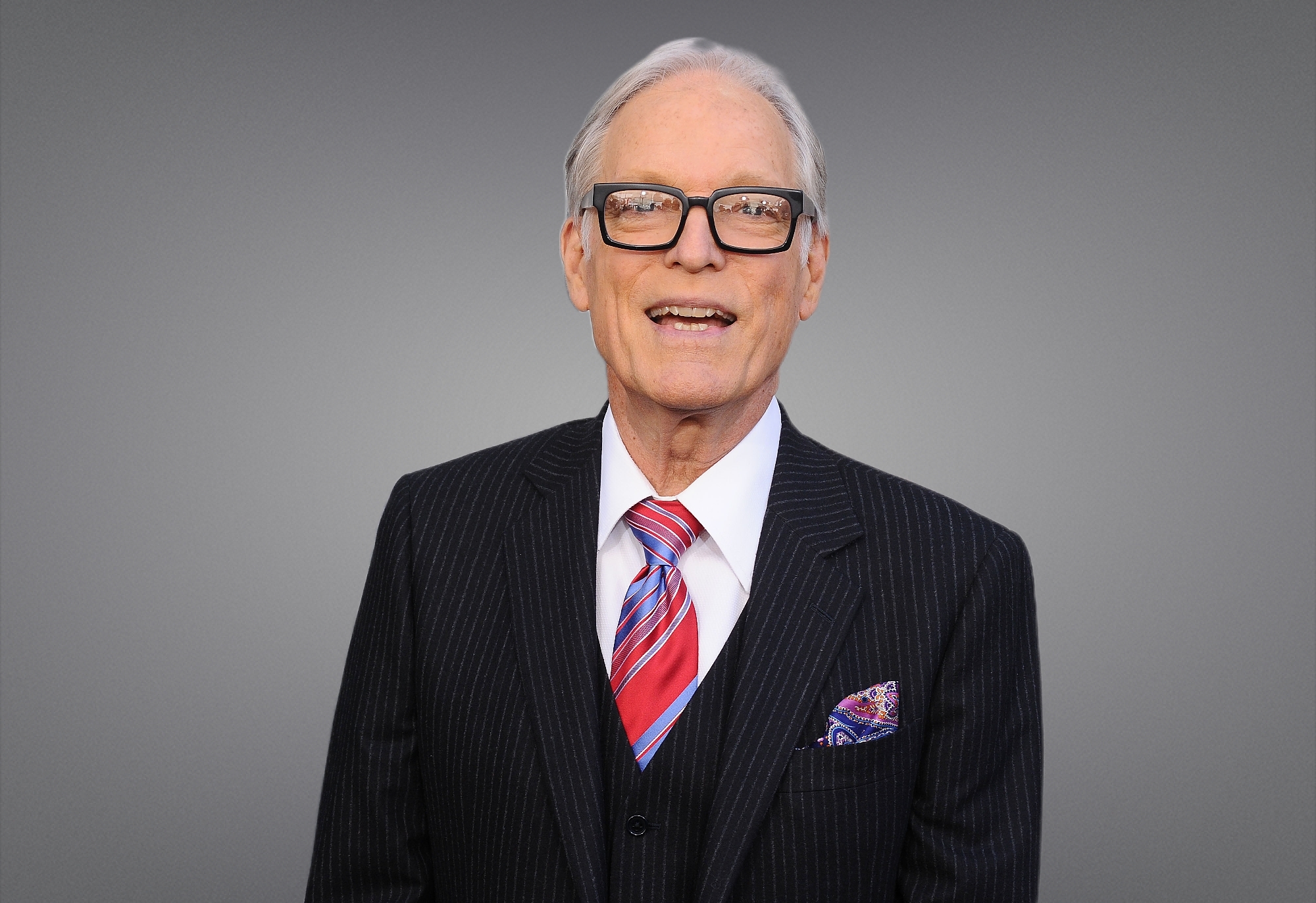
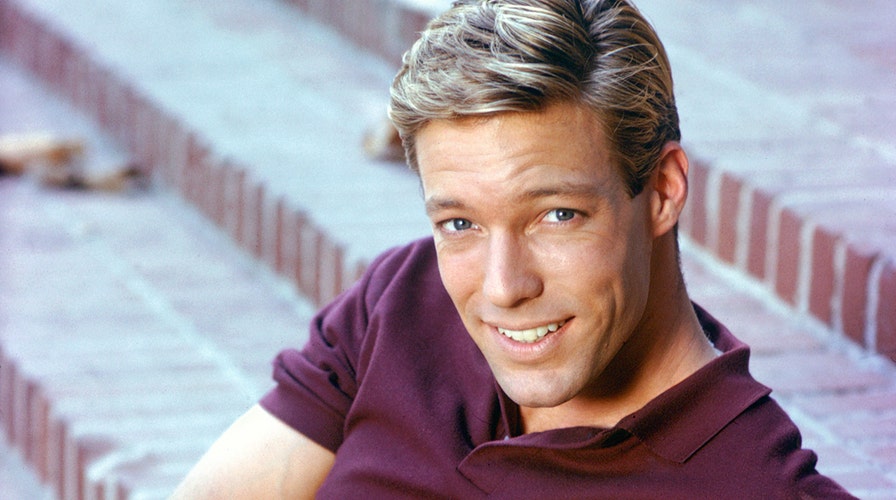
Chamberlain's singing ability also led to some hit singles in the early 1960s, including the "Theme from Dr. Kildare", titled "Three Stars Will Shine Tonight", which struck No. 10 according to theBillboardHot 100 Charts.Dr. Kildareended in 1966, after which Chamberlain began performing on the theater circuit. In 1966, he was cast oppositeMary Tyler Moorein the ill-fated Broadway musicalBreakfast at Tiffany's, co-starringPriscilla Lopez, which, after an out-of-town tryout period, closed after only four previews. Decades later, he returned to Broadway in revivals ofMy Fair LadyandThe Sound of Music.
At the end of the 1960s, Chamberlain spent a period of time in England, where he played in repertory theater and in the BBC's Portrait of a Lady (1968), becoming recognized as a serious actor. The following year, he starred opposite Katharine Hepburn in the film The Madwoman of Chaillot (1969).[11] While in England, he took vocal coaching and in 1969 performed the title role in Hamlet for the Birmingham Repertory Theatre, becoming the first American to play the role there since John Barrymore in 1925. He received excellent notices and reprised the role for television in 1970 for the Hallmark Hall of Fame. A recording of the presentation was released by RCA Red Seal Records and was nominated for a Grammy Award.
Since the 1990s, Chamberlain has appeared mainly in television films, on stage, and as a guest star on such series as The Drew Carey Show and Will & Grace. in 1991, he appeared in a TV movie version of Davis Grubb's The Night of the Hunter that received mixed reviews. He starred as Henry Higgins in the 1993–1994 Broadway revival of My Fair Lady. In the fall of 2005, Chamberlain appeared in the title role of Ebenezer Scrooge in the Broadway National Tour of Scrooge: The Musical. In 2006, Chamberlain guest-starred in an episode of the British drama series Hustle, as well as season 4 of Nip/Tuck. In 2007, Chamberlain guest-starred as Glen Wingfield, Lynette Scavo's stepfather in episode 80 (Season 4, Episode 8, "Distant Past") of Desperate Housewives.
In 2008 and 2009, Chamberlain appeared as King Arthur in the national tour of Monty Python's Spamalot. In 2010 and 2012, he appeared as Archie Leach in season 3, episode 3 and season 4, episode 18 of the series Leverage, as well as two episodes of season 4 of Chuck where he played a villain known only as The Belgian.Chamberlain has also appeared in several episodes of Brothers & Sisters, playing an old friend and love-interest of Saul's.[17] He also appeared in the independent film We Are the Hartmans in 2011. In 2012, Chamberlain appeared on stage in the Pasadena Playhouse as Dr. Sloper in the play The Heiress.
The
late-night news program Nightline, anchored by Ted Koppel, airs for the
first time on ABC.
The show that
would become Nightline first aired during the 1979 Iranian hostage
crisis, during which Iranians seized the U.S. embassy in Iran, taking 66
Americans hostage. To cover the story as it unfolded, ABC debuted a late-night
news show called The Iran Crisis: America Held Hostage, which was
normally anchored by Fred Reynolds. When the crisis ended, the show became a
more general news show called Nightline and Koppel, who had already
worked for ABC News in various capacities since 1963, became its anchor.
Throughout its tenure on
television, Nightline has aired five nights a week at 11:30 p.m.,
competing with NBC’s The Tonight Show and CBS’s Late Show with David
Letterman for viewers during much of that time. Despite some threats of
cancellation over the years, Koppel’s professionalism and the show’s unique mix
of long-format interviews and investigative journalism kept the show popular
with audiences. Nightline remains the only news show of its genre to air
every weeknight.
In
November 2005, Ted Koppel left Nightline; he was replaced by the
three-anchor team of Martin Bashir, Cynthia McFadden and Terry Moran. The
program also introduced a new multi-topic format. In the past, each show had
concentrated on a single topic.
J.R. Ewing (Larry Hagman), the
character millions loved to hate on TV’s popular nighttime drama Dallas, was shot.
The shooting made the season finale, titled A House Divided, one of television’s
most famous cliffhangers and left America wondering “Who shot J.R.?” Dallas fans waited for the next eight
months to have that question answered because the season premiere of Dallas was delayed due to a Screen
Actors Guild strike. That summer, the question “Who Shot J.R.?” entered the
national lexicon. Fan’s wore T-shirts printed with "Who Shot J.R.?" and "I
Shot J.R.". A session of the Turkish parliament was suspended to allow legislators a chance to get
home in time to view the Dallas
episode. Betting parlors worldwide took bets as to which one of the 10 or so
principal characters had actually pulled the trigger. J.R. had many enemies and
audiences were hard-pressed to guess who was responsible for the shooting.
The person who pulled the
trigger was revealed to be J.R.’s sister in law/mistress Kristin Shepard (Mary
Crosby) in the "Who
Done It?"
episode which aired on November 21, 1980. It was, at the time, the highest rated television episode in US history. It had a Nielsen
rating of 53.3 and a 76% share, and
it was estimated that 83,000,000 people watched the episode. The previous
record for a TV episode, not counting the final installment of the miniseries Roots, had been the 1967 finale for The Fugitive. "Who Shot J.R.?" now sits second on the
list, being beaten in 1983 by the final episode of M*A*S*H but still remains the highest rated non-finale
episode of a TV series.
March 21, 1995
The first episode of NewsRadio aired on NBC.
Focusing on the work lives of
the staff of an AM news station. The series was created by executive
producer Paul Simms, and was filmed in front of a studio audience
at CBS Studio Center and Sunset Gower
Studios. The show's theme tune was
composed by Mike Post, who also scored the pilot (Ian Dye and Danny Lux did
subsequent episodes).
The show placed #72 on Entertainment
Weekly 's "New TV
Classics" list. The series is set at WNYX, a fictional AMnews radio station
in New York City, populated by an eccentric station owner and staff.
The show begins with the arrival of a new news director, level-headed Dave
Nelson (Dave Foley). While Dave turns out to be less naive than his
youthful appearance suggests, he never fully gains control of his co-workers.
The fast-paced scripts and
ensemble cast combined physical humor and sight gags with
smart dialogue and absurd storylines. Plots often involved satirical takes on
historical events, news stories, and pop culturereferences.
The third- and fourth-season finales took the absurdity to the extreme,
setting the characters in outer space and aboard the Titanic.
There are a total of 97 episodes. Reruns continued in syndication for several years
before disappearing in most markets, but the show has aired on A&E Network, Nick at Nite and TBS network
in the United States, andTVtropolis and
the Comedy Network in Canada. In the United States, the show occasionally airs
as a filler onWGN America and runs regularly on Reelz Channel.
The program became available in syndication to local stations again starting in
July 2007 through The Program
Exchange. NBC briefly canceled NewsRadio in
May 1998, after its fourth season, but the decision was reversed two weeks later, with
an order of 22 episodes placed for afifth season. Ten days after its renewal, Phil Hartman was
killed by his wife, and his absence cast a pall over the fifth season. NBC left
the series "on the bubble" until the day the final episode of the
fifth season aired, months after production had wrapped. The fifth season
ending storyline where Jimmy James buys a radio station in a small New
Hampshire town was intended to provide a new setting for a potential sixth
season, but NBC later decided to officially cancel the series after poor
ratings and reviews.
A decade later it moved to television on CBS. Contestants on the show were asked trick questions
which they almost always failed to answer correctly. If they answered
incorrectly, or failed to come up with any answer in a short time, Beulah the
Buzzer went off. The host then told them that since they had failed to tell the
truth, they would have to pay the consequences. Consequences consisted of
elaborate stunts, some done in the studio and others done outside, some
completed on that week's episode and others taking a week or more and requiring
the contestant to return when the stunt was completed. Some of the stunts were
funny, but more often they were also embarrassing, and occasionally they were
sentimental like the reunion with a long-lost relative or a relative/spouse
returning from military duty overseas, particularly Vietnam. Sometimes, if that
military person was based in California, his or her spouse or parents were
flown in for that reunion.
The spa city of "Hot Springs" in Sierra
County, New Mexico took the name Truth or Consequences in1950, when host Ralph Edwards announced that he
would do the program from the first town that renamed itself after the show.
Ralph Edwards came to the town during the first weekend of May for the next
fifty years.
The original TV version of this series, with Edwards as host, lasted only a
single season.
When in returned three years later on NBC, Jack
Bailey was the host, later replaced
by Steve Dunne.
NBC aired a daytime version of the show from 1956 to 1965, first with Jack
Bailey again as host, succeeded by Bob
Barker. Barker remained with the show
through the rest of the daytime run and on into the original syndicated run
from 1966 to 1974. During Barker's run as host, "Barker's Box" was
played. Barker's Box was a box with four drawers in it. A contestant able to
pick the drawer with money in it won a bonus prize. Bob Hilton hosted a
short-lived syndicated revival from 1977 to1978 and in the fall of 1987, comic
Larry Anderson became the host of another short-lived version.
March 23, 1950
Beat the Clock premiered on
CBS-TV.
Beat
the Clock is a Goodson-Todmangame show that
aired on American television in several versions since 1950.
The original show, hosted
by Bud Collyer, ran on CBS from 1950 to 1958 and ABC from 1958 to 1961. The show was revived in
syndication as The New Beat the Clock from 1969 to 1974,
with Jack Narz as host until 1972, when he was replaced by the
show's announcer, Gene Wood. Another version ran on CBS from 1979 to 1980
(as The All-New Beat the Clock, and later as All-New
All-Star Beat the Clock), with former Let's Make a Deal host Monty Hall as
host and Narz as announcer. The most recent version aired in 2002 on PAX (now
ION) with Gary Kroeger and Julielinh Parker as co-hosts. The series was
also featured as the third episode ofGameshow
Marathon in 2006. Ricki Lake hosted
while Rich Fields announced.
In 2013, the show appeared
in TV Guide's list of the 60 greatest game shows ever.
Best most known for playing Alex Rieger on the
television comedy series Taxi, John Lacey on the NBC series Dear
John, and Alan Eppes on the CBS series Numb3rs.
He was born in The Bronxborough of New York City, New York, the son of Sally (née Kitzis) and Joseph Sidney Hirsch, an electrician. His father was also born in New York[2] where the family had lived since the mid-1800s. Sally
(Sarah) Kitzis was born in Russia. Hirsch was raised Jewish.
Hirsch's first major television appearance was in the
mini-series The Law (1974).
For his performance in Taxi, in 1981 and again in 1983, Judd Hirsch won the Emmy Award for Lead Actor In a Comedy Series. Hirsch went on to
play the title character on the modestly successful sitcom Dear
John and in 1989 won a Golden
Globe Award for Best Actor in a
Television Series in a Comedy or Musical for this role.[4] He later teamed with Bob Newhart in the short-lived comedy George and Leo. He had also previously starred for one season in the
series Delvecchio, playing a police detective (1976–1977).
After a three-month-long criminal trial in Los Angeles Superior Court, a
jury acquits Robert Blake, star of the 1970s television detective show Baretta,
of the murder of his 44-year-old wife, Bonny Lee Bakley.
Blake,
who was born Mickey Gubitosi in 1933 in New Jersey, made his movie debut at the
age of six, in MGM’s 1939 movie Bridal Suite; the studio soon featured him in
its Our Gang series of short films. After changing his name to Robert Blake, he
starred in the 1960 gangster movie The Purple Gang and numerous other films. In
1967, Blake memorably portrayed Perry Smith, one of two real-life murderers at
the center of Truman Capote’s In Cold Blood, when the book was adapted for the
big screen. As an actor, Blake was best known for his Emmy-winning work as the
street-smart plainclothes policeman Tony Baretta in the ABC series Baretta. The
show ran from 1975 to 1978, and Blake won an Emmy Award for Best Actor in a
Drama Series at the end of its first season.
During
his criminal trial, Blake’s defense team portrayed the aging actor as a rather
pathetic figure and argued that Bakley had a pattern of sending letters and
nude photos of herself to famous men and had trapped Blake into marrying her by
becoming pregnant. The couple’s daughter, Rose, was born in June 2000, and
though Bakley initially claimed that the child was fathered by Christian
Brando, son of the celebrated actor Marlon Brando, a paternity test proved the
baby was Blake’s. Blake and Bakley married that November. Their brief, unhappy
union lasted until May 4, 2001, when Bakley was shot to death as she sat in a
car outside a Los Angeles restaurant.
Blake
was arrested for the murder, and the prosecution produced two former stunt
doubles who claimed the actor had recruited them to kill his wife. During
cross-examination, the stuntmen were revealed to be cocaine and methamphetamine
users. In their acquittal of Blake, the jury made it clear they didn’t believe
the stuntmen’s statements, and also concluded that the prosecution had failed
to place the murder weapon in Blake’s hands.
In
November 2005, eight months after the criminal trial ended, Robert Blake was
found guilty in a civil trial of “intentionally” causing Bonny Lee Bakley’s
death; he was ordered to pay $30 million to Bakley’s children. Rose remained in
the care of Blake’s eldest daughter, Delinah. Though he did not testify in the
criminal trial, Blake did take the stand during his civil trial to deny the
accusations.
Moonlighting is an American television series that aired on ABC from
March 3, 1985, to May 14, 1989. The network aired a total of 66 episodes (67 in
syndication as the pilot is split into two episodes). Starring Bruce Willisand Cybill Shepherd as private detectives,
the show was a mixture of drama, comedy, and romance, and was considered to be
one of the first successful and influential examples of comedy-drama, or "dramedy",
emerging as a distinct television genre.
The
show's theme song was performed by jazz singer Al Jarreau and became a hit. The
show is also credited with making Willis a star, while providing Shepherd with
a critical success after a string of lackluster projects. In 1997, the
episode "The Dream Sequence Always Rings Twice" was ranked #34
on TV Guide's 100 Greatest Episodes of All Time. In 2007, the series
was listed as one of Time magazine's "100
Best TV Shows of All-Time." The relationship between David and
Maddie was included in TV Guide 's list of the best TV couples of
all time.
March 7, 1955
The first Broadway play to be televised in color,
featuring the original cast, airs.
The play was Peter Pan, starring Mary Martin.
March 7, 1960
Jack Paar
returns to the Tonight Show.
A
month after walking off The Tonight Show to protest censorship, host
Jack Paar returns to the show. Paar, who had been hosting the show since July
1957, shortly after host Steve Allen left, was protesting NBC's censorship of a
joke about a "water closet," which the network deemed inappropriate.
Jack Benny discovered
Paar in 1945; they met in Guadalcanal while both were entertaining the troops.
Benny was already a famous comedian, but Paar was just beginning his career.
Benny helped Paar launch a radio show, The Jack Paar Show, in 1947.
Although well received, the show was cancelled after Paar allegedly insulted
Jack Benny's comedy.
Paar joined The
Tonight Show as host in 1957 after Steve Allen retired from the popular
late-night program. The witty, often emotional Paar was a master of the
interview as well as comic sketches. Regulars on his show included Hugh Downs,
bandleader Jose Melis, Tedi Thurman, and Dody Goodman. Florence Henderson,
Betty White, and Buddy Hackett also appeared frequently. The mostly humorous
show also included serious moments: Paar railed against the Cuban dictatorship
under Batista and praised Castro's revolution. He also did some telecasts from
the Berlin Wall.
Paar permanently left The
Tonight Show in 1962, and the show was hosted by a series of substitutes
until Johnny Carson took over later that year. Carson's 30-year reign became
the longest in The Tonight Show's history. Late-night stars Jay Leno and
David Letterman vied for his spot when Carson left the show in 1992. Leno ended
up in the host's seat, and Letterman launched Late Show opposite The
Tonight Show the following year.
Jack Paar died at his
Connecticut home in January 2004 at age 85 after a long illness.
March 7, 1975
The final episode of The Odd Couple aired on ABC.
March 8, 1945
George Michael
"Micky" Dolenz, Jr. is born.
The actor, musician,
television director, radio personality and theater director, best known as a
member of the 1960s made-for-television band The Monkees.
Dolenz
was born at the Cedars of Lebanon Hospital, Los Angeles California, the son of
George Dolenz and Janelle Johnson, both of whom were Hollywood actors.
Dolenz
began his show business career in 1956 when he starred in a children’s show
called Circus Boy under the name Mickey Braddock. In the show, he played an
orphaned boy who is the water boy for the elephants in a one-ring circus at the
start of the twentieth century. The program ran for three years, after which
Dolenz made sporadic appearances on network TV shows and pursued his education.
He
also played guitar and sang with obscure rock and roll bands, including one
called The Missing Links. Dolenz went to Ulysses S. Grant High School in Valley
Glen, Los Angeles, California and graduated in 1962. He was attending college
in Los Angeles when hired for the "drummer" role in The Monkees.
In
1965, Dolenz was cast in the television sitcom The Monkees and became the
drummer and a lead vocalist in the band created for the show. Micky said later
that someone at Screen Gems forgot to contact his agent to inform him the
series was picked up by NBC; he wound up learning about his new job by reading
the announcement in Variety. He was not at that time a drummer. He needed
lessons even to be able to mime credibly, but eventually was taught how to play
properly. By the time The Monkees toured for real in late 1966, Dolenz was
competent enough to play the drums himself. (He learned to play right-handed
and left-footed.)
Tommy
Boyce and Bobby Hart, writers of many of The Monkees' songs, observed quickly
that when brought in to the studio together, the four actors would try to crack
each other up. Because of this, they would often bring in each singer
individually. The antics escalated once, until Micky poured a cup of ice on Don
Kirshner's head; at the time, Dolenz did not know Kirshner on sight.
According
to Mike Nesmith, it was Dolenz's voice that made the Monkees' sound
distinctive, and even during tension-filled times Nesmith and Peter Tork
voluntarily turned over lead vocal duties to Dolenz on their own compositions,
such as Tork's "For Pete's Sake", which became the closing title
theme for the second season of the TV show.
Dolenz
wrote a few of the band’s songs as well as providing the lead vocals for such
hits as "Last Train to Clarksville" and "I'm a Believer".
Towards the end of the series’ hectic two-year run, Dolenz directed and
co-wrote what turned out to be the show’s final episode.
Despite
being more of a singer than a musician, Micky purchased one of the first 25
Moog synthesizers, the third Moog Synthesizer ever commercially sold. (The
first two belonged to Wendy Carlos and Buck Owens.) His performance on The
Monkees song "Daily Nightly" (written by Michael Nesmith) from the
LP, Pisces, Aquarius, Capricorn & Jones Ltd., was the first use of a
synthesizer on a rock recording. He eventually sold his instrument to Bobby
Sherman.
Thanks
in part to reruns of The Monkees on Saturday mornings and in syndication, The
Monkees Greatest Hits charted in 1976. The LP, issued by Arista (a subsidiary
of Screen Gems), was actually a re-packaging of a 1972 compilation LP called
Refocus that had been issued by Arista's previous label imprint, Bell Records,
also owned by Screen Gems.
Dolenz
and Jones took advantage of this, joining ex-Monkees songwriters Tommy Boyce
and Bobby Hart to tour the United States. From 1975 to 1977, as the
"Golden Hits of The Monkees" show ("The Guys who Wrote 'Em and
the Guys who Sang 'Em!"), they successfully performed in smaller venues
such as state fairs and amusement parks, as well as making stops in Japan,
Thailand and Singapore. They also released an album of new material as Dolenz,
Jones, Boyce & Hart (they could not use the Monkees name for legal reasons).
Nesmith
had not been interested in a reunion. Tork claimed later that he had not been
asked, although a Christmas single (credited to Micky Dolenz, Davy Jones and
Peter Tork) was produced by Chip Douglas and released on his own label in 1976.
The single featured Douglas's and Howard Kaylan's "Christmas Is My Time of
Year" (originally recorded by a 1960s supergroup, Christmas Spirit), with
a B-side of Irving Berlin's "White Christmas" (Douglas released a
remixed version of the single, with additional overdubbed instruments, in
1986). Tork also joined Dolenz, Jones, Boyce & Hart on stage at Disneyland
on July 4, 1976, and also joined Dolenz and Jones on stage at the Starwood in
Hollywood, California in 1977.
After
the television show ended and the band broke up, Dolenz hoped to continue a
solo recording career, and released several singles on MGM Records (and its
subsidiaries) in the early 1970s. In 1971, Peter Tork helped arrange a Micky
Dolenz single, "Easy on You"/"Oh Someone".
Dolenz
released the B.A. Robertson song "To Be or Not to Be" on December 31,
1981. The song is a playful tribute to the works of William Shakespeare. The
flip side was "Beverly Hills", written by Dolenz. The single was
released to coincide with Micky's tour of Japan. Both were very successful. The
single is Jam Records J-8112B. Dolenz also released 2 CD's on the Kid Rhino
label, "Micky Dolenz Puts You to Sleep" (containing Dolenz chosen
songs originally released by many major artists, given a "dreamy"
touch too) and "Broadway Micky".
In
2005, after leaving WCBS-FM, Dolenz went on tour with his sister, singer Coco
Dolenz. On August 31, 2010, Dolenz released his first album in over 15 years
via Gigatone Entertainment of Sacramento, California. Titled "King for a
Day", the album is a 14-track tribute to legendary songwriter Carole King.
Dolenz also appeared in an event called "myRecordFantasy with Micky
Dolenz" August 2–4, 2010 giving fans the opportunity to audition and
perform on this album. The event was recorded and adapted to a reality series
entitled "myRecordFantasy", the trailer of which was released August
31, 2010.
After
the Monkees television show ended, Dolenz continued performing providing
voice-overs for a number of Saturday-morning cartoon series including The Funky
Phantom, Partridge Family 2200 A.D., Scooby-doo, Butch Cassidy and the Sundance
Kids, Devlin and Wonder Wheels (from The Skatebirds). Dolenz provided the voice
of Arthur in the first season of the animated series The Tick. Dolenz also
played one of Alan Matthews' bandmates in the sitcom Boy Meets World, and later
joined Davy Jones and Peter Tork in episode eight of the 3rd season (titled
"Rave On. In 1972, Dolenz played Vance in the murder mystery film Night of
the Strangler. Dolenz provided the voice of Two-Face's twin henchmen in the
two-part episode "Two-Face" on Batman: The Animated Series. In a
September 2006 radio interview, Dolenz reported that he is the current voice of
Snuggle the Fabric Softener Bear. Dolenz also made guest appearances on prime
time shows including Adam-12 and My Three Sons. He also auditioned for the role
of Fonzie on the series Happy Days, but lost out to Henry Winkler.
1977
saw him performing with former band-mate Davy Jones in a stage production of
the Harry Nilsson musical The Point! in London, playing the part of Arrow,
Oblio's (Jones) pet dog. After the show’s run, he remained in England and began
directing for stage and television, as well as producing several of the shows
he directed. In 1980, Dolenz produced and directed the sitcom Metal Mickey,
featuring a small metallic robot with the catch-phrase "boogie
boogie." Because the similarity of the character's name to his own caused
confusion on set, it was at this time that Micky Dolenz officially changed his
name to Michael Dolenz.
In
the early 1980s, Dolenz directed a stage version of Bugsy Malone, the cast of
which included a then-unknown 14-year-old Welsh actress named Catherine
Zeta-Jones. From 1983 to 1984 he was responsible for creating and producing the
British children's television show Luna.
Early
in the development of Batman Forever, Dolenz was a contender for the role of
The Riddler, which ultimately went to Jim Carrey.
In
June 2006, Dolenz played Charlemagne at the Goodspeed Opera House for the
revival of the musical Pippin in East Haddam, Connecticut. He also toured in
that role. In 2007, he appeared in Rob Zombie's remake of Halloween as Derek
Allan, the owner of the gun shop where Dr. Loomis (played by Malcolm McDowell)
buys a gun in his search for Michael Myers. On April 25, 2007, Dolenz was
featured on American Idol on the "Idol Gives Back" episode when the
show filmed celebrities singing and dancing to "Stayin' Alive" by the
Bee Gees. Dolenz participated in the 2008–09 season of CMT's "Gone
Country," competing against fellow celebrities Sheila E (who eventually
won), Taylor Dayne, George Clinton, and Richard Grieco.
On
January 29, 2011, Dolenz appeared in the Syfy Channel movie Mega Python vs.
Gatoroid alongside Debbie Gibson and Tiffany.
In
1986, a screening of the entire Monkees television series by MTV led to renewed
interest in the group, followed by a single ("That Was Then, This Is
Now" reached number 20 on the Billboard Hot 100 in the U.S.), a 20th
Anniversary Tour, a greatest hits album and a brand new LP, Pool It! in 1987.
The group's original albums were reissued and all hit the record charts at the
same time.
Since
1986, Dolenz has joined the other ex-Monkees for several reunion tours, most
recently in 2011 with a series of concerts in England and the United States,
and has toured extensively as a solo artist. He has continued to direct for
television both in the United Kingdom and the United States, and had occasional
acting gigs, including roles in the TV series The Equalizer and as the Mayor on
the cable TV series Pacific Blue.
In
2009, Micky inked a deal to record an album of the classic songs of Carole
King, titled "King for a Day". The album (released on Gigitone
Records) was produced by Jeffrey Foskett, who has worked extensively with Brian
Wilson and played on Wilson’s 2004 Grammy-winning version of SMiLE. King’s
songs "Pleasant Valley Sunday", "Sometime in the Morning",
and "The Porpoise Song (Theme From Head)" have emerged as signature
songs from The Monkees. As of February 2010, he was appearing on stage in
London in 'Hairspray with Michael Ball.' The show also went on tour and had a
successful run in Dublin, Ireland during November 2010. In 2011, he rejoined
the group for An Evening with The Monkees: The 45th Anniversary Tour.
On
January 10, 2005, Dolenz replaced Dan Taylor as the morning disc jockey at
oldies radio station WCBS-FM in New York. On June 3, 2005, Dolenz celebrated
his 100th show with a special morning show at B.B. Kings. In an ironic and
controversial twist, that was also his last show at the station; at 5:00 PM,
WCBS-FM announced that the station would replace its oldies format with a
"Jack" format, and fired all of the stations on-air jocks. WCBS-FM
has since returned to its oldies format.
Dolenz
has been married three times and is the father of four daughters. In 1967,
while in the UK on tour, Dolenz met future wife Samantha Juste, a co-presenter
on BBC TV's pop music show, Top of the Pops. They married in 1967 and had a
daughter, Ami Dolenz (b. January 8, 1969), an actress particularly active in
the 1980s and 1990s. Dolenz and Juste divorced in 1975.
He
married Trina Dow in 1977. The couple had three daughters: Charlotte Janelle
(b. August 8, 1981), Emily Claire (b. July 25, 1983), and Georgia Rose (b.
September 3, 1984). They divorced in 1991. Trina has become a couples therapist
(still using her married name). Dolenz married his third wife, Donna Quinter,
in 2002.