I represent the first generation who, when we were born, the television was now a permanent fixture in our homes. When I was born people had breakfast with Barbara Walters, dinner with Walter Cronkite, and slept with Johnny Carson.
Read the full "Pre-ramble"
Conan
O’Brien makes final appearance as The
Tonight Show host.
Conan O’Brien
hosts his final episode of The Tonight
Show, following an announcement by NBC earlier in the month that Jay Leno
would return as the host of the long-running, late-night program. The decision
to replace O’Brien was met with protests by his fans and became a
public-relations debacle for the network.
In its early years The Tonight Show,
which debuted in 1954, was hosted by entertainers including Steve Allen and
Jack Paar. Under Johnny Carson, who assumed hosting duties in 1962, the
program, with its opening monologue, celebrity interviews, musical performances
and comedy sketches, became a late-night institution for millions of Americans.
When Carson retired in 1992 he was replaced by Leno. On September 27, 2004, the
50th anniversary of the show’s launch, NBC announced O’Brien would take over
from Leno in 2009.
Born in Massachusetts in 1963, O’Brien graduated from Harvard University
and went on to work as a writer for such television shows as Saturday Night Live and “The Simpsons.”
In 1993, the lanky redhead began hosting his own TV show on NBC, Late Night with Conan O’Brien,
which followed The Tonight Show.
After recording the final Late Night
show on February 20, 2009, O’Brien and his staff relocated from New York City to Los
Angeles for The Tonight Show with Conan
O’Brien, which premiered on June 1, 2009.
Meanwhile, Leno went on to helm his own weeknight comedy series in primetime.
However, the program earned less-than-stellar ratings, and after a strong start
O’Brien’s Tonight Show ratings also
slumped. In early January 2010, NBC executives proposed rearranging the
late-night lineup: Leno would host a half-hour show at 11:35 p.m. ET (the
long-standing start time for Tonight Show)
while The Tonight Show with Conan O’Brien
would move to 12:05 a.m. O’Brien objected to this plan, publicly stating on
January 12: "I sincerely believe that delaying The Tonight Show into the next day to accommodate another comedy
program will seriously damage what I consider to be the greatest franchise in
the history of broadcasting. The Tonight
Show at 12:05 simply isn’t The
Tonight Show."
O’Brien’s fans held rallies outside NBC studios in Los Angeles and other U.S.
cities and organized an “I’m with CoCo” online support movement. Nevertheless,
on January 21 it was reported that O’Brien had reached a deal with NBC worth
more than $30 million to leave “The Tonight Show.” His last episode aired the
following night and included guests Tom Hanks, Will Ferrell and Neil Young.
During the program O’Brien said: “Walking away from The Tonight Show is the hardest thing I have ever had to do. …Every
comedian dreams of hosting ‘The Tonight Show’ and, for seven months, I got to.
I did it my way, with people I love, and I do not regret a second.”
Leno returned as host of “The Tonight Show” on March 1, 2010. On November 8 of
that year, O’Brien launched a new late-night program, “Conan,” on cable channel
TBS. A book about the Tonight Show
conflict, titled “The War for Late Night: When Leno Went Early and Television
Went Crazy” by New York Times reporter Bill Carter, was published that same month.
January 23, 1975
Barney Miller first aired.
Set
in a New York City police station in Greenwich Village. The series originally
was broadcast from January 23, 1975, to May 20, 1982, on ABC. It was created
byDanny Arnold and Theodore J. Flicker. Noam Pitlik directed the majority of
the episodes.
January 23, 2005
Johnny Carson Died.
On March 19, 1999, Carson, then 73, suffered a
severe heart attack at his home in Malibu,
California. Carson was sleeping when he suddenly awoke with severe chest pains.
He was rushed to a hospital in nearby Santa Monica where he underwent
quadruple-bypass surgery.
At 6:50 AM PST on
January 23, 2005, Carson died at Cedars-Sinai
Medical Center in Los Angeles, of respiratory arrest
arising from emphysema. He was 79 years old. Carson had
revealed his illness to the public in September 2002. Following Carson's death
his body was cremated, and the ashes were given to his wife. In accordance with
his family's wishes, no public memorial service was held. There were numerous
tributes paid to Carson upon his death, including a statement by then President
George W. Bush, recognizing the deep and
enduring affection held for him.
On January 24, 2005, The Tonight Show with Jay Leno paid
tribute to Carson with guests Ed McMahon, Bob Newhart, Don Rickles, Drew Carey and k.d. lang. Letterman followed suit on
January 31 with former Tonight Show executive producer Peter Lassally and bandleader Doc Severinsen. During the beginning of
this show, Letterman said that for 30 years no matter what was going on in the
world, no matter whether people had a good or bad day, they wanted to end the
day by being "tucked in by Johnny." Letterman also told his viewers
that the monologue he had just given had consisted entirely of jokes sent to
him by Carson in the last few months of his life. Doc Severinsen ended the
Letterman show that night by playing one of Carson's two favorite songs, "Here's That Rainy
Day" (the other was "I'll Be Seeing
You"). It had been reported over the decades of Carson's fame
that he was, off-camera, so intensely private that he had never once invited
McMahon to his home. After Carson's death, though, McMahon disputed those
rumors and claimed that a close friendship existed. On his final Tonight
Show appearance, Carson himself said that while sometimes people who work
together for long stretches of time on television don't necessarily like each
other, this was not the case with him and McMahon: They were good friends who
would have dinner together, and the camaraderie that they had on the show could
not be faked. Carson and McMahon were friends for 30 years.
A week or so after the tributes, Dennis Miller was on the Tonight Show
and told Jay Leno about the first time he tried to
host a talk show, and how miserably it went. He said that he got a call
immediately after the first show, from Carson, telling him, "It's not
as easy as it looks, is it, kid?"
The family was conceived by
Groening shortly before a solicitation for a series of animated shorts with the producer James L. Brooks.
Groening created a dysfunctional family and named the characters after members
of his own family, substituting Bart for his own name. The shorts became a part
of The Tracey
Ullman Show on April 19,
1987. After a three-season run, the sketch was developed into a half-hour prime time show
and was an early hit for Fox, becoming the network's first series to land in
the Top 30 ratings in a season (1989–1990).
Since its debut on December
17, 1989, the show has broadcast 561
episodes, and the 26th season began on September 28, 2014. The
Simpsons is thelongest-running American
sitcom, the longest-running American animated program, and in 2009 it
surpassed Gunsmoke as
the longest-running American scripted primetime television series. The Simpsons Movie, a feature-length film, was released in theaters
worldwide on July 26 and 27, 2007, and grossed over $527 million. On October
28, 2014, executive producer Al Jean announced that Season 27 had started
production, renewing the series through the 2015–16 season.
Time magazine's December 31, 1999, issue named it the
20th century's best television series, and on January 14, 2000, the Simpson
family was awarded a star on the Hollywood Walk of
Fame. It has won dozens of awards
since it debuted as a series, including 31 Primetime Emmy
Awards, 30 Annie Awards,
and a Peabody Award. Homer's exclamatory catchphrase "D'oh!"
has been adopted into the English language, while The Simpsons has
influenced many adult-oriented animated sitcoms.
The show takes place during
the 2370s, and begins on the far side of the Milky Way galaxy, 75,000 light-years from Earth. It follows the adventures of theStarfleet vessel USS Voyager, which became stranded in the Delta
Quadrant while pursuing a
renegade Maquis ship. The two ships' crews merge aboardVoyager to
make the estimated 75-year journey home.
The show was created by Rick Berman, Michael Piller and Jeri Taylor,
and is the fifth incarnation of Star Trek, which began with the
1960s series Star
Trek, created by Gene Roddenberry. It was produced for seven seasons, from 1995 to 2001, and is the
only Star Trek TV series with a female captain, Kathryn Janeway,
as a main character.
Star Trek: Voyager aired on UPN and was the network's second longest running series,
as well as the final show from its debut lineup to end.
The show was a milder
version of a successful 1973–74 ABC series, Toma, starring Tony Musante as
chameleon-like, real-life New Jerseypolice officer David
Toma. While popular, Toma received intense criticism at the
time for its realistic and frequent depiction of police and criminal violence.
When Musante left the series after a single season, the concept was retooled as Baretta,
with Robert Blake in the title role.
Detective Anthony Vincenzo
"Tony" Baretta is an unorthodox plainclothes cop (badge #609) with
the 53rd precinct, who lives with Fred, his Triton sulphur-crested
cockatoo, in apartment 2C at the
run-down King Edward Hotel in an unnamed Eastern city (presumably Newark, New Jersey). Like his model David Toma, Tony Baretta wore many
disguises on the job. When not in disguise, Baretta usually wore a short-sleeve
sweatshirt, casual slacks, a brown suede jacket and a newsboy cap.
He often carried an unlit cigarette in his lips or behind his ear. His
catchphrases included "You can take dat to da bank" and "And
dat‘s the name of dat tune." When exasperated he would occasionally speak
in asides to his late father, Louie Baretta.
Baretta drove a rusted-out
Mist Blue 1966 Chevy Impala four-door
sport sedan nicknamed "The Blue Ghost" (license plate 532
BEN). In the series Baretta hung out at Ross’s Billiard Academy and referred to
his numerous girlfriends as his "cousins".
Supporting characters
include:
Billy Truman (Tom Ewell),
the elderly hotel manager/house detective, who used to work with Tony’s
father Louie at the 53rd Precinct.
A spin-off, the series had its "pilot"
episode air on All in the Family (on Jan. 11). The Jeffersons
began in a period in TV history when African-American characters were becoming
the leads of their own shows. Isabel Sanford, in fact, was the first
African-American Emmy winner as Best Actress in a Comedy Series (in 1981). The
series broke ground in its inclusion of an interracial marriage (in Tom and
Helen Willis) and explored the same types of topical issues as All in the
Family. Although, as the Museum of Broadcast Communications' Encyclopedia
of Television notes, "America's black community remained divided in
its assessment of the program," the show was unique in the television
landscape for its portrayal of an affluent African-American family.
On this day in 1955, Eisenhower gave a 33-minute
conference in the treaty room at the State Department, recorded by NBC and
shared with CBS, ABC, and the DuMont Network.
What I always meant by that was that I do believe that a lot of directors, and writers, and sometimes producers just lose their edge because they haven't seen anybody or talked to anybody or been with anybody who isn't a kind of replica of themselves for a long period of time.
-Buck Henry
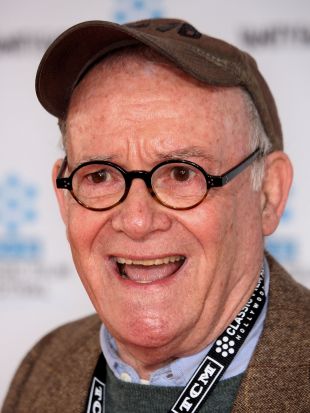
Buck Henry Born Henry Zuckerman (December 9, 1930 – January 8, 2020)
Buck Henry died today from a heart attack at Cedars-Sinai Medical Center in Los Angeles at age 89.
Buck Henry was born to a Jewishfamilyin New York City, the son of silent film actress and star of the originalGentlemen Prefer Blondes,Ruth Taylor(January 13, 1905 – April 12, 1984) and Paul Steinberg Zuckerman (April 15, 1899 – 1965), a retired Air Force brigadier general andstockbroker.
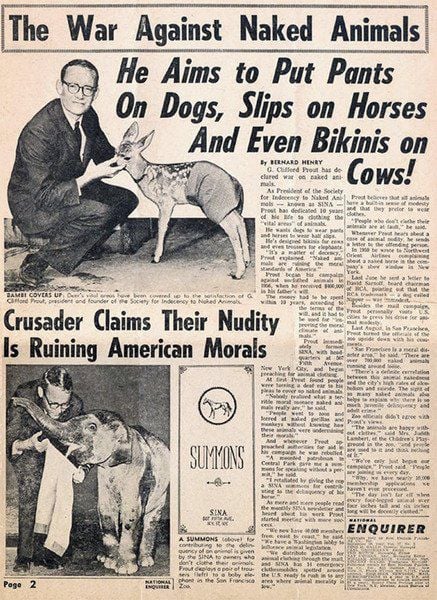
From 1959 to 1962, as part of an elaborate hoax by comedian Alan Abel, he made public appearances as G. Clifford Prout, the quietly outraged president of the Society for Indecency to Naked Animals, who presented his point of view on talk shows. The character of Prout, who wished to clothe all animals in order to prevent their 'indecency', was often presented as an eccentric but was otherwise taken seriously by the broadcasters who interviewed him. 'Prout' received many letters of support from TV viewers, and even some unsolicited monetary donations—all of which were invariably returned, as neither Henry nor Abel (who had no intention of following through on the Society's stated aims) wanted to be accused of raising money fraudulently.
Henry's dry humor attracted attention in the entertainment community. He became a cast member onTVprograms such asThe New Steve Allen Show(1961) andThat Was The Week That Was(1964–65). He was a co-creator and writer forGet Smart(1965–70), withMel Brooks. Two of his TV projects had short runs but are fondly remembered by fans:Captain Nice(1967) withWilliam Danielsas a reluctant superhero, andQuark(1978), withRichard Benjaminin command of a garbage scow in outer space. He also appeared in the 1989 "My Dinner With Einstein" episode ofMurphy Brownas Dr. Victor Rudman, a fractal scientist who dated Murphy.
He appeared on the television show Will and Grace in 2005. In 2007, he made two guest appearances on The Daily Show as a contributor, billed as the show's "Senior Senior Correspondent". He has also appeared as Liz Lemon's father, Dick Lemon, in the 30 Rock episodes "Ludachristmas" (December 13, 2007) and "Gentleman's Intermission" (November 4, 2010). In 2011, he appeared in a multi-episode arc of Hot in Cleveland as Elka's groom.
Henry hosted NBC's Saturday Night Live 10 times between 1976 and 1980, making him the show's most frequent host during its initial five-year run, thus setting a record that held for nearly a decade. This figure does not include the show's second-season Mardi Gras special, for which he was not in fact credited as host, but rather as one of several guest comedy and musical performers. Because he was featured more prominently than any of the other comedy performers who guested on the special episode (which was broadcast live from within the midst of Mardi Gras events in New Orleans), he is sometimes erroneously considered to have been the host of the program. (This role could be more accurately described as having been filled by musical performer Randy Newman).
It became a tradition during these years for Henry to host the final show of each season, beginning with the 1976-1977 season.
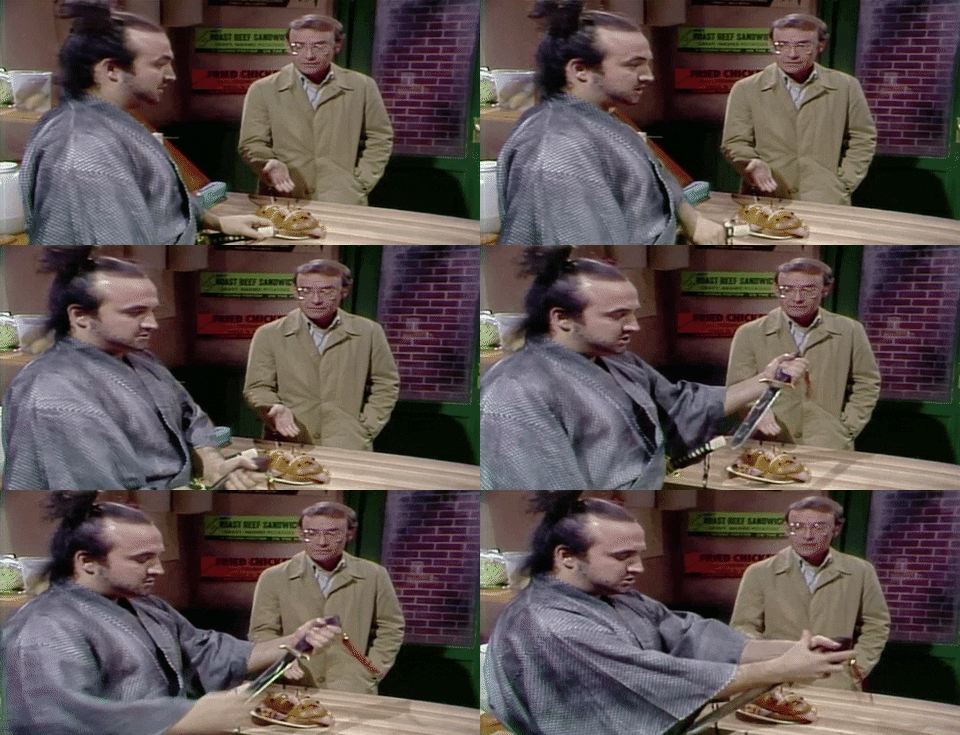
Henry's frequent host record would be broken when Steve Martin made his 11th appearance as host of the show on the finale episode of the 1988-1989 season. During the October 30, 1976, episode, Buck Henry was injured in the forehead by John Belushi's katana in the samurai sketch. Henry's head began to bleed and he was forced to wear a large bandage on his forehead for the rest of the show. As a gag, the members of the SNL cast each wore a bandage on their foreheads as well.
Recurring characters on SNL
Howard, a sadistic stunt coordinator
Marshall DiLaMuca, father of Bill Murray's character Todd in The Nerds sketches
Mr. Dantley, the straight man and frequent customer to Samurai Futaba's (John Belushi) many businesses.
Uncle Roy, a single, pedophilic babysitter. The skits were written by Rosie Shuster and Anne Beatts, and appeared twice and remains extremely controversial to this day.
Henry shared an Oscar nomination with Calder Willingham for their screenplay for The Graduate (1967). He received a second shared Oscar nomination, this time for Best Director of 1978's Heaven Can Wait, which he co-directed with the movie's star Warren Beatty. In 1997, Henry was the recipient of the Austin Film Festival's Distinguished Screenwriter Award.
His Broadway credits included the 2002 revival of Morning's at Seven. Off-Broadway in July 2009, he starred opposite Holland Taylor in Mother, a play by Lisa Ebersole.



 Good Night Buck