Here is another "Mental Sorbet"
that we could use to momentarily forget about those
things that leave a bad taste in our mouths

Published on Oct 13, 2017

Stay Tuned
Tony Figueroa

I represent the first generation who, when we were born, the television was now a permanent fixture in our homes. When I was born people had breakfast with Barbara Walters, dinner with Walter Cronkite, and slept with Johnny Carson. Read the full "Pre-ramble"
 |
As always, the further we go back in Hollywood history,
the more that fact and legend become intertwined. It's hard to say where the truth really lies.
October 21, 1962
Chubby Checker sings his 1960 No. 1 hit, "The
Twist," on Ed Sullivan's variety show.
His appearance boosted sales of the record, which became increasingly
popular until January, when the song hit No. 1 again, making "The
Twist" the only record ever to top the charts twice. The song is still
considered one of the most successful singles of all time, having stayed in the
Top 100 charts for 39 weeks.
October 22, 1942
Annette Funicello is born in Utica, New
York.
Funicello became a featured Mouseketeer on Disney's Mickey Mouse Club
and later starred in several Disney features, including The Shaggy Dog
(1959). Her popularity continued into
her teenage years. She starred in a series of beach movies with singer Frankie
Avalon, including Beach Party in 1963 and Muscle Beach Party in
1964. Decades later, the pair reunited in Back to the Beach (1987).
October 22,
1952
Jeff Goldblum born in Pittsburgh, Pennsylvania. Goldblum began performing in stage productions in New York City in the 1970s. His big-screen
debut came with a tiny part in 1974’s Death Wish, which starred Charles
Bronson as an architect turned vigilante. Goldblum then went on to roles in
director Robert Altman’s California Split (1974) and Nashville
(1975), which was nominated for five Academy Awards, including Best Picture and
Best Director. In 1977, he had a small role in Woody Allen’s Annie Hall,
which won four Oscars, including Best Picture, Best Director and Best Actress
(Diane Keaton). The following year, he appeared in the hit sci-fi movie Invasion
of the Body Snatchers.
Goldblum’s movie career heated up in the 1980s. In 1983, he played
a tabloid magazine reporter in director Lawrence Kasdan’s The Big Chill,
about a group of college friends from the 1960s who reunite in the
1980s following the death of a friend. The Big Chill, which featured an
ensemble cast also including Glenn Close, Kevin Kline, Tom Berenger, William
Hurt, Mary Kay Place, JoBeth Williams and Meg Tilly, was nominated for three
Oscars, including Best Picture. In 1985, Goldblum co-starred with
Michelle Pfeiffer in director John Landis’s Into the Night and teamed
with Kevin Costner, Kevin Kline, Scott Glenn and Danny Glover in the Western Silverado.
The following year, Goldblum starred in David Cronenberg’s The Fly as
Seth Brundle, a scientist who turns into a giant bug-like creature after an
experiment goes wrong. The Fly, which featured the now-famous line, “Be
afraid…Be very afraid,” was a critical and commercial success, and Goldblum
received strong reviews for his performance. The film, which won an Oscar for
Best Makeup, co-starred Geena Davis, to whom Goldblum was married from 1987 to
1990. Goldblum and Davis also co-starred in the 1988 comedy Earth Girls Are
Easy.
In 1993, Goldblum played a mathematician in Steven Spielberg’s
sci-fi blockbuster Jurassic Park, about a fictional island filled with
cloned dinosaurs created by scientists. Based on a Michael Crichton novel, Jurassic
Park became one of the highest-grossing movies in history. The film, which
co-starred Sam Neill and Laura Dern (to whom Goldblum was engaged for a time),
won Oscars for Best Sound, Best Visual Effects and Best Sound Effects Editing.
In 1996, Goldblum appeared with Will Smith, Bill Pullman and Mary McDonnell in
another sci-fi blockbuster, Independence Day, about an alien attack on
Earth. The following year, Goldblum reprised his role as Dr. Ian Malcolm in
Spielberg’s Jurassic Park sequel The Lost World, also featuring
Julianne Moore and Vince Vaughan.
Goldblum went on to appear in such movies as 2002’s Igby
Goes Down, with Kieran Culkin and Claire Danes; director Wes Anderson’s The
Life Aquatic with Steve Zissou (2004), co-starring Bill Murray and Owen
Wilson; and director Barry Levinson’s Man of the Year (2006).
To quote the Bicentennial Minute, "And that's the way it was".
Stay Tuned Tony Figueroa |

Puerto Rico se levanta con un nuevo himno #IslaBendita. Un regalo de amor y esperanza de nuestros artistas para su Pueblo. Haz tu donativo en www.unidosporpuertorico.com

United for Puerto Rico Puerto Rico rises with a new anthem #IslaBendita. A gift of love and hope from our artists for their people. Make your donation to www.unidosporpuertorico.com
|
| Stay Tuned Tony Figueroa |
|
As always, the further we go back in Hollywood history,
the more that fact and legend become intertwined. It's hard to say where the truth really lies.
October 9, 1967
Doc Severinsen replaced Skitch Henderson as
musical director of "The Tonight Show Starring Johnny Carson."
October 15, 2007
Drew Carey debuts as new host of The Price is Right.
Comedian and actor Drew Carey takes over hosting
duties on The Price is Right, the longest-running daytime game show in
television history. Carey replaced Bob Barker, who retired at the age of 83
after hosting the show for 35 years.
To quote the Bicentennial Minute, "And that's the way it was". Stay Tuned Tony Figueroa |


|
As always, the further we go back in Hollywood history,
the more that fact and legend become intertwined. It's hard to say where the truth really lies.
October 3, 1947
WMAL-TV
became the first VHF high band station.
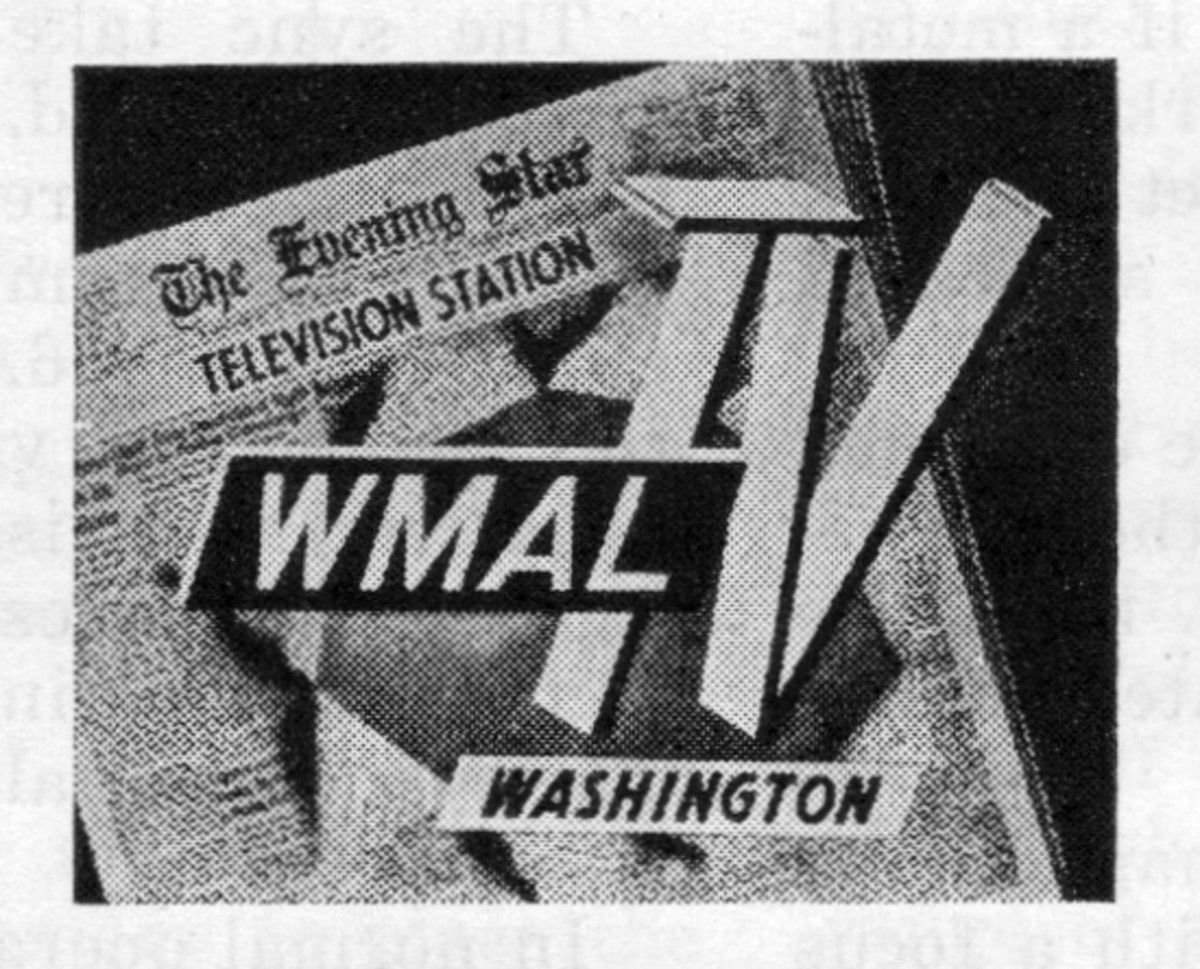 The District of Columbia's third television station began broadcasting on October 3, 1947 as WTVW, owned by the Washington Star, along with WMAL radio (630 AM and 107.3 FM, now WRQX). It was the first Band III VHF television station (channels 7-13) in the United States. A few months later, the station changed its call letters to WMAL-TV after its radio sisters. WMAL radio had been an affiliate of the NBC Blue Network since 1933, and remained with the network after it was spun off by NBC and evolved into ABC. However, channel 7 started as a CBS station since ABC had not yet established its television network. When ABC launched on television in 1948, WMAL-TV became ABC's third primary affiliate; the station continued to carry some CBS programming until WOIC (channel 9, now WUSA) signed on in 1949. During the late 1950s, the station was also briefly affiliated with the NTA Film Network.[2] (Note: The WTVW call letters were later picked up by what is now WISN-TV, the ABC affiliate in Milwaukee, Wisconsin, when it signed on in 1954. Now the callsign is residing in Evansville, Indiana on a CW-affiliated station that is also on channel 7.)
October 3, 1957
The Pat Boone Chevy Showroom premiered on ABC-TV.
The Pat Boone Chevy
Showroom is a half-hour variety
show that aired on ABC-TV from October 3, 1957 to June
23, 1960, starring the young singer Pat Boone and a host of top-name guest stars
sponsored by Chevrolet. Boone, a descendant of Kentucky frontiersman Daniel
Boone, was, at 23, still attending Columbia University in New
York City when the program began production. Upon his graduation from
Columbia in 1958, TV Guidemagazine
pictured him in his cap and gown on its cover.
Boone, the No. 10 all-time
vocalist in sales, was at the time the youngest person to host his own network
variety program until ABC's The
Donny & Marie Show, with two hosts, broke the record in
1976.
October 3, 1977
CBS-TV broadcasted Elvis
In Concert. It was a special that
was filmed during his last tour.
Elvis In Concert is a posthumous 1977 TV special starring Elvis
Presley. It was Elvis' third and final TV special, following Elvis (a.k.a. The '68 Comeback
Special) and Aloha From Hawaii. It was filmed
during Presley's final tour in the cities of Omaha,
Nebraska, on June 19, 1977, and Rapid City, South Dakota, on June 21,
1977. It was broadcast on CBS on October 3, 1977, two months after Presley's death. It
is one of only few of Elvis' programs which remains unlikely to ever be
commercially released on home video and is only available in bootleg
form. However, parts of the special were used in the video
documentary Elvis: The Great Performances and the theatrical
documentary This is Elvis,
both of which were released on home video.
October 3, 1992
Sinead O'Connor tore a picture of the pope during her
appearance on Saturday Night Live.
On 3 October 1992, O'Connor appeared on Saturday Night Live as a musical guest. She sang an a cappella version of Bob Marley’s "War", intended as a protest against sexual abuse in the Catholic Church—O'Connor referred to child abuse rather than racism. She then presented a photo of Pope John Paul II to the camera while singing the word "evil", after which she tore the photo into pieces, said "Fight the real enemy", and threw the pieces towards the camera.
Saturday Night Live had no foreknowledge of O'Connor's plan; during
the dress rehearsal, she held up a photo of a refugee child. NBC Vice-President
of Late Night Rick Ludwin recalled that when he saw O'Connor's
action, he "literally jumped out of [his] chair." SNL writer
Paula Pell recalled personnel in the control booth discussing the cameras
cutting away from the singer.The audience was completely silent, with no booing
or applause; executive producer Lorne
Michaels recalled that "the air went out the studio".
Michaels ordered that the applause
sign not be used.
A nationwide audience saw
O'Connor’s live performance, which the New York Daily News's
cover called a "Holy Terror". NBC received more than 500 calls
on Sunday and 400 more on Monday, with all but seven criticising O'Connor; the
network received 4,400 calls in total. Contrary to rumour, NBC was not
fined by the Federal Communications Commission for
O'Connor’s act; the FCC has no regulatory power over such behaviour. NBC
did not edit the performance out of the West coast tape-delayed broadcast that
night, but reruns of the episode use footage from the dress rehearsal.
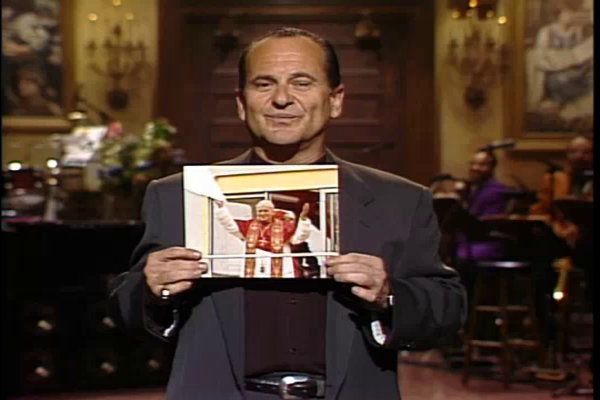 As part of SNL's apology to the audience, during his opening monologue the following week, host Joe Pesci held up the photo, explaining that he had taped it back together—to huge applause. Pesci also said that if it had been his show, "I would have gave her such a smack."
In a 2002 interview
with Salon, when asked if she would change anything
about the SNL appearance, O'Connor replied, "Hell,
no!" On 24 April 2010, MSNBC aired the live version during an
interview with O'Connor on The Rachel
Maddow Show.
October 4, 1957
Leave It to Beaver debuts.
The typical 1950s "wholesome family" comedy
presented the life of the Cleaver family from the perspective of seven-year-old
Theodore "Beaver" Cleaver. The Cleaver clan included parents June and
Ward, and older brother Wally. The show, which ran until 1963, enjoyed much
popularity in reruns as well as a revival in the 1980s as The New Leave It
to Beaver.
October 5, 1947
U.S. President Harry S.
Truman held the first televised presidential address from the White House. The
subject was the current international food crisis.
On
this day in 1947, President Harry Truman (1884-1972) makes the first-ever
televised presidential address from the White House, asking Americans to cut
back on their use of grain in order to help starving Europeans. At the time of
Truman’s food-conservation speech, Europe was still recovering from World War
II and suffering from famine. Truman, the 33rd commander in chief, worried that
if the U.S. didn’t provide food aid, his administration’s Marshall Plan for
European economic recovery would fall apart. He asked farmers and distillers to
reduce grain use and requested that the public voluntarily forgo meat on
Tuesdays, eggs and poultry on Thursdays and save a slice of bread each day. The
food program was short-lived, as ultimately the Marshall Plan succeeded in
helping to spur economic revitalization and growth in Europe. In
1947,television was still in its infancy and the number of TV sets in U.S.
homes only numbered in the thousands (by the early 1950s, millions of Americans
owned TVs); most people listened to the radio for news and entertainment.
However, although the majority of Americans missed Truman’s TV debut, his
speech signaled the start of a powerful and complex relationship between the
White House and a medium that would have an enormous impact on the American
presidency, from how candidates campaigned for the office to how presidents
communicated with their constituents. Each of Truman’s subsequent White House
speeches, including his 1949 inauguration address, was televised. In 1948,
Truman was the first presidential candidate to broadcast a paid political ad.
Truman pioneered the White House telecast, but it was President Franklin
Roosevelt who was the first president to appear on TV–from the World’s Fair in
New York City on April 30, 1939. FDR’s speech had an extremely limited TV
audience, though, airing only on receivers at the fairgrounds and at Radio City
in Manhattan.
October 5, 1957
Bernard Jeffrey McCullough better
known by his stage name Bernie Mac, was born on the South Side of Chicago.
Mac gained popularity as a stand-up comedian. He joined comedians Steve Harvey, Cedric
the Entertainer, and D.L. Hughley as The Original Kings of Comedy.
After briefly hosting the HBO show Midnight Mac,
Mac appeared in several films in smaller roles. His most noted film role was as
Frank Catton in the remake Ocean's
Eleven and the titular character of Mr. 3000. He was the star of The Bernie Mac
Show, which ran from 2001-2006, earning him two Emmy Award nominations for Outstanding Lead
Actor in a Comedy Series. His other films included starring roles in Friday,The Players Club, Head of State,
Charlie's
Angels: Full Throttle, Bad Santa, Guess Who, Pride, Soul Men, and Madagascar:
Escape 2 Africa.
Mac suffered from sarcoidosis, an
inflammatory lung disease that produces tiny lumps of cells in the solid
organs, but had said the condition was in remission in 2005. Despite having the
disease, his death on August 9, 2008 was caused by complications from pneumonia.
October 6, 1992
Ross
Perot appeared in his first paid broadcast on CBS-TV after entering the U.S.
presidential race.
To quote the Bicentennial Minute, "And that's the way it was".
Stay Tuned Tony Figueroa |


