
Here is your
a little spark of madness
that we could use to momentarily forget about those
things that leave a bad taste in our mouths.
|

Stay Tuned
Tony Figueroa
Tony Figueroa

I represent the first generation who, when we were born, the television was now a permanent fixture in our homes. When I was born people had breakfast with Barbara Walters, dinner with Walter Cronkite, and slept with Johnny Carson. Read the full "Pre-ramble"
|

November 16, 1916
Daws Butler is born.
November 16, 1946
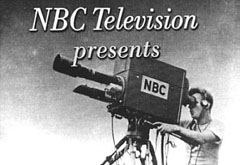
Television Screen Magazine launches.
The show, one of NBC's first network series, included
a collection of features on news, lifestyles, fashion, and other topics. The
show ran until 1949. In 1968, CBS revived the TV magazine concept with 60
Minutes, which became one of the country's Top 10 shows in 1977 and stayed
in the Top 20 for more than 20 years.
November 16, 1981
Luke and Laura got married on General Hospital.
One of television’s most famous wedding celebrations took place, with General Hospital‘s Luke and Laura saying “I do” in front of 30 million viewers.The two-day event remains one of the most iconic moments in daytime
television history, and brought stars Anthony Geary and Genie Francis instant
mainstream celebrity. The rocky relationship of Luke and Laura also helped to
create a template for other soap “supercouples,” combining adventure, tragedy
and romance.
November 19, 1941
Dan Haggerty is born.
November 21
World Television Day
World Television Day was proclaimed by the United
Nations in 1996. It is celebrated annually on November 21.


November 9, 1951
Louis Jude “Lou” Ferrigno is born.
November 15, 1926
NBC radio network's grand opening.
The NBC Red Network debuts, celebrating its launch with one of the earliest remote musical broadcasts. The debut program featured nationally known bands playing at several different locations.
 The National Broadcasting Company's NBC Radio Network (also known as
the NBC Red Network from 1927 to 1942) was an American
commercial radio network which was in continuous operation from 1926 through
1999. Along with the NBC Blue Network, it was one of the first
two nationwide networks established in the United States. Its major competitors
were the Columbia
Broadcasting System (CBS), founded in 1927, and the Mutual Broadcasting System, founded in 1934. In 1942, NBC was required to
divest one of its national networks. As such, it sold NBC Blue, which was soon
renamed the American Broadcasting Company (ABC). After this separation, the Red Network
continued as the NBC Radio Network.
For
the first 61 years of its existence, NBC was owned by the Radio Corporation of America (RCA) with New York City radio station WEAF (renamed WNBC in 1946,
WRCA in 1954 and again as WNBC in 1960) as its flagship station. Following the emergence of
television as the dominant entertainment medium and much of NBC Radio's talent
migrating both to CBS and NBC television, the network made multiple investments
in programming in hopes of retaining relevance. These included the weekend
program umbrella Monitor (1955–1975), the all-news focused NBC News and
Information Service (1975–1977) and the talk radio service NBC Talknet, all of which encountered
varying degrees of success and failure.
Following General Electric's purchase of RCA in late
1986, GE sold the NBC Radio Network to Westwood One in 1987. Westwood One had acquired Mutual in 1985 and gradually,
the operations of both networks were combined. NBC Radio News, which was also
folded into Mutual's news operations, saw most of its functions cease on April
17, 1999, when the Mutual name was retired and both Mutual and NBC were
absorbed into CBS's
radio news operations.
Westwood One and its successor network continued to use
"NBC" branding for some of its programming until 2020, partnering
with NBC
News to
operate NBC News Radio from 2003 until 2014, and with NBC Sports for NBC Sports Radio. From 2016 onward, iHeartMedia has handled production
and distribution of NBC News Radio.

November 2, 1966
Friends star David Schwimmer born in Astoria, Queens, New York. Schwimmer was raised in Southern California and attended Beverly Hills High School.
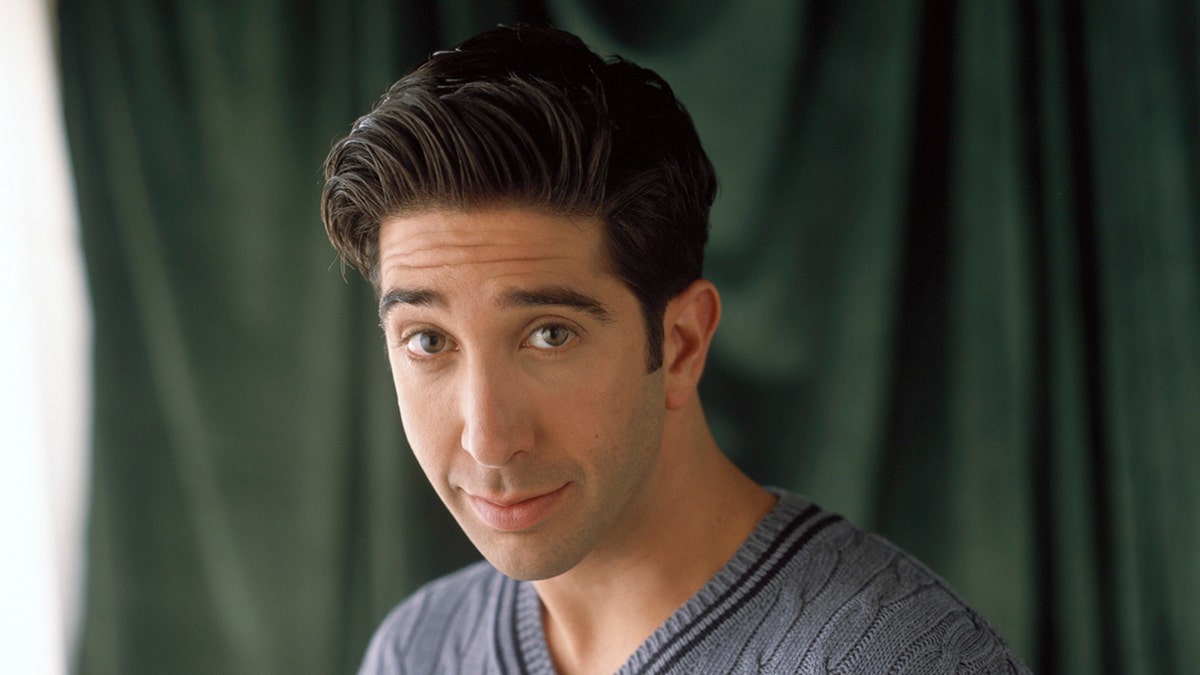
Friends, which debuted on September 22, 1994, on NBC, became a
massive hit and a pop-culture icon, propelling Schwimmer and the five other
main cast members--Aniston, Cox Arquette, Lisa Kudrow, Matt LeBlanc and Matthew
Perry--to Hollywood stardom. The show inspired fashion and hairstyle trends
(notably Aniston’s layered cut, known as “The Rachel”), as well as such
catchphrases as “How you doin’?” and “We were on a break.” After 10
seasons, the final episode of Friends aired on May 6, 2004; more than 50
million viewers reportedly tuned in, one of the all-time largest audiences for
a TV finale. (By comparison, the most-watched last episode in TV history, the
l983 finale of M*A*S*H, drew some 106 million viewers, while the last
episode of Seinfeld, in 1998, was seen by over 76 million people.)
In addition to his work on Friends, Schwimmer has appeared in such
movies as
The Pallbearer (1996), with Gwyneth Paltrow; Six Days Seven Nights
(1998), with Harrison Ford and Anne Heche; Picking Up the Pieces
(2000) with Woody Allen and Kiefer Sutherland; and HBO’s critically acclaimed
World War II miniseries Band of Brothers (2001). Schwimmer played the
title role in the 2005 film Duane Hopwood and voiced the character of
Melman the Giraffe in the animated feature Madagascar (2005).
November 3, 1956
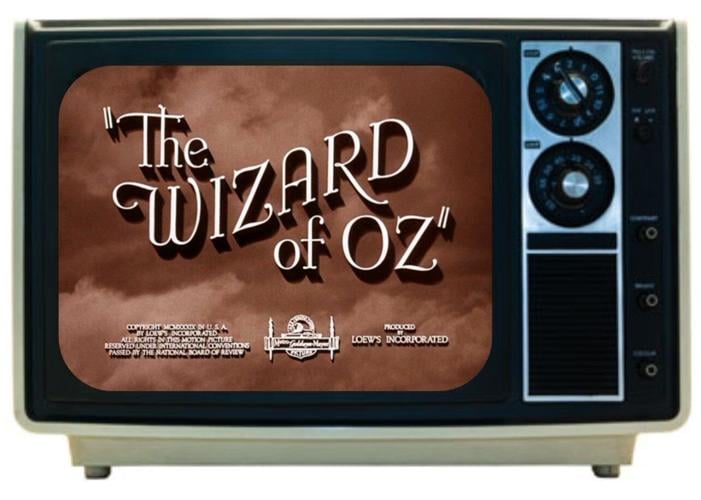
The Wizard of Oz is broadcast on television for the first time.
November 5, 1911
Leonard Slye, later known as Roy Rogers, is born in Cincinnati, Ohio.
Rogers first came to Hollywood in the 1920s as a migrant fruit picker. In the early 1930s, he joined a singing group called Uncle Tom Murray's Hollywood Hillbillies, which first sang on the radio in 1931. Rogers went on to sing with other similar groups, including the Sons of the Pioneers, which recorded hits like "Tumbling Tumbleweeds." The Sons of the Pioneers group was recruited for low-budget western films, and Rogers was soon playing bit parts for Republic Pictures, the same studio where cowboy star Gene Autry worked. When Autry quit over a dispute with the studio in 1937, Rogers gained more exposure. Starring with his trick horse, Trigger, and his frequent co-star Dale Evans, Rogers soon became one of the Top 10 moneymakers in Hollywood.Rogers also followed
Autry into the radio medium, launching The Roy Rogers Show in 1944. The
show, a mix of music and drama, always closed with the song "Happy
Trails," which became known as Rogers' theme song.
After
Rogers' wife died in 1946, he married co-star Dale Evans. His radio program ran
until 1955. In 1951, a TV version of the program debuted and ran until 1957.
Rogers became one of the wealthiest men in Hollywood by diversifying his money:
His empire included a TV production studio, real estate, cattle, horses, a
rodeo show, and a restaurant chain. Roy Rogers died in 1998.
"Until
we meet again on screen or in person, good night, good luck, and may the good
Lord take a likin' to you."
November 6, 1946
Sally Margaret Field is
born.
Field began her career in television, starring on the sitcoms Gidget (1965–66) and The Flying Nun (1967–70). She ventured into film with Smokey and the Bandit (1977) and later Norma Rae (1979), for which she received theAcademy Award for Best Actress. She later received Golden Globe Award nominations for her performances inAbsence of Malice (1981) and Kiss Me Goodbye (1982), before receiving her second Oscar for Best Actress forPlaces in the Heart (1984). Field received further nominations for a Golden Globe Award for Best Actress forMurphy's Romance (1985) and Steel Magnolias (1989).
November 6, 2001
The TV show 24
aired for the first time.
 |
| Sir Patrick Stewart 13 July 1940 – 28 October 2026 |
In 1966, Stewart became a member of the Royal Shakespeare Company (RSC).
He made his Broadway theatre debut in 1971 in a production of A Midsummer Night's Dream. In 1979, he received the Laurence Olivier Award for Best Actor in a Supporting Role for his performance in Antony and Cleopatra in the West End. His first television role was in Coronation Street in 1967. His first major screen roles were in the television series Fall of Eagles (1974), I, Claudius (1976) and Tinker Tailor Soldier Spy (1979). In 2008, he reprised his role as King Claudius in Hamlet and received his second Laurence Olivier Award and his first Tony Award nomination for respectively the West End and Broadway theatre productions.
Stewart gained international stardom for his leading role as Captain Jean-Luc Picard in the American science fiction television series Star Trek: The Next Generation (1987–1994), a role he reprised in a series of four films (1994–2002) and Star Trek: Picard (2020–2023). He starred as Captain Ahab in the USA Network television miniseries Moby Dick (1998), Ebenezer Scrooge in the TNT fantasy television film A Christmas Carol (1999), and King Henry II in the Showtime drama television film The Lion in Winter (2003). He was Primetime Emmy Award-nominated for his guest comedic roles in the NBC sitcom Frasier (2003) and BBC sitcom Extras (2005). A recurring collaborator of Seth MacFarlane, he starred as the lead of the MacFarlane-produced Starz sitcom Blunt Talk (2015–2016), the voice of CIA Deputy Director Avery Bullock in the animated sitcom American Dad! (2005–2026), and the narrator of the two Ted films (2012, 2015).
On film, Stewart gained further stardom portraying Professor Charles Xavier in the X-Men film series (2000–2017), reprising the role in the Marvel Cinematic Universe (2022, 2026), with his appearance in Avengers: Doomsday (2026) being his final film appearance. He also acted in Hedda (1975), Excalibur (1981), Dune (1984), Robin Hood: Men in Tights (1993), Jeffrey (1995), Jimmy Neutron: Boy Genius (2001), Green Room (2015), The Kid Who Would Be King (2019), and The Sheep Detectives (2026).
 |
| Good night, sweet prince, and flights of angels sing thee to thy rest |
October 26, 1946
Pat Sajak born.
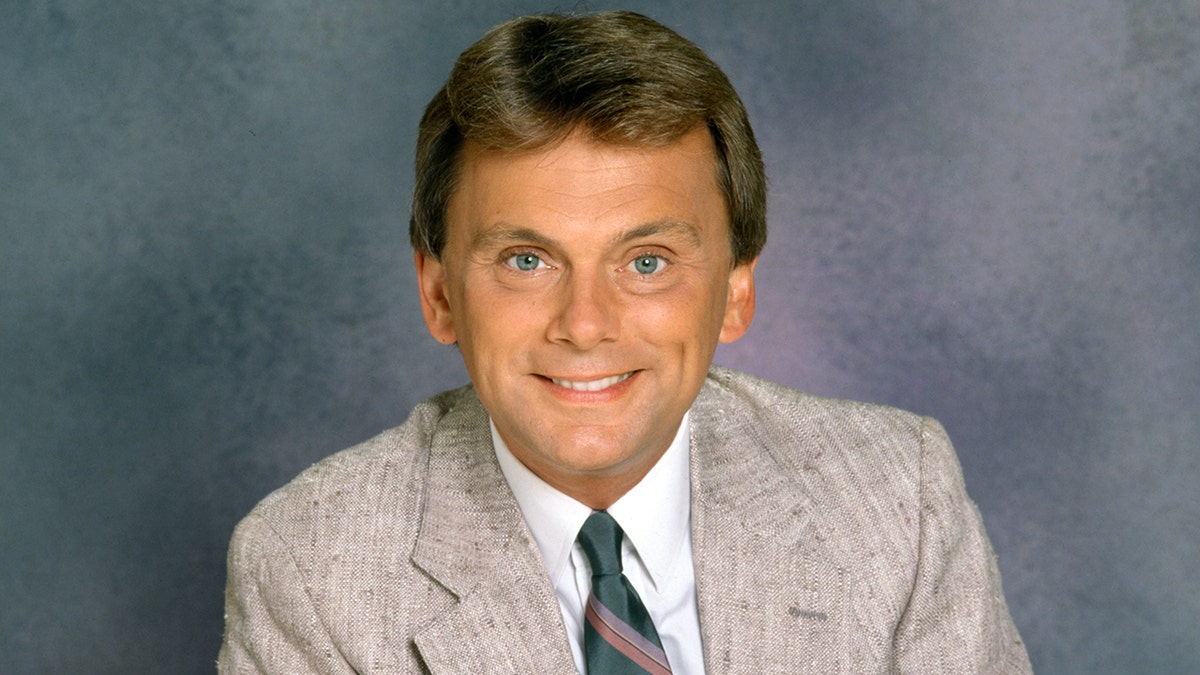
After attending Chicago’s Columbia College, Sajak joined the Armyin 1968
and went to Vietnam, where he was a disc jockey for Armed Forces Radio in
Saigon. After his discharge from the military, he worked in radio and TV and in
1977 became a weatherman for a Los Angeles TV station. In 1981, Wheel of
Fortune’s creator, Merv Griffin (who also developed the long-running game
show Jeopardy!, which debuted in 1964) tapped Sajak to take over hosting
duties from Chuck Woolery for a network daytime version of Wheel. In
1983, Wheel of Fortune became a syndicated evening program. It has
remained on the air continuously since that time, with Sajak and White as
co-hosts.
During each episode of Wheel of Fortune, contestants compete to solve
word puzzles. Players spin the big wheel to determine prize money and each
player can buy vowels to help solve the puzzle. White stands next to the
puzzleboard and reveals the individual letters when players have guessed them
correctly. Born Vanna Marie Rosich on February 18, 1957, White was raised in
North Myrtle Beach, South Carolina. She attended the Atlanta School of Fashion
Design and worked as a model before heading to Los Angeles to pursue acting. In
1982, the blonde beauty was selected to join Sajak on Wheel of Fortune.
The first letter she ever turned on the puzzleboard was a “T.” In 1992, the
Guinness Book of World Records named White “Television’s Most Frequent
Clapper,” crediting her with an average of 720 claps per show.
Each year, more than 3,000 people audition to become contestants on Wheel
of Fortune, while fewer than 500 make the final cut. During its 25 years of
syndication, Wheel of Fortune has given over $180 million in cash and
prizes to its contestants.
As for longevity, while Jeopardy! debuted in 1964, it has not aired
continuously since then. Jeopardy! first aired from 1964 to 1975, then
went off the air. It returned briefly, from 1978 to 1979, and was revived again
in 1984, when Alex Trebek became host of a syndicated edition of the show. The
longest-running game show in network or syndication is The Price is Right. The
show originally aired on network TV from 1956 to 1965. A syndicated version of The
Price is Right premiered in 1972, with Bob Barker as host. Barker remained
with the show until his retirement at the age of 83 in 2007. Comedian Drew
Carrey took over hosting duties beginning in October 2007.
October 27, 1966
It's the Great Pumpkin, Charlie Brown first aired.
A Halloween special, it was the third Peanuts special (and second holiday-themed special, following A Charlie Brown Christmas) to be produced and animated by Bill Melendez. Its initial broadcast took place on October 27, 1966, on CBS, preempting My Three Sons. CBS re-aired the special annually through 2000, with ABC picking up the rights beginning in 2001, where it now airs annually at Halloween. ABC once broadcast You're Not Elected, Charlie Brown immediately following It's the Great Pumpkin, as if to emphasize the proximity of Halloween to Election Day. Also, the Great Pumpkin is mentioned in You're Not Elected.The program was nominated for an Emmy Award. It has been issued on home video several times, including a Remastered Deluxe
Edition of the special released by Warner Home Video on September 2, 2008, with the bonus feature It's
Magic, Charlie Brown which was
released in 1981. To celebrate its 40th anniversary, a retrospective book was
published in 2006. It's the Great Pumpkin, Charlie Brown: The Making of a
Television Classic includes the entire script, never-before-seen
photographs, storyboard excerpts, and interviews with the original child actors who provided the voices of the Peanuts gang.
Charlie Brown's repeated line of "I got a rock"
caused some stir among many viewers of the show, according to Charles M. Schulz in the book and retrospective
TV special "Happy Birthday,
Charlie Brown." Schulz said that after the program first aired,
bags and boxes of candy came in from all over the world "just for Charlie
Brown."
October 29, 1956
The
Huntley-Brinkley Report first aired.
October 30, 1931
Dick Gautier is born.
Actor, comedian, composer, singer and author. Among his most well-known television roles are for Hymie the Robot in the television series Get Smart, and Robin Hood in the short-lived TV comedy series When Things Were Rotten, a Mel Brooks send-up of the classic legend.
October 20, 1991 -
The movie I Still Dream of Jeannie aired.
It is the second and final reunion film based on the 1965–1970 sitcom I Dream of Jeannie.
Barbara Eden and Bill Daily are the only two regular cast members from the original series to reprise their roles in this film. Once again, Larry Hagman was unavailable to reprise his role of Tony Nelson, as he had just completed a 14-year run on Dallas and was taking a vacation with his family. Although the character Tony Nelson is mentioned throughout the film, and briefly appears in the animated opening sequence, he remains unseen for the rest of the film.One of his Dallas co-stars, Ken Kercheval, appears in the film. The irony is further emphasized by the fact that Hagman and Kercheval played arch-enemies on Dallas and the character that Kercheval plays in I Still Dream of Jeannie is one that fills in the spot that would have gone to Hagman if he had been able to play Tony Nelson again for this film.
October
13, 2021
William
Shatner goes to space
As
exciting as exploring space may seem, despite the dangers, Shatner returned
from his adventure with a surprise emotion: grief. He said the journey into
space filled him with “overwhelming sadness.”
In
his memoir Boldly Go: Reflections on a Life of Awe and Wonder,
Shatner says that he felt anxious when the space-flight day arrived, despite
numerous preparatory simulations and training courses that he took with his
fellow voyagers: Glen de Vries, a tech mogul; Audrey Powers, Blue Origin's vice
president; and Chris Boshuizen, a former NASA engineer.
jShatner
said he kept thinking about the Hindenburg disaster,
when an airship crashed on May 6, 1937 in New Jersey. Yet he was committed to
the flight, so he pushed himself to do it, despite doubts about whether his
nonagenarian’s body could handle it. The g-pressure increased to painful levels
right after takeoff. Then, the shuttle reached the point beyond gravity where
the crew was weightless, and while his fellow travelers were enjoying floating
around the vessel, Shatner just wanted to get to a window and look at what was
outside.
“I
love the mystery of the universe,” Shatner wrote in his book. “I love all the
questions that have come to us over thousands of years of exploration and
hypotheses. Stars exploding years ago, their light traveling to us years later;
black holes absorbing energy; satellites showing us entire galaxies in areas
thought to be devoid of matter entirely … all of that has thrilled me for
years.”
Then,
after a few moments of looking out the window, Shatner felt sadness about the
destruction of the Earth because of mankind’s interference.
“But when I looked in the opposite direction, into space, there was no mystery, no majestic awe to behold … all I saw was death,” Shatner wrote. “I saw a cold, dark, black emptiness.”
The surprise grief Shatner felt, he wrote, is not uncommon among astronauts, including Sally Ride. It’s called the “Overview Effect,” which is what happens when a space traveler views the Earth from orbit and feels the overwhelming awareness of our planet’s fragility. Author Frank White is credited with coining the term in 1987 when he wrote in his book The Overview Effect: Space Exploration and Human Evolution: “There are no borders or boundaries on our planet except those that we create in our minds or through human behaviors. All the ideas and concepts that divide us when we are on the surface begin to fade from orbit and the moon. The result is a shift in worldview, and in identity.”
October 15, 1951
TV's first long-running sitcom hit, I Love Lucy.
At the time, most television shows were broadcast live from New York City,
and a low-quality 35mm or 16mm
kinescope print was made of the show to
broadcast it in other time zones. Because Ball was pregnant, she and Arnaz
insisted on filming the show in Hollywood.
The duo, along with co-creator Jess Oppenheimer, then decided to shoot the
show on 35 mm film in front of a studio audience, with three cameras, a technique now standard for
most present-day sitcoms. The result was a much sharper image than other shows
of the time, and the audience reactions were far more authentic than the "canned laughter" used on most filmed
sitcoms of the time. The technique was not completely new — another CBS comedy
series, Amos 'n' Andy,
which debuted four months earlier, was already being filmed at Hal Roach Studios with three 35mm cameras
to save time and money. Hal Roach Studios was also used for filming at least
two other TV comedies as early as 1950, both airing on ABC, namely Stu Erwin's The
Trouble with Father, and the TV version of Beulah; the original
1949/50 Jackie Gleason TV version of The Life of Riley on NBC was also
done on film, not live. There were also some dramatic TV shows pre-dating I
Love Lucy which were also filmed, not live. But I Love Lucy was the
first show to use this film technique in front of a studio audience.
Arnaz persuaded Karl Freund, an Academy Award -winning cinematographer of
such films as Metropolis
(1927), Dracula (1931), and The Good Earth
(1937), as well as director of The Mummy
(1932), to be the series' cinematographer.
Scenes were often performed in sequence, as a play would be, which was
unusual for comedies at that time. Retakes were rare and dialogue mistakes were
often played off for the sake of continuity.
I
Love Lucy became one of the most
popular TV situation comedies in history, ranking in the top three shows for
six years and turning the couple's production company, Desilu, into a
multimillion-dollar business. Ball became president of the company in 1960,
after she and Desi divorced. She also starred in several other "Lucy"
shows, including The Lucy Show, which debuted in 1962 and ran for six
seasons, and Here's Lucy, in which she starred with her two children
until the show was cancelled in 1974. A later show, Life with Lucy,
featuring Lucy as a grandmother, was cancelled after only eight episodes. Ball
worked little in the last years of her life. She died of congestive heart
failure following open-heart surgery in 1989.
October 16, 1946
Suzanne Somers is born Suzanne Marie Mahoney.


