Monday, July 21, 2025

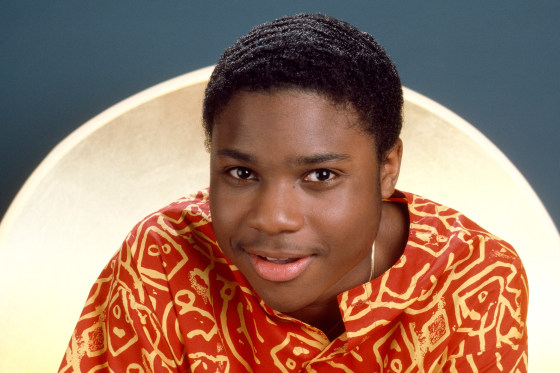
Malcolm-Jamal Warner

Theater is my favorite platform. Television is my favorite paycheck. The more television I can do, the more theater I can do.

Malcolm-Jamal Warner

August 18, 1970 – July 20, 2025

Malcolm-Jamal Warner was born in Jersey City, New Jersey, on August 18, 1970. He was named after Malcolm X and jazz pianist Ahmad Jamal. He was raised in Los Angeles from age five. At the age of nine, he demonstrated an interest in show business that led to enrollment in acting schools. His career as a child performer later led him to graduate high school from The Professional Children's School in New York City, New York.

With appearances and roles on many television shows and films, he landed his most successful role as Theo Huxtable, the only son of Heathcliff Huxtable, who was played by Bill Cosby on the NBC sitcom, The Cosby Show from 1984 to 1992. Warner auditioned for the role on the final day of the nationwide search. In 1986, he was nominated for Outstanding Supporting Actor in a Comedy Series at the 38th Primetime Emmy Awards.

Warner guest starred in an episode of The Fresh Prince of Bel-Air, playing the role of Hilary Banks' boyfriend. Warner hosted the literacy-promoting children's show CBS Storybreak in 1993 and 1994. In 1995, Warner appeared as a homeless man on Touched by an Angel.[8] He also portrayed U.S. Marshal Terry Nessip in the film Drop Zone (1994), and Leroy Cappy in the HBO film The Tuskegee Airmen (1995).

From 1996 to 2000, Warner co-starred with comedian Eddie Griffin on the UPN sitcom Malcolm & Eddie.[11] He went on to co-star as Kurdy Malloy in Jeremiah (2002–2004), was the voice of The Producer character on The Magic School Bus, and appeared in the 2004 CBS sitcom Listen Up with Jason Alexander.

In 2008, he portrayed Cordell in the Matthew McConaughey and Kate Hudson rom-com film Fool's Gold.

In 2009 he guest starred in an episode in the TNT series HawthoRNe. In 2011 and 2012, he guest starred in four episodes of the NBC series Community as Andre, the ex-husband of Shirley Bennett (Yvette Nicole Brown). His character subtly referenced his Cosby Show past by wearing a "Cosby sweater" that he stated was from his dad.

Warner co-starred in BET's 2011 scripted comedic television series Reed Between the Lines. He played the role of Alex Reed, an English professor married to Carla Reed, a psychologist played by former Girlfriends star Tracee Ellis Ross. The couple had three children: Kaci and Kenan Reynolds, Carla's children from a previous relationship, and Alexis Reed, their child together.[19] The show highlighted the couple's ups and downs together as a blended family. In 2012, Warner was nominated for Outstanding Actor in a comedy series at the NAACP Image Awards for his role in Reed Between the Lines.

On the third season (2014–2015) of TNT police procedural Major Crimes, Warner portrayed Lt. Chuck Cooper, a member of the LAPD's Special Investigation's Section. Warner portrayed Al Cowlings in the 2016 crime series American Crime Story production The People v. O.J Simpson, based on the events of the O. J. Simpson trial. Warner played prison counselor Julius Rowe on the sixth season (2016–2017) of USA's Suits. He also played the role of parole officer James Bagwell on Amazon Prime's show Sneaky Pete. In 2018, he appeared as Dr. AJ "The Raptor" Austin on FOX's The Resident.

During his tenure on The Cosby Show, Warner turned his hand to directing, making music videos including New Edition's "N.E. Heart Break" (1989), rapper Special Ed's "I'm the Magnificent" (1989) and British R&B group Five Star's "I Love You For Sentimental Reasons" (1994). He directed episodes of sitcoms including The Cosby Show, All That, Kenan & Kel, Malcolm & Eddie, and The Fresh Prince of Bel-Air. Warner also directed the teen-oriented public health video Time Out: The Truth About HIV, AIDS, and You (1992), which featured Arsenio Hall and Earvin "Magic" Johnson discussing the realities of HIV and AIDS and the best ways to prevent its spread.

In 2003, Warner released his debut jazz-funk EP, The Miles Long Mixtape. In 2007, Warner followed up with his second CD entitled Love & Other Social Issues. In 2015, he received a Grammy Award for Best Traditional R&B Performance for his contribution to a cover of Stevie Wonder's "Jesus Children of America". Warner performed a poem on the track, dedicated to the victims of the Sandy Hook Elementary School shooting, along with musicians Robert Glasper Experiment and Lalah Hathaway.

Warner played bass guitar, performing in a band where he recited his poetry over the music.

Warner performed at the National Black Theatre Festival from 2003 onwards, in addition to hosting its Poetry Jam. Warner's 2022 spoken word poetry album Hiding in Plain View was nominated for a Grammy Award for Best Spoken Word Poetry Album in the 65th Annual Grammy Awards, the first year the category was included in the awards.

In June 2024, Warner and cohosts Weusi Baraka and Candace Kelley created the Not All Hood (NAH) podcast to discuss the lives and experiences of Black Americans.
Good Night Malcolm

Stay Tuned 


Tony Figueroa

This Week in Television History: July 2025 PART III


July 22, 1965

Till Death Us Do Part debuted on England’s BBC-TV.

Till Death Us Do Part is a British television sitcom that aired on BBC1 from 1965 to 1975. First airing as a Comedy Playhouse pilot, the show aired in seven series until 1975. Six years later, ITV continued the sitcom, calling it Till Death.... From 1985 to 1992, the BBC produced a sequel In Sickness and in Health.

Created by Johnny Speight, Till Death Us Do Part centred on the East End Garnett family, led by patriarch Alf Garnett (Warren Mitchell), a reactionarywhite working-class man who holds racist and anti-socialist views. His long-suffering wife Else was played by Dandy Nichols, and his daughter Rita by Una Stubbs. Rita's husband Mike Rawlins (Anthony Booth) is a socialist layabout. The character Alf Garnett became a well known character in British culture, and Mitchell played him on stage and television up until 1998, when Speight died.

In addition to the spin-off In Sickness and in Health, Till Death Us Do Part was re-made in many countries including Brazil, Germany (Ein Herz und eine Seele), the Netherlands (In Voor- En Tegenspoed), and the United States (All in the Family).

Many episodes from the first three series are thought to no longer exist, having been wiped in the late 1960s and early '70s as was the policy at the time.

July 25, 1985

Rock Hudson announces he has AIDS. 

Rock Hudson, a quintessential tall, dark and handsome Hollywood leading man of the 1950s and 1960s who made more than 60 films during his career, announces through a press release that he is suffering from acquired immune deficiency syndrome (AIDS). With that announcement, Hudson became the first major celebrity to go public with such a diagnosis. The first cases of AIDS, a condition of the human immune system, were reported in homosexual men in the United States in the early 1980s. At the time of Hudson’s death, AIDS was not fully understood by the medical community and the disease was stigmatized by the general public as a condition affecting only gay men, intravenous drug users and people who received contaminated blood transfusions.

Hudson was born Roy Harold Scherer, Jr., on November 17, 1925, in Winnetka, Illinois. He rose to fame in the 1950s, starring in such films as Giant (1956), for which he received an Academy Award nomination, and A Farewell to Arms (1957). Hudson’s good looks and charm were on display in 1959’s Pillow Talk and several other romantic comedies he made with Doris Day in the early 1960s. In the 1970s, Hudson co-starred in the popular TV series McMillan and Wife. In the early 1980s, he began experiencing health problems and underwent heart bypass surgery. His final TV role was a recurring part on Dynasty from 1984 to 1985.

In July 1985 Hudson was hospitalized while in Paris. Some media reports indicated he was suffering from liver cancer. However, on July 25, Hudson issued a press release stating he had AIDS and was in France for treatment. Hudson, who had a three-year marriage during the 1950s to a woman who had been his agent’s secretary, was believed to be gay, although he never spoke publicly about his sexuality.

Hudson died on October 2, 1985, at age 59 in Beverly Hills, California. His death was credited with bringing attention to an epidemic that went on to kill millions of men, women and children of all backgrounds from around the world. Hudson’s friend and former Giant co-star Elizabeth Taylor became an AIDS activist and rallied the Hollywood community to raise millions for research. In 1993, Tom Hanks received a Best Actor Oscar for his performance in director Jonathan Demme’s Philadelphia, the first major Hollywood movie to focus on AIDS.

July 27, 1940

Bugs Bunny first appears on the silver screen in A Wild Hare. 

The wisecracking rabbit had evolved through several earlier short films. As in many future installments of Bugs Bunny cartoons, A Wild Hare featured Bugs as the would-be dinner for frustrated hunter Elmer Fudd.


July 27, 2003

Bob Hope dies at age 100 in Toluca Lake, California. 

Known for entertaining American servicemen and women for more than five decades, Hope had a career that spanned the whole range of 20th century entertainment, from vaudeville to Broadway musicals to radio, television and movies.

He was born Leslie Townes Hope, the fifth of seven sons, on May 29, 1903, in Eltham, England. In 1907, Hope’s family moved to Cleveland, Ohio. As a young man, he began his entertainment career as a dancer and vaudeville performer. During the 1930s, he appeared in Broadway musicals, along with such performers as Fanny Brice and Ethel Merman. In 1934, Hope wed the nightclub singer Dolores Reade; the marriage would endure until his death. In 1938, Hope, who became known for his snappy one-liners, rose to national fame with his own radio show on NBC and his first feature film, The Big Broadcast of 1938.

In 1940, Hope co-starred in the box-office hit Road to Singapore with Bing Crosby. The film, about a pair of singing, wisecracking con men, was the first of seven “Road” movies the pair would make. Hope appeared in more than 50 feature films during his career. He hosted the Academy Awards 18 times, although he never won an Oscar himself, an occurrence he turned into a long-running joke. However, he did receive five special awards from the Academy, including two honorary Oscars. Hope was also a top entertainer on TV and from 1959 to 1996 he made 284 “Bob Hope specials” for NBC.

Starting with World War II, Hope began entertaining American troops at military bases around the world. His USO tours traveled to military bases during times of war (Vietnam, the Persian Gulf), as well as times of peace. He was so beloved for his work with the military for more than half a century that Congress passed a resolution in 1997 making Hope an honorary veteran. It was one of the countless honors that Hope received throughout his career. In 1998, he was granted honorary knighthood from Queen Elizabeth.


Tony Figueroa

Monday, July 14, 2025

This Week in Television History: July 2025 PART II


July 19, 1989

Rebecca Shaeffer (age 21) is murdered at her Los Angeles home by Robert John Bardo, a mentally unstable man who had been stalking her. Schaeffer’s death helped lead to the passage in California of legislation aimed at preventing stalking.

Schaeffer was born November 6, 1967, in Eugene, Oregon. She worked as a teenage model and had a short stint on the daytime soap opera One Life to Live, but was best known for co-starring with Pam Dawber in the television sitcom My Sister Sam. Bardo, born in 1970, had written Schaeffer letters and unsuccessfully tried to gain access to the set of My Sister Sam, before showing up at her apartment on July 19, 1989. The obsessed fan had reportedly obtained the actress’s home address through a detective agency, which located it through records at the California Department of Motor Vehicles. On the day of the murder, Schaeffer reportedly complied with Bardo’s request for an autograph when he appeared at her home and then asked him to leave. He returned a short time later and the actress, who reportedly was waiting for someone to deliver a script, answered the door again. Bardo then shot and killed her.

Arrested the next day in Tucson, Arizona, Bardo was later prosecuted by the Los Angeles County district attorney Marcia Clark, who later became famous as a prosecutor in the O.J. Simpson trial. In 1991, Bardo was convicted of capital murder and sentenced to life in prison without the possibility of parole. In 1994, California passed the Driver’s Privacy Protection Act, which prevented the Department of Motor Vehicles from releasing private addresses.

The 2002 film Moonlight Mile, loosely inspired by Schaeffer’s story, was written and directed by Brad Silberling, who had been dating the young actress at the time of her death.


Stay Tuned


Tony Figueroa

Monday, July 07, 2025

This Week in Television History: July 2025 PART I


July 10, 1995

Hugh Grant appears on Tonight Show after Hollywood arrest.

On this day in 1995, Hugh Grant appears on late-night television’s The Tonight Show less than two weeks after being arrested with a Hollywood prostitute. The show’s host, Jay Leno, famously asked the English actor, “What the hell were you thinking?”

Grant, who shot to stardom with the 1994 hit British film Four Weddings and a Funeral, was arrested on June 27, 1995, in a parked car near Sunset Boulevard with a prostitute named Divine Brown and charged with lewd conduct in a public place. At the time of his arrest, Grant, then age 34, was already scheduled to appear on The Tonight Show to promote Nine Months, his first major Hollywood movie. The actor kept his agreement and went on the program, speaking publicly about the incident for the first time. “What the hell were you thinking?” Leno asked him, to which Grant simply responded “I did a bad thing.” The show garnered huge ratings (enabling Leno to beat his late-night talk show rival David Letterman) and Grant was praised for apologizing for his behavior, in contrast to other scandal-plagued celebrities who went into seclusion or blamed their mistakes on others.

Grant pled no contest to the charges against him, paid a fine and received probation. Although the arrest surprised many fans of the actor, who was known for his charm and wit, his career did not seem to suffer in the end and he went on to star in a number of films, most often romantic comedies, including Notting Hill (1999), Bridget Jones’s Diary (2001),  About a Boy (2002), Love Actually (2003) and Music and Lyrics (2007). Though Grant’s long-term girlfriend, the English model and actress Elizabeth Hurley, stuck by him during the scandal, the couple announced their separation in 2000 after 13 years together.

July 12, 1990

Northern Exposure airs its first episode. 

The offbeat show, about a Manhattan doctor contractually forced to work in the fictional of town Cicely, Alaska for four years to repay a student loan from the state.  Rob Morrow stared as Dr. Joel Fleischman. Most of Northern Exposure's story arcs are character-driven, with the plots revolving around the eccentricities of the Cicely citizens. The show consistently ranked in the Top 20 most-watched TV shows until it was canceled in 1995.


July 13, 1985

Live Aid, a massive concert for African famine relief, takes place simultaneously in Philadelphia and London. 

In addition to 162,000 fans that attended the all-day event were 1.5 billion viewers worldwide who watched the show on MTV or other television stations. An estimated 75 percent of all radio stations around the world broadcast at least part of the concert.

Irish musician Bob Geldof, of the Boomtown Rats, organized the event. Among the participants were Bob Dylan, Paul McCartney, the Beach Boys, Carlos Santana, Madonna, Sting, and Tina Turner. Several disbanded groups came together again for the day, including Crosby, Stills and Nash; The Who; and surviving members of Led Zeppelin, including Robert Plant, Jimmy Page, and John Paul Jones. All performers worked for free, as did many other concert workers. The production, which ordinarily would have cost $20 million to stage, cost only $4 million and raised more than $70 million for famine relief.

Despite the number of acts, the show ran surprisingly smoothly. Rotating stages allowed bands to set up and dismantle their equipment while other bands were onstage. Acts from one stadium were telecast across the Atlantic to the other. Such organization, however, did not characterize the group's later charitable efforts: Live Aid was later criticized for its disorganized and slow efforts to channel aid to Africa.


Stay Tuned


Tony Figueroa

Monday, June 30, 2025

This Week in Television History: June 2025 PART IV


July 2, 1955

The long-running musical-variety program The Lawrence Welk Show debuts on ABC. 

Welk, a bandleader from North Dakota known for light dance music, had launched his own show in 1951 on KTLA in Los Angeles. The show remained a network hit for some 16 years, then became a syndicated series. Welk retired in 1982 and died in 1992.

July 3, 1950

TV game show Pantomime Quiz Show debuts as a network series on CBS. The program, a variation of charades, ran for 13 years, although it changed networks several times. 

The show began as a local program in Los Angeles in 1947. In 1949, the show was one of TV's first programs to win an Emmy, first awarded by the National Academy of Television Arts and Sciences that year.

July 5, 1970

PBS began airing concerts by the Boston Pops Orchestra. 

Evening at Pops is an American concert television series produced by WGBH-TV. It is one of the longest-running programs on PBS, airing from 1970 to 2005.[1] The program was a public television version of a variety show, featuring performances by the Boston Pops Orchestra. It was taped at Symphony Hall in Boston, Massachusetts.

Most shows featured a guest star, usually a well known singer or musician, most commonly within popular music or sometimes rock, folk, jazz or other musical genres. After one or two opening numbers by the Pops, the guest would be brought onstage. Usually the guest would sing several their own hits or songs associated with them, with accompaniment by the Pops. After concluding their set, the guest artist would leave the stage, and the Pops would play one or two closing numbers. The three men who served as Boston Pops Conductor during the show's run – Arthur Fiedler (1970-79), John Williams (1979-95) and Keith Lockhart (1996-2005) – appeared. Gene Galusha provided narration and announced most of the pieces played.

Evening at Symphony, a companion series produced by WGBH and featuring performances of the Boston Symphony Orchestra conducted by Seiji Ozawa, aired on PBS from 1974 to 1979.

July 6, 1925

Mervyn "Merv" Edward Griffin, Jr. the American television host and media mogul is born. 

He began his career as a radio and big band singer who went on to appear in movies and on Broadway. During the 1960s, Griffin hosted his own talk show, The Merv Griffin Show, and created the game shows Jeopardy! and Wheel of Fortune. A billionaire at his death, he is considered an entertainment business magnate.


Stay Tuned


Tony Figueroa

Monday, June 23, 2025

This Week in Television History: June 2025 PART III


June 26, 1975

Sonny and Cher's divorce becomes final. 

With a string of pop hits in the mid-1960s that began with the career-defining "I Got You Babe" (1965), Sonny and Cher Bono established themselves as the most prominent and appealing married couple in the world of popular music. Hipper than Steve Lawrence and Eydie Gormé, and far more fun than John and Yoko, Sonny and Cher projected an image of marital harmony that a lot of people could relate to—an image not so much of perfect bliss, but of a clearly imperfect yet happy mismatch. Mr. and Mrs. Bono traded on that image professionally for a solid decade, even several years past the point that it was true. After 13 years together as a couple and six years of marriage—the last three for the cameras—Sonny and Cher were legally divorced on this day in 1975.

By the time they were divorced, Sonny and Cher were primarily known as television stars thanks to their hugely successful NBC variety show, but their romantic and professional relationships started in the Southern California music industry in the early 1960s. In 1962, Salvatore "Sonny" Bono was working as a producer, gofer and sometime percussionist for the legendary producer Phil Spector when he met Cherilyn Sarkasian in a Los Angeles coffee shop. Just 16 years old and recently dropped out of her Fresno, California, high school, Cherilyn was soon singing backup on such legendary Spector-produced hits as "You've Lost That Lovin' Feelin'" (Righteous Brothers, 1964), "Da Doo Ron Ron" (The Crystals, 1963) and "Be My Baby" (Ronettes, 1963). The couple released one unsuccessful single under the name "Caesar and Cleopatra" before landing a #1 pop hit in 1965 with "I Got You Babe" under their new name, Sonny and Cher.

Ultimately, Sonny and Cher had only a few memorable hits after their first, the biggest of them being 1967's "The Beat Goes On." By 1968, in fact, Sonny and Cher were essentially finished as a viable recording act, and Sonny's efforts to establish a film career for the pair were foundering. A move to Las Vegas, where they developed a nightclub act featuring playful, between-song bickering, is what ultimately resurrected Sonny and Cher's career. By 1971, they were starring in a top-10 television program built around that act that would run off and on, in various incarnations, until 1977. Two years later, they would be living in separate homes and with new romantic partners, but it was not until two years after that that their split became public and their divorce final on June 26, 1975. 

June 27, 1945

FCC allocates TV channels. 

On this day in 1945, the FCC allocates airwaves for 13 TV stations. Before World War II, a few experimental TV shows had been broadcast in New York, but the war postponed the development of commercial television. With the allocation of airwaves, commercial TV began to spread. The first regularly scheduled network series appeared in 1946, and many Americans viewed television for the first time in 1947, when NBC broadcast the World Series. Since privately owned television sets were still rare, most of the series' estimated 3.9 million viewers watched the games from a bar.

June 28, 1975

Rod Serling dies at age 50 after open-heart surgery. 

Born in 1924 in Syracuse, New York, Serling became one of early television's most successful writers, best known for the anthology series The Twilight Zone, which he created, wrote, and hosted.

In 1959, CBS aired the first episode of The Twilight Zone. Serling fought hard for creative control, hiring writers he respected (such as Richard Matheson and Charles Beaumont) and launched himself into weekly television. He stated in an interview that the science fiction format would not be controversial and would escape censorship unlike the earlier Playhouse 90. In reality the show gave him the opportunity to communicate social messages in a more veiled context.

Serling drew on his own experiences for many episodes, with frequent stories about boxing, military life and aircraft pilots, which integrated his firsthand knowledge. The series also incorporated Serling's progressive social views on racial relations and the like, which were somewhat veiled by the science fiction and fantasy elements of the shows. Occasionally, however, Serling could be quite blunt, as in the episode "I Am The Night — Color Me Black", where racism and hatred causes a dark cloud to form in the American South before eventually spreading elsewhere. Serling was also progressive on matters of gender, with many stories featuring quick-thinking, resilient women, although he also wrote stories featuring shrewish, nagging wives.

The show lasted five seasons (four using a half-hour format, with one half-season using an hour-long format), winning awards and critical acclaim for Serling and his staff. While having a loyal fan base, the program never had huge ratings and was twice canceled, only to be revived. After five years and 156 episodes, 92 of them written by Serling himself, he wearied of the show. In 1964, he decided to let the third cancellation be final.

Serling sold his rights to the series to CBS. His wife later claimed that he did this partly because he believed the studio would never recoup the cost of the show, which frequently went over budget.

In 1969, NBC aired a Serling-penned pilot for a new series, Night Gallery. Set in a dimly lit museum which was open after hours, the pilot film featured Serling (as on-camera host) playing the part of curator introducing three tales of the macabre, unveiling canvases that would appear in the subsequent story segments (its brief first season rotated as one spoke of a four-series programming wheel titled Four in One), focused more on gothic horror and the occult than did The Twilight Zone. Serling, no longer wanting the burden of an executive position, sidestepped an offer to retain creative control of content—a decision he would come to regret. Although discontented with some of producer Jack Laird's script and creative choices, Serling maintained a stream of creative submissions and ultimately wrote over a third of the series' scripts. By season three however, Serling began to see many of his script contributions rejected. With his complaints ignored, the disgruntled host dismissed the show as "Mannix in a cemetery". Night Gallery lasted until 1973.

Subsequent to The Twilight Zone, Serling moved onto cinema screens and continued to write for television. In 1964, he scripted Carol for Another Christmas, a television adaptation of Charles Dickens' A Christmas Carol. It was telecast only once, December 28, 1964, on ABC.[3]

On May 25, 1962, Serling guest starred in the episode "The Celebrity" of the CBS sitcom Ichabod and Me with Robert Sterling and George Chandler.

He wrote a number of screenplays with a political focus, including Seven Days in May (1964) about an attempted military coup against the President of the United States; Planet of the Apes (1968); and The Man (1972) about the first African American President.


Stay Tuned


Tony Figueroa

Monday, June 16, 2025

This Week in Television History: June 2025 PART II


June 16, 2002

The first episode of The Dead Zone aired. 

The Dead Zone, a.k.a. Stephen King's Dead Zone (in USA) is an American/Canadian science fiction drama television series starring Anthony Michael Hall as Johnny Smith, who discovers he has developed psychic abilities after a coma. The show, credited as "based on characters" from Stephen King's 1979 novel of the same name, first aired in 2002, and was produced by Lionsgate Television and CBS Paramount Network Television (Paramount Network Television 2002-06) for the USA Network.

The show was originally commissioned for UPN, but the network later dropped the show and it was picked up instead by USA. 03nmThe series was filmed in Vancouver, British Columbia, Canada for its first five seasons. The sixth and last season was billed as "The season that changes everything" and production was moved to Montreal.

The Dead Zone was expected to be renewed for a seventh season; however, due to low ratings and high production costs the series was canceled in December 2007, without a proper series finale.

Some rumors spread that Syfy would pick up the series after it was canceled by USA, but it did not happen. Rumors of a made-for-TV movie have all but faded with time.


Stay Tuned


Tony Figueroa

Monday, June 09, 2025

This Week in Television History: June 2025 PART I


June 9, 1961

Michael J. Fox was born, in Canada. 

He first became known for his role as Alex P. Keaton on the popular sitcom Family Ties, and went on to star in such films as Back to the Future and Teen Wolf as well as the TV series Spin City. In 1999, he announced that he was battling Parkinson's Disease. He left Spin City in 2000 but later guest starred on such shows as Scrubs and Boston Legal.

Quotes

My happiness grows in direct proportion to my acceptance, and in inverse proportion to my expectations.

– Michael J. Fox

Early Career

Actor. Born Michael Andrew Fox, on June 9, 1961, in Edmonton, Alberta, Canada. Fox began using the middle initial 'J' (presumably smoother-sounding than 'A') professionally to distinguish himself from another acting "Michael Fox." Michael J. Fox first achieved stardom in 1982, as the acquisitive Reagan-era poster-boy Alex P. Keaton on the popular television sitcom Family Ties.

Hailing from Canada, where he grew up the youngest of five children to Bill and Phyllis Fox, Michael struggled in school and was too small - he is five feet, four inches tall - to compete in his favorite activity, ice hockey. He found an outlet in drama class, and in 1976 made his professional debut in the CBS series Leo and Me at age 15 (playing a 10-year-old). After starring in the CBS movie Letters from Frank (also filmed in Canada), Fox dropped out of high school and drove to Los Angeles with his father. There, he found work in the series Palmerstown, U.S.A. before landing the role in Family Ties, where he wooed audiences with his confident charm and impeccable comic timing for seven years.

Big Screen Success

He also had enormous success on the big screen, playing Marty McFly in Robert Zemeckis' zany romp, Back to the Future (1985). After playing comic roles in Teen Wolf and The Secret of My Success, Fox wanted to broaden his range and took some unlikely dramatic turns, playing a factory worker in Light of Day, a cocaine-snorting fact checker in Bright Lights, Big City, and earning critical acclaim for his starring role alongside Sean Penn in Brian DePalma's Vietnam saga Casualties of War.

Spin City

Audiences applauded Fox's return to Back to the Future, for sequels II and III in 1989 and 1990. His pitch-perfect portrayal of a George Stephanopoulos-type character in The American President (1995) earned Fox accolades once again, but it was his ceremonious return to prime time television in the ABC sitcom Spin City, which launched in 1996, that put Fox back where he belonged - delighting audiences on a weekly basis with a schedule that allowed him more time with his family. In 1999, he contributed his trademark voice and comic flare as the title character (a little white mouse) in the film adaptation of E.B. White's Stuart Little. Fox was honored with a star on the fabled Hollywood Walk of Fame in December 2002.

Battle with Parkinson's Disease

In late 1999, Fox made the startling announcement that he had been battling Parkinson's disease since 1991, and had even undergone brain surgery to alleviate tremors. Despite Spin City's incredible success and a showering of Emmy and Golden Globe awards, Fox announced in early 2000 that he would leave the show, which he also executive produced, to spend time with his family, and to concentrate on raising money and awareness for Parkinson's disease - including the May 2000 launch of the Michael J. Fox Foundation for Parkinson's Research. Fox won an Emmy and a Golden Globe for his final season on Spin City, along with the respect and support of the entire Hollywood community.

In 2004, Fox guest starred in the television comedy Scrubs as Dr. Kevin Casey, a surgeon with obsessive-compulsive disorder. In 2006, he appeared in a recurring role on the drama Boston Legal. Fox was nominated for an Emmy Award for best guest appearance. In 2009, he appeared on the dark drama, Rescue Me, and his television special Michael J. Fox: Adventures of an Incurable Optimist, based on his best-selling book by the same title, aired on ABC.

Fox married the actress Tracy Pollan (who played Ellen, Alex Keaton's girlfriend, on Family Ties) in 1988. The couple has four children: son Sam, twin girls Aquinnah and Schuyler, and daughter Esmé Annabelle.


Stay Tuned


Tony Figueroa

Monday, June 02, 2025

This Week in Television History: May 2025 PART IV


June 7, 1955

$64,000 Question premieres.

TV game show The $64,000 Question debuts on this day in 1955. The show was a spin-off of radio game show The $64 Question and spun off The $64,000 Challenge. The show started with contestants answering a question worth $64, with each subsequent question worth double the amount of the previous one. The show was an instant hit, knocking I Love Lucy out of first place in the ratings. Rumors of rigging plagued this and other big-money game shows in the mid-1950s causing The $64,000 Question and The $64,000 Challenge to be yanked off the air within three months of the quiz show scandal's eruption. Challenge went first, in September 1958, with Question – once the emperor of Tuesday night television – taking its Sunday night time slot, until it was killed in November, 1958.


June 8, 2010

The pilot episode of Pretty Little Liars aired on ABC Family. 

Pretty Little Liars premiered on June 8, 2010 the United States, becoming ABC Family's highest-rated series debut on record across the network's target demographics. It ranked number one in key 12–34 demos and teens, becoming the number-one scripted show in Women 18–34, and Women 18–49. The premiere was number two in the hour for total viewers, which generated 2.47 million unique viewers, and was ABC Family's best delivery in the time slot since the premiere of The Secret Life of the American Teenager.

The second episode retained 100% of its premiere audience with 2.48 million viewers, despite the usual downward trend following a premiere of a show, and built on its premiere audience. It was the dominant number one of its time slot in Adults 18–49, and the number one show in female teens. Subsequent episodes fluctuated between 2.09 and 2.74 million viewers. The August 10, 2010 "Summer Finale" episode drew an impressive 3.07 million viewers.

Set in the fictional town of Rosewood, Pennsylvania, the series follows the lives of four girls, Aria Montgomery, Hanna Marin, Emily Fields, and Spencer Hastings, whose clique falls apart after the disappearance of their leader, Alison DiLaurentis. One year later, the estranged friends are reunited as they begin receiving messages from a mysterious figure named A who threatens to expose their deepest secrets, including ones they thought only Alison knew. At first, they think it's Alison herself, but after her body is found, the girls realize that someone else is planning on ruining their perfect lives.


Stay Tuned


Tony Figueroa