I represent the first generation who, when we were born, the television was now a permanent fixture in our homes. When I was born people had breakfast with Barbara Walters, dinner with Walter Cronkite, and slept with Johnny Carson.
Read the full "Pre-ramble"
Here is another "Mental Sorbet"a little Spark of Madnessthat we could use to momentarily forget about those things that leave a bad taste in our mouths.
Writer, producer and director Dean Hargrove, actor James Sutorius and singer/actress Laura Pursell will join us on the next edition of TV CONFIDENTIAL, airing Sept. 23-28 at the following times and venues:
WROM Radio Detroit, MI Wednesday 9/23 8pm ET, 5pm PT 2am ET, 11pm PT Sunday 9/27 8pm ET, 5pm PT 2am ET, 11pm PT Click on the Listen Live button at WROMRadio.net
KHDN AM-1230 KBSR AM-1490 KYLW AM-1450 Billings, MT part of GLN Radio Network Friday 9/25 3pm ET, Noon PT Saturday 9/26 6pm ET, 3pm PT Monday 9/28 3pm ET, Noon PT
Share-a-Vision Radio San Francisco Bay Area Friday 9/25 7pm ET, 4pm PT 10pm ET, 7pm PT Click on the Listen Live button at KSAV.org Use the TuneIn app on your smartphone and type in KSAV or hear us on the KSAV channel on CX Radio Brazil
Indiana Talks Marion, IN Saturday 9/26 8pm ET, 5pm PT Sunday 9/27 6pm ET, 3pm PT Click on the player at IndianaTalks.com or use the TuneIn app on your smartphone and type in Indiana Talks
KSCO-AM 1080 San Jose, Santa Cruz and Salinas, CA KOMY-AM 1340 La Selva Beach and Watsonville, CA Sunday 9/27 9am ET, 6am PT Also streaming at KSCO.com
RadioSlot.com San Francisco, CA Monday 9/28 10pm ET, 7pm PT with replays Tuesday thru Friday at 10pm ET, 7pm PT Click on the Talk Slot button at RadioSlot.com
If you follow the world of TV mysteries, you know that Dean Hargrove as the Emmy Award-winning writer, producer and director of such classic shows as Columbo, The Name of the Game, Matlock, Diagnosis Murder, The Father Dowling Mysteries and Jake and the Fatman, not to mention the highly successful series of Perry Mason movies that ran on NBC. Dean is also the director and executive producer of Tap World, a critically acclaimed documentary that provides a window into the world of tap dancing — and what tap means to the artists who undertake that discipline. We’ll talk about the film, and more, when Dean Hargrove joins us in our second hour.
Tap World will be screened at the Urban World Film Festival in New York (Sept. 23-27) and at the Regent Theatre in Arlington, MA on Sunday, Oct. 18. The film will also become available for video on demand on Netflix later this year.
Also joining us this week will be singer/actress Laura Pursell. As an actress Laura has worked in film and television with the likes of Dick Van Patten, Talia Share and Weird Al Yankovic. As a singer she first came into prominence in 2001, when she sang for Betty and President Gerald Ford in Palm Springs, CA. Since that time, Laura has performed in St. Petersburg, Russia, Dublin, Ireland and many venues up and down the West Coast.
Laura’s latest album, The Very Last Dance Hall Left in L.A., is a collaboration with her father, legendary Nashville pianist Bill Pursell. We’ll ask Laura about working with her dad when she joins us in our first hour.
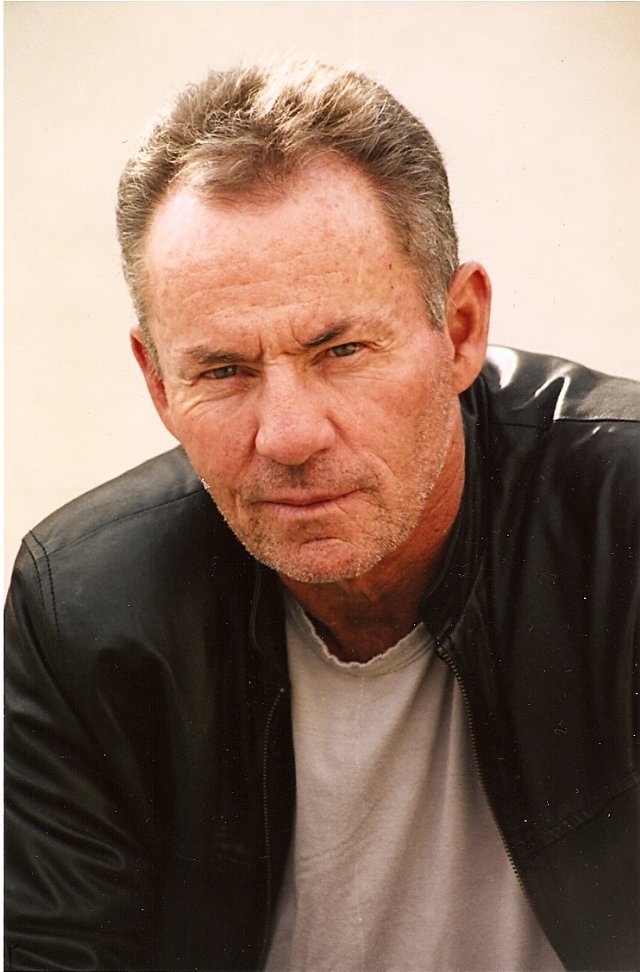
Plus: Part 2 of our conversation with stage and television actor James Sutorius (TheAndrosTargets, The Bob Crane Show). It’s a full program as always... We certainly hope you’ll join us.
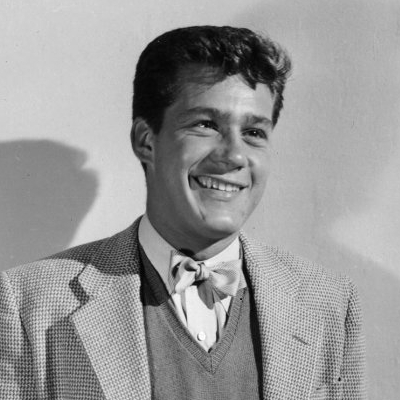
Larson found the role of cub reporter Jimmy Olsen on The Adventures of Superman to be a handicap, because he became typecast as a naive young man.
This caused him to do little acting after the show ended in 1958, and instead he focused on behind-the-scenes work, such as writing and production. Larson was always willing to sit for interviews about the Superman series and his connection to it, and in recent years had a number of cameos that paid subtle tribute to his character and the series, including a 1991 episode of the TV series Superboy, alongside Noel Neill, who played Lois Lane in Adventures of Superman, and an episode of Lois & Clark: The New Adventures of Superman as an aged Jimmy Olsen in the episode "Brutal Youth", first telecast on October 20, 1996.
Larson had a cameo in a late-1990s American Express card commercial with Jerry Seinfeld and an animated Superman, directed by David Kellogg. He and Neill provided commentary on several Adventures of Superman episodes for the January 2006 DVD release of the 1953 season, and in 2006, he appeared in Bryan Singer's film Superman Returns in a cameo role as "Bo the Bartender". Larson and Neill appeared together at the premiere of Superman Returns.
Larson most recently appeared in an episode of Law & Order: Special Victims Unit, which aired on the NBC network on January 6, 2010. In this episode, titled "Quickie", Larson portrayed "Dewey Butler", grandfather to a young suspect who was allegedly having unprotected sexual relations with women.
Among his other work, Larson wrote the libretto to the opera Lord Byron to music by Virgil Thomson.
As always, the further we go back in Hollywood history, the more that fact and legend become intertwined. It's hard to say where the truth really lies.
NFL Monday Night Football made its debut on ABC-TV.
The game was between the Cleveland Browns and the New
York Jets. The Browns won 31-21.
September 21, 1985
George Clooney makes his first appearance as a
handyman on the popular TV sitcom The Facts of Life.
Clooney appeared in 17 episodes of the show, which
aired from 1979 to 1988 and chronicled the lives of a group of young women who
meet at a fictional boarding school. Years later, he moved on to Hollywood
superstardom in the hit TV medical drama ER and such films as The
Perfect Storm, Ocean’s Eleven and Michael Clayton.
Clooney, who was born on May 6, 1961, in Lexington, Kentucky,
is the son of the journalist and TV host Nick Clooney and the nephew of the
well-known singer Rosemary Clooney. His early acting credits, in addition to The
Facts of Life, included small roles on the popular sitcom Roseanne
and the drama Sisters. Clooney also appeared in single episodes of such
shows as The Golden Girls and Murder, She Wrote. Clooney first
shot to fame as Dr. Doug Ross on the medical drama ER, which debuted in
1994.
While appearing on ER, Clooney headlined such movies as Batman
& Robin (1997), in which he played the caped crusader himself; Out
of Sight (1998), which co-starred Jennifer Lopez and marked the first time
Clooney worked with the director Steven Soderbergh, his future frequent
collaborator; and Three Kings (1999). After leaving the long-running
medical drama, he went on to starring roles in The Perfect Storm (2000),
O Brother, Where Art Thou? (2000) and Soderbergh’s Ocean’s Eleven
(2001) and its two sequels, Ocean’s Twelve (2004) and Ocean’s
Thirteen (2007). Clooney made his directorial debut with 2002’s Confessions
of a Dangerous Mind, about the game show host Chuck Barris, who claimed in
his memoir that he also worked for the C.I.A.
Clooney won an Academy Award in the Best Supporting Actor category for his
role in Syriana (2005), a complex thriller about the oil industry. He
also received Best Director and Best Screenplay Oscar nominations for Good
Night, and Good Luck (2005), about the 1950s journalist Edward R. Murrow
and his conflict with the anti-Communist U.S. Senator Eugene McCarthy. Clooney
earned his first Best Actor Oscar nomination for his performance in the title
role of 2007’s legal thriller Michael Clayton.
Off-screen, the actor,
who was named People magazine’s “Sexiest Man of the Year” in 1997 and
2006, is known both for his confirmed bachelor status and his advocacy of
various political and social causes, including the environment and the troubled
Darfur region of Sudan.
The series was nominated for
12 Emmy
Awards and won five. The first season episode "The Amazing
Falsworth" earned writerMick Garris an Edgar
Award for Best Episode in a TV Series. It was not a ratings hit
(ranking 40th in Season 1 and 46th in Season 2), however, and the network did
not renew it after the two-year contract expired. The 1987 science fiction
movie, *batteries not included was
originally intended to be featured in Amazing Stories, but Steven Spielberg
liked the idea so much that he decided to make it a theatrical release.[4]
The first Farm Aid concert is held in Champaign, Illinois.
It started with an offhand remark made by Bob Dylan
during his performance at Live Aid, the massive fundraising concert held at
Wembley Stadium, London, and JFK Stadium, Philadelphia, in the early summer of
1985. As television viewers around the world phoned in donations in support of
African famine relief, Dylan said from the stage, "I hope that some of the
money...maybe they can just take a little bit of it, maybe...one or two
million, maybe...and use it, say, to pay the mortgages on some of the farms
and, the farmers here, owe to the banks." Dylan would come under harsh
criticism from Live Aid organizer Bob Geldof for his remarks ("It was a
crass, stupid and nationalistic thing to say," Geldof would later write),
but he planted a seed with several fellow musicians who shared his concern over
the state of the American family farm. Less than one month later, Willie
Nelson, Neil Young and John Mellencamp announced plans for "Farm
Aid," a benefit concert for America's farmers held in Champaign, Illinois, on this day in
1985.
As one might have expected of a concert staged to
"raise awareness about the loss of family farms and to raise funds to keep
farm families on their land," Farm Aid featured a number of performers
from the worlds of country, folk and rootsy rock music. There were the three main
organizers and the instigator Bob Dylan, for instance, along with Hoyt Axton,
Johnny Cash, Merle Haggard, Emmylou Harris, Waylon Jennings, Loretta Lynn, Joni
Mitchell and Charley Pride. But the first Farm Aid, more than any of the annual
Farm Aid concerts since, was a bit of a stylistic free-for-all, featuring
artists united only by their interest in supporting a good cause.
"As soon as I read in the paper that there was
gonna be such a thing," Sammy Hagar told MTV's cameras on the day of the
show, "I called my manager and said, 'I wanna do it.' And he said, 'It's
all country.' I said, 'I don't care. It's America. I wanna do it.' If there was
anything more surprising than hearing Hagar perform his hard-rock anthem
"I Can't Drive 55" on the same stage that had earlier featured the
quiet folk of Arlo Guthrie, it was hearing Lou Reed perform "Walk On The
Wild Side" on a stage that had featured John Denver.
Over the years since its first charity concert on this
day in 1985, the Farm Aid organization has raised upwards of $33 million to
support small farmers, promote sustainable farming practices and encourage
consumption of "good food from family farms."
September 24, 1955
Judy Garland made her TV
debut on the "Ford Star Jubilee" on CBS.
Instead of the usual live performance staged
especially for Ford Star Jubilee, the final episode on November 3,
1956 was a special, two-hour presentation of the 1939 MGM theatrical
Technicolor film The Wizard of Oz, hosted by Bert Lahr,
10-year-old Liza Minnelli and young Oz expert Justin
Schiller. This marked the first time that the film had ever been shown on
television, and the only time that one of the film's actual actors (Lahr) as
well as one of the children of the film's star (Judy Garland) hosted it. The
broadcast was a critical and ratings smash, but the film was not shown on TV
again until 1959, when it was presented by CBS at 6:00 P.M., E.S.T. rather than
9:00 P.M., and this time as a Christmas season special in its
own right, not as part of an anthology series. The 1959 telecast was hosted by
comedian Red Skelton and his daughter Valentina. This
broadcast attracted an even wider audience, because children were able to
watch, and thus began the tradition of showing the film annually on television.
Another rare instance of Ford Star Jubilee presenting
a filmed, rather than live, program was their 1956 musical version of Maxwell
Anderson's High Tor, starring Bing Crosby and Julie
Andrews. Music was by Arthur
Schwartz, noted composer of such scores as those for The
Band Wagon and Revenge with Music. Crosby, according to
sources, had insisted the production be filmed rather than presented live,
because he did not feel comfortable acting in a live television musical play.[1] Although
it was filmed in color, the musical version of High Tor has
never been released on VHS or DVD.
September 24, 1970
The
Odd Couple is a television
situation comedy broadcast from September 24, 1970 to March 7, 1975 on ABC.
The first episode of
"Growing Pains" aired on ABC.
The Seaver family resides
at 15 Robin Hood Lane in Huntington, Long Island, New York. Dr.
Jason Seaver, a psychiatrist, works from home because his wife, Maggie,
has gone back to work as a reporter. Jason has to take care of the kids: ladies man
Mike, bookish honors student Carol, and rambunctious Ben. A
fourth child, Chrissy Seaver, is born in 1988. In the beginning, she is played
in her infant stage by twins. In season six, Chrissy's age was advanced to six years
old.
September 25, 1965
The half hour Saturday
morning cartoon "The Beatles" premiered on ABC-TV.
The
Beatles is
an Americananimated television series featuring
the fanciful and musical misadventures of the popular Englishrock band
of the same name. It ran from 1965 to 1969 on ABC in the US (only 1965 to 1967
was first run; later transmissions were reruns). The series debuted on
September 25, 1965 and ended on September 7, 1969. A total of 39 episodes were
produced. The series was shown on Saturday mornings at 10:30 AM EST until the
1967 third season when it was moved to 12:00 PM EST. For the fourth season,
which consisted of reruns, the series was shown at 9:30 AM EST on Sunday
mornings. Each episode has a name of a Beatles song, so the story is based
on its lyrics and it is also played at some time in the episode. The original
series was rebroadcast in syndication by MTV in 1986 and
1987 and on the Disney Channel.[1] The
series was a historical milestone as the first weekly television series to
feature animated versions of real, living people.
September 25, 1970
The
Partridge Family premieres on ABC television.
Unwilling
to rest as a one-hit wonder when its first big hit, The Monkees,went
off the air in 1968, the television production company Screen Gems wasted no
time in trying to repeat its success. On this day in 1970, in the 8:30 p.m.
time slot immediately following The Brady Bunch, ABC premiered a program
that would give Screen Gems its second TV-to-pop-chart smash: The Partridge
Family.
If the Beatles served as the inspiration for The
Monkees, it was the real-life family act the Cowsills that inspired Screen
Gems to dream up The Partridge Family. Originally made up of four
teenage brothers (Bill, Bob, Barry and John), the Cowsills scored their first
top-40 hit with "The Rain, The Park & Other Things" (1967) after
adding their mother to the lineup. They earned three more hits in 1968 with
"We Can Fly," "Indian Lake" and "Hair" after
adding two additional younger siblings, and it was in this configuration that
they caught the eyes of the folks at Screen Gems. In fact, Screen Gems approached
the Cowsill family about having the children star in the show that would
eventually become The Partridge Family, but the family demurred when it
learned that actress Shirley Jones, and not Barbara Cowsill, would be playing
the role of Shirley Partridge. Undaunted, Screen Gems hired four non-singing
child actors for the roles of Laurie, Danny, Chris and Tracy Partridge and one
future teen idol, David Cassidy, for the role of Keith.
In the pilot episode of The Partridge Family,
the five children of a widowed single mother convince their mom to join them in
their garage recording sessions and then watch their first record, "I
Think I Love You" become a #1 pop hit. In a case not so much of life
imitating art as of a brilliant marketing machine replicating its earlier
success, the song "I Think I Love You" raced to the top of the
real-life pop charts less than two months after its television debut.
However, hits like "I Think I Love You" and
"I Woke Up in Love This Morning" were not actually recorded by a five
siblings and their mom in a garage. The Partridge Family's hits were recorded
by some of the best professional musicians working in Los Angeles at the time,
including drummer Hal Blaine and the other studio musicians known as the
Wrecking Crew. The Partridge Family did, however, launch David Cassidy
on a short-lived career as an actual pop singer, and it also, according to news
reports, inspired some misguided runaways to show up on Shirley Jones' Beverly
Hills lawn in the hopes that she might adopt them into her television family.
The series is about a poor
backwoods family transplanted to Beverly Hills,
California, after striking oil on
their land. A Filmways production created by writer Paul Henning,
it is the first in a genre of “fish out of
water” themed television shows, and
was followed by other Henning-inspired country-cousin series on CBS. In 1963,
Henning introduced Petticoat Junction, and in 1965 he reversed the rags to riches model
for Green Acres. The show paved the way for later culture-conflict
programs such as The Jeffersons, McCloud, The Nanny, The Fresh
Prince of Bel-Air, and Doc.
Panned by many entertainment critics of its time, it quickly became a huge
ratings success for most of its nine-year run on CBS.
September 26, 1960
First Kennedy-Nixon debate.
For the first time in U.S. history, a debate between major party presidential
candidates is shown on television. The presidential hopefuls, John F. Kennedy,
a Democratic senator of Massachusetts, and Richard M. Nixon, the vice president
of the United States, met in a Chicago studio to discuss U.S. domestic matters.
Kennedy emerged the apparent winner from this first of four televised debates,
partly owing to his greater ease before the camera than Nixon, who, unlike
Kennedy, seemed nervous and declined to wear makeup. Nixon fared better in the
second and third debates, and on October 21 the candidates met to discuss
foreign affairs in their fourth and final debate. Less than three weeks later,
on November 8, Kennedy won 49.7 percent of the popular vote in one of the
closest presidential elections in U.S. history, surpassing by a fraction the
49.6 percent received by his Republican opponent.
One year after leaving the vice presidency, Nixon returned to politics, winning
the Republican nomination for governor of California. Although he lost the
election, Nixon returned to the national stage in 1968 in a successful bid for
the presidency. Like Lyndon Johnson in 1964, Nixon declined to debate his
opponent in the 1968 presidential campaign. Televised presidential debates
returned in 1976, and have been held in every presidential campaign since.
To quote the Bicentennial Minute, "And that's the way it was".