I represent the first generation who, when we were born, the television was now a permanent fixture in our homes. When I was born people had breakfast with Barbara Walters, dinner with Walter Cronkite, and slept with Johnny Carson.
Read the full "Pre-ramble"
William Shatner has one style. We have completely contrasting personalities. We're very good friends. I adore him, but we're very different people, so they were smart enough to write characters that reflected that.
-Patrick Stewart
Sir Patrick Stewart 13 July 1940 – 28 October 2026
On this day in 1946, Patrick Leonard Sajdak, who will one day be known to
millions of game-show fans as the Wheel of Fortune host Pat Sajak, is
born in Chicago. Wheel of Fortune, which debuted in 1975, became the
longest-running syndicated game show on American television, turning Sajak and
his co-host, Vanna White, into pop-culture icons.
After attending Chicago’s Columbia College, Sajak joined the Armyin 1968
and went to Vietnam, where he was a disc jockey for Armed Forces Radio in
Saigon. After his discharge from the military, he worked in radio and TV and in
1977 became a weatherman for a Los Angeles TV station. In 1981, Wheel of
Fortune’s creator, Merv Griffin (who also developed the long-running game
show Jeopardy!, which debuted in 1964) tapped Sajak to take over hosting
duties from Chuck Woolery for a network daytime version of Wheel. In
1983, Wheel of Fortune became a syndicated evening program. It has
remained on the air continuously since that time, with Sajak and White as
co-hosts.
During each episode of Wheel of Fortune, contestants compete to solve
word puzzles. Players spin the big wheel to determine prize money and each
player can buy vowels to help solve the puzzle. White stands next to the
puzzleboard and reveals the individual letters when players have guessed them
correctly. Born Vanna Marie Rosich on February 18, 1957, White was raised in
North Myrtle Beach, South Carolina. She attended the Atlanta School of Fashion
Design and worked as a model before heading to Los Angeles to pursue acting. In
1982, the blonde beauty was selected to join Sajak on Wheel of Fortune.
The first letter she ever turned on the puzzleboard was a “T.” In 1992, the
Guinness Book of World Records named White “Television’s Most Frequent
Clapper,” crediting her with an average of 720 claps per show.
Each year, more than 3,000 people audition to become contestants on Wheel
of Fortune, while fewer than 500 make the final cut. During its 25 years of
syndication, Wheel of Fortune has given over $180 million in cash and
prizes to its contestants.
As for longevity, while Jeopardy! debuted in 1964, it has not aired
continuously since then. Jeopardy! first aired from 1964 to 1975, then
went off the air. It returned briefly, from 1978 to 1979, and was revived again
in 1984, when Alex Trebek became host of a syndicated edition of the show. The
longest-running game show in network or syndication is The Price is Right. The
show originally aired on network TV from 1956 to 1965. A syndicated version of The
Price is Right premiered in 1972, with Bob Barker as host. Barker remained
with the show until his retirement at the age of 83 in 2007. Comedian Drew
Carrey took over hosting duties beginning in October 2007.
October 27, 1966
It's the Great Pumpkin, Charlie Brown first aired.
A Halloween
special, it was the third Peanuts special (and second holiday-themed
special, following A Charlie Brown
Christmas) to be produced and animated by Bill Melendez. Its initial broadcast took place
on October 27, 1966, on CBS, preempting My Three Sons. CBS re-aired the special
annually through 2000, with ABC
picking up the rights beginning in 2001, where it now airs annually at
Halloween. ABC once broadcast You're
Not Elected, Charlie Brown immediately following It's the
Great Pumpkin, as if to emphasize the proximity of Halloween to Election
Day. Also, the Great Pumpkin is mentioned in You're Not Elected.
The program was nominated for an Emmy Award. It has been issued on home video several times, including a Remastered Deluxe
Edition of the special released by Warner Home Video on September 2, 2008, with the bonus feature It's
Magic, Charlie Brown which was
released in 1981. To celebrate its 40th anniversary, a retrospective book was
published in 2006. It's the Great Pumpkin, Charlie Brown: The Making of a
Television Classic includes the entire script, never-before-seen
photographs, storyboard excerpts, and interviews with the original child actors who provided the voices of the Peanuts gang.
Charlie Brown's repeated line of "I got a rock"
caused some stir among many viewers of the show, according to Charles M. Schulz in the book and retrospective
TV special "Happy Birthday,
Charlie Brown." Schulz said that after the program first aired,
bags and boxes of candy came in from all over the world "just for Charlie
Brown."
October 29, 1956
The
Huntley-Brinkley Report first aired.
The
Huntley-Brinkley Report (sometimes known as The Texaco Huntley-Brinkley Report,
for one of its early sponsors) was the NBC television network’s flagship
evening news program from October 29, 1956, until July 31, 1970. It was
anchored by Chet Huntley in New York City, and David Brinkley in Washington,
D.C. It succeeded theCamel News Caravan, anchored by John Cameron Swayze. The
program ran for 15 minutes at its inception but expanded to 30 minutes on
September 9, 1963, exactly a week after CBS Evening News with Walter Cronkite
did so. It was developed and produced initially by Reuven Frank. Frank left the
program in 1962 to produce documentaries (Eliot Frankel replaced him) but
returned to the program the following year when it expanded to 30 minutes.[1]
He was succeeded as executive producer in 1965 by Robert “Shad” Northshield and
in 1969 by Wallace Westfeldt.
October 30, 1931
Dick
Gautier is born.
Actor, comedian, composer, singer and author. Among his most well-known
television roles are for Hymie the Robot in the television series Get Smart, and Robin Hood in the short-lived TV comedy series When
Things Were Rotten, a Mel Brooks send-up of the classic legend.
Foghorn J. Leghorn first appeared in
Walky Talky Hawky
The character of Foghorn Leghorn was directly
inspired by the popular character of Senator Claghorn, a blustery Southern
politician played by Kenny Delmar who was a regular
character onThe Fred Allen Show, a popular radio show of the 1940s. The rooster
adopted many of Claghorn's catch phrases, such as "That's a joke, ah say,
that's a joke, son." Delmar had based the character of Claghorn upon a
Texas rancher who was fond of saying this.
September 3, 1966
The
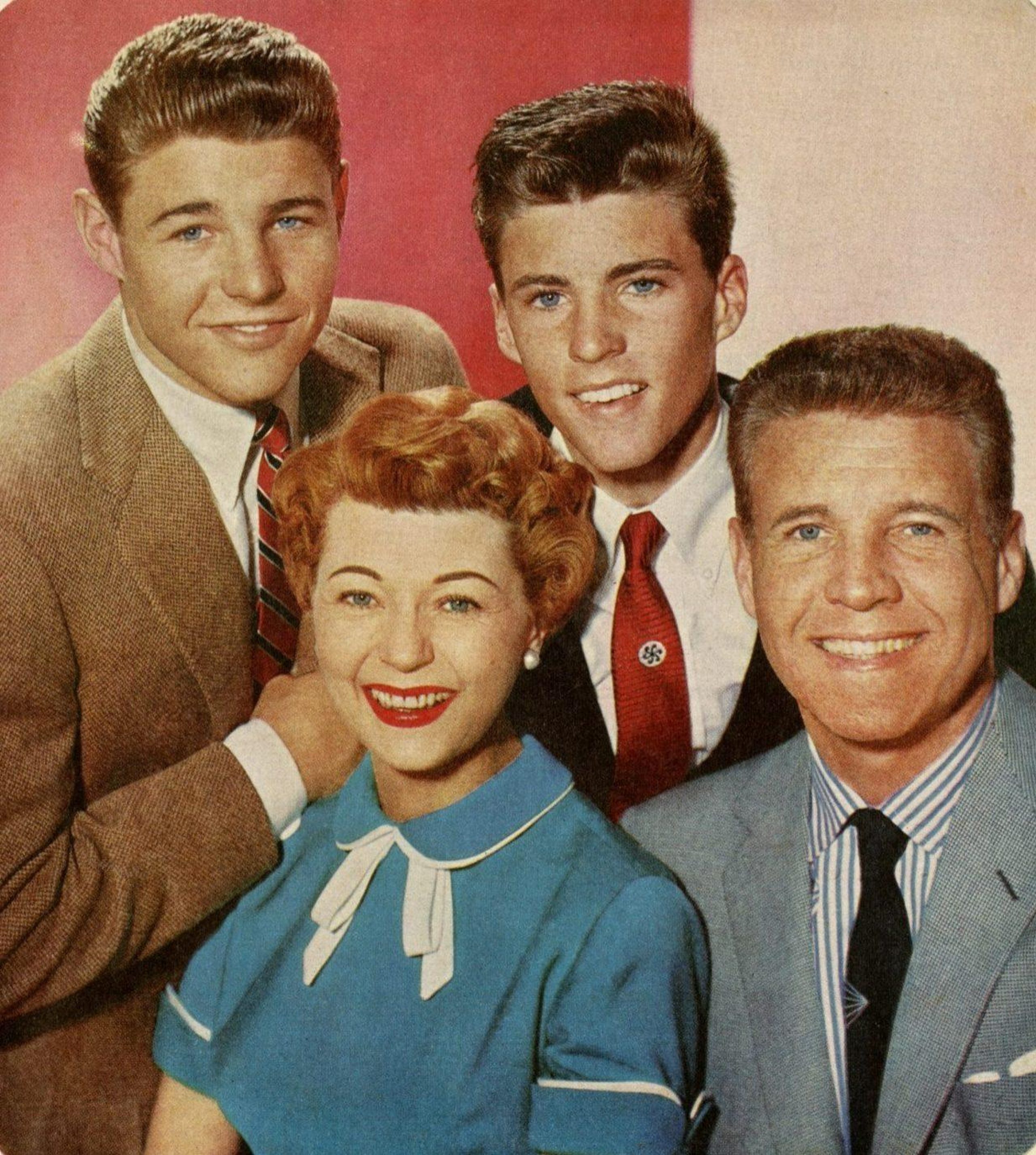
Adventures of Ozzie and Harriet airs its last episode.
The sitcom focused on the comic antics of a young
family based on the real-life family of show founders and stars Ozzie and
Harriet Nelson. The show premiered as a radio comedy in 1944 and ran for 10
years. Even before the radio show ended, a TV version launched in 1952; the
television show ran until 1966. The Nelson's two sons, Ricky and David, played
themselves on the TV version.
September 3, 1991
It’s
a Wonderful Life director Capra dies.
On this day in 1991, Frank Capra, a leading
Hollywood director in the 1930s and 1940s whose movies include the now-classic You
Can’t Take It With You, Mr. Smith Goes to Washington and It’s a
Wonderful Life, dies at the age of 94 at his home in La Quinta, California.
According to his obituary in the New York Times: “Capra movies were
idealistic, sentimental and patriotic. His major films embodied his flair for
improvisation and spontaneity, buoyant humor and sympathy for the populist
beliefs of the 1930s.”
Capra was born in Sicily, on May 18, 1897, and as a young boy sailed to
America in steerage with his family, who settled in Los Angeles. After
graduating from the California Institute of Technology and serving in the U.S.
Army, Capra worked his way up through the movie industry; he had his first big
success as a director with 1933’s Lady for a Day, which received a Best
Picture Academy Award nomination. The following year, Capra helmed the comedy It
Happened One Night, starring Clark Gable and Claudette Colbert. The film
took home Oscars in five categories: Best Director, Best Picture, Best Adapted
Screenplay and Best Actor and Actress. Capra won a second Best Director Oscar
for Mr. Deeds Goes to Town (1936), which starred Gary Cooper as a man
who inherits a large fortune and wants to use it to help Depression-era
families. Capra received a third Best Director Oscar for You Can’t Take It
With You (1938), a movie about an eccentric family that starred James
Stewart, Jean Arthur and Lionel Barrymore and was based on the Pulitzer
prize-winning play of the same name by Moss Hart and George Kaufman.
In 1940, Capra took home a fourth Best Director Oscar for Mr. Smith Goes
to Washington (1939), which featured Stewart as an incorruptible U.S.
senator. After the attack on Pearl Harbor in 1941, Capra joined the Army again
and during his time in the service made several well-received propaganda films,
including Prelude to War (1943), which earned an Academy Award for Best
Documentary. Capra went on to co-write and direct 1946’s It’s a Wonderful
Life, perhaps his best-known work. The film again starred Stewart, this
time as George Bailey, a small-town man who is saved from suicide by a guardian
angel. Although the film was considered a box-office disappointment when it was
first released, it garnered five Oscar nominations, including one for Best
Picture, and eventually gained widespread appeal when it was broadcast annually
on TV around Christmastime, starting in the 1970s.
Capra’s final film was Pocketful of
Miracles (1961), a remake of Lady for a Day starring Bette Davis as
a street vendor who needs to remake herself into a society dame in order not to
disappoint her daughter.
The speech focused on Truman’s acceptance of
a treaty that officially ended America’s post-World War II occupation
of Japan.
The broadcast, via then-state-of-the-art
microwave technology, was picked up by 87 stations in 47 cities, according to
CBS. In his remarks, Truman lauded the treaty as one that would help “build a
world in which the children of all nations can live together in peace.” As
communism was threatening to spread throughout Pacific Rim nations such as
Korea and Vietnam, the U.S. recognized the need to create an ally in a strong,
democratic Japan.
Since the end of
World War II in 1945, Japan had been occupied and closely monitored by the
American military under the leadership of General Douglas MacArthur.
By 1951, six years later, Truman considered the task of rebuilding Japan
complete. Truman praised the Japanese people’s willingness to go along with the
plan and expressed his pride in having helped to rebuild Japan as a democracy.
Gone was the old militaristic police state; in its place was a country with a
new constitution, unions for protecting the rights of laborers and voting
rights for women, among many other positive changes.
The Multilateral Treaty of Peace with Japan,
as it was ultimately called, was ratified by the U.S. Congress on March 20,
1952.
The show was founded and hosted by actor and comedian Jerry
Lewis, who hosted the broadcast from its 1966 inception until 2010.
The history of MDA's telethon dated back to the 1950s, when the Jerry
LewisThanksgiving Party for MDA raised
funds for the organization's New
York City area operations. The telethon was held annually on Labor Day
weekend beginning in 1966, and would raise $2.45 billion for MDA from its
inception through 2009.
The telethon aired up to 21½ hours, starting on the Sunday evening preceding
Labor Day and continuing until late Monday afternoon on the holiday itself. MDA
called its network of participating stations the "Love Network".
The show originated from Las
Vegas for 28 of the years it was broadcast.
Beginning in 2011, coinciding with Lewis's controversial departure, MDA
radically reformatted and shortened the telethon's format into that of a benefit
concert, shortening the length of the special each successive
year. The 2011 edition was seen exclusively on the Sunday evening
before Labor
Day for six hours; This edition, syndicated to approximately 160
television stations throughout the United States on September 4, 2011, Nigel
Lythgoe, Jann Carl, Alison
Sweeney and Nancy O'Dell were brought on as
co-hosts. shared hosting duties for the 2011 edition.
Successive telethons from 2012 to 2014 renamed the show as the MDA
Show of Strength and further cut its airtime. The 2012 edition
aired on Sunday, September 2, 2012; the job of renaming the new show was given
to MDA's advertising agency E.B. Lane (now LaneTerralever). Mark Itkowitz,
their Exec. Creative Director came up with the name MDA Show of Strength and it
quickly gained internal approval. The 2012 edition was reduced to three hours
as a primetime-only broadcast. The telethon aired at 8 p.m. Eastern and Pacific
Time, and was seen live in the Eastern and Central
time zones.
The 2012 edition did not refer itself as a "telethon". The
2013 Show of Strength discontinued the long-standing format of
being syndicated to individual stations of varying network
affiliation and aired on a major national network instead of being
syndicated to individual stations, airing on ABC on Sunday, September 1,
2013, and being reduced to two hours. While the 2012 edition did not refer
itself as a "telethon", it referred itself as such for the 2013
edition.
The final edition, for 2014, aired on ABC on August 31, again as a two-hour
special beginning at 9PM ET/PT. This was the final edition for the
telethon, as it was announced on May 1, 2015 that the MDA would be
discontinuing the annual event.
Mel Blanc, the voice of Bugs Bunny, Daffy Duck, and
countless other Warner Bros. cartoon characters, was born in San Francisco.
His parents, who ran a women's clothing business,
moved with their son to Portland, Oregon, when Blanc was a child. Blanc began
performing as a musician and singer on local radio programs in Portland before
he was 20. In the late 1920s, he and his wife, Estelle, created a daily radio
show called "Cobwebs and Nuts," which became a hit. Blanc made many
other radio appearances and became a regular on Jack Benny's hit radio show,
providing the sounds of Benny's ancient car (The Maxwell) and playing several
other characters.
In 1937, Blanc made his
debut with Warner Bros., providing the voice for a drunken bull in a short
cartoon called "Picador Porky." Another actor provided the pig's
voice, but Blanc later replaced him. In 1940, Bugs Bunny debuted in a short
called "A Wild Hare." Blanc said he wanted the rabbit to sound tough
and streetwise, so he created a comic combination of Bronx and Brooklyn
accents. Other characters Blanc created for Warner Bros. included the Road
Runner, Sylvester, and Tweety Bird. He performed in some 850 cartoons for
Warner Bros. during his 50-year career. For other studios, he provided the
voices of Barney Rubble and Dino the dinosaur in The Flintstones, Mr.
Spacely for The Jetsons, and Woody Woodpecker's laugh.
In his 1988
autobiography, That's Not All Folks, Blanc described a nearly fatal
traffic accident that left him in a coma. Unable to rouse him by using his real
name, a doctor finally said, "How are you, Bugs Bunny?" and Mel
replied, in Bugs' voice, "Ehh, just fine, doc. How are you?"
Blanc
continued to provide voices until the late 1980s, most memorably voicing Daffy
Duck dueling with Donald Duck in Who Framed Roger Rabbit? (1988). After
Mel Blanc died of complications from heart disease, his son Noel, trained by
his father, provided the voices for the characters the elder Blanc had helped
bring to life.
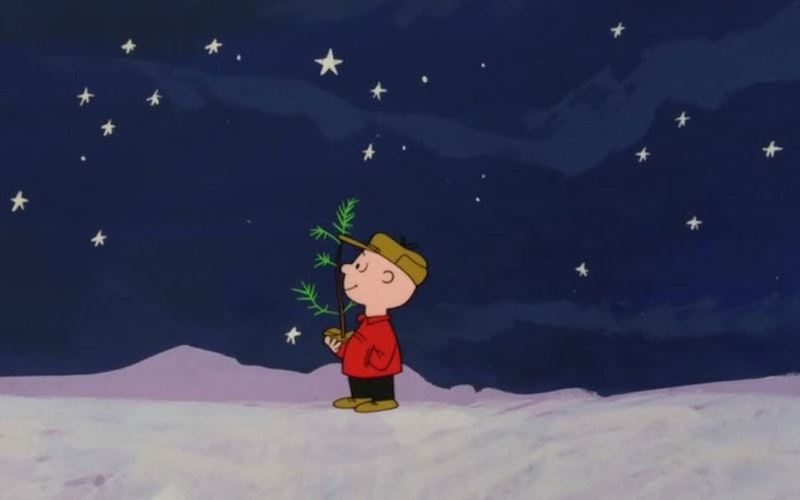
It was produced and directed by former Warner Bros. and UPA animator Bill Meléndez, who also supplied the voice for the character of Snoopy. Initially sponsored by Coca-Cola, the special aired on CBS from its debut in 1965 through 2000, and has aired on ABC since 2001. For many years it aired only annually, but is now telecast at least twice during the Christmas season. The special has been honored with both an Emmy and Peabody award.
A Charlie Brown Christmas is also one of CBS's most successful specials, airing annually more times on that network than even MGM's classic motion picture The Wizard of Oz. Oz was shown thirty-one times on CBS, but not consecutively; between 1968 and 1976, NBC aired the 1939 film.
For the first time in nearly six decades, the Charlie Brown holiday specials will not be broadcast on television. Instead, the Peanuts are heading to Apple TV+.