I represent the first generation who, when we were born, the television was now a permanent fixture in our homes. When I was born people had breakfast with Barbara Walters, dinner with Walter Cronkite, and slept with Johnny Carson.
Read the full "Pre-ramble"
that we could use to artificially maintain our Christmas spirit.
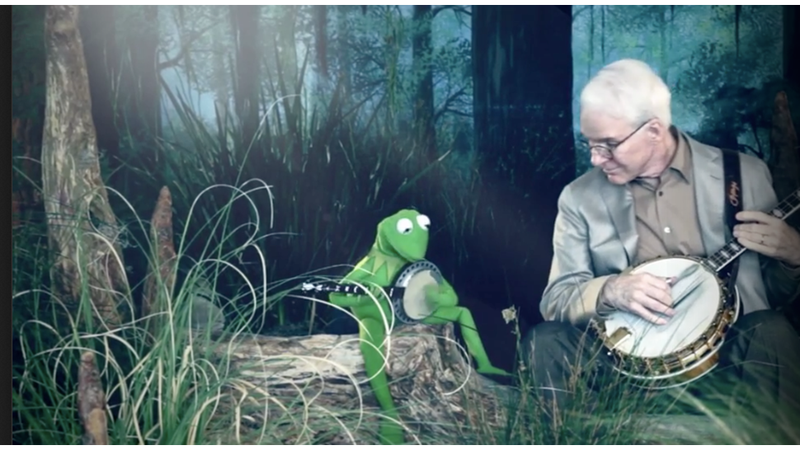
"Baby, It's Cold Outside" is a song with words and music by Frank Loesser. Although popular during the Christmas season. Loesser wrote the duet in 1944 and premiered the song with his wife, Lynn Garland, at their Navarro Hotel housewarming party, and performed it toward the end of the evening, signifying to guests that it was nearly time to end the party. Garland considered it "their song" and was furious when Loesser sold the song to MGM. In 1948, after years of informally performing the song at various parties, Loesser sold its rights to MGM, which inserted the song into its 1949 motion picture, Neptune's Daughter.[2] The film featured two performances of the song: one by Ricardo Montalbán and Esther Williams and the other by Red Skelton and Betty Garrett, the second of which has the roles of wolf and mouse reversed. These performances earned Loesser an Academy Award for Best Original Song.
Here is a "HOLIDAY SOR-BAY"a little spark of madness that we could use to artificially maintain our Christmas spirit.
Today in Television History
December 30, 1959
Comedian Tracey Ullman is born in
Hackbridge, England. She attended theater school from ages 12 to 16. At age 21,
she began performing with an avant-garde drama group, the Royal Court Theater,
where she won rave reviews. She
landed her own U.S. TV show in 1987. The Emmy-winning Tracey Ullman Show
ran from 1987 to 1990. The show featured short skits starring Ullman and a
regular cast of players, and also aired short animated segments-one was an
offbeat cartoon about underachieving 10-year-old named Bart Simpson and his
oddball family. The cartoon was later spun off into its own hit show, The
Simpsons.
December 30, 1984
Crazy Like a Fox first aired.
The series starred Jack Warden as
Harry Fox, a free-spirited private detective who lived by his wits and John
Rubinstein as his high-strung attorney son, Harrison, who unwillingly,
and frequently, found himself dragged into his father's cases.
The show's opening would always feature
Harry and Harrison talking on the phone in their offices like this:
·Harrison:
Hello?
·Harry:
Harrison, I need your help.
·Harrison:
Dad, you keep forgetting. I'm a lawyer. You're the detective!
·Harry:
Aw, come on son. All I need is a ride. What could possibly happen?
Originally airing Sundays at 9 PM (EST), the show was a hit in its first
season, even cracking the Nielsen Top 10 with an average household share of
19.9. However, midway through the second season, CBS brought back its Sunday
Night Movie, which displaced the show (along with Trapper John, M.D., which followed Crazy
Like a Fox up to that point) and resulted in it being bounced around
to various time slots, which caused ratings to drop significantly and led to
its cancellation at the end of the season.
Here is another "Mental Sorbet" that we could use to momentarily forget about those things that leave a bad taste in our mouths.
This video from the website “Funny or Die” did a spoof in retaliation of Kirk Cameron’s response to Piers Morgan’s interview question on homosexuality. The satirical video, CCOKC, features former child celebrities making ‘fun’ of Cameron’s religious beliefs regarding his views of homosexuality. Cameron had previously stated during this interview his interpretation of the Christian beliefs as it being "unnatural" and "detrimental" to society.
Listen to me on TV CONFIDENTIAL with Ed Robertson and Frankie Montiforte Broadcast LIVE every other Monday at 9pm ET, 6pm PT (immediately following STU'S SHOW) on Shokus Internet Radio. The program will then be repeated Tuesday thru Sunday at the same time (9pm ET, 6pm PT)on Shokus Radio for the next two weeks, and then will be posted on line at our archives page at TVConfidential.net. We are also on Share-a-Vision Radio (KSAV.org) Friday at 7pm PT and ET, either before or after the DUSTY RECORDS show, depending on where you live.
As always, the further we go back in Hollywood history, the more that fact and legend become intertwined. It's hard to say where the truth really lies.
October 25, 1924 Billy Barty was born William John Bertanzetti. Barty was one of the most famous 20th century people with dwarfism.
Barty, an Italian American, was born in Millsboro, Pennsylvania. He was a member of the gang in the Mickey McGuire serial of silent shorts (a children's comedy series of the 1920s, similar in tone to the Our Gang/Little Rascals comedies, starring a very young Mickey Rooney in the title role). In The Gold Diggers of 1933, a nine-year-old Barty appeared as a baby who escapes from his stroller. Because of his stature, much of his work consisted of bit parts and gag roles, although he was featured prominently in W.C. Fields and Me (1976), Foul Play and The Lord of the Rings (both 1978), Under the Rainbow (1981), Night Patrol (1984), Legend (1985), Masters of the Universe (1987), Willow (1988), UHF (1989), Life Stinks and Radioland Murders (1994). Barty was known for his boundless energy and enthusiasm for any productions in which he appeared. He also performed a remarkable impression of pianist Liberace. He performed with the Spike Jones musical comedy show on stage and television. He was also the evil side kick on the 1970s Saturday morning TV series Dr. Shrinker. Barty also starred in a local Southern California children's show, "Billy Barty's Bigtop," in the mid-1960s, which regularly showed The Three Stooges shorts. In one program, Stooge Moe Howard visited the set as a surprise guest. The program gave many Los Angeles-area children their first opportunity to become familiar with little people, who until then had been rarely glimpsed on the screen except as two-dimensional curiousities. Barty also starred as "Sigmund" in the popular children's t.v. show Sigmund and the Sea Monsters produced by Sid and Marty Krofft in 1974-1976. In 1983, Barty supplied the voice for Figment in EPCOT Center's Journey Into Imagination dark ride. He subsequently supplied a reprisal for the second incarnation, though very brief. Barty was a noted activist for the promotion of rights for others with dwarfism. He was disappointed with contemporary Hervé Villechaize's insistence that they were "midgets" instead of actors with dwarfism. Barty founded the Little People of America to help with his activism. Barty was married to Shirley Bolingbroke of Malad City, Idaho, from 1962 until his death at age 76. They had two children, Lori Neilson and TV/film producer and director Braden Barty. Until the time of his death, Barty was a beloved annual guest-star on Canada's Telemiracle telethon, one of the most successful (per capita) telethons in the world.
Coogan began his movie career as a child actor in silent films. Many years later, he became known as Uncle Fester on The Addams Family (TV show, 1964-1966). In the interim, he shocked the United States by suing his mother and stepfather over his squandered film earnings and provoked California to enact the first known legal protection for the earnings of child performers. He began his acting career as an infant in both vaudeville and film, with an uncredited role in the 1917 film Skinner's Baby. Charlie Chaplin discovered him in a Los Angeles vaudeville house, doing the shimmy, a popular dance at the time, on the stage. His father, Jack Coogan, Sr. was also an actor. The boy was a natural mimic, and delighted Chaplin with his abilities in this area. As a child actor, he is best remembered for his role as Charlie Chaplin's irascible sidekick in the film classic The Kid (1921) and for the title role in Oliver Twist, directed by Frank Lloyd, the following year. He was also the first star to get heavily merchandised, with peanut butter, stationery, whistles, dolls, records, and figurines just being a sample of the Coogan merchandise. He also travelled internationally to huge crowds. Many of his early films are lost or unavailable, but Turner Classic Movies recently presented The Rag Man with a new score. Coogan was famous for his pageboy haircut and his The Kid outfit of oversized overalls and cap, which was widely imitated, including by the young Scotty Beckett in the Our Gang films. Jackie Coogan has his hand and foot prints in concrete out front of Grauman's Chinese Theater, Ceremony #19, on December 12, 1931 (his former wife Betty Grable, Ceremony #68, on February 15, 1943 also). He also has a star on the Hollywood Walk of Fame in front of 1654 Vine Street, just south of Hollywood Blvd. As a child star, Coogan earned an estimated $3 to 4 million, but the money was taken by his mother, Lilian, and stepfather, Arthur Bernstein, for extravagances such as fur coats, diamonds, and cars. He sued them in 1938 (at age 23), but after legal expenses, he only received $126,000 of the approx. $250,000 left. When Coogan fell on hard times, Charlie Chaplin gave him some financial support. The legal battle did, however, bring attention to child actors and resulted in the state of California enacting the California Child Actor's Bill, sometimes known as the Coogan Bill or the Coogan Act. This requires that the child's employer set aside 15% of the child's earnings in a trust, and codifies such issues as schooling, work hours and time-off. Jackie's mother and stepfather attempted to soften the situation by pointing out that the child was having fun and thought he was playing. However, virtually every child star from Baby Peggy on has stated that they were keenly aware that what they were doing was work.
Oct 26, 1946 Pat Sajak born.
On this day in 1946, Patrick Leonard Sajdak, who will one day be known to millions of game-show fans as the Wheel of Fortune host Pat Sajak, is born in Chicago. Wheel of Fortune, which debuted in 1975, became the longest-running syndicated game show on American television, turning Sajak and his co-host, Vanna White, into pop-culture icons. After attending Chicago’s Columbia College, Sajak joined the Army in 1968 and went to Vietnam, where he was a disc jockey for Armed Forces Radio in Saigon. After his discharge from the military, he worked in radio and TV and in 1977 became a weatherman for a Los Angeles TV station. In 1981, Wheel of Fortune’s creator, Merv Griffin (who also developed the long-running game show Jeopardy!, which debuted in 1964) tapped Sajak to take over hosting duties from Chuck Woolery for a network daytime version of Wheel. In 1983, Wheel of Fortune became a syndicated evening program. It has remained on the air continuously since that time, with Sajak and White as co-hosts.
October 27, 1954 Disneyland, Walt Disney's first television series, premieres on ABC.
The one-hour show, introduced by Tinkerbell, presented a rotating selection of cartoons, dramas, movies, and other entertainment. The show ran for 34 years under various names, including Walt Disney Presents and The Wonderful World of Disney. The program was the longest-running prime-time series on network TV.
October 28, 1950 Popular radio personality Jack Benny moves to television with The Jack Benny Show. The TV version of the show ran for the next 15 years.
Jack Benny was born Benjamin Kubelsky in 1894. His father, a Lithuanian immigrant, ran a saloon in Waukegan, Illinois, near Chicago. Benny began playing violin at age six and continued through high school. He began touring on the vaudeville circuit in 1917. In 1918, he joined the navy and was assigned to entertain the troops with his music but soon discovered a flair for comedy as well. After World War I, Benny returned to vaudeville as a comedian and became a top act in the 1920s. In 1927, he married an actress named Sadye Marks; the couple stayed together until Benny's death in 1974. Benny's success in vaudeville soon won him attention from Hollywood, where he made his film debut in Hollywood Revue of 1929. Over the years, he won larger roles, notably in Charley's Aunt (1941) and To Be or Not to Be (1942). Movies were only a sideline for Benny, though, who found his natural medium in radio in 1932. In March 1932, then-newspaper columnist Ed Sullivan, dabbling in radio, asked Benny to do an on-air interview. Benny reluctantly agreed. His comedy, though, was so successful that Benny was offered his own show almost immediately, which debuted just a few months later. At first a mostly musical show with a few minutes of Benny's comedy during interludes, the show evolved to become mostly comedy, incorporating well-developed skits and regular characters. In many of these skits, Benny portrayed himself as a vain egomaniac and notorious pinchpenny who refused to replace his (very noisy) antique car and who kept his money in a closely guarded vault. His regulars included his wife, whose character, Mary Livingstone, deflated Benny's ego at every opportunity; Mel Blanc, who used his famous voice to play Benny's noisy car, his exasperated French violin teacher, and other characters; and Eddie Andersen, one of radio's first African American stars, who played Benny's long-suffering valet, Rochester Van Jones. The program ran until 1955. In the 1950s, Benny began experimenting with television, making specials in 1950, 1951, and 1952. Starting in 1952, The Jack Benny Show aired regularly, at first once every four weeks, then every other week, then finally every week from 1960 to 1965. Benny was as big a hit on TV as on the radio. Despite the stingy skinflint image he cultivated on the air, Benny was known for his generosity and modesty in real life. He died of cancer in Beverly Hills in 1974.
Winkler is best known for his role as Fonzie on the 1970s American sitcomHappy Days. "The Fonz", a leather-clad greaser and auto mechanic, started out as a minor character at the show's beginning, but had achieved top billing by the time the show ended. Winkler started acting by appearing in a number of television commercials. In October 1973, he was cast for the role of Arthur Herbert Fonzarelli, nicknamed The Fonz or Fonzie, in the TV show Happy Days. The show was first aired in January 1974. During his decade on Happy Days, Winkler also starred in a number of movies, including The Lords of Flatbush (1974), playing a troubled Vietnam veteran in Heroes (1977), The One and Only (1978), and a morgue attendant in Night Shift (1982), which was directed by Happy Days co-star Ron Howard. In 1979 Winkler appeared in the made-for-TV movie An American Christmas Carol, which was a modern remake of the Charles Dickens classic A Christmas Carol. An American Christmas Carol was set in Concord, New Hampshire during the Great Depression. Winkler played the role of Benedict Slade, the Ebenezer Scrooge equivalent of that film. After Happy Days, Winkler put his acting career on the back burner, as he began concentrating on producing and directing. He quickly worked on developing his own production company and, within months, he had opened Winkler-Rich Productions. He produced several television shows including MacGyver, So Weird and Mr. Sunshine, Sightings, and the game shows Wintuition and The Hollywood Squares (the latter from 2002–2004 only). He also directed several movies including the Billy Crystal movie Memories of Me (1988) and Cop and a Half (1993) with Burt Reynolds. As the 1990s continued, Winkler began a return to acting. In 1994 he returned to TV with the short-lived right-wing comedy Monty on Fox which sank in mere weeks. Also in 1994, he co-starred with Katharine Hepburn in the holiday TV movie One Christmas, her last film. In 1998, Adam Sandler asked Winkler to play a college football coach, a supporting role in The Waterboy (1998). He would later appear in three other Sandler films, Little Nicky (2000) where he plays himself and is covered in bees, Click (2006, as the main character's father), and You Don't Mess with the Zohan(2008). He has also played small roles in movies such as Down to You (2000), Holes (2003), and I Could Never Be Your Woman (2007). Winkler recently had a recurring role as incompetent lawyer Barry Zuckerkorn in the Fox Television comedy Arrested Development. In one episode, his character hopped over a dead shark lying on a pier, a reference to his role in the origin of the phrase "jumping the shark". After that episode, Winkler in interviews stated that he was the only person to have "jumped the shark" twice. When Winkler moved to CBS for one season to star in 2005–06's Out of Practice, his role as the Bluth family lawyer on Arrested Development was taken over by Happy Days co-star Scott Baio in the fall of 2005, shortly before the acclaimed but Nielsen-challenged show ceased production. In October 2008, Winkler appeared in a video on funnyordie.com with Ron Howard, reprising their roles as Fonzie and Richie Cunningham, encouraging people to vote for Barack Obama. The video entitled "Ron Howard’s Call to Action" also features Andy Griffith.
To quote the Bicentennial Minute, "And that's the way it was".
Listen to me on TV CONFIDENTIAL with Ed Robertson and Frankie Montiforte Broadcast LIVE every other Monday at 9pm ET, 6pm PT (immediately following STU'S SHOW) on Shokus Internet Radio. The program will then be repeated Tuesday thru Sunday at the same time (9pm ET, 6pm PT)on Shokus Radio for the next two weeks, and then will be posted on line at our archives page at TVConfidential.net. We are also on Share-a-Vision Radio (KSAV.org) Friday at 7pm PT and ET, either before or after the DUSTY RECORDS show, depending on where you live.
As always, the further we go back in Hollywood history, the more that fact and legend become intertwined. It's hard to say where the truth really lies.
July 12, 1990 Northern Exposure airs its first episode.
The offbeat show, about a Manhattan doctor contractually forced to work in the fictional of town Cicely, Alaska for four years to repay a student loan from the state. Rob Morrow stared as Dr. Joel Fleischman. Most of Northern Exposure's story arcs are character-driven, with the plots revolving around the eccentricities of the Cicely citizens. The show consistently ranked in the Top 20 most-watched TV shows until it was canceled in 1995.
July 12, 1937 William "Bill" Henry Cosby, Jr. is born.
A veteran stand-up performer, he got his start at various clubs, then landed a vanguard role in the 1960s action show I Spy. He later starred in his own series, The Bill Cosby Show, in 1969. He was one of the major characters on the children's television show The Electric Company for its first two seasons, and created the humorous educational cartoon series Fat Albert and the Cosby Kids, about a group of young friends growing up in the city. Cosby also acted in numerous films. Cosby's net worth is estimated at over $300 million.
July 12, 1908 Milton Berle is born.
As the manic host of NBC's Texaco Star Theater (1948–55), he was the first major star of television and as such became known as Uncle Miltie and Mr. Television to millions during TV's golden age.
July 13, 1985 Live Aid, a massive concert for African famine relief, takes place simultaneously in Philadelphia and London. In addition to 162,000 fans that attended the all-day event were 1.5 billion viewers worldwide who watched the show on MTV or other television stations. An estimated 75 percent of all radio stations around the world broadcast at least part of the concert.
Irish musician Bob Geldof, of the Boomtown Rats, organized the event. Among the participants were Bob Dylan, Paul McCartney, the Beach Boys, Carlos Santana, Madonna, Sting, and Tina Turner. Several disbanded groups came together again for the day, including Crosby, Stills and Nash; The Who; and surviving members of Led Zeppelin, including Robert Plant, Jimmy Page, and John Paul Jones. All performers worked for free, as did many other concert workers. The production, which ordinarily would have cost $20 million to stage, cost only $4 million and raised more than $70 million for famine relief. Despite the number of acts, the show ran surprisingly smoothly. Rotating stages allowed bands to set up and dismantle their equipment while other bands were onstage. Acts from one stadium were telecast across the Atlantic to the other. Such organization, however, did not characterize the group's later charitable efforts: Live Aid was later criticized for its disorganized and slow efforts to channel aid to Africa.
Jul 16, 1967 Will Ferrell is born in Irvine, California. After rising to fame on TV’s Saturday Night Live, Ferrell starred in a string of big-screen comedies, including Old School and Talladega Nights: The Ballad of Ricky Bobby.
Ferrell graduated from the University of Southern California in 1990 and went on to join The Groundlings, an improvisational comedy group whose members have included Phil Hartman, Jon Lovitz and Lisa Kudrow. In 1995, Ferrell became a cast member of Saturday Night Live (SNL). Over the course of his seven seasons with the show, he became known for his impersonations of such celebrities as President George W. Bush, game show host Alex Trebek and Inside the Actors Studio host James Lipton. Ferrell also became known for the fictional characters he created, including cowbell player Gene Frenkle of Blue Oyster Cult, cheerleader Craig Buchanan and dense nightclubber Steve Butabi. In 1998, Ferrell reprised the Butabi character for the feature-length movie A Night at the Roxbury, which co-starred his SNL castmates Chris Kattan and Molly Shannon. The following year, Ferrell and Shannon appeared together in another SNL sketch movie spin-off, Superstar, about the nerdy Catholic schoolgirl Mary Katherine Gallagher (played by Shannon). During his years at SNL, Ferrell also had supporting roles in movie comedies like Austin Powers: International Man of Mystery (1995), Zoolander (2001) and Jay and Silent Bob Strike Back (2001). In 2003, Ferrell starred in the box-office hits Elf, about a human raised by Santa’s elves, and Old School, about three men in their 30s who try to relive their college days by starting their own fraternity. Ferrell, along with his Old School co-stars Luke Wilson and Vince Vaughn, came to be known in the media as members of the so-called “Frat Pack,” a group of male Hollywood actors who appeared together in comedies in the late 1990s and 2000s. Jack Black, Owen Wilson and Ben Stiller were also considered members of the group. In recent years, Ferrell has starred in several sports-themed comedies, including 2006’s Talladega Nights, about auto racing; 2007’s Blades of Glory, about figure skating; and 2008’s Semi-Pro, about basketball.
July 18 1913 Richard Bernard “Red” Skelton was born.
The comedian who was best known as a top radio and television star from 1937 to 1971 Skelton's show business career began in his teens as a circus clown and went on to vaudeville, Broadway, films, radio, TV, night clubs and casinos, while pursuing another career as a painter.
To quote the Bicentennial Minute, "And that's the way it was".
Listen to me on TV CONFIDENTIAL with Ed Robertson and Frankie Montiforte Broadcast LIVE every other Monday at 10pm ET, 7pm PT on Shokus Internet Radio. The program will then be repeated Tuesday thru Sunday at the same time (10pm ET, 7pm PT) on Shokus Radio for the next two weeks, and then will be posted on line at our archives page at TVConfidential.net. As always, the further we go back in Hollywood history, the more that fact and legend become intertwined. It's hard to say where the truth really lies.
October 27, 1954 Disneyland, Walt Disney's first television series, premieres on ABC. The one-hour show, introduced by Tinkerbell, presented a rotating selection of cartoons, dramas, movies, and other entertainment. The show ran for 34 years under various names, including Walt Disney Presents and The Wonderful World of Disney. The program was the longest-running prime-time series on network TV.
October 28, 1950 Popular radio personality Jack Benny moves to television with The Jack Benny Program. The TV version of the show ran for the next 15 years.
Jack Benny was born Benjamin Kubelsky in 1894. His father, a Lithuanian immigrant, ran a saloon in Waukegan, Illinois, near Chicago. Benny began playing violin at age six and continued through high school. He began touring on the vaudeville circuit in 1917. In 1918, he joined the navy and was assigned to entertain the troops with his music but soon discovered a flair for comedy as well. After World War I, Benny returned to vaudeville as a comedian and became a top act in the 1920s. In 1927, he married an actress named Sadye Marks; the couple stayed together until Benny's death in 1974. Benny's success in vaudeville soon won him attention from Hollywood, where he made his film debut in Hollywood Revue of 1929. Over the years, he won larger roles, notably in Charley's Aunt (1941) and To Be or Not to Be (1942). Movies were only a sideline for Benny, though, who found his natural medium in radio in 1932. In March 1932, then-newspaper columnist Ed Sullivan, dabbling in radio, asked Benny to do an on-air interview. Benny reluctantly agreed. His comedy, though, was so successful that Benny was offered his own show almost immediately, which debuted just a few months later. At first a mostly musical show with a few minutes of Benny's comedy during interludes, the show evolved to become mostly comedy, incorporating well-developed skits and regular characters. In many of these skits, Benny portrayed himself as a vain egomaniac and notorious pinchpenny who refused to replace his (very noisy) antique car and who kept his money in a closely guarded vault. His regulars included his wife, whose character, Mary Livingstone, deflated Benny's ego at every opportunity; Mel Blanc, who used his famous voice to play Benny's noisy car, his exasperated French violin teacher, and other characters; and Eddie Andersen, one of radio's first African American stars, who played Benny's long-suffering valet, Rochester Van Jones. The program ran until 1955. In the 1950s, Benny began experimenting with television, making specials in 1950, 1951, and 1952. Starting in 1952, The Jack Benny Program aired regularly, at first once every four weeks, then every other week, then finally every week from 1960 to 1965. Benny was as big a hit on TV as on the radio. Despite the stingy skinflint image he cultivated on the air, Benny was known for his generosity and modesty in real life. He died of cancer in Beverly Hills in 1974.
Winkler is best known for his role as Fonzie on the 1970s American sitcomHappy Days. "The Fonz", a leather-clad greaser and auto mechanic, started out as a minor character at the show's beginning, but had achieved top billing by the time the show ended. Winkler started acting by appearing in a number of television commercials. In October 1973, he was cast for the role of Arthur Herbert Fonzarelli, nicknamed The Fonz or Fonzie, in the TV show Happy Days. The show was first aired in January 1974. During his decade on Happy Days, Winkler also starred in a number of movies, including The Lords of Flatbush (1974), playing a troubled Vietnam veteran in Heroes (1977), The One and Only (1978), and a morgue attendant in Night Shift (1982), which was directed by Happy Days co-star Ron Howard. In 1979 Winkler appeared in the made-for-TV movie An American Christmas Carol, which was a modern remake of the Charles Dickens classic A Christmas Carol. An American Christmas Carol was set in Concord, New Hampshire during the Great Depression. Winkler played the role of Benedict Slade, the Ebenezer Scrooge equivalent of that film. After Happy Days, Winkler put his acting career on the back burner, as he began concentrating on producing and directing. He quickly worked on developing his own production company and, within months, he had opened Winkler-Rich Productions. He produced several television shows including MacGyver, So Weird and Mr. Sunshine, Sightings, and the game shows Wintuition and The Hollywood Squares (the latter from 2002–2004 only). He also directed several movies including the Billy Crystal movie Memories of Me (1988) and Cop and a Half (1993) with Burt Reynolds. As the 1990s continued, Winkler began a return to acting. In 1994 he returned to TV with the short-lived right-wing comedy Monty on Fox which sank in mere weeks. Also in 1994, he co-starred with Katharine Hepburn in the holiday TV movie One Christmas, her last film. In 1998, Adam Sandler asked Winkler to play a college football coach, a supporting role in The Waterboy (1998). He would later appear in three other Sandler films, Little Nicky (2000) where he plays himself and is covered in bees, Click (2006, as the main character's father), and You Don't Mess with the Zohan (2008). He has also played small roles in movies such as Down to You (2000), Holes (2003), and I Could Never Be Your Woman (2007). Winkler recently had a recurring role as incompetent lawyer Barry Zuckerkorn in the Fox Television comedy Arrested Development. In one episode, his character hopped over a dead shark lying on a pier, a reference to his role in the origin of the phrase "jumping the shark". After that episode, Winkler in interviews stated that he was the only person to have "jumped the shark" twice. When Winkler moved to CBS for one season to star in 2005–06's Out of Practice, his role as the Bluth family lawyer on Arrested Development was taken over by Happy Days co-star Scott Baio in the fall of 2005, shortly before the acclaimed but Nielsen-challenged show ceased production. In October 2008, Winkler appeared in a video on funnyordie.com with Ron Howard, reprising their roles as Fonzie and Richie Cunningham, encouraging people to vote for Barack Obama. The video entitled Ron Howard’s Call to Action also features Andy Griffith.
To quote the Bicentennial Minute, "And that's the way it was".