I represent the first generation who, when we were born, the television was now a permanent fixture in our homes. When I was born people had breakfast with Barbara Walters, dinner with Walter Cronkite, and slept with Johnny Carson.
Read the full "Pre-ramble"
Listen to me on TV CONFIDENTIAL with Ed Robertson and Frankie Montiforte Broadcast LIVE every other Monday at 9pm ET, 6pm PT (immediately following STU'S SHOW) on Shokus Internet Radio. The program will then be repeated Tuesday thru Sunday at the same time (9pm ET, 6pm PT)on Shokus Radio for the next two weeks, and then will be posted on line at our archives page at TVConfidential.net. We are also on Share-a-Vision Radio (KSAV.org) Friday at 7pm PT and ET, either before or after the DUSTY RECORDS show, depending on where you live.
As always, the further we go back in Hollywood history, the more that fact and legend become intertwined. It's hard to say where the truth really lies.
June 7, 1955 $64,000 Question premieres.
The show was a spin-off of radio game show The $64 Question and spun off The $64,000 Challenge. The show started with contestants answering a question worth $64, with each subsequent question worth double the amount of the previous one. The show was an instant hit, knocking I Love Lucy out of first place in the ratings. Rumors of rigging plagued this and other big-money game shows in the mid-1950s causing The $64,000 Question and The $64,000 Challenge to be yanked off the air within three months of the quiz show scandal's eruption. Challenge went first, in September 1958, with Question – once the emperor of Tuesday night television – taking its Sunday night time slot, until it was killed in November, 1958.
Jun 10, 2007 Last episode of The Sopranos airs. Almost 12 million people tune in for the series finale of HBO’s critically acclaimed, multi-award-winning Mob-family drama. The mastermind behind The Sopranos was David Chase, a longtime writer, producer and director for TV series such as The Rockford Files, I’ll Fly Away and Northern Exposure. Chase drew inspiration for his latest series from his Italian-American childhood growing up in New Jersey, when he was fascinated by William Wellman’s great 1931 gangster film The Public Enemy, starring Jimmy Cagney. The Sopranos was an immediate hit with critics when it premiered in January 1999. At its center was the New Jersey Mafia boss Tony Soprano (James Gandolfini), whose attacks of anxiety early in the series send him into the office of a therapist, Dr. Jennifer Melfi (Lorraine Bracco). It soon becomes clear that Tony has a stressful life managing his family--including his vindictive mother (Nancy Marchand) and uncle (Dominic Chianese), his materialistic but good-hearted wife Carmela (Edie Falco) and his two teenage children, Meadow (Jamie-Lynn Sigler) and Anthony Jr., or A.J. (Robert Iler)--as well as his crew of lieutenants, notably Paulie Walnuts (Tony Sirico), Silvio Dante (Steve Van Zandt) and Christopher Moltisanti (Michael Imperioli). The Sopranos brought to television a complex, compassionate vision of Mafia life similar to those previously portrayed on the big screen by directors like Francis Ford Coppola (the three Godfather movies) and Martin Scorsese (Mean Streets, Goodfellas). Both The Godfather and Goodfellas were touchstones for Chase (and his characters) throughout the series, as was The Public Enemy, which Tony memorably watches after his mother’s death in the show’s third season. According to Alessandra Stanley, writing in the New York Times during the final season of The Sopranos: “The series lowered the bar on permissible violence, sex and profanity at the same time that it elevated viewers’ taste, cultivating an appetite for complexity, wit and cinematic stylishness on a serial drama in which psychological themes flickered and built and faded and reappeared. The best episodes had equal amounts of high and low appeal, an alchemy of artistry and gutter-level blood and gore, all of it leavened with humor.” As Stanley recounts, critics and pop-culture observers were often hyperbolic in their praise for the show, calling it Dickensian or Shakespearian; the author Norman Mailer, for one, called The Sopranos the closest thing to the Great American Novel in today’s culture. Fans loved it as well: The show’s audience reached a peak of some 18 million viewers during its fourth season. The show’s breakout success, along with that of the comedy series Sex and the City (which debuted six months before The Sopranos), established HBO’s reputation as the home of some of TV’s most popular original programming. In the final season of The Sopranos, Tony survives a near-fatal shooting and begins to contemplate his own aging and mortality. Meanwhile, it appears that a full-scale war is brewing between the crime families of New York and New Jersey, as the hated Phil Leotardo (Frank Vincent) takes control of New York after former boss Johnny Sack (Vincent Curatola) dies in prison. When Phil goes after Tony and his crew, they react in turn, and the bodies stack up. In the closing scene of the open-ended finale, Tony meets Carmela, Meadow and A.J. in a diner for dinner. As soon as the screen went black, fans immediately began debating what actually happened, and mourning the end of a show that many had considered the best in the history of television.
To quote the Bicentennial Minute, "And that's the way it was".
Here is another "Mental Sorbet" that we could use to momentarily forget about those things that leave a bad taste in our mouths.
McDonald's France has released a new gay ad campaign entitled "Come As You Are" which promotes McDonald's being a place where people can feel free to be themselves.
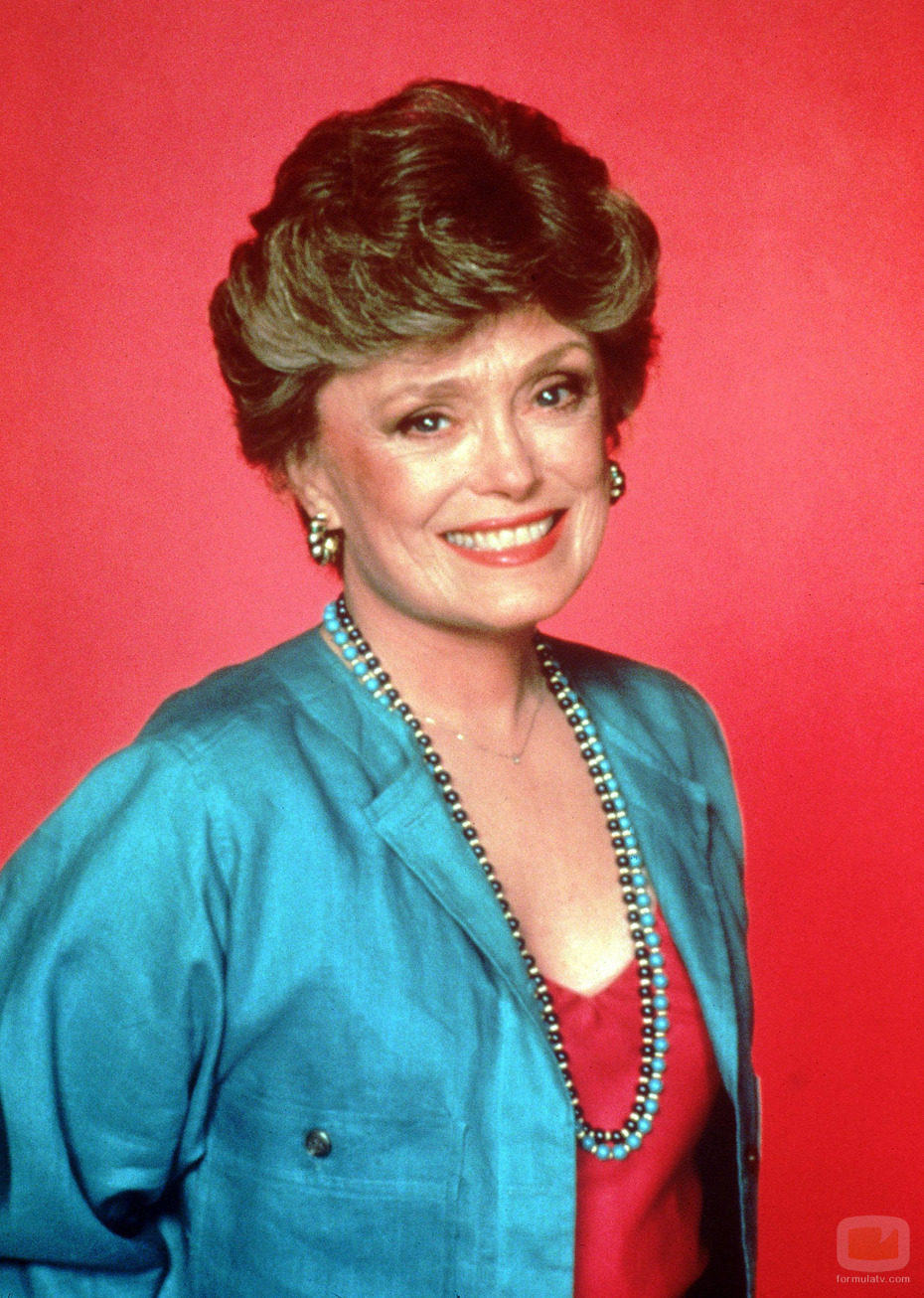
She was born Eddi-Rue McClanahan in Healdton, Oklahoma, the daughter of Dreda Rheua-Nell (née Medaris), a beautician, and William Edwin McClanahan, a building contractor. She began acting on Off-Broadway in New York City in 1957, but did not make her Broadway debut until 1969 when she portrayed Sally Weber in the original production of John Sebastian and Murray Schisgal's musical, Jimmy Shine, with Dustin Hoffman in the title role.
Her role as Caroline Johnson on Another World (from July 1970 - September 1971) brought her notoriety. On the show, while taking care of twins Michael and Marianne Randolph, Caroline fell in love with their father, John, and began poisoning their mother, Pat. The short-term role was extended to more than a year before Caroline was finally brought to justice after kidnapping the twins. Once her role on Another World ended, Rue joined the cast of the CBS soap Where the Heart Is, in which she played Margaret Jardin.
In Maude, broadcast from 1972 to 1978, McClanahan played Maude's (Bea Arthur) best friend, Vivian Harmon (Later Findlay). Vivian had been Maude's best friend since they both attended college together. Vivian began datingDr. Arthur Harmon (played by Conrad Bain) at the beginning of the second season and were married during the middle of it.
From 1983 to 1984 she played Fran Crowley,Thelma Harper's younger, uptight spinster sister on the sitcom Mama's Family. Fran worked as a newspaper reporter and free-lance writer. She later died by choking on a toothpick at The Bigger Jigger.
She also appeared as a leader of Al-Anon in a 1970's informational video called "Slight Drinking Problem," in which Patty Duke played the enabling and eventually self-empowered wife of an alcoholic. An animal welfare advocate and vegetarian, McClanahan was one of the first celebrity supporters of People for the Ethical Treatment of Animals (PETA).
Her autobiography, My First Five Husbands, was released nationwide in 2007. In June 2008, The Golden Girls was awarded the 'Pop Culture' award at the Sixth Annual TV Land Awards. Rue accepted the award with co-stars Bea Arthur and Betty White. McClanahan's last acting role was in the cable series Sordid Lives on the Logo network, which premiered July 23, 2008, playing Peggy Ingram, the older sister of Sissy Hickey and mother of Latrelle, LaVonda and Earl "Brother Boy".
She was diagnosed with breast cancer in June 1997, from which she completely recovered. On November 14, 2009, she was to be honored for her lifetime achievements at an event "Golden: A Gala Tribute To Rue McClanahan" at the Castro Theatre in San Francisco, California.[5] The event was postponed due to McClanahan's hospitalization. She had triple bypass surgery on November 4. It was announced on January 14, 2010 by Entertainment Tonight that while recovering from surgery she had suffered a minor stroke. In March 2010, Betty White reported on The Ellen DeGeneres Show that McClanahan was doing well, and that her speech had returned to normal.
To Quotes Rue McClanahan, "Cruelty is one fashion statement we can all do without".
Listen to me on TV CONFIDENTIAL with Ed Robertson and Frankie Montiforte Broadcast LIVE every other Monday at 9pm ET, 6pm PT (immediately following STU'S SHOW) on Shokus Internet Radio. The program will then be repeated Tuesday thru Sunday at the same time (9pm ET, 6pm PT)on Shokus Radio for the next two weeks, and then will be posted on line at our archives page at TVConfidential.net. We are also on Share-a-Vision Radio (KSAV.org) Friday at 7pm PT and ET, either before or after the DUSTY RECORDS show, depending on where you live.
As always, the further we go back in Hollywood history, the more that fact and legend become intertwined. It's hard to say where the truth really lies.
May 31, 1930 Clint Eastwood is born in San Francisco, California. With his father, Eastwood wandered the West Coast as a boy during the Depression. Then, after four years in the Army Special Services, Eastwood went to Hollywood, where he got his start in a string of B-movies.
For eight years, Eastwood played Rowdy Yates in the popular TV Western series Rawhide, before emerging as a leading man in a string of low-budget “spaghetti” Westerns directed by Sergio Leone: Fistful of Dollars (1964), For a Few Dollars More (1965) and The Good, the Bad and the Ugly (1966). All three were successful, but Eastwood made his real breakthrough with 1971’s smash hit Dirty Harry, directed by Don Siegel. Though he was not the first choice to play the film’s title role--Frank Sinatra, Steve McQueen and Paul Newman all reportedly declined the part--Eastwood made it his own, turning the blunt, cynical Dirty Harry into an iconic figure in American film. Also in 1971, Eastwood moved behind the camera, making his directorial debut with the thriller Play Misty for Me, the first offering from his production company, Malpaso. Over the next two decades, he turned in solid performances in films such as The Outlaw Josey Wales (1976), Every Which Way But Loose (1978), Escape From Alcatraz (1979) and Honkytonk Man (1982), but seemed to be losing his star power for lack of a truly great film. By the end of the 1980s, after four Dirty Harry sequels, released from 1973 to 1988, Eastwood was poised to escape the character’s shadow and emerge as one of Hollywood’s most successful actor-turned-directors. In 1992, he hit the jackpot when he starred in, directed and produced the darkly unconventional Western Unforgiven. The film won four Oscars, including Best Supporting Actor (Gene Hackman), Best Film Editing, Best Director and Best Picture, both for Eastwood. He also found box-office success as a late-in-life action and romantic hero, in In the Line of Fire (1993) and The Bridges of Madison County (1995), respectively. As a director, Eastwood worked steadily over the next decade, making such films as Midnight in the Garden of Good and Evil (1997), Absolute Power (1997) and, most notably, the crime drama Mystic River (2003), for which he was again nominated for the Best Director Oscar. The following year, he hit a grand slam with Million Dollar Baby, in which he also starred as the curmudgeonly coach of a determined young female boxer (Hilary Swank, in her second Oscar-winning performance). In addition to Swank’s Academy Award for Best Actress, the film won Oscars for Best Supporting Actor (Morgan Freeman) and Eastwood’s second set of statuettes for Best Director and Best Picture. In 2006, Eastwood became only the 31st filmmaker in 70 years to receive a Lifetime Achievement Award from the Directors Guild of America (DGA). That year, he directed a pair of World War II-themed movies, Flags of Our Fathers (2006) and Letters from Iwo Jima (2006). The latter film, which featured an almost exclusively Japanese cast, earned an Oscar nomination for Best Picture and a fourth Best Director nomination for Eastwood (his 10th nomination overall). Off-screen, Eastwood has pursued an interest in politics, serving as mayor of Carmel, California, from 1986 to 1988. He was married to Maggie Johnson in 1953, and the couple had two children, Kyle and Alison (who co-starred in Midnight in the Garden of Good and Evil), before separating in 1978 and divorcing in 1984. Eastwood also had long-term relationships with the actresses Sondra Locke and Frances Fisher (with whom he had a daughter, Francesca). He married his second wife, Dina Ruiz Eastwood, in 1996. Their daughter, Morgan, was born that same year. JUNE
Jun 1, 1980 CNN (Cable News Network), the world's first 24-hour television news network, makes its debut.
The network signed on at 6 p.m. EST from its headquarters in Atlanta, Georgia, with a lead story about the attempted assassination of civil rights leader Vernon Jordan. CNN went on to change the notion that news could only be reported at fixed times throughout the day. At the time of CNN's launch, TV news was dominated by three major networks--ABC, CBS and NBC--and their nightly 30-minute broadcasts. Initially available in less than two million U.S. homes, today CNN is seen in more than 89 million American households and over 160 million homes internationally. CNN was the brainchild of Robert "Ted" Turner, a colorful, outspoken businessman dubbed the "Mouth of the South." Turner was born on November 19, 1938, in Cincinnati, Ohio, and as a child moved with his family to Georgia, where his father ran a successful billboard advertising company. After his father committed suicide in 1963, Turner took over the business and expanded it. In 1970, he bought a failing Atlanta TV station that broadcast old movies and network reruns and within a few years Turner had transformed it into a "superstation," a concept he pioneered, in which the station was beamed by satellite into homes across the country. Turner later bought the Atlanta Braves baseball team and the Atlanta Hawks basketball team and aired their games on his network, TBS (Turner Broadcasting System). In 1977, Turner gained international fame when he sailed his yacht to victory in the prestigious America's Cup race. In its first years of operation, CNN lost money and was ridiculed as the Chicken Noodle Network. However, Turner continued to invest in building up the network's news bureaus around the world and in 1983, he bought Satellite News Channel, owned in part by ABC, and thereby eliminated CNN's main competitor. CNN eventually came to be known for covering live events around the world as they happened, often beating the major networks to the punch. The network gained significant traction with its live coverage of the Persian Gulf War in 1991 and the network's audience grew along with the increasing popularity of cable television during the 1990s. In 1996, CNN merged with Time Warner, which merged with America Online four years later. Today, Ted Turner is an environmentalist and peace activist whose philanthropic efforts include a 1997 gift of $1 billion to the United Nations.
The show’s creator, Darren Star, was best known at the time for producing the long-running Fox TV series Beverly Hills, 90210, and its spin-off, Melrose Place. For Sex and the City, Star switched coasts, loosely adapting a book by the same name by Candace Bushnell, compiled from a number of her columns for The New York Observer. In the pilot, Carrie Bradshaw (Sarah Jessica Parker), who authors a similar newspaper column for the fictional New York City Star, and her three friends--Samantha (Kim Cattrall), Charlotte (Kristin Davis) and Miranda (Cynthia Nixon)--discuss the issue of whether women are capable of having sex like men. Carrie also has an embarrassing first run-in with Mr. Big (Chris Noth), with whom she will begin a tumultuous relationship that will last the length of the series. Sex and the City didn’t really break out with fans until the second season, when the format of the show changed a bit: Carrie stopped addressing the camera directly, and simply provided a voice-over narration, and the man-on-the-street-type testimonials by different characters were largely omitted. The main premise--that each episode provides fodder for one of Carrie’s columns, each of which features a different question about sex, love and relationships--remained constant throughout the show, as did the unusually frank discussion and portrayal of sex that became the show’s hallmark. At the Emmy Awards, Sex and the City was nominated in the category of Outstanding Comedy Series in each of its six seasons; it won the award in 2001. In 2004, Parker collected an Emmy for Outstanding Lead Actress in a Comedy Series, while Cynthia Nixon triumphed in the supporting category. To win, Nixon beat out co-stars Davis and Cattrall, who had been nominated in five out of the six seasons of the show’s run. Cattrall and Parker both took home Golden Globe Awards for their performances as well, and the show received three Globes for Best TV Series - Musical or Comedy. As soon as the series wrapped up in 2004, buzz began about a possible big-screen adaptation. Though the project stalled due to questions over money and Cattrall’s reported reluctance to sign on to the project, the plans finally came to fruition in late May 2008, when Sex and the City: The Movie was released to mixed reviews but great box-office success, including a $55.7 million opening weekend haul. As with the series, Parker served as an executive producer for the movie, which was written and directed by Michael Patrick King.
To quote the Bicentennial Minute, "And that's the way it was".
Television critic and NPR commentator David Bianculli is scheduled to join us on the next edition of TV CONFIDENTIAL, which premieres Monday, May 31 at 9pm ET, 6pm PT on Shokus Internet Radio, with rebroadcasts Friday, June 4 at 7pm ET and PT on Share-a-Vision Radio, KSAV.org, as well as throughout the week on ShokusRadio.com. Nationally known for his reviews and commentaries on the popular radio program Fresh Air, David Bianculli is the author of Dangerously Funny, a comprehensive look at the careers of Tom and Dick Smothers and the legacy of their groundbreaking television variety series, The Smothers Brothers Comedy Hour (CBS, 1967-1969). Combining cutting-edge comedy with groundbreaking music and scathing social commentary, The Smothers Brothers Comedy Hour was the Saturday Night Live of its time, pushing boundaries and needling authority long before The Colbert Report, The Daily Show and Real Time with Bill Maher. An instant hit, The Smothers Brothers Comedy Hour was one of the most influential and top-rated shows on prime time American television, until it was unceremoniously pulled in April 1969 for being too controversial. The complete story of the show's rise and fall will be told in detail when David Bianculli joins in our second hour.
Also scheduled to join us that night will be animator Gene Hamm, a friend and colleague of Art Clokey, the creator of the popular children's series Gumby and Davey and Goliath. Art Clokey passed away in January 2010; Gene Hamm will help us pay tribute to Mr. Clokey's career when he joins us in our first hour. If you want to be part of our conversation, if you're a fan of The Smothers Brothers or grew up watching Gumby and Davey and Goliath, we invite you to join us for our live broadcast on Monday, May 31 beginning at 9pm ET, 6pm PT on ShokusRadio.com. Phone number is (888) SHOKUS-5, (888) 746-5875. You can also email questions in advance to talk@tvconfidential.net. TV CONFIDENTIAL with Ed Robertson and Frankie Montiforte Every night at 9pm ET, 6pm PT Shokus Internet Radio Fridays 7pm ET and PT Share-a-Vision Radio, KSAV.orgwww.tvconfidential.netblog.tvconfidential.netAlso available as a podcast via iTunes and FeedBurner
RadarOnline.com reported, Coleman had slipped into a coma and was on life support after suffering an intracranial hemorrhage. He was pulled of life support this morning and later passed away. His wife Shannon Price and her father were at the hospital Friday.
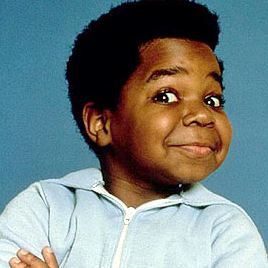
Gary Wayne Coleman was born in Zion, Illinois on February 8, 1968. He was adopted by Edmonia Sue, a nurse practitioner, and W.G. Coleman, a fork-lift operator. He suffered from a congenitalkidney disease caused by focal segmental glomerulosclerosis (an autoimmune destruction and alteration of the kidney), which halted his growth at an early age, leading to a small stature (4 ft 8 in; 1.42 m). He underwent two kidney transplants, one in 1973 and one in 1984, and required daily dialysis.
Coleman was cast in the role of Arnold Jackson on Diff'rent Strokes, portraying a child adopted by a wealthy widower. The show was broadcast from 1978 to 1986, and was a huge success. Coleman became the most popular fixture of the show, enhanced by his character's catchphrase"What'choo talkin' 'bout, Willis?" At the height of his fame on Diff'rent Strokes, he earned as much as $100,000 per episode. It is estimated he was left with a quarter of the original amount after paying his parents, advisers, lawyers, and taxes. He later successfully sued his parents and his ex-advisers for misappropriation of his finances and was awarded $1.3 million. Coleman became a popular figure, starring in a number of feature films and made-for-TV movies including On the Right Track and The Kid with the Broken Halo. The latter eventually served as the basis for the Hanna-Barbera-produced animated series The Gary Coleman Show.
Coleman is parodied in the hit 2003 BroadwaymusicalAvenue Q, which won the 2004 Tony Award for best musical. A character presented as Coleman works as the superintendent of the apartment complex where the musical takes place. In the song, "It Sucks to be Me", he laments his fate. On Broadway, the role was originally played by Natalie Venetia Belcon. In 2005, Coleman announced his intention to sue the producers of Avenue Q for their depiction of him, although as of 2010 the lawsuit had not materialized. At the 2007 New York Comic Con, Coleman said, "I wish there was a lawyer on Earth that would sue them for me."
Coleman secretly wed his girlfriend of five months, Shannon Price, 22, on August 28, 2007. They met on the set of the 2006 comedy film Church Ball. On May 1 and 2, 2008, Coleman and his wife appeared on the show Divorce Court to air their differences in front of Judge Lynn Toler. Unlike regular Divorce Court participants, they appeared on the show with the intent to save their marriage rather than adjudicate a separation. Death. On July 3, 2009, Coleman and his wife were involved in a domestic dispute in which Coleman's wife was arrested on suspicion of domestic violence, and both parties were cited for disorderly conduct.
Coleman suffered a seizure on the set of The Insider on February 26, 2010. Dr. Drew Pinsky, who was with Coleman at the time, assisted him until paramedics arrived.
On May 26, 2010, Coleman was admitted to Utah Valley Regional Medical Center in Provo, Utah, after falling and hitting his head and suffering an intracranial hemorrhage at his home outside of Salt Lake City, UT. He was announced to be in critical condition. By mid-morning on May 27, 2010, Coleman was conscious and lucid. By mid-afternoon on May 27, 2010, Coleman was unconscious and on life support.
Earlier today, it was announced that he was still unconscious and on life support. Coleman died later in the day after being taken off life support .
Here is another "Mental Sorbet" that we could use to momentarily forget about those things that leave a bad taste in our mouths.
During a 1995 appearance on The Late Show with David Letterman, Barrymore shocked the normally unflappable host by climbing onto his desk and flashing him (but with her back to the camera) for his birthday.
Art Linkletter was born Gordon Arthur Kelly in Moose Jaw, Saskatchewan, Canada. In his autobiography, Confessions of a Happy Man (1960), he revealed that he had had no contact with his natural parents or his sister or two brothers since he was abandoned when only a few weeks old. He was adopted by Mary (née Metzler) and Fulton John Linkletter, an evangelical preacher.
Linkletter hosted of two long-running TV shows. House Party, which ran on CBS radio and television for 25 years, and People Are Funny, on NBC radio-TV for 19 years. Linkletter was famous for interviewing children on House Party and Kids Say the Darndest Things, which led to a successful series of books quoting children. He is the only person to have five network television shows running in prime time simultaneously.
In 1963, Linkletter became the endorser and spokesman for Milton Bradley's Game of Life. His picture appeared on the box with the statement "I Heartily Endorse This Game", and also on the $100,000 bills featured in the game.
In 2005, at the age of 93, he opened the Happiest Homecoming on Earth celebrations for the fiftieth anniversary of Disneyland. Half a century earlier, he commentated on the opening day celebrations in 1955. For this, he was named a Disney Legend in 2005.
Linkletter had one of the longest marriages of any celebrity in America (it lasted for 74.5 years, until his death). He married Lois Foerster on November 25, 1935, and they had five children: Arthur Jack (known as Jack Linkletter, a TV host), Dawn, Robert, Sharon, and Diane.
Linkletter outlived three of his five children. His 20-year-old daughter, Diane Linkletter, died on October 4, 1969, by jumping out of her sixth-floor kitchen window. Linkletter claimed that she committed suicide because she was on, or having a flashback from, an LSDtrip, but toxicology tests done after the incident detected no signs of LSD use, and it is quite likely that the drug played no part in her suicide. Linkletter spoke out against drugs to prevent children from straying into a drug habit. His record, We Love You, Call Collect, recorded before her death, featured a discussion about permissiveness in modern society. It featured a rebuttal by Diane, called Dear Mom and Dad. The record won a 1970 Grammy Award for the "Best Spoken Word Recording". His son Robert died in an automobile accident on September 12, 1980.
His son (Arthur) Jack Linkletter, (November 20, 1937(1937-11-20)–December 18, 2007 (aged 70), died from lymphoma.
To Quote Art Linkletter, "Things turn out best for the people who make the best out of the way things turn out".
Listen to me on TV CONFIDENTIAL with Ed Robertson and Frankie Montiforte Broadcast LIVE every other Monday at 9pm ET, 6pm PT (immediately following STU'S SHOW) on Shokus Internet Radio. The program will then be repeated Tuesday thru Sunday at the same time (9pm ET, 6pm PT)on Shokus Radio for the next two weeks, and then will be posted on line at our archives page at TVConfidential.net. We are also on Share-a-Vision Radio (KSAV.org) Friday at 7pm PT and ET, either before or after the DUSTY RECORDS show, depending on where you live.
As always, the further we go back in Hollywood history, the more that fact and legend become intertwined. It's hard to say where the truth really lies.
May 25, 1992 Jay Leno's first Tonight Show.
When Carson announced his retirement in 1992, Jay Leno succeeded him as host (Jay Leno, who became "permanent guest host" in 1987.), much to the outrage of David Letterman, host of Late Night, which ran after Tonight. The following year, Letterman accepted CBS's $42 million offer for his own show and launched the Late Show in 1993, running against Leno's time slot. Letterman beat Leno every week for the show's first year. On September 22, 2006, Variety reported that The Tonight Show led in ratings for the 11th consecutive season, with a nightly average of 5.7 million viewers – 31% of the total audience in that time slot – compared to 4.2 million viewers for the Late Show with David Letterman, 3.4 million for Nightline and 1.6 million for Jimmy Kimmel Live. When the Leno show initially directly faced Letterman's show, Letterman initially led in ratings, however the turning episode is generally marked when Hugh Grant appeared on Leno (July 10, 1995). Leno famously asked Grant "What the hell were you thinking?" referring to Grant's arrest for seeing a prostitute. NBC announced in 2004 that Leno would leave The Tonight Show at the end of May 2009, handing the reins to Conan O'Brien. However, following rumors of Leno being interested in moving elsewhere to launch a competing program, NBC signed Leno to a new deal for a nightly talk show in the 10:00 p.m. ET timeslot. The primetime series, tentatively titled The Jay Leno Show, will debut in fall 2009, following a similar format to the Leno incarnation of Tonight. In their new roles, neither O'Brien nor Leno succeeded in delivering the viewing audiences the network anticipated. On January 7, 2010, multiple media outlets reported that beginning March 1, 2010, Jay Leno would move from his 10pm weeknight time slot to 11:35pm, due to a combination of pressure from local affiliates whose newscasts were suffering, and both Leno's and O'Brien's poor ratings. Leno's show would be shortened from an hour to 30 minutes. All NBC late night programming would be preempted by the 2010 Winter Olympics between February 15 and February 26. This would move The Tonight Show to 12:05am, a post-midnight timeslot for the first time in its history. O'Brien's contract stipulated that NBC could move the show back to 12:05 a.m. without penalty (a clause put in primarily to accommodate sports preemptions).
On January 10, NBC confirmed that they would move Jay Leno out of primetime as of February 12 and intended to move him to late night as soon as possible. TMZ reported that O'Brien was given no advance notice of this change, and that NBC offered him two choices: an hour-long 12:05am time slot, or the option to leave the network. On January 12, O'Brien issued a press release that stated he would not continue with Tonight if it moved to a 12:05am time slot, saying, "I believe that delaying The Tonight Show into the next day to accommodate another comedy program will seriously damage what I consider to be the greatest franchise in the history of broadcasting. The Tonight Show at 12:05 simply isn’t the Tonight Show." On January 21, it was announced that NBC had struck a deal with O'Brien. It was decided that O'Brien would leave The Tonight Show. The deal was made that O'Brien would receive a $33 million payout and that his staff of almost 200 would receive $12 million in the departure. O'Brien's final episode aired on Friday, January 22. Leno returned as host of The Tonight Show following the 2010 Winter Olympics on March 1, 2010.
May 28, 1998 Comic Phil Hartman killed by wife Brynn, in a murder-suicide.
He was 49. Born on September 24, 1948, in Ontario, Canada, Hartman was raised in Connecticut and Southern California, and later became an American citizen. Early on, he found work designing record album covers (he created the official logo for the rock band Crosby, Stills, Nash & Young) but made the leap to acting in 1975 when he joined the L.A. improvisational acting group, the Groundlings. With his fellow Groundlings alum, Paul Reubens, Hartman wrote the screenplay for the successful comedy Pee-Wee’s Big Adventure (1985). Along with Reubens, Hartman had helped create the zany man-child character of Pee Wee Herman, though Reubens received most of the credit. From 1986 to 1990, Hartman portrayed Kap’n Karl on the Saturday morning children’s TV series Pee-Wee’s Playhouse. Also in 1986, Hartman earned a spot on the long-running NBC sketch comedy show Saturday Night Live. In his eight years on the show, Hartman became known for his spot-on impersonations of a variety of celebrities, notably President Bill Clinton. He also made frequent guest appearances on The Tonight Show with Jay Leno. In 1989, Hartman shared an Emmy Award for his writing contributions to Saturday Night Live. He went on to set a record for the most appearances (153) as one of the show’s regulars. Hartman joined the cast of the TV sitcom NewsRadio in 1995. He played the egotistical anchorman of an AM radio news station in New York City through four seasons of the show’s five-year run. The ensemble cast also included Dave Foley, Maura Tierney and Andy Dick. Hartman also notably provided the voices for a number of characters, including the has-been actor Troy McClure and the incompetent lawyer Lionel Hurtz, on the acclaimed animated series The Simpsons. In addition to his TV work as an actor and pitchman (for MCI, McDonald’s and Cheetos, among others), Hartman appeared on the big screen in Blind Date (1987), Jingle All the Way (1996) and Small Soldiers, released after his death. Off-screen, Hartman was popular among his Hollywood colleagues and known for being completely different from some of the more unlikable characters he had portrayed. The murder-suicide, which shocked fans and friends alike, occurred early on the morning of May 28, 1998, at the couple’s home in the Los Angeles suburb of Encino. According to news reports, Brynn, Hartman’s third wife (two previous marriages ended in divorce) had a history of drug and alcohol problems. The couple had two children.
May 29, 2003 Bob Hope celebrates 100th birthday
Some 35 U.S. states declare it to be Bob Hope Day on this day in 2003, when the iconic comedic actor and entertainer turns 100 years old. In a public ceremony held in Hollywood, city officials renamed the intersection of Hollywood Boulevard and Vine Avenue--famous for its historic buildings and as a central point on the Hollywood Walk of Fame--Bob Hope Square. Several 1940s-era U.S. planes flew overhead as part of an air show honoring Hope’s longtime role as an entertainer of U.S. armed forces all over the world. Hope, who was then suffering from failing eyesight and hearing and had not been seen in public for three years, was too ill to attend the public ceremonies. Three of his children attended the naming ceremony, along with some of his younger show-business colleagues, including Mickey Rooney. One of the leading talents on the vaudeville scene by the 1930s, the London-born, American-raised Hope met his future wife (of nearly seven decades), the nightclub singer Dolores Reade, while he was performing on Broadway in the musical Roberta. They married in 1934, and four years later Hope launched his own radio program, The Bob Hope Show, which would run for the next 18 years. One of the country’s most popular comics, Hope had a successful film career largely thanks to the series of seven “Road” movies he made with Bing Crosby and Dorothy Lamour, including Road to Singapore (1940), Road to Morocco (1942), Road to Utopia (1946) and Road to Rio (1947). In 1941, after America’s entrance into World War II, Hope began performing for U.S. troops abroad; he would play shows for more than a million American servicemen by 1953. Some 65 million people watched him perform for troops in Vietnam on Christmas Eve in 1966, in his largest broadcast. Hope also became a legend for his countless TV specials, which he would perform over the course of some five decades. He hosted the Academy Awards ceremony a total of 18 times, more than any other Oscars host. Dubbed “Mr. Entertainment” and the “King of Comedy,” Hope died on July 27, 2003, less than two months after his 100th birthday celebration. He was survived by Dolores, their four adopted children--Linda, Anthony, Nora and Kelly--and four grandchildren.
May 30, 1908 Mel Blanc, the voice of Bugs Bunny, Daffy Duck, and countless other Warner Bros. cartoon characters, was born in San Francisco.
His parents, who ran a women's clothing business, moved with their son to Portland, Oregon, when Blanc was a child. Blanc began performing as a musician and singer on local radio programs in Portland before he was 20. In the late 1920s, he and his wife, Estelle, created a daily radio show called "Cobwebs and Nuts," which became a hit. Blanc made many other radio appearances and became a regular on Jack Benny's hit radio show, providing the sounds of Benny's ancient car (The Maxwell) and playing several other characters. In 1937, Blanc made his debut with Warner Bros., providing the voice for a drunken bull in a short cartoon called Picador Porky. Another actor provided the pig's voice, but Blanc later replaced him. In 1940, Bugs Bunny debuted in a short called A Wild Hare. Blanc said he wanted the rabbit to sound tough and streetwise, so he created a comic combination of Bronx and Brooklyn accents. Other characters Blanc created for Warner Bros. included the Road Runner, Sylvester, and Tweety Bird. He performed in some 850 cartoons for Warner Bros. during his 50-year career. For other studios, he provided the voices of Barney Rubble and Dino the dinosaur in The Flintstones, Mr. Spacely for The Jetsons, and Woody Woodpecker's laugh. In his 1988 autobiography, That's Not All Folks, Blanc described a nearly fatal traffic accident that left him in a coma. Unable to rouse him by using his real name, a doctor finally said, "How are you, Bugs Bunny?" and Mel replied, in Bugs' voice, "Ehh, just fine, doc. How are you?" Blanc continued to provide voices until the late 1980s, most memorably voicing Daffy Duck dueling with Donald Duck in Who Framed Roger Rabbit? (1988). After Mel Blanc died of complications from heart disease, his son Noel, trained by his father, provided the voices for the characters the elder Blanc had helped bring to life.
To quote the Bicentennial Minute, "And that's the way it was".
May 17, 2010 First hour: Actor and author James Best (Best in Hollywood: The Good, The Bad and The Beautiful) joins Ed, Frankie and guest co-host Tony Figueroa for a conversation about The Dukes of Hazzard, his work with James Stewart, Burt Reynolds, and other motion picture legends, his experience teaching young actors camera technique in Hollywood and at the University of Mississippi, and his early days as a contract player at Universal Studios.
Second hour: Mark Dawidziak, television critic for The Cleveland Plain-Dealer, joins Ed and Frankie for a look at some of the top stories coming out of the annual network TV upfronts, including the cancellation of the original Law and Order after 20 years on television, the future of American Idol post-Simon Cowell, and NBC's widely publicized failed pilot of the remake of Rockford Files, as well as CBS' upcoming remake of Hawaii Five-O. Mark's latest book, The Bedside, Bathtub and Armchair Companion to Dracula, is an engaging look at the Dracula phenomenon, from the publication of the Bram Stoker novel in 1897 to the many film and television adaptations, including the classic 1931 film with Bela Lugosi, the 1974 television Dracula starring Jack Palance and produced by Dan Curtis, and the 1979 theatrical release starring Frank Langella. Also in this hour: David Krell remembers the legacy of Saturday Night Live on late night and prime time television, while Ed and Frankie pay tribute to actress Adele Mara.

 To quote the Bicentennial Minute, "And that's the way it was".