Tuesday, December 05, 2017

Your HOLIDAY SOR-BAY: Abbott & Costello


Here is a "HOLIDAY SOR-BAY"

little spark of madness

that we could use to artificially maintain our Christmas spirit.


December 5, 1952
The Abbott and Costello Show debuts. They made only 52 episodes, but the show appeared in reruns for decades.
Bud Abbott and Lou Costello teamed up in the early 1930s to form a vaudeville comedy act. The team soon became one of vaudeville's biggest successes. In 1940, they launched their own radio program, which ran until 1949.
They made their first film in 1940, One Night in the Tropics, followed by the hit Buck Privates (1941). The pair made more than 30 films together, including a series of horror-movie spoofs, including Abbott and Costello Meet Frankenstein, Abbott and Costello Meet Dr. Jekyll and Mr. Hyde (1953), and Abbott and Costello Meet the Mummy (1955).


Stay Tuned


Tony Figueroa

Monday, December 04, 2017

Your HOLIDAY SOR-BAY: Beverly Hillbillies - Home for Christmas


Here is a "HOLIDAY SOR-BAY"

little spark of madness

that we could use to artificially maintain our Christmas spirit.


December 4, 1937
Max Baer Jr. is born. Baer was born Maximilian Adalbert Baer Jr. in Oakland, California, the son of boxing champion Max Baer and his wife Mary Ellen Sullivan. His father was of GermanJewish and Scots-Irish descent. His brother and sister are James Manny Baer (1941–2009) and Maude Baer (b. 1943). His uncle was boxer and actor Buddy Baer.Actor, screenwriter, producer, and director. He is best known for playing Jethro Bodine on The Beverly Hillbillies.


Stay Tuned


Tony Figueroa

Sunday, December 03, 2017

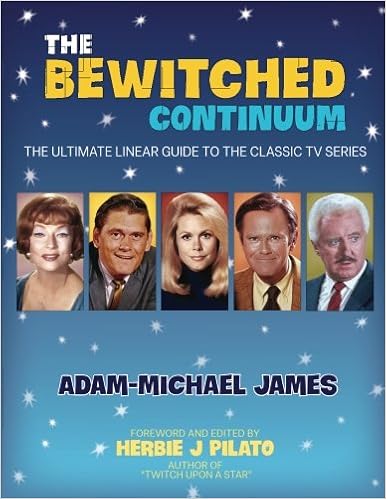
My Interview with Adam-Michael James author of "I, Samantha, Take This Mortal, Darrin"

I, Samantha, Take This Mortal, Darrin
Two years ago I got to meet with Adam-Michael James author of The Bewitched Continuum: The Ultimate Linear Guide to the Classic TV Series and and talk about his book and the classic sitcom Bewitched. Read the interview. Now Adam-Michael James has a new Fan Fiction Novel 
I, Samantha, Take This Mortal, Darrin where he gives the show the finale it deserves.

Tony: Why Fan Fiction? You wrote a novel, why not focus on original stories? 

AMJ: Well, in a way, “I, Samantha...” is an original story. [laughs] At least, it is in that the arc is my own creation, as are the combinations of characters that interact. I do have other original stories to tell, and I will, but this one decided it wanted to be told first. 


Tony: Fan Fiction has gone from fan pages to Fan Fiction sites to mainstream on sites like Kindle Worlds. How does one go about taking your story to getting published? 


AMJ: You’re not far off the mark in mentioning Kindle. Both of my “Bewitched” books are indeed self-published. With “The Bewitched Continuum” I tried for a traditional publisher, but got turned down. So I went through CreateSpace and have been very pleased with them. While self-published books don’t quite get looked down on the way they did 10 years ago, it’s still very easy to produce something that screams “I’m self published!” Which is why I always go out of my way by personally choosing fonts, proofreading the hell out of things, and making sure the cover comes off professional. For this book I was lucky to get Dan Parent, a writer and illustrator for the “Archie” comics, to do up a rendition of the Stephenses for me. He did a bang-up job! 


Tony: This story was told in your book 

The Bewitched Continuum. Why tell it again? 


AMJ: True, it’s in “The Bewitched Continuum”, but only in four paragraphs. And admittedly, that was all it was intended to be. But you know that the world – or at least our part of it – has been changing, and not for the better. You also know that Elizabeth Montgomery and Bill Asher filled “Bewitched” with messages of equality and acceptance, which need to be heard now just as much as they did during the civil rights movement, when the show first aired. In fact, I think we need to hear them more. Since I had layered these same messages into my original series finale synopsis, it seemed only right to fesh it out and speak out for the rights of everyone to be who they are the way Samantha would have. 


Tony: At this point you are in the Bewitched business? 


AMJ: [laughs] I’ve been in the “Bewitched” business ever since The Bewitched Continuum” came out, as the promotion has never stopped. You could say I have 40 years on-the job training, though, since I saw my first episode in 1977. 


Tony: This is not just a story this is a finale. Why didn't Bewitched do a final episode? 


AMJ: We’re really used to the idea of a series finale now, but it was a rare thing when “Bewitched” was in first-run. “The Dick Van Dyke Show” had a wrap-up, as did “The Fugitive” - however, it wasn’t until “M*A*S*H” went off the air in 1983 that the series finale became a cultural phenomenon. With “Bewitched”, I’ve heard two stories: one that they knew they were done, and one in which a ninth season had been planned. So the odds are that the cast and crew didn’t know the show was ending, and wouldn’t have filmed a finale if they did. 


Tony: Your story features three characters that were introduced in the episode Sisters at Heart. These characters were never seen again. Why did you want them in your story? 


AMJ: “Sisters At Heart” was such an important episode, and said to be Elizabeth’s favorite. The way it tackled racism, the way it took a stand for equality – it was the most direct way the show had addressed these issues up until that point. Then, you have Tabitha’s friend Lisa finding out she’s a witch, and I’ve long thought it was a shame “Bewitched” didn’t bring back Lisa, or any other mortal character with knowledge about the witchcraft, since they were aware of the truth. That’s why the whole Wilson family returns, as well as many other characters, both mortal and witch, that either only made limited appearances or who were major players that hadn’t been around for a while. Uncle Arthur and the Kravitzes, for example, were missing from the entire eighth season. But they’re in my book. My only rule was, no new characters! Everyone who shows up has a history with the show – and I’ve got endnotes galore, so people can reference which episode these folks come from. 


Tony: How did you want to wrap up the series? 


As I mentioned before, I felt it was important to take the show’s overall messages of equality and acceptance and amplify them. But also, in any series finale, you want to see a show come full circle in some way. The title “I, Samantha, Take This Mortal, Darrin” is a fip on the pilot, which was “I, Darrin, Take This Witch, Samantha.” You always saw Darrin stuck in his position at McMann and Tate, and every once in a while you saw that dangling carrot of the agency becoming McMann, Tate, and Stephens. It never happened on the show, so that’s where my story starts. Samantha throws a party and you see characters interacting that never shared scenes on the show. And there are tons of nods to past episodes and events, which is another reason for including endnotes – aside from making sure people knew what was my idea and what was the show’s. So this big party with mainstream and obscure funk songs goes swimmingly until something magical happens in front of everybody; instead of trying to bluff a dozen people, Samantha just decides to tell the truth – also a parallel, considering the show began with her telling Darrin she’s a witch. Well, the Witches’ Council doesn’t take too kindly to that and Samantha has to defend herself against them, with the stakes higher than they’d ever been on the show, another facet I thought would be appropriate for a finale. Plus, being out of the confines of physical TV show, there were other parts of people’s stories, to say nothing of the witch world, that could be explored in novel form. 


Tony: How much longer do you think the show could have gone? 


AMJ: Wow, that’s the million dollar question, isn’t it? It’s hard to answer knowing that Elizabeth was getting tired of doing the show and that they were producing a higher number of remake episodes at this point than ever before. I still think there was enough originality that there could have been a Season 9, at least. 


Tony: As the author of The Bewitched Continuum, how hard was it to not throw everything you know about the show into the book? 


AMJ: It really wasn’t that hard. Once I had the overall story, picking and choosing what to highlight just sort of came naturally. I’m not gonna lie – I did craft “I, Samantha...” as sort of a tie-in to “The Bewitched Continuum”, since they’re linked anyway. For the most part, I knew what show details I wanted to use to drive my own story. But sometimes I either had to wrack my brain trying to remember a detail or I had to flip through “The Bewitched Continuum” trying to find something that would fit into what I was trying to say. In which case I had to reference my own reference book! [laughs]


Stay Tuned 


Tony Figueroa

Your HOLIDAY SOR-BAY: MST3K #521 - Santa Claus


Here is a "HOLIDAY SOR-BAY"

little spark of madness

that we could use to artificially maintain our Christmas spirit.


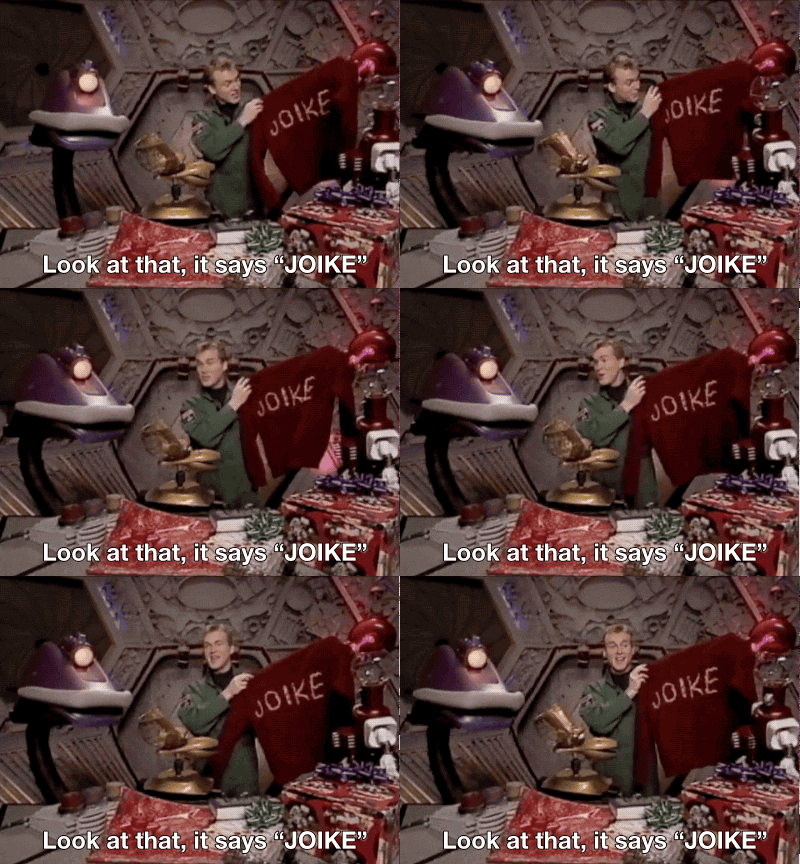
Mystery Science Theater 3000 - Santa Claus It's Christmas time on the SOL! After Mike and the 'bots exchange gifts, they get to watch a movie where Santa Claus has to outwit Satan in order to deliver gifts.


Stay Tuned


Tony Figueroa

Saturday, December 02, 2017

Your HOLIDAY SOR-BAY: WKRP in Cincinnati


Here is a "HOLIDAY SOR-BAY"

little spark of madness

that we could use to artificially maintain our Christmas spirit.


WKRP in CincinnatiSeason 2, Episode 11

Jennifer's Home for Christmas (17 Dec. 1979)


WKRP s02e11 Jennifer's Home For Christmas by carpalton


Stay Tuned


Tony Figueroa

Friday, December 01, 2017

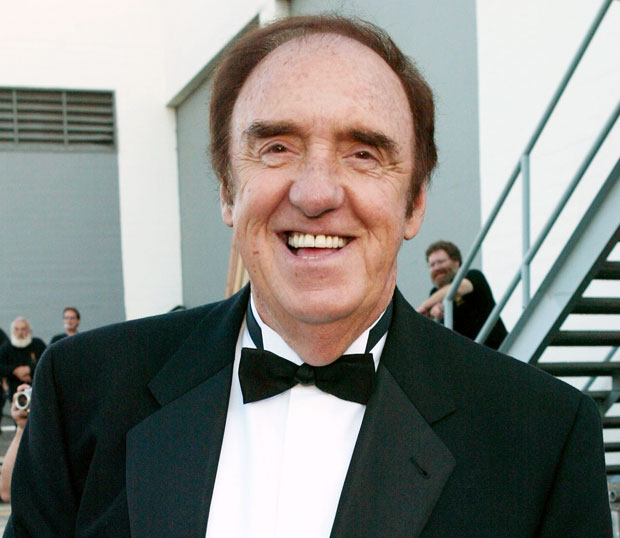
Jim Nabors

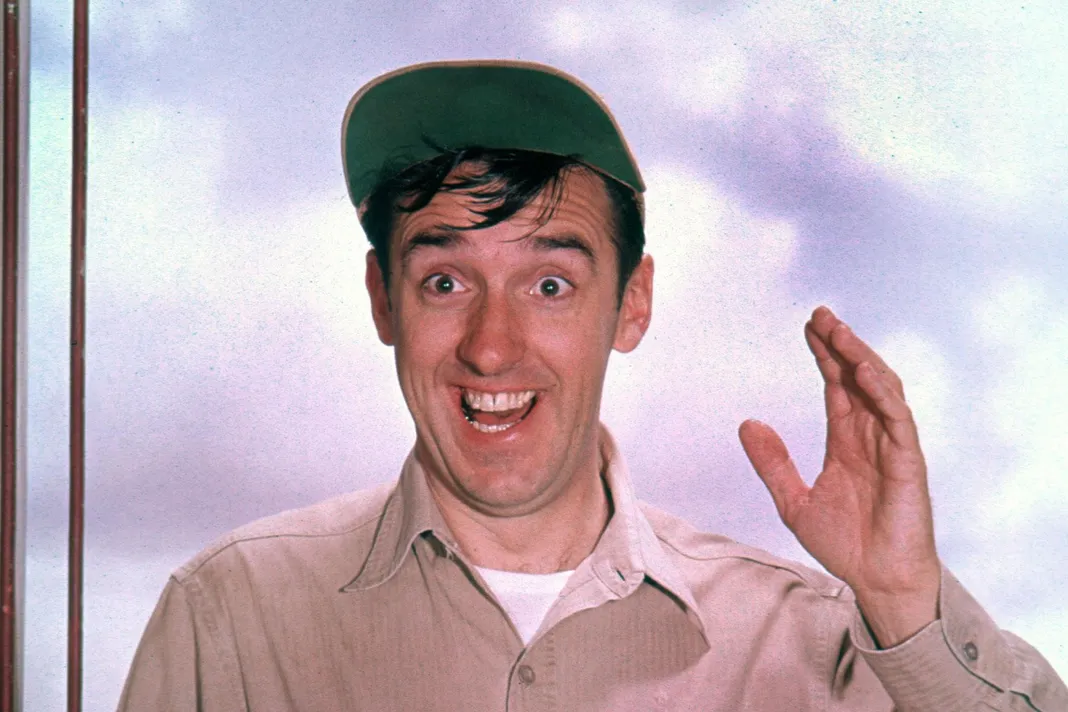
"I think this story sums up my career the best. One time I was walking in an airport somewhere and I saw this woman with her young son. The son looked up at me and it was obvious that he recognized me. He thought for a second and he said 'Mom, there goes an old Gomer!'"
Jim Nabors
James Thurston NaborsJune 12, 1930 – November 30, 2017
Jim Nabors died at his Honolulu, Hawaii, home on November 30, 2017, aged 87. At the time of his death, Nabors was suffering from health issues regarding his immune system as a result of contracting hepatitis B in India.
Nabors was born on June 12, 1930 to Mavis and Fred Nabors in Sylacauga, Alabama, where he sang for his high school and church, and he had two sisters. He attended the University of Alabama, where he began acting in skits. While at Alabama, he became a member of Delta Tau Delta International Fraternity. After graduating, he moved to New York City, where he worked as a typist for the United Nations; after a year, he moved to Chattanooga, Tennessee, where he got his first job in the television industry as a film cutter.


Because of his asthma, Nabors moved to Los Angeles and worked as a film cutter for NBC. He also worked at a Santa Monica tavern, The Horn, singing and acting in cabaret theater. His act featured him as a character similar to the Gomer Pyle character he later portrayed. He sang in a baritone and sometimes spoke and sang in his higher-pitched comedic voice. At the club, comedian Bill Dana saw Nabors' act and invited him to appear on The Steve Allen Show. Nabors signed on to the show, but it was soon canceled.

It was at The Horn where Nabors was discovered by Andy Griffith and was hired to play a one-shot role of Gomer Pyle, an "addlebrained" gas station attendant, on The Andy Griffith Show (Season 3, episode 13 - "The Bank Job"). Nabors's character (based on his act at The Horn) became so popular that he was made a regular on the show and was later given his own show, the spin-off Gomer Pyle, U.S.M.C., in which his character joined the United States Marine Corps. The show, which placed Nabors' bungling, naive character opposite Sergeant Vince Carter (Frank Sutton), was also popular.


Despite its run during the Vietnam WarGomer Pyle remained popular, because it avoided war-related themes and instead focused on the show's rural roots and the relationship between Pyle and Carter. Nabors resigned from Gomer Pyle, U.S.M.C. after five seasons—prompting producers Aaron Ruben and Sheldon Leonardto ask CBS to cancel it—because he desired to move to something else, "reach for another rung on the ladder, either up or down."


Nabors revealed his rich baritone voice first on the February 24, 1964, "The Song Festers" episode of The Andy Griffith Show and on April 8, 1964, on The Danny Kaye Show, and subsequently capitalized on it with numerous successful recordings and live performances. Most of the songs were romantic ballads, though he sang pop, gospel, and country songs as well.


The climactic vocal performance on Gomer Pyle, U.S.M.C. came in an episode titled "The Show Must Go On", aired November 3, 1967, in which Pyle sang "The Impossible Dream (The Quest)" in Washington, D.C., at a U.S. Navy relief show, accompanied by the Marine Corps Band. A clip from the show, in which Pyle says "Surprise, surprise, surprise!" appears in the Pink Floyd album The Wall in the song "Nobody Home". He hosted a variety show, The Jim Nabors Hour (1969–1971), which featured his Gomer Pyle co-stars Ronnie Schell and Frank Sutton. Despite a poor critical reception, the show was popular and earned an Emmy nomination. After the cancellation of The Jim Nabors Hour, Nabors embarked on a nationwide roadshow.

Typecast from his role as Gomer Pyle, Nabors found his subsequent roles mostly comedic. In the 1970s, he appeared in the children's television programs Krofft Supershow and Buford and the Galloping Ghost. He appeared in every season premiere of The Carol Burnett Show, because Burnett considered him a "good-luck charm".


In a 1973 episode of The Rookies, he played his first "serious" role, a man called on to be an assassin after the death of his sister. Also in 1973, Nabors sang "The Star-Spangled Banner" before Game One of the Major League Baseball World Series. From 1977 to 1978, Nabors hosted another variety show, The Jim Nabors Show. Though the show lasted only one season, Nabors was nominated for a Daytime Emmy for Outstanding Host or Hostess in a Talk, Service or Variety Series.

In the 1980s, Nabors appeared in three feature-length films starring his friend Burt Reynolds, at the latter's request. In The Best Little Whorehouse in Texas (1982), about a sheriff (Reynolds) who falls in love with a brothel madam (Dolly Parton), Nabors played Deputy Fred, a character similar to Gomer Pyle. Though the film was given mostly unfavorable reviews, Nabors garnered some positive comments for his performance.Nabors eventually grew tired of the "prime-time TV grind" and abandoned television jobs for nightclub and concert engagements and a role in a touring production of Man of La Mancha. However, Sid and Marty Krofft persuaded Nabors to star in the Saturday-morning children's television show The Lost Saucer, about two bumbling androids, Fi (Ruth Buzzi) and Fum (Nabors), who travel through time with two children. Nabors, whose character was described as a "Gomer Pyle in outer space", sang in a few of the episodes. Nabors also guest starred on episode 6 of season 1 of The Muppet Show.


In 1983, he was cast as an auto mechanic in Stroker Ace, starring Burt Reynolds as a race car driver who fights a fried-chicken chain entrepreneur. The film was panned, and Nabors earned a Golden Raspberry Award for his performance. In Reynolds' star-studded Cannonball Run II (1984), about a cross-country car chase, Nabors made a cameo appearance alongside such celebrities as Dom DeLuiseJackie ChanShirley MacLaineDean MartinFrank Sinatra, and Andy Griffith Show co-stars Don Knotts and George Lindsey. Like Reynolds' previous two films, Cannonball received mostly negative reviews.

In 1986, Nabors returned to television, reprising his role as Gomer Pyle in the television movie Return to Mayberry, in which the cast of The Andy Griffith Show reunited. so in 1986, Nabors starred in the half-hour comedy pilot Sylvan in Paradise as the title character, Sylvan Sprayberry, an accident-prone bell captain at a Hawaiian hotel. The series was not picked up by NBC.

In 1994, Nabors suffered from a near-fatal case of hepatitis B. According to Nabors, he contracted the disease while traveling in India; he shaved with a straight razor and "whacked [his] face all up." The disease caused liver failure, and Nabors was given a dim prognosis; however, his friend Carol Burnett made an arrangement with the transplant division of UCLA and secured Nabors a transplant. Nabors later became involved with the American Liver Foundation as a result of his experience.
After moving to Hawaii from Bel Air, California with his partner Stan Cadwallader in 1976, he launched a show, "The Jim Nabors Polynesian Extravaganza" at the Hilton Hawaiian Village, which ran for two years. Nabors eventually experienced "bright-light burnout" and disappeared from the stage, save for an occasional performance. In 1984, after a five-year hiatus, Nabors returned to performing, starring in the "Moulin Rouge" show at the Las Vegas Hilton and other shows in Reno and Las Vegas. He made his theatrical debut as Harold Hill in The Music Man with Florence Henderson at the Burt Reynolds Dinner Theatre.
Shortly after recovering from his transplant, Nabors embarked on another tour, with stops in Phoenix, St. Louis, and Washington. From 1997 to 2006, Nabors starred in the Burton White-produced A Merry Christmas with Friends and Nabors, a live performance at the Hawaii Theatre Center in Honolulu. The production, featuring local and national artists, ran for 40 performances and was directed by Tom Hansen until Hansen's death in 2006. The final performance run was directed by John Rampage and dedicated to Hansen.
Nabors began vacationing in Hawaii in the 1960s, and in 1976, moved from Bel Air, California, to Honolulu, Hawaii. For 25 years, he owned a macadamia plantation on Maui before selling it to the National Tropical Botanical Garden, a conservationist organization, though he still retained farming rights to the land and owned a second home on the property.

Nabors married his partner of 38 years, Stan Cadwallader, at Seattle, Washington's Fairmont Olympic Hotel on January 15, 2013, a month after same-sex marriage became legal in Washington. Although he had been closeted before this, his sexual orientation was not completely secret; for instance, Nabors brought his then-boyfriend Cadwallader along to his Indy 500 performance in 1978.

Good Night Mr. Nabors

Stay Tuned

Tony Figueroa

Your HOLIDAY SOR-BAY: The Richard Pryor Show - Santa Claus


Here is a "HOLIDAY SOR-BAY"

little spark of madness

that we could use to artificially maintain our Christmas spirit.


Today is Cyber Monday

Disgruntled Santa Claus concerning the celebration of Christmas.


Stay Tuned


Tony Figueroa