Monday, June 13, 2011

This Week in Television History: June 2011 PART II

Listen to me on me on TV CONFIDENTIAL:
Shokus Radio Mondays 9pm ET, 6pm PT with replays three times a day, seven days a week at 11am ET, 8am PT 9pm ET, 6pm PT and 1am ET, 10pm PT
Passionate World Radio Tuesdays 11:05pm ET, 8:05pm PT
KSAV – San Francisco Bay Area Fridays 7pm ET and PT KWDJ 1360 AM – Ridgecrest, CA Saturdays 11pm ET, 8pm PT Sundays 5pm ET, 2pm PM

As always, the further we go back in Hollywood history, the more that fact and legend become intertwined. It's hard to say where the truth really lies.


June 15, 1969


First Hee Haw episode.

TV country-western variety show Hee Haw debuts. Hee Haw started on
CBS as a summer 1969 replacement for The Smothers Brothers Comedy Hour. Although the program ran for only two years, it was a hit with audiences and was in the Top 20 when CBS dropped it, deciding the show's hick country focus wasn't appropriate for the network's image. Hosted by country singers Roy Clark and Buck Owens, the program featured top country musicians and wacky stunts, jokes, and hijinks. The show went into syndication after the network dropped it, becoming highly successful and running until 1992. The show was inspired by Rowan & Martin's Laugh-In, the major difference being that Hee Haw was far less topical, and was centered around country music. The show was equally well-known for its voluptuous, scantily-clad women in stereotypical farmer's daughter outfits.

June 16, 1959
George Reeves Dies.
His death at age 45 from a gunshot remains a polarizing issue. Some believe the official verdict of suicide; others believe George Reeves was murdered or the victim of an accidental shooting.


According to the Los Angeles Police Department report, between approximately 1:30 and 2:00 a.m. on June 16, 1959, George Reeves died of a gunshot wound to the head in the upstairs bedroom of his Benedict Canyon home. He was 45 years old.


Police arrived within the hour. Present in the house at the time of death were Leonore Lemmon, William Bliss, writer Robert Condon, and Carol Van Ronkel, who lived a few blocks away with her husband, screenwriter Rip Van Ronkel.


According to all the witnesses, Lemmon and Reeves had been dining and drinking earlier in the evening in the company of writer Condon, who was ghostwriting an autobiography of prizefighter Archie Moore. Reeves and Lemmon argued at the restaurant, and the trio returned home. However, Lemmon stated in interviews with Reeves's biographer Jim Beaver that she and Reeves had not accompanied friends dining and drinking, but rather to wrestling matches. Contemporary news items indicate that Reeves's friend Gene LeBell was wrestling that night—yet LeBell's own recollections are that he did not see Reeves after a workout session earlier in the day. In any event Reeves went to bed, but some time near midnight an impromptu party began when Bliss and Carol Van Ronkel arrived. Reeves angrily came downstairs and complained about the noise. After blowing off steam, he stayed with the guests for a while, had a drink, and then retired upstairs again in a bad mood.


The house guests later heard a single gunshot. Bliss ran into Reeves's bedroom and found George Reeves dead, lying across his bed, naked and face up, his feet on the floor. This position has been attributed to his sitting on the edge of the bed when he shot himself, after which his body fell back on the bed and the 9mm Luger pistol fell between his feet.


Statements made to police and the press essentially agree. Neither Lemmon nor the other witnesses made any apology for their delay in calling the police after hearing the gunshot, but the shock of the death, the lateness of the hour, and their state of intoxication were given as reasons for the delay. Police said that all of the witnesses present were extremely inebriated, and that their coherent stories were very difficult to obtain.


In contemporary news articles, Lemmon attributed Reeves's apparent suicide to depression caused by his "failed career" and inability to find more work. The police report states, "[Reeves was]... depressed because he couldn't get the sort of parts he wanted." Newspapers and wire-service reports frequently misquoted LAPD Sergeant V.A. Peterson as saying: "Miss Lemmon blurted, 'He's probably going to go shoot himself.' A noise was heard upstairs. She continued, 'He's opening a drawer to get the gun.' A shot was heard. 'See, I told you so.'"' However, this statement may have been embellished by journalists. Lemmon and her friends were downstairs at the time of the shot with music playing. It would be nearly impossible to hear a drawer opening in the upstairs bedroom. Lemmon later claimed that she'd never said anything so specific but rather had made an offhand remark along the lines of "Oh, he'll probably go shoot himself now."


Witness statements and examination of the crime scene led to the conclusion that the death was self-inflicted. A more extensive official inquiry concluded that the death was indeed suicide. Reeves's will, dated 1956, bequeathed his entire estate to Toni Mannix, much to Lemmon's surprise and devastation. Her statement to the press read, "Toni got a house for charity, and I got a broken heart", referring to the Myasthenia Gravis Foundation.


A popular urban legend states that Reeves died because he believed that he had acquired Superman's powers and killed himself trying to fly. He is interred at Mountain View Cemetery and Mausoleum in Altadena, California.


Many people at the time, and many more in later years, have refused to believe the idea that George Reeves would kill himself. Laymen have commented on the fact that no powder stippling from the gun's discharge was found on the actor's skin, leading them to believe that the weapon would therefore have to have been held several inches from the head upon firing. Forensic professionals report that powder tattooing is left only when the weapon is not in contact with the skin, while a contact wound (which skull fracture patterns clearly reveal Reeves's wound to be) results in "a round entrance with blackened and seared margins, an entrance wound with a muzzle imprint around it, or a stellate entrance," but no powder tattoo. Followers of the case also point to the absence of fingerprints on the gun and of gunshot-residue testing on the actor's hands as evidence in support of one theory or another. Police, however, found the gun too thickly coated in oil to hold fingerprints, and gunshot-residue testing was not commonly performed by the Los Angeles Police Department in 1959; thus, no inferences can be drawn in support of any theory from these elements separately.


Reeves's incredulous mother, Helen Bessolo, employed attorney Jerry Geisler and the Nick Harris Detective Agency. Their operatives included a fledgling detective named Milo Speriglio, who would later falsely claim to have been the primary investigator. A cremation of Reeves's body was postponed. No substantial new evidence was ever uncovered, but Reeves's mother never accepted the conclusion that her son had committed suicide. Notably, she also publicly denied that her son planned to marry Leonore Lemmon, since he had never told her. However, he had announced this to any number of friends and strangers, even referring to her on occasions as "my wife".


An after-the-fact article quoted "pallbearers" at Reeves's funeral (actors Alan Ladd and Gig Young) as not believing that Reeves was the "type" who would kill himself. However, neither of these men actually served as pallbearers, and only one, Young, was a friend of Reeves. "Anti-suicide" proponents argue that Reeves would have no desire to end his life with so many prospects in sight.


The central thesis of the partially fictionalized Reeves biography Hollywood Kryptonite states as fact that Reeves was murdered by order of Toni Mannix as punishment for their breakup. This is illustrated as a potential scenario in Hollywoodland, with the blame more clearly leveled at Eddie Mannix than at Toni, although the film ultimately suggests the death was a suicide. However, the authors of Hollywood Kryptonite were forced to create a "hit man" to make the plot of their book work, and no such person appears to have ever existed.


In the Grossman book, Jack Larson was quoted as having accepted that it was suicide. Although he suggested in a 1982 Entertainment Tonight/This Weekend interview that he had had a momentary slight questioning of the verdict based on a comment from a friend near the time of the interview, he has stated publicly on several occasions that he always believed that Reeves had taken his own life and that quotations implying that he ever believed otherwise were either in error or deliberately falsified. "Jack and I never really tried to get anyone to re-open George's death," Noel Neill said. "I am not aware of anyone who wanted George dead. I never said I thought George was murdered. I just don't know what happened. All I know is that George always seemed happy to me, and I saw him two days before he died and he was still happy then."


Hollywoodland dramatizes the investigation of Reeves's death. The movie stars Ben Affleck as Reeves and Adrien Brody as fictional investigator Louis Simo, suggested by real-life detective Milo Speriglio. The movie shows three versions of his death: killed semi-accidentally by Lemmon, murdered by an unnamed hitman under orders from Eddie Mannix, and, finally, suicide.


Toni Mannix suffered from Alzheimer's disease for years and died in 1983. In 1999, following the resurrection of the Reeves case by TV shows Unsolved Mysteries and Mysteries and Scandals, Los Angeles publicist Edward Lozzi claimed that Toni Mannix had confessed to a Catholic priest in Lozzi's presence that she was responsible for having George Reeves killed. Lozzi made the claim on TV tabloid shows, including Extra, Inside Edition, and Court TV. In the wake of Hollywoodland's publicity in 2006, Mr. Lozzi repeated his story to the tabloid The Globe and to the LA Times, where the statement was refuted by Jack Larson. Larson stated that facts he knew from his close friendship with Toni Mannix precluded Lozzi's story from being true. According to Lozzi, he lived with and then visited the elderly Mannix from 1979 to 1982, and that on at least a half-dozen occasions he called a priest when Mrs. Mannix feared death and wanted to confess her sins. Mannix suffered from Alzheimer's disease and senile dementia, but Lozzi insists that her "confession" was made during a period of lucidity in Mannix's home before she was moved from her house to a hospital. Mannix lived in a hospital suite for the last several years of her life, having donated a large portion of her estate a priori to the hospital in exchange for perpetual care. Lozzi also told of Tuesday night prayer sessions that Toni Mannix conducted with him and others at an altar shrine to George Reeves which she had built in her home. Lozzi stated, "During these prayer sessions she prayed loudly and trance-like to Reeves and God, and without confessing yet, asked them for forgiveness." Lozzi's claim, however, is unsupported by independent evidence.


Jun 18, 1942


Film critic Roger Ebert born. Roger Ebert, who will become famous as the movie critic who used his thumbs to pass judgment on Hollywood’s latest offerings on his long-running TV show, is born in Urbana, Illinois.


While a student at the University of Illinois at Urbana-Champaign in the 1960s, Ebert was the editor of the school newspaper, the Daily Illini. He began his professional career in 1966, as a reporter and feature writer at the Chicago Sun-Times, where his interest in movies led him to visit the set of Camelot, the 1967 film starring Richard Harris as King Arthur and Vanessa Redgrave as Queen Guinevere. In the spring of 1967, after the Sun-Times movie critic Eleanor Keane left the paper, Ebert was given the job. Ebert’s first review as critic was of the French New Wave film Galia (1966).


In 1975, Ebert became the first film critic to win the Pulitzer Prize. That same year, he teamed with another critic, Gene Siskel, on a monthly show on local television called Opening Soon at a Theater Near You. By the time the show later moved to PBS (Public Broadcasting System), Siskel and Ebert had established their now-famous format: two men sitting in theater seats discussing the newest movies and giving each of them a positive--”thumbs up”--or negative--”thumbs down”--review. In 1982, the show began a nationwide syndicated broadcast as At the Movies; four years later, the title changed to Siskel & Ebert, which it would keep for the next 20 years.


Siskel and Ebert’s colorful criticism--and their good-natured disagreements--turned their show into a long-running hit, and made them well-known personalities in their own right. Their run lasted until early 1999, when Siskel died at the age of 53, from complications of surgery to remove a brain tumor. Ebert co-hosted with a series of guests until mid-2000, when Richard Roeper of the Sun-Times became his permanent co-host. Ebert & Roeper aired through the summer of 2006, when Ebert underwent surgery to remove cancer in his jaw. Ebert kept fans in the loop about his condition and recovery with written updates on his Sun-Times Web site.

In July 2008, the show’s owner, Buena Vista, decided to pull the plug on Ebert & Roeper, which Roeper had been continuing with guest critics. Ebert had remained active behind the scenes, but had not been able to appear on air because of his illness.

To quote the Bicentennial Minute, "And that's the way it was".


Stay Tuned

Tony Figueroa

Friday, June 10, 2011

Your Mental Sorbet: Rhoda's Wedding

Here is another "Mental Sorbet" that we could use to momentarily forget about those things that leave a bad taste in our mouths... Maybe this time you will still have a bad taste.

June is for weddings... Why not?
Eight weeks into the series, on Monday, October 28, 1974, Rhoda and Joe are married in a special hour-long episode. Heavily publicized, the episode became one of the highest-rated events in 1970s television, even defeating the competing ABC ratings juggernaut, Monday Night Football. At the time of its airing the episode had the distinction of being the second most-watched television program in American history, surpassed only by the birth of Little Ricky on the 1950s comedy I Love Lucy. The episode was watched by more than 50 million Americans. It featured guest appearances by many of the main characters from The Mary Tyler Moore Show: Mary Richards (Mary Tyler Moore), Lou Grant (Edward Asner), Murray Slaughter (Gavin MacLeod), Georgette Franklin (Georgia Engel), and Phyllis Lindstrom (Cloris Leachman). (The only major characters who didn't attend were Ted Baxter and Sue Ann Nivens.)


In the Mary Tyler Moore show episode "The New Sue Ann," airing Saturday, Oct. 26, 1974, two days before Rhoda's Wedding, the characters frequently discuss Rhoda's upcoming event and buy wedding gifts. At the end of the episode Murray and Lou are leaving the TV station to drop off Mary at the airport. During Rhoda's Wedding it is revealed that on a lark they had all decided to fly to New York to surprise Rhoda. During the episode, Phyllis promises to pick up Rhoda at her sister's Manhattan apartment and drive her to her parents' apartment in the Bronx for the ceremony. The self-absorbed and forgetful Phyllis neglects to keep her promise, forcing Rhoda, unable to find another ride or a taxi, to take the subway in her wedding dress, run through the streets of the Bronx, and cross the Grand Concourse to dash into her parents' apartment building in one of the series' most memorable moments. Ida is furious with Phyllis, and threatens to kill her; Rhoda herself is just as furious with Phyllis, as is most everyone at the ceremony. The only one who forgives her is Georgette, who still warns Phyllis to get her tail out of the room when Rhoda arrives. The episode also features special closing credits, showing Rhoda running through the city streets in her wedding dress, and an altered theme song including passages from The Wedding March.


Stay Tuned
Tony Figueroa

Thursday, June 09, 2011

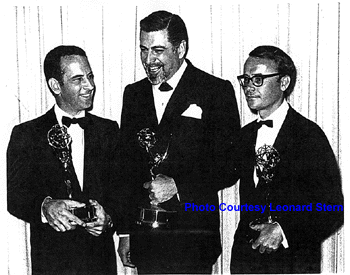
Leonard Stern

Leonard Stern, the Emmy Award-winning TV writer, producer and director has died at the age 88. Born Dec. 23, 1922, in New York City, Stern began writing jokes for Milton Berle at 16. He majored in journalism at New York University and was a Women's Army Corps recruiter while serving in the Army during World War II. After launching his career in radio, he began writing films in the early '50s, including Ma and Pa Kettle Go to Town and Abbott and Costello in the Foreign Legion. He moved into television and became a writer for the Honeymooners sketches on The Jackie Gleason Show in 1953. He continued as a writer on the The Honeymooners series.

Stern won an Emmy in 1957 as part of the writing team of The Phil Silvers Show. A second Emmy for writing came in 1967 when he and Buck Henry won for an episode of "Get Smart," on which Stern also was the original executive producer.

Stern, who worked on 23 TV series, created "I'm Dickens … He's Fenster," "Run Buddy Run," "He & She" and "McMillan & Wife," and he co-created "The Governor & J.J." and "Partners in Crime."

Stern launched his publishing career with Mad Libs, books whose pages offer brief stories with key words left blank. One player asks the other players to provide nouns, verbs, adjectives or adverbs. After doing so, as it says in the instructions: "Read the complete silly story back and roar with laughter." The idea for Mad Libs came to Stern and co-creator Roger Price in 1953. Stern was working on a "Honeymooners" script and was stumped for a word to describe Ralph Kramden's new boss' nose when Price dropped by. As Stern recalled in a 2008 interview with Publishers Weekly, "I asked Roger for an idea for an adjective, and before I could tell him what it was describing, he threw out 'clumsy' and 'naked.' "We both started laughing. We sat down and wrote a bunch of stories with blanks in them. That night we took them to a cocktail party and they were a great success." But publishers, Stern later recalled,rejected Mad Libs, some saying it was a game, not a book. But the game people claimed it was a book, not a game. Finally, Stern and Price decided to self-publish a modest print run in 1958.

Stern at the time was head writer for The Steve Allen Show, and Mad Libs received a major boost when Stern suggested that they use the Mad Libs format to introduce guest stars. With Allen asking the audience for a noun and adjective, it led to this memorable introduction: "And here's the scintillating Bob Hope, whose theme song is 'Thanks for the Communist.'"

In 1994, Stern collected his years of dealing with television network executives and censors for "A Martian Wouldn't Say That," a collection of memos and remarks culled from his and other writers' files that he compiled with Diane L. Robison. The title comes from one executive's script note for a line of dialogue in an episode of the 1960s sitcom "My Favorite Martian."

He later co-wrote and directed the 1979 film "Just You and Me, Kid," starring George Burns and Brooke Shields.


Good Night Mr. Stern
Stay Tuned

Tony Figueroa

Tuesday, June 07, 2011

TV Confidential Archives May 30, 2011


Show No. 90
May 30, 2011


First hour: Television historian Wesley Hyatt (The Encyclopedia of Daytime Television, Television's Top 100) joins Ed for a look at Oprah Winfrey’s impact on daytime television over the past 25 years. Also in this hour: Phil Gries with Part 2 of our special tribute to The Tonight Show Starring Johnny Carson, including clips from Johnny’s first anniversary show in October 1963.

Second hour: Ed welcomes Stephen Bowie, publisher of The Classic TV History Blog, for a look at some of the early live television dramas directed by Sidney Lumet, particularly with regard to certain stylistic elements that Lumet would later hone throughout his motion picture career. Also in this hour: Tony Figueroa and Donna Allen remember the premiere of CNN, the final episode of The Sopranos and other events that originally took place This Week in TV History.

Monday, June 06, 2011

This week in Television History: June 2011 Part I

Listen to me on me on TV CONFIDENTIAL:

Shokus Radio Mondays 9pm ET, 6pm PT with replays three times a day, seven days a week at 11am ET, 8am PT 9pm ET, 6pm PT and 1am ET, 10pm PT

Passionate World Radio Tuesdays 11:05pm ET, 8:05pm PT

KSAV – San Francisco Bay Area Fridays 7pm ET and PT

KWDJ 1360 AM – Ridgecrest, CA Saturdays 11pm ET, 8pm PT Sundays 5pm ET, 2pm PM

As always, the further we go back in Hollywood history, the more that fact and legend become intertwined. It's hard to say where the truth really lies.


June 6, 1998
Sex and the City
premieres on HBO.


The cable network HBO airs the pilot episode of Sex and the City, a new comedy series chronicling the lives and loves of four single women living in New York City.


The show’s creator, Darren Star, was best known at the time for producing the long-running Fox TV series Beverly Hills, 90210, and its spin-off, Melrose Place. For Sex and the City, Star switched coasts, loosely adapting a book by the same name by Candace Bushnell, compiled from a number of her columns for The New York Observer. In the pilot, Carrie Bradshaw (Sarah Jessica Parker), who authors a similar newspaper column for the fictional New York City Star, and her three friends--Samantha (Kim Cattrall), Charlotte (Kristin Davis) and Miranda (Cynthia Nixon)--discuss the issue of whether women are capable of having sex like men. Carrie also has an embarrassing first run-in with Mr. Big (Chris Noth), with whom she will begin a tumultuous relationship that will last the length of the series.


Sex and the City didn’t really break out with fans until the second season, when the format of the show changed a bit: Carrie stopped addressing the camera directly, and simply provided a voice-over narration, and the man-on-the-street-type testimonials by different characters were largely omitted. The main premise--that each episode provides fodder for one of Carrie’s columns, each of which features a different question about sex, love and relationships--remained constant throughout the show, as did the unusually frank discussion and portrayal of sex that became the show’s hallmark.


At the Emmy Awards, Sex and the City was nominated in the category of Outstanding Comedy Series in each of its six seasons; it won the award in 2001. In 2004, Parker collected an Emmy for Outstanding Lead Actress in a Comedy Series, while Cynthia Nixon triumphed in the supporting category. To win, Nixon beat out co-stars Davis and Cattrall, who had been nominated in five out of the six seasons of the show’s run. Cattrall and Parker both took home Golden Globe Awards for their performances as well, and the show received three Globes for Best TV Series - Musical or Comedy.


As soon as the series wrapped up in 2004, buzz began about a possible big-screen adaptation. Though the project stalled due to questions over money and Cattrall’s reported reluctance to sign on to the project, the plans finally came to fruition in late May 2008, when Sex and the City: The Movie was released to mixed reviews but great box-office success, including a $55.7 million opening weekend haul. As with the series, Parker served as an executive producer for the movie, which was written and directed by Michael Patrick King.


Jun 10, 2007


Last episode of The Sopranos airs.


Almost 12 million people tune in for the series finale of HBO’s critically acclaimed, multi-award-winning Mob-family drama The Sopranos on this day in 2007.


The mastermind behind The Sopranos was David Chase, a longtime writer, producer and director for TV series such as The Rockford Files, I’ll Fly Away and Northern Exposure. Chase drew inspiration for his latest series from his Italian-American childhood growing up in New Jersey, when he was fascinated by William Wellman’s great 1931 gangster film The Public Enemy, starring Jimmy Cagney. The Sopranos was an immediate hit with critics when it premiered in January 1999. At its center was the New Jersey Mafia boss Tony Soprano (James Gandolfini), whose attacks of anxiety early in the series send him into the office of a therapist, Dr. Jennifer Melfi (Lorraine Bracco). It soon becomes clear that Tony has a stressful life managing his family--including his vindictive mother (Nancy Marchand) and uncle (Dominic Chianese), his materialistic but good-hearted wife Carmela (Edie Falco) and his two teenage children, Meadow (Jamie-Lynn Sigler) and Anthony Jr., or A.J. (Robert Iler)--as well as his crew of lieutenants, notably Paulie Walnuts (Tony Sirico), Silvio Dante (Steve Van Zandt) and Christopher Moltisanti (Michael Imperioli).


The Sopranos brought to television a complex, compassionate vision of Mafia life similar to those previously portrayed on the big screen by directors like Francis Ford Coppola (the three Godfather movies) and Martin Scorsese (Mean Streets, Goodfellas). Both The Godfather and Goodfellas were touchstones for Chase (and his characters) throughout the series, as was The Public Enemy, which Tony memorably watches after his mother’s death in the show’s third season.


According to Alessandra Stanley, writing in the New York Times during the final season of The Sopranos: “The series lowered the bar on permissible violence, sex and profanity at the same time that it elevated viewers’ taste, cultivating an appetite for complexity, wit and cinematic stylishness on a serial drama in which psychological themes flickered and built and faded and reappeared. The best episodes had equal amounts of high and low appeal, an alchemy of artistry and gutter-level blood and gore, all of it leavened with humor.” As Stanley recounts, critics and pop-culture observers were often hyperbolic in their praise for the show, calling it Dickensian or Shakespearian; the author Norman Mailer, for one, called The Sopranos the closest thing to the Great American Novel in today’s culture. Fans loved it as well: The show’s audience reached a peak of some 18 million viewers during its fourth season. The show’s breakout success, along with that of the comedy series Sex and the City (which debuted six months before The Sopranos), established HBO’s reputation as the home of some of TV’s most popular original programming.


In the final season of The Sopranos, Tony survives a near-fatal shooting and begins to contemplate his own aging and mortality. Meanwhile, it appears that a full-scale war is brewing between the crime families of New York and New Jersey, as the hated Phil Leotardo (Frank Vincent) takes control of New York after former boss Johnny Sack (Vincent Curatola) dies in prison. When Phil goes after Tony and his crew, they react in turn, and the bodies stack up. In the closing scene of the open-ended finale, Tony meets Carmela, Meadow and A.J. in a diner for dinner. As soon as the screen went black, fans immediately began debating what actually happened, and mourning the end of a show that many had considered the best in the history of television.


To quote the Bicentennial Minute, "And that's the way it was".


Stay Tuned

Tony Figueroa

Sunday, June 05, 2011

The Wacky World of Jonathan Winters: Next on TV CONFIDENTIAL


The career of comic legend Jonathan Winters will be the focus of the next edition of TV CONFIDENTIAL, premiering Monday, June 6 at 9pm ET, 6pm PT on Shokus Internet Radio, with additional airings Tuesday, June 7 at 11:05pm ET, 8:05pm PT on Passionate World Radio, Friday, June 10 at 7pm ET and PT on Share-a-Vision Radio, KSAV.org, and Saturday, June 11 at 8pm PT and Sunday, June 12 at 2pm PT on KWDJ 1360-AM (Ridgecrest, CA).

Many of us know Jonathan Winters for his numerous appearances on The Tonight Show with Jack Paar and Johnny Carson, The Steve Allen Show, The Dean Martin Show, Rowan and Martin’s Laugh-In, Mork & Mindy, and such classic film as It’s A Mad, Mad, Mad, Mad World and The Russians Are Coming, The Russians Are Coming, as well as his influence on such comedians as Bill Cosby, George Carlin, Richard Lewis and, most notably, Robin Williams. What you may not know is that Jonathan Winters is also an accomplished artist and painter. Winters’ passion for art is the subject of a unique film, Certifiably Jonathan, that also gives viewers a window into his brilliant comedic mind.

Joining us this week will be filmmakers Jim Pasternak and Richard Marshall, the director and producer, respectively, of Certifiably Jonathan. We’ll talk about what was like to collaborate with Winters, his improvisational skills, his influences as a humorist and his ongoing impact on comedians today when Jim and Richard join us in our first hour.


Our tribute to Jonathan Winters will continue into our second hour, which will include highlights of a 2008 interview that Winters gave to Phil Gries in which he discussed some of his early television appearances, including Omnibus and And Here’s The Show, the origins of his famous character Maude Frickett, and his thoughts on such legends as Groucho Marx, Shelley Berman, Sid Caesar and Dean Martin.


Also this week: Tony Figueroa and Donna Allen will join us for a round-table discussion of such topics as Oprah Winfrey’s final broadcast and some surprising cancellations among prime time network shows, including Community and Law and Order: Los Angeles. It’s a full program as always... we certainly hope you’ll join us.


TV CONFIDENTIAL: A radio talk show about television
Mondays 9pm ET, 6pm PT
Shokus Internet Radio
Tuesdays 11:05pm, 8:05pm PT
Passionate World Radio
Fridays 7pm ET and PT
Share-a-Vision Radio, KSAV.org
Saturdays 8pm PT
Sundays 2pm PT
KWDJ 1360-AM (Ridgecrest, Calif.)
www.tvconfidential.net
blog.tvconfidential.net

Also available as a podcast via
iTunes and FeedBurner
Find us now on
Facebook

Friday, June 03, 2011

James Arness

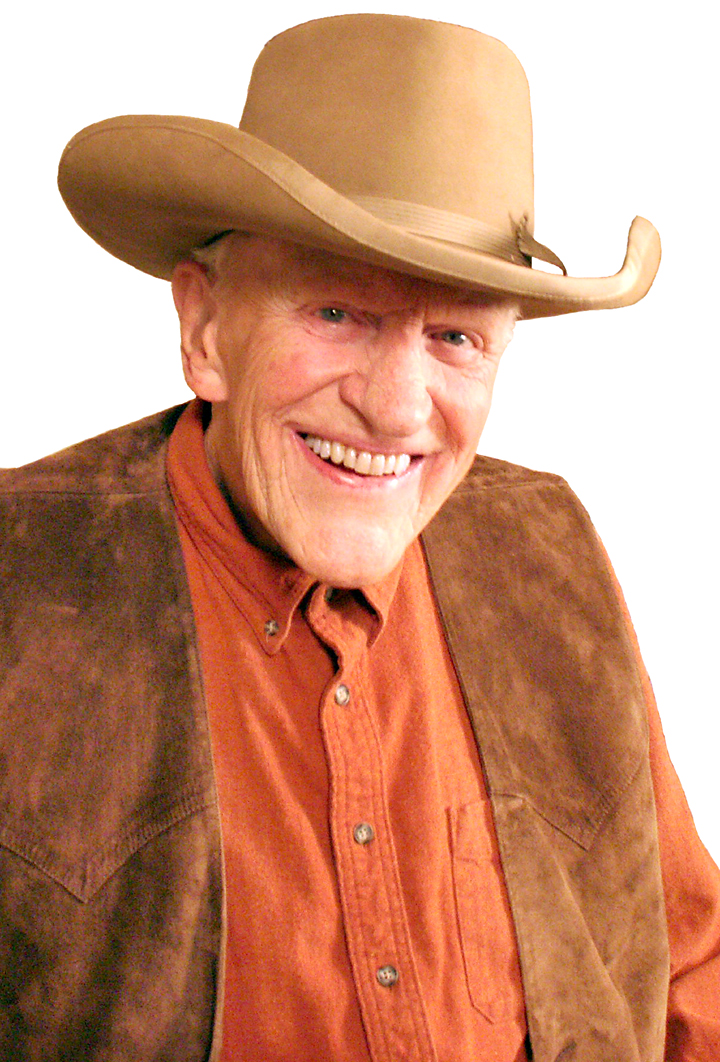
James Arness died today at the age of 88 from natural causes. He was born James Aurness on May 26, 1923 in Minneapolis, Minnesota and was best known for portraying Marshal Matt Dillon on Gunsmoke for 20 years. Arness has the distinction of having played the role of Marshal Matt Dillon in five separate decades: 1955 to 1975 in the weekly series, then in Gunsmoke: Return to Dodge (1987) and four more made-for-TV Gunsmoke movies in the 1990s. In Europe Arness reached cult status for his role as Zeb Macahan in the western series How the West Was Won. His parents were Rolf Cirkler Aurness (July 22, 1894 – July 1982), a businessman, and Ruth (née Duesler) Aurness (died September 1986), a journalist. His younger brother was actor Peter Graves. His father's ancestry was Norwegian, his mother's German. The family name had been Aursnes, but when Rolf's father Peter Aursnes emigrated from Norway in 1887, he changed it to Aurness. Arness and his family were Methodists.

In his prewar years, Arness worked as a courier for a jewelry wholesaler, loading and unloading railway boxcars at the Minneapolis freight-yards, and logging in Pierce, Idaho. Arness wanted to be a naval fighter pilot, but he felt his poor eyesight would bar him. His height of 6 feet 7 inches (2.01 m) ended his hopes, since 6 feet 2 inches (1.88 m) was the limit for aviators. Instead, he was called for the Army and reported to Fort Snelling, Minnesota in March 1943.

Arness served as a rifleman with the U.S. 3rd Infantry Division, and was severely wounded during Operation Shingle, at Anzio, Italy.

According to James Arness – An Autobiography, he landed on Anzio Beachhead on January 21, 1944 as a rifleman with 2nd Platoon, E Company, 2nd Battalion, 7th Regiment of the 3rd Infantry Division. Due to his height, he was the first ordered off his landing craft to determine the depth of the water; it came up to his waist.

On January 29, 1945, having undergone surgery several times, Arness was honorably discharged. His wounds continued to bother him, and in later years Arness suffered from acute leg pain, which even prevented him from mounting a horse.

His decorations include the Bronze Star Medal, Purple Heart; the European-African-Middle Eastern Campaign Medal with three bronze battle stars, the World War II Victory Medal and the Combat Infantryman Badge.

After his discharge, James Arness entered Beloit College in Wisconsin. He began his performing career as a radio announcer in Minnesota in 1945.

Aurness soon began acting, and appeared in films. He began with RKO, which immediately changed his name to "Arness". His film debut was as Loretta Young's (Katie Holstrom) brother, Peter Holstrom, in The Farmer's Daughter (1947).

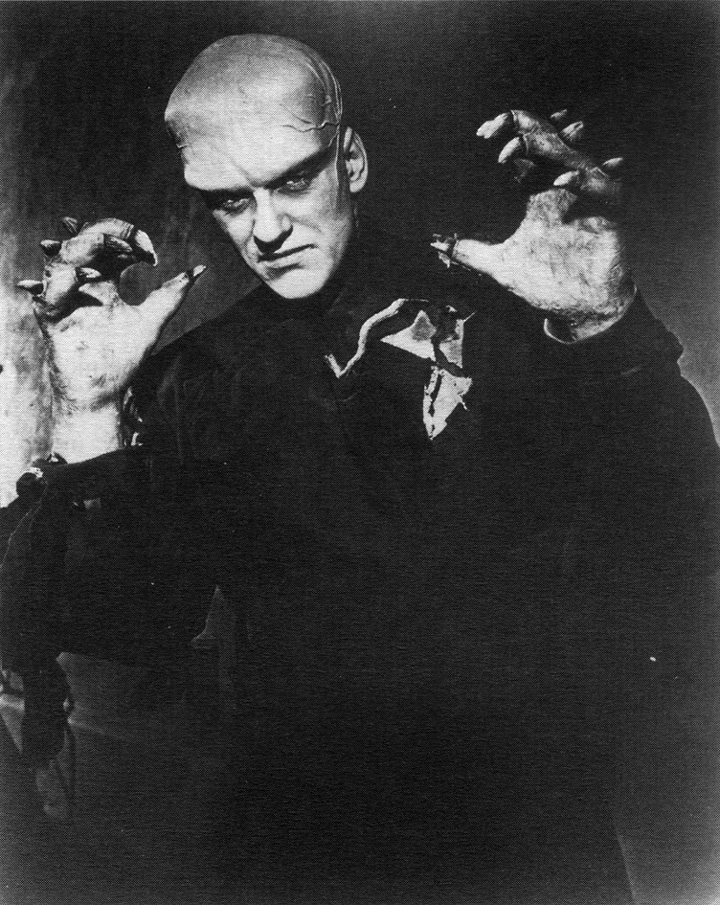
Though identified with westerns, Arness also appeared in two science fiction films, The Thing from Another World (in which he portrayed the title character) and Them!. He was a close friend of John Wayne and co-starred with him in Big Jim McLain, Hondo, Island in the Sky, and The Sea Chase.

John Wayne was originally offered the starring role in an upcoming TV western drama titled Gunsmoke. Wayne turned down the offer, but strongly recommended Arness for the role.

After Gunsmoke ended, Arness performed in western-themed movies and television series, including How the West Was Won, and in five made-for-television Gunsmoke movies between 1987 and 1994.

An exception was as a big city police officer in a short-lived 1981 series, McClain's Law. His role as Zeb Macahan in How the West Was Won made him into a cult figure in many European countries, as the series has been re-broadcast many times around Europe, where it became more popular than in the states.

Arness did the narration for Harry Carey, Jr.'s Comanche Stallion (directed by Clyde Lucas).

To quote Mr Arness, "With Gunsmoke, we had an outstanding quality of writing. The show had been on radio for three years, so they were able to fine-tune the characters. What made us different from other westerns was the fact that Gunsmoke wasn't just action and a lot of shooting; they were character-study shows. They're interesting to watch all these years later".

Good Night Marshal Dillon

Stay Tuned


Tony Figueroa

Your Mental Sorbet: Screen Tests for the Batman TV series

Here is another "Mental Sorbet" that we could use to momentarily forget about those things that leave a bad taste in our mouths... Maybe this time you will still have a bad taste.

Lyle Waggoner, Peter Deyell, Adam West and Burt Ward Screen Test for the Batman TV series


Stay TunedTony Figueroa

Tuesday, May 31, 2011

TV Confidential Archives: May 23, 2011


Show No. 89
May 23, 2011


First hour: TV critic Mark Dawidziak joins Ed for a look at what trends we can glean from the new network television shows that will premiere this coming fall. Also in this hour: Phil Gries pays tribute to Johnny Carson on the 19th anniversary of his final appearance as host of The Tonight Show. Plus: Listener emails.

Second hour: Ed welcomes actor, artist, filmmaker and novelist Peter Mark Richman (Dynasty, Three’s Company, Longstreet, Cain’s Hundred, Four Faces, The Rebirth of Ira Masters, Hollander’s Deal) for a wide-ranging conversation about his life and career, including Peter Mark's work with such legends as Paddy Chayefsky, Martin Ritt, Janis Paige and Quinn Martin.

Monday, May 30, 2011

Tributes to Sidney Lumet and Johnny Carson: Next on TV CONFIDENTIAL


Television historians Stephen Bowie and Wesley Hyatt will join us on the next edition of TV CONFIDENTIAL, premiering Monday, May 30 at 9pm ET, 6pm PT on Shokus Internet Radio, with additional airings Tuesday, May 31 at 11:05pm ET, 8:05pm PT on Passionate World Radio, Friday, June 3 at 7pm ET and PT on Share-a-Vision Radio, KSAV.org, and Saturday, June 4 at 8pm PT and Sunday, June 5 at 2pm PT on KWDJ 1360-AM (Ridgecrest, CA).

Publisher of The Classic TV History Blog, an excellent resource on many of the writers, producers and shows from the Golden Age of Television,
Stephen Bowie will help us pay tribute to director Sidney Lumet, who passed away on Apr. 9 at the age of 86. Known for helming such acclaimed feature motion pictures as 12 Angry Men, The Verdict, Network, Dog Day Afternoon, The Pawnbroker, Prince of the City, Serpico and Fail-Safe, Lumet also made many significant contributions to television in the 1950s and early 1960s, particularly during the era of live television. Many elements of style for which Lumet would become later known as a director were first developed in some of those early live dramas. We’ll talk about that and more when Stephen joins us in our second hour.

Wesley Hyatt will join us in our first hour with a look at Oprah Winfrey’s impact on daytime television over the past 25 years. Plus: Part 2 of our special tribute to The Tonight Show Starring Johnny Carson, including clips from Johnny’s first anniversary show in October 1963; and a brand new edition of This Week in TV History.

TV CONFIDENTIAL: A radio talk show about television
Mondays 9pm ET, 6pm PT
Shokus Internet Radio
Tuesdays 11:05pm, 8:05pm PT
Passionate World Radio
Fridays 7pm ET and PT
Share-a-Vision Radio, KSAV.org
Saturdays 8pm PT
Sundays 2pm PT
KWDJ 1360-AM (Ridgecrest, Calif.)
www.tvconfidential.net
blog.tvconfidential.net

Also available as a podcast via
iTunes and FeedBurner
Find us now on
Facebook