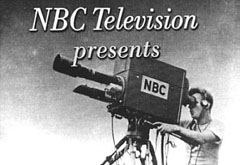
I represent the first generation who, when we were born, the television was now a permanent fixture in our homes. When I was born people had breakfast with Barbara Walters, dinner with Walter Cronkite, and slept with Johnny Carson.
Read the full "Pre-ramble"
Charles
Dawson "Daws" Butler (November 16, 1916 – May 18, 1988) was an
American voice actor who specialized in voicing animated films and television
series. He worked mostly for the Hanna-Barbera animation production
company where he originated the voices of many familiar characters,
including Yogi
Bear, Quick Draw McGraw, Snagglepuss, and Huckleberry Hound.
November 16, 1946
Television Screen Magazine launches.
The show, one of NBC's first network series, included
a collection of features on news, lifestyles, fashion, and other topics. The
show ran until 1949. In 1968, CBS revived the TV magazine concept with 60
Minutes, which became one of the country's Top 10 shows in 1977 and stayed
in the Top 20 for more than 20 years.
November 16, 1981
Luke and Laura got married on General Hospital.
One of
television’s most famous wedding celebrations took place, with General Hospital‘s
Luke and Laura saying “I do” in front of 30 million viewers.
The two-day event remains one of the most iconic moments in daytime
television history, and brought stars Anthony Geary and Genie Francis instant
mainstream celebrity. The rocky relationship of Luke and Laura also helped to
create a template for other soap “supercouples,” combining adventure, tragedy
and romance.
November 19, 1941
Dan Haggerty is
born.
He is best known as Grizzly Adams in the title role of the 1974 Sunn
Classic Pictures feature, The Life and Times of Grizzly Adams. From this feature film evolved the NBC television
series which ran from 1977 to 1978, and Haggerty became known to movie-goers
for his portrayal of nature-loving John “Grizzly” Adams.
November 21
World Television Day
World Television Day celebrates the daily value of
television as a symbol of communication and globalization. Television is one of
the single greatest technological advances of the 20th century, serving to
educate, inform, entertain and influence our decisions and opinions. It is estimated that approximately 90% of
homes around the world have televisions, however, with the introduction of
internet broadcasting, the number is declining in favor of computers.
World Television Day was proclaimed by the United
Nations in 1996. It is celebrated annually on November 21.
The gothicsoap opera that originally aired weekdays on the ABC television network, from June 27, 1966, to April 2,
1971. The show was created by Dan Curtis. The story bible, which was written by Art Wallace, does not mention any supernatural elements. It was unprecedented in daytime television
when ghosts were introduced about six months after it began.
Dark Shadows
was distinguished by its vividly melodramatic performances, atmospheric
interiors, memorable storylines, numerous dramatic plot twists, unusually
adventurous music score, and broad and epic cosmos of characters and heroic
adventures. Now regarded as something of a classic, it continues to enjoy an
intense cult following. Although the original series ran for only five years,
its scheduling as a daily daytime drama allowed it to amass more single
episodes during its run (1,225) than most other science-fiction/fantasy genre
series produced for English-language television, including Doctor Who and the entire Star Trek television franchise. Only the paranormal soap opera Passions, with a total of 2,231 episodes, has more.
Directors Tim Burton and Quentin Tarantino, and pop singer Madonna have publicly stated they are fans of the series. As
a child, Johnny Depp was so obsessed with Barnabas Collins that he wanted
to be him; he collaborated with Tim Burton on a
theatrical film adaptation which
opened in 2012, in which he plays Barnabas.
In 2004 and 2007, Dark Shadows was ranked #19
and #23 on TV Guide's Top Cult
Shows Ever
June 28, 1926
Mel Brooks is born Melvin James Kaminsky
He is known as a creator of broad film farces and
comic parodies.
Brooks began his career as a comic and a writer for the early TV variety
show Your Show of Shows. He became well known
as part of the comedy duo with Carl
Reiner in the comedy skit, The 2000 Year Old Man.
Radner was born in Detroit, Michigan, the daughter of Jewish parents Henrietta (née Dworkin), a legal
secretary, and Herman Radner, a businessman. She grew up in Detroit with a
nanny, Elizabeth Clementine Gillies, whom she called "Dibby" (and on
whom she based her famous character Emily Litella),[3]
and an older brother named Michael. She attended the University
Liggett School in Grosse Pointe.
Radner wrote in her autobiography It's Always Something that toward the
end of her life she, "coped with stress by having every possible eating
disorder from the time I was nine years old. I have weighed as much as 160
pounds and as little as 93. When I was a kid, I overate constantly. My weight
distressed my mother and she took me to a doctor who put me on Dexedrine
diet pills when I was ten years old."
Radner was close to her father, who operated Detroit's
Seville Hotel, where many nightclub performers and actors stayed while
performing in the city. He took her on trips to New York to see Broadway
shows. As Radner wrote in It's Always Something, when she was twelve her
father developed a brain tumor, and the symptoms began so suddenly that he told
people his eyeglasses were too tight. Within days he was bedridden and unable
to communicate, and he remained in that condition until his death two years
later.
Radner enrolled at the University of
Michigan at Ann Arbor,
where she made a lifelong platonic friend of fellow student David Saltman, who
wrote a biography of her after her death. Radner joined Saltman and his
girlfriend on a trip to Paris in the summer of 1966. Saltman wrote that he was so
affectionate with his girlfriend that they left Radner to fend for herself
during much of their sightseeing. Twenty years later, when many details of
Radner's eating disorder were reported in a bestselling book about Saturday
Night Live by Doug Hill and Jeff Weingrad, Saltman realized she had been in
a quandary over the French cuisine, but had no one with whom she could discuss her
situation.
In Ann Arbor,
Radner began her broadcasting career as the weather girl for college radio
station WCBN, but
dropped out in her senior year to follow her then-boyfriend, a Canadian
sculptor named Jeffrey
Rubinoff, to Toronto,
Canada. In Toronto, she made her professional acting debut in the 1972
production of Godspell with future stars Eugene Levy,
Andrea Martin, Victor Garber
and Martin Short. Afterward, Radner joined the Toronto Second City
comedy troupe.
Radner gained name recognition as one of the original
"Not
Ready for Prime Time Players", a
member of the freshman group on the first season of Saturday Night Live.
She was the first performer cast for the show. Between 1975 and 1980, she
created such characters as obnoxious personal advice expert Roseanne
Roseannadanna, "Baba Wawa",
a parody of Barbara Walters, and Emily Litella,
an elderly hearing-impaired woman who gave angry and misinformed editorial
replies on "Weekend Update". Radner also parodied such celebrities as Lucille Ball,
Patti Smith,
and Olga Korbut in SNL sketches. She won an Emmy Award
in 1978 for her work on SNL.
Radner battled bulimia
during her time on the show. She once told a reporter that she had thrown up in
every toilet in Rockefeller Center. She had a relationship with SNL castmate Bill Murray,
with whom she had also worked at the National Lampoon, that ended badly.
Few details of their relationship or its end were made public at the time. When
Radner wrote It's Always Something, this is the only reference she made
to Murray in the entire book: "All the guys [in the National Lampoon
group of writers and performers] liked to have me around because I would laugh
at them till I peed in my pants and tears rolled out of my eyes. We worked
together for a couple of years creating The National Lampoon Show,
writing The National Lampoon Radio Hour, and even working on stuff for
the magazine. Bill Murray joined the show and Richard Belzer ..."
According to Bill Murray, last time Radner and he saw each other was at a party
thrown by Laraine Newman. Hearing she was leaving, Murray and Dan Akroyd
carried her around and around the house party, repeatedly saying goodbye to
everyone, and since all the guests were comedians, they all did comedy bits
with her, over and over.
Alan Zweibel,
who co-created the Roseanne Roseannadanna character and co-wrote all of
Roseanne's dialogue, recalled that Radner, one of three original SNL cast
members who stayed away from cocaine,
chastised him for using it.
Radner had mixed emotions about the fans and strangers
who recognized her in public. She sometimes became "angry when she was
approached, but upset when she wasn't."
In 1979, Radner appeared on Broadway in
a successful one-woman show entitled Gilda Radner - Live From New York.
The show featured material that was racier than what NBC censors allowed Saturday
Night Live to put on the television airwaves, such as the song Let's
Talk Dirty to the Animals. In 1979, shortly before Radner began her final
season on Saturday Night Live, her Broadway show was filmed by Mike Nichols
under the title Gilda Live!, co-starring Paul Shaffer
and Don Novello, and was released to theaters nationwide in 1980 with
poor results. A soundtrack album was also unsuccessful. During the production, she met
her first husband, G. E. Smith, a musician who also worked on the show. They were
married in a civil ceremony in 1980.
In the fall of 1980, after all original SNL
cast members departed from the show, Radner starred opposite Sam Waterston
in the Jean Kerr
play, Lunch Hour, as a pair whose spouses are having an affair, and in
response invent one of their own, consisting of trysts on their lunch hour. The
show ran for over seven months.
Radner met actor Gene Wilder
on the set of the Sidney Poitier film Hanky Panky, when the two appeared together. She described their
first meeting as "love at first sight." She was unable to resist her
attraction to Wilder as her marriage to guitarist G. E. Smith
deteriorated. Radner went on to make a second film, The
Woman in Red, released in 1984
with Wilder and their relationship grew. The two were married on September 18,
1984, in St. Tropez. The pair made a third film together, Haunted Honeymoon, released in 1986.
After experiencing severe fatigue and suffering from
pain in her upper legs on the set of Haunted Honeymoon in the United Kingdom
in 1985, Radner sought medical treatment. After 10 months of false diagnoses,
she learned that she had ovarian cancer
on October 21, 1986. She suffered extreme physical and emotional pain during chemotherapy
and radiotherapy treatment.
After Radner was told she had gone into remission, she wrote It's Always Something (a
catchphrase of her character Roseanne
Roseannadanna), which included many
details of her struggle with the illness. Life
magazine did a March 1988 cover story on her illness, entitled "Gilda
Radner's Answer to Cancer: Healing the Body with Mind and Heart." In 1988,
Radner guest-starred on It's
Garry Shandling's Show on Showtime, to great critical acclaim. When Shandling asked her
why she had not been seen in public for a while, she replied, "Oh, I had
cancer. What did you have?" Shandling's reply: "A very bad
series of career moves... which, by the way, there's no cure for
whatsoever." She also repeated on-camera Mark Twain's
apocryphal saying, "Reports of my death are greatly exaggerated."
Radner planned to host an episode of Saturday Night Livethat
year, but a writers'
strike caused the cancellation of the
rest of the network television season.
In the fall of 1988, after biopsies and a saline wash
of her abdomen showed no signs of cancer, Radner was put on a maintenance
chemotherapy treatment to prolong her remission, but later that same year, she
learned that her cancer had returned after a routine blood test showed her
levels of the tumor marker CA-125 had increased. She was admitted to Cedars-Sinai
Medical Center in Los Angeles on May
17, 1989 for a CAT scan. Despite being fearful that she would never wake up,
she was given a sedative but passed into a coma during the scan. She did not
regain consciousness and died three days later from ovarian cancer
at 6:20 am on May 20, 1989; Wilder was at her side.
Gene Wilder had this to say about her death:
She went in for the scan – but the people there could
not keep her on the gurney. She was raving like a crazed woman – she knew they
would give her morphine and was afraid she’d never regain consciousness. She
kept getting off the cart as they were wheeling her out. Finally three people
were holding her gently and saying, "Come on Gilda. We’re just going to go
down and come back up." She kept saying, "Get me out, get me
out!" She’d look at me and beg me, "Help me out of here. I’ve got to
get out of here." And I’d tell her, "You’re okay honey. I know. I
know." They sedated her, and when she came back, she remained unconscious
for three days. I stayed at her side late into the night, sometimes sleeping
over. Finally a doctor told me to go home and get some sleep. At 4 am on
Saturday, I heard a pounding on my door. It was an old friend, a surgeon, who
told me, "Come on. It's time to go." When I got there, a night nurse,
whom I still want to thank, had washed Gilda and taken out all the tubes. She
put a pretty yellow barrette in her hair. She looked like an angel. So
peaceful. She was still alive, and as she lay there, I kissed her. But then her
breathing became irregular, and there were long gasps and little gasps. Two
hours after I arrived, Gilda was gone. While she was conscious, I never said
goodbye.
Her funeral was held in Connecticut on May 24, 1989.
In lieu of flowers, her family requested that donations be sent to The Wellness
Community. Her gravestone reads:
"Gilda Radner Wilder - Comedienne - Ballerina 1946-1989". She was
interred at Long Ridge Union Cemetery in Stamford,
Connecticut.
By coincidence, the news of her death broke on early
Saturday afternoon (Eastern Daylight Time), while Steve Martin
was rehearsing as the guest host for that night's season finale of Saturday
Night Live. Saturday Night Live personnel—including Lorne Michaels,
Phil Hartman,
and Mike Myers
(who had, in his own words, "fallen in love" with Radner after
playing her son in a BC Hydro commercial on Canadian television and considered her
the reason he wanted to be on SNL)—had not known she was so close to
death. They scrapped Martin's planned opening monologue and instead, Martin, in
tears, introduced a video clip of a 1978 sketch in which he and Radner parodied
Fred Astaire
and Cyd Charisse in a well-known dance routine from The Band Wagon.
Wilder established the Gilda Radner Ovarian Detection
Center at Cedars-Sinai to screen high-risk candidates (such as women of Ashkenazi Jewish descent) and run basic diagnostic tests. He testified before
a Congressional committee that Radner's condition had been misdiagnosed and
that if doctors had inquired more deeply into her family background they would
have learned that her grandmother, aunt and cousin had all died of ovarian
cancer, and therefore they might have attacked the disease earlier.
Radner's death from ovarian cancer helped to raise
awareness of early detection and the connection to familial epidemiology. The
media attention in the two years after Radner's death led to registry of 450
families with familial ovarian cancer at the Familial Ovarian Cancer Registry,
a research database registry at the Roswell
Park Cancer Institute in Buffalo, New
York. The registry was later renamed the Gilda Radner Familial Ovarian Cancer
Registry (GRFOCR). In 1996, Gene Wilder and Registry founder Steven Piver, one
of Radner's medical consultants, published Gilda's Disease: Sharing Personal
Experiences and a Medical Perspective on Ovarian Cancer. Through Wilder's
efforts and those of others, awareness of ovarian cancer and its symptoms has
continued to grow.
In 1991, Gilda's Club,
a network of affiliate clubhouses where people living with cancer, their
friends and families, can meet to learn how to live with cancer, was founded.
The center was named for a quip from Radner, who said, "Having cancer gave
me membership in an elite club I'd rather not belong to." Many Gilda's
Clubs have opened across the United States and in Canada. In 2009, Gilda's Club
merged with another similar institution, The Wellness Community, under the new
name of Cancer Support Community, which was legally adopted in 2011.
In 2002, the ABC television network aired a television movie about her
life: Gilda Radner: It's Always Something, starring Jami Gertz
as Radner.
In 2007 she was featured in the film Making Trouble,
a tribute to female Jewish comedians, produced by the Jewish Women’s
Archive.
Radner won an Emmy Award
for "Outstanding Continuing or Single Performance by a Supporting Actress
in Variety or Music" for her performance on Saturday Night Live in 1977. She posthumously won a Grammy for "Best Spoken
Word Or Non-Musical Recording" in 1990.
In 1992, Radner was inducted into the Michigan
Women's Hall of Fame for her
achievements in arts and entertainment. On June 27, 2003, she received a star
on the Hollywood Walk of
Fame at 6801 Hollywood Blvd.
Parts of West Houston Street in New York City, Lombard
Street in Toronto, and Chester Street in White Plains, New York have been
renamed "Gilda Radner Way."
June 28, 1951
Amos ’n’
Andy moved to CBS-TV from radio.
Amos and Andy began as one of the first radio comedy
series, written and voiced by Freeman
Gosden and Charles Correll and originating from station WMAQ in
Chicago. After
the program was first broadcast in 1928, it grew to become a huge influence on
radio series that followed. The show ran as a nightly radio serial from 1928
until 1943, as a weekly situation comedy from 1943 until 1955, and as a nightly
disc-jockey program from 1954 until 1960. A television adaptation ran on CBS-TV
from 1951 until 1953, and continued in syndicated reruns from 1954 until 1966. The
Amos 'n Andy Show was produced from June 1951 to April 1953 with 78 filmed
episodes, sponsored by the Blatz Brewing Company.
The television series used African-American actors in the main roles, although
the actors were instructed to keep their voices and speech patterns as close to
Gosden and Correll's as possible. Produced at the Hal
Roach Studios for CBS, it was one of the first television series to be
filmed with a multicamera setup, four months
before the more famous I Love Lucy used the
technique. The lighting cameraman (Director of Photography) was Robert de
Grasse ASC. The operating cameramen (camera operators) were Robert de Grasse,
Lucien Andriot ASC, and Benjamin Kline ASC. The classic theme song was
"The Perfect Song." In the TV series, however, the theme became Gaetano
Braga's "Angel's Serenade", which sounded similar to
"The Perfect Song" (and because it was in the public domain),
performed by The Jeff Alexander Chorus. The
program went on the air June 28, 1951.
The main roles in the television
series were played by the following African-American actors:
This time, the NAACP mounted a formal protest almost as soon as the
television version began, and that pressure was considered a primary factor in
the video version's cancellation (the sponsor, Blatz Beer, was targeted as
well, finally discontinuing their advertising support in June 1953). It has
been suggested that CBS erred in its choice of having the program premiere
during the NAACP national convention for that year, as the timing may have
increased the objections to it. The show was widely repeated in syndicated
reruns until 1966 when CBS acquiesced to pressure from the NAACP and the
growing civil
rights movement and withdrew the program. Until recently, the
television show had been released only on bootleg
videotape versions, but by 2005, 72 of the 78 known TV episodes were available
in bootleg DVD sets.
When the show was cancelled, 65 episodes had been produced. An additional 13
episodes were produced to be added to the syndicated rerun package. These
episodes were focused on Kingfish, with little participation from Amos 'n'
Andy. This is because these episodes were to be titled The Adventures of
Kingfish, but they premiered under the Amos 'n' Andy title instead.
The additional episodes first aired on CBS on January 4, 1955. Plans were made
for a vaudeville act of the television program in August 1953, with Tim Moore,
Alvin Childress and Spencer Williams playing the same roles. It is not known
whether there were any performances. Still eager for television success,
Gosden, Correll and CBS made initial efforts to give the series another try.
The plan was to begin televising Amos 'n' Andy in the fall of 1956, with
both of its creators appearing on television in a split screen with the
proposed African-American cast.
A group of cast members began a "TV Stars of Amos 'n' Andy"
cross-country tour in 1956, which was halted by CBS; the
network considered it an infringement of their exclusive rights to the show and
its characters. A similar tour had been planned by some cast members in 1953
after cancellation of the series. Following the threatened legal action which
brought the 1956 tour to an end, Moore, Childress, Williams and Lee were able
to perform like this for at least one night in 1957 in Windsor,
Ontario.
In 1978, a one-hour documentary film, Amos 'n' Andy: Anatomy of a
Controversy, aired in television syndication (and in
later years, on PBS).
It told a brief history of the franchise from its radio days to the CBS series,
and featured interviews with then-surviving cast members. The film also
contained a select complete episode of the classic TV series that had not been
seen since it was pulled from the air in 1966.
In soaps, people come back from the dead all the time,
to the point where death is just a bus stop.
-Anthony Geary
Anthony Geary
born Tony Dean Geary
May 29, 1947 – December 14, 2025
His career spanned more than five decades. Geary's career began in episodic television. He appeared as a guest on several primetime series and transitioned into a career predominantly in thesoap operagenre. His first soap role was David Lockhart (1971–1972) onBright Promise(1969–1972), and he later joinedThe Young and the Restlessas George Curtis. His breakout role came in 1978 when he joined the cast ofGeneral HospitalasLuke Spencer. For his work as Luke, Geary went on to earn a record eightDaytime Emmy AwardsforOutstanding Lead Actor in a Drama Seriesprior to his retirement.
GMA expanded to weekends with the debut of a Sunday
edition on January 3, 1993. The Sunday edition was later canceled in 1999;
weekend editions returned on both Saturdays and Sundays on September 4, 2004.
The weekday program airs from 7:00 to 9:00 a.m. in all U.S. time
zones (live in the Eastern Time Zone and on tape delay elsewhere
across the country); the Saturday and Sunday editions are one hour long and is
transmitted to ABC's stations live at 7:00 a.m. Eastern Time, although
stations in some markets air
the weekend broadcasts either one hour earlier or later than the 7:00 a.m.
slot. A third hour of the weekday broadcast aired from 2007 to 2008,
exclusively on ABC News Now.
The program features news,
interviews, weather forecasts, special-interest stories, and feature segments
such as "Pop News" (featuring pop culture and
entertainment news, and viral videos),
the "GMA Heat Index" (featuring a mix of entertainment, lifestyle and
human-interest stories) and "Play of the Day" (featuring a selected
viral video or television program clip). It is produced by ABC News and
broadcasts from the Times Square
Studios in New York City's Times Square district.
The primary anchors are Robin Roberts, George
Stephanopoulos and Lara Spencer,
along with newsreader Amy Robach,
social media anchor Tony Reali and
weather anchor Ginger Zee.
Good Morning America has been the most watched morning show in total
viewers and key demos each year since Summer 2012. GMA generally
placed second in the ratings, behind NBC's Today from 1995 to 2012. It
overtook its rival for a period from the early to mid-1980s with anchors David
Hartman and Joan Lunden,
from the late 1980s to the mid-1990s with Charles Gibson and
Lunden, and in April 2012 with Roberts and Stephanopoulos.
Good Morning America won the first three Daytime Emmy Awards for "Outstanding Morning Program",
sharing the inaugural 2007 award with Today and winning the
2008 and 2009 awards outright.
November 4, 1950
Marjorie Armstrong
“Markie” Post is born.
Best known for her roles as bail bondswoman Terri Michaels in The Fall Guy on ABC from 1982 to 1985, as public defender Christine
Sullivan on the NBCsitcomNight Court from 1985 to 1992, and as Georgie Anne Lahti
Hartman on the CBSsitcomHearts Afire from 1992 to 1995. Post died aged 70 at her home in Los Angeles, on August 7, 2021; she had been suffering from cancer.
Poppin' Fresh, more widely known as the Pillsbury
Doughboy, is an advertising icon and mascot of the Pillsbury Company, appearing in many of their commercials. Many
commercials from 1965 until 2004 (returned in 2009 to 2011 and 2013 in a Geico Commercial)
conclude with a human finger poking the Doughboy's stomach. The Doughboy
responds when his stomach is poked by giggling (Hoo-Hoo!, or earlier on,
a slight giggle "hee hee").
The show had its origins in a
November 1975 American television movie entitled The New, Original
Wonder Woman starring Carter. It followed a 1974 TV movie
entitled Wonder Woman starring blond actress Cathy Lee Crosby, who neither resembled the super-hero character nor exhibited any
apparent super-human powers. (John D. F. Black wrote and produced the 1974 TV movie.) In this second movie, set
during World War II and produced by Douglas S. Cramer and Wilford Lloyd "W.L." Baumes, who were working from
a script by Stanley Ralph Ross, Carter as Wonder Woman matched the original comic
book character. Its success led the ABC
television network to order two
more one-hour episodes which aired in April 1976. That success led ABC to order
an additional 11 episodes which the network aired weekly (for the most part)
during the first half of the 1976–77 television season. The episodes ran on Wednesday
nights between October 1976 and February 1977.
Wonder Woman achieved solid ratings on ABC during its first
season, but the network was reluctant to renew the series for another
season. Wonder Woman was a period piece, and as such, it was
more expensive to produce than a series set in the present day. Also, ABC
thought that the 1940s setting limited possible storylines, with the major
villains being Nazis. ABC did not renew the series, so Jerry Lieder,
then-president of Warner Bros. Television, went to CBS with the notion of shifting the series to the
present-day 1970s, which would cost less to produce and allow for more creative
storylines. Unlike 20th Century
Fox Television's Batman, the series was produced without having a theatrical
feature film in the middle of its production. In addition, none of the villains
had recurring appearances. CBS agreed and picked up the show in 1977, and it
continued for another two seasons.
She was the tenth of 18
children (children who included siblings and fellow actresses Estelle Evans and Rosanna Carter).
Rolle
is best known for her television role as Florida Evans, the character she played
on two 1970s sitcoms. The character was
introduced as Maude Findlay's housekeeper on Maude, and was spun off in the show's second
season into Good
Times,
a show about Florida's family. Rolle was nominated in 1975 for the Best Actress
in a Musical/Comedy Golden Globe Award for her role in Good Times. Rolle was 19 years older
than the actor (John
Amos) who
played her husband James Evans. The James Evans character was only added after
Esther Rolle fought hard for a father figure and husband to be added to the
show. Rolle had fought for the father character on the show, more relevant
themes and scripts and was unhappy when the success of Jimmie Walker's character, J.J. Evans,
took the show in what she thought was a frivolous direction. John Amos agreed
with Rolle about Walker's character and was fired from the show after the third
season ended. Later on, in a stand-off with Good Times producer Norman Lear, Rolle also quit when her
contract ended. Although the show continued without her for the fifth season,
she returned for the show's final season. In 1979 she won an Emmy for her role in Summer of My German Soldier, a made-for-television
movie.
Among
her guest star roles was one on The Incredible Hulk in an episode entitled
"Behind the Wheel" where she played a taxicab business owner. In
the 1990s, Rolle was a surprise guest on RuPaul's VH-1 talk show. Her Maude co-star Bea Arthur was the guest, and
Rolle was brought out to surprise Arthur. The two had not seen each other in
years, Arthur said, and embraced warmly. Rolle also appeared in a series
of psychic hotline TV commercials
in the 1990s. "Tell them Esther sent you," was her trademark line.
Rolle
died on November 17, 1998 in Culver City, California, from complications of diabetes, nine days after her 78th
birthday. Her body was flown back to her hometown ofPompano Beach, Florida. A devout Methodist, Rolle requested that her
funeral be held at Bethel African Methodist Episcopal Church. The family
requested that any flower donations be sent to such organizations as the
African American Chapter of the American Diabetes Association, The Bethune-Cookman College in Daytona Beach, Florida, The Black Academy
of Arts and Letters in Dallas, Texas, The Jenesse Center in Los Angeles, and
Marcus Garvey Elementary and Junior High School in Los Angeles.
November 8, 1965
Days of our Lives first aired on November 8, 1965.
The series was created by husband-and-wife team Ted Corday
and Betty Corday along with Irna Phillips
in 1964, and many of the first stories were written by William J. Bell.
The original title sequence voiced by MacDonald Carey
is still used to this day. The series expanded from 30 minutes to a full hour
on April 21, 1975. The co-creator and original executive producer, Ted Corday,
was only at the helm for eight months before dying of cancer in 1966. His
widow, Betty, was named executive producer upon his death. She
continued in that role, with the help of H. Wesley Kenney and Al Rabin as supervising producers, before she semi-retired in
1985. When Mrs. Corday semi-retired in 1985, and later died in 1987, her son,
Ken, became executive producer and took over the full-time, day-to-day running
of the show, a title he still holds today.
When Days of our Lives
debuted the cast consisted of seven main characters (Tom Horton, Alice Horton,
Mickey Horton, Marie Horton,
Julie Olson,
Tony Merritt, and Craig Merritt). The series first focused on its core family,
the Hortons. Several other families have been added to the cast, and many of
them still appear on the show. Frances Reid
the matriarch of the series' Horton family remained with the show from its
inception to her death on February 3, 2010.
The Cordays and Bell combined the "hospital soap" idea with the
tradition of centering a series on a family, by making the show about a family
of doctors, including one who worked in a mental hospital. Storylines in the
show follow the lives of middle and upper-class professionals in Salem, a middle-America town, with the
usual threads of love, marriage, divorce, and family life, plus the medical
storylines and character studies of individuals with psychological problems.
Former executive producer Al Rabin took pride in the characters' passion, saying
that the characters were not shy about "sharing what's in their gut."
Critics originally praised the show for its non-reliance on nostalgia and its
portrayal of "real American contemporary families." By the 1970s,
critics deemed Days to be the most daring daytime drama, leading the way in
using themes other shows of the period would not dare touch, such as artificial insemination and interracial romance. The January 12, 1976
cover of Time magazine featured Days of our Lives' Bill Hayes and Susan Seaforth Hayes, the first daytime actors
to ever appear on its cover. The Hayeses themselves were a couple whose
onscreen and real-life romance (they met on the series in 1970 and married in
1974) was widely covered by both the soap opera magazines and the mainstream press.
One of the longest-running storylines involved the rape of Mickey
Horton's wife Laura by Mickey's brother Bill.
Laura confides in her father-in-law Dr. Tom, and the two agree that her husband
Mickey should never know. The secret, involving the true parentage of Michael
Horton (a product of the rape) and Mickey's subsequent health issues as a
result of the revelation, spanned episodes from 1968 to 1975. The storyline was
the first to bring the show to prominence, and put it near the top of the Nielsen
daytime ratings. Another love triangle, between lounge singer Doug Williams, Tom and Alice's
daughter Addie, and Addie's own daughter, Julie,
proved to be very popular around the same time. The storyline culminated in the
death of Addie in 1974 and the marriage of Doug and Julie in 1976.
In the 1980s, the Brady and DiMera
families were introduced, and their rivalry quickly cemented their places as
core families in Salem beside the Hortons. Around the same time, with the help
of head writers Sheri Anderson, Thom Racina,
and Leah
Laiman, action/adventure storylines and supercouples
such as Bo
and Hope, Shane and Kimberly, and Patch
and Kayla reinvigorated the show, previously focused primarily on the domestic
troubles of the Hortons.
November 8, 2010
Conan premiered
on TBS.
Describing
itself as a traditional late-night talk show, Conan draws its
comedy from recent news stories, political figures and prominent celebrities,
as well as aspects of the show itself. The show typically opens with a monologue from
Conan O'Brien relating to recent headlines and frequently features exchanges
with his sidekick, Andy Richter,
and members of the audience. The next segment is devoted to a celebrity
interview, with guests ranging from actors and musicians to media personalities
and political figures. The show then closes with either a musical or comedy
performance.
On
TBS, Conan airs Monday through Thursday beginning at
11:00 p.m. eastern time. Comedian and actor Andy Richter continues
his role as sidekick to O'Brien, and as the show's announcer. Conan's long-time
house band continues with the host under the new moniker Jimmy
Vivino and the Basic Cable Band,
with Max Weinberg being replaced as bandleader by guitarist Jimmy Vivino and
as drummer by regular substitute James Wormworth,
both of whom regularly substituted for Weinberg during his brief departures.