I represent the first generation who, when we were born, the television was now a permanent fixture in our homes. When I was born people had breakfast with Barbara Walters, dinner with Walter Cronkite, and slept with Johnny Carson.
Read the full "Pre-ramble"
Here is another "Mental Sorbet" that we could use to momentarily forget about those things that leave a bad taste in our mouths.
The television special Petula, aired in April 1968. A vehicle for popular singer Petula Clark ("Downtown"), the show featured Harry Belafonte as her guest. During one song, Petula touched Belafonte's arm and this "interracial contact" was considered taboo enough to cause a national controversy to surround the special.
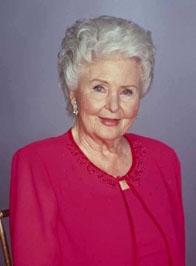
Reid grew up in Berkeley, California. Her acting career started in 1938 with a bit part in the movie Man-Proof. Reid's Broadway debut was as Juliette Lecourtois in Where There's a Will at the John Golden Theatre in 1939. She later played Roxane opposite Jose Ferrer's Cyrano in the 1946 Broadway production of Cyrano de Bergerac at the Alvin Theatre. She repeated her stage role of Roxane, again opposite Ferrer, in a 1949 one-hour Philco Television Playhouse adaptation of Cyrano. After a series of stage roles throughout the 1940s and 1950s, Reid played title role in the CBS television version of the radio soap operaPortia Faces Life from 1954 to 1955. She next portrayed Grace Baker on As The World Turns from 1959 to 1962, and Rose Pollack on The Edge of Night in 1964.
Reid portrayed matriarch Alice Horton on Days of our Lives since the show's premiere on November 8, 1965. Reid's 37-year long reign on DAYS seemingly ended when her character was controversially "killed" by the Salem Stalker in 2004, but thankfully it was all a hoax and Reid returned later that year.
In 1966 Reid appeared opposite Rock Hudson in the 1966 John Frankenheimer drama Seconds. In the audio commentary for the DVD version of the film, Frankenheimer called Reid one of his favorite actresses.
To qoute Frances Reid on her real self breaking through her mild-mannered character Alice, "I don't think you should limit your vocabulary. And every now and then things come out as an expletive. I think it shocks our crew when I do it. They expect me to be...Alicey."
As always, the further we go back in Hollywood history, the more that fact and legend become intertwined. It's hard to say where the truth really lies.
In 1986, Morris began playing a regular occasional character, "Arnold 'Sporty' James," on the NBC cop drama Hunter, starring Fred Dryer and Stepfanie Kramer. Morris continually appeared as "Sporty" on Hunter through 1989. In 1994, he was shot in an apparent robbery attempt but went on to make a full recovery. In a radio interview, he mentioned that the robber who shot him was eventually incarcerated, and in prison some fans of Morris's who happened to be inmates there teamed up and beat up the robber in revenge. Morris starred on Martin as Martin's first boss Stan. Morris's shooting had caused him to be unable to continue in the role, and he was written out of the show by having the character become a national fugitive. The scene where he is about to undergo plastic surgery was shot on the hospital bed Morris occupied while recuperating from the 1994 assault.
Mumy came to prominence in the 1960s as a child actor, most notably as Will Robinson, the youngest of the three children of Prof. John and Dr. Maureen Robinson (played Guy Williams and June Lockhart respectively) and friend of the nefarious and pompous Dr. Zachary Smith (played by Jonathan Harris), in the cult 1960s CBS sci-fi television seriesLost in Space. He later appeared as a lonely teenager, Sterling North, in the 1969 Disneymovie, Rascal, and as Teft in the 1971 film Bless the Beasts and Children. In the 1990s, he had the role of Lennier in the syndicated sci-fi TV series Babylon 5, and he also served as narrator of A&E Network's Emmy Award-winning series, Biography. He is also notable for his musical career, as a solo artist and as half of the duo Barnes & Barnes.
February 1, 1982 Late Night with David Letterman premieres.
David Letterman's offbeat late-night talk show debuts on this day in 1982. A favorite of college students, the show aired after Johnny Carson's The Tonight Show. When Carson retired in 1992, Letterman and rival comic Jay Leno engaged in a heated battle for the coveted host slot. When Letterman was passed over, he left NBC for CBS, where his new program, Late Show with David Letterman, outperformed Leno's show almost every week in its first year.
February 2, 1937 Thomas Bolin "Tom" Smothers III is born.Comedian, composer and musician, best known as half of the musical comedy team the Smothers Brothers, alongside his younger brother Dick.
February 2, 1947 Farrah Fawcett is born.
A multiple Golden Globe and Emmy Award nominee, Fawcett rose to international fame when she first appeared as private investigator Jill Munroe in the TV series Charlie's Angels in 1976. Fawcett later appeared off-Broadway to the approval of critics and in highly rated television movies in roles often challenging (The Burning Bed, Nazi Hunter: The Beate Klarsfeld Story, Poor Little Rich Girl: The Barbara Hutton Story, Margaret Bourke-White) and sometimes unsympathetic (Small Sacrifices). Fawcett was also a pop culture figure whose hairstyle was emulated by millions of young women and whose poster sales broke records, making her an international sex symbol in the 1970s and 1980s. Fawcett was diagnosed with anal cancer in 2006, and began treatment, including chemotherapy and surgery. Four months later, on her 60th birthday, the Associated Presswire service reported that Fawcett was, at that point, cancer free. Less than four months later, in May 2007, Fawcett brought a small digital video camera to document a doctor's office visit. There, she was told a malignantpolyp was found in the area where she had been treated for the initial cancer. Doctors contemplated whether to implant a radiation seeder (which differs from conventional radiation and is used to treat other types of cancer). Fawcett's U.S. doctors told her that she would require a colostomy. Instead, Fawcett traveled to Germany for treatments described variously in the press as "holistic", "aggressive", and "alternative". There, Dr. Ursula Jacob prescribed a treatment including surgery to remove the anal tumor, and a course of perfusion and embolization for her liver cancer by Doctors Claus Kiehling and Thomas Vogl in Germany, and chemotherapy back in Fawcett's home town of Los Angeles. Although initially the tumors were regressing, their reappearance a few months later necessitated a new course, this time including laser ablation therapy and chemoembolization. Aided by friend Alana Stewart, Fawcett documented her battle with the disease. In early April 2009, Fawcett, back in the United States, was rushed to a hospital, reportedly unconscious and in critical condition. Subsequent reports, however, indicated that the severity of her condition was not as dire as first reported. On April 6, the Associated Press reported that her cancer had metastasized to her liver. Fawcett had learned of this development in May 2007 and her subsequent treatments in Germany had targeted this as well. The report denied that she was unconscious, and explained that the reason for Fawcett's hospitalization was not her cancer but a painful abdominal hematoma that had been the result of a minor procedure, according to the Los Angeles cancer specialist treating Fawcett, Dr. Lawrence Piro. Her spokesperson emphasized she was not "at death's door", adding "She remains in good spirits with her usual sense of humor ... She's been in great shape her whole life and has an incredible resolve and an incredible resilience." Three days later, on April 9, Fawcett was released from the hospital, picked up by longtime companion O'Neal, and, according to her doctor, was "walking and in great spirits and looking forward to celebrating Easter at home." A month later, on May 7, Fawcett was reported as being critically ill, with Ryan O'Neal quoted as saying that she now spends her days at home, on an IV, often asleep. The Los Angeles Times reported that Fawcett was in the last stages of her cancer and had the chance to see her son Redmond in April 2009, although shackled and under supervision, as he was then incarcerated, Fawcett seemed not to notice. Her 91-year-old father, James Fawcett, flew out to Los Angeles to visit. Her doctor, Lawrence Piro, and Fawcett's friend and Angels co-star Kate Jackson—a breast cancer survivor—appeared together on The Today Show dispelling tabloid-fueled rumors, including the suggestions that Fawcett had ever been in a coma, had ever reached 86 pounds, and had ever given up her fight against the disease or lost the will to live. Jackson decried such fabrications, saying they "really do hurt a human being and a person like Farrah". Piro recalled when it became necessary for Fawcett to undergo treatments that would cause her to lose her hair, acknowledging that "Farrah probably has the most famous hair in the world", but acknowledged that it is not a trivial matter for any cancer patient, whose hair "affects [one's] whole sense of who [they] are". Of the documentary, Jackson averred that Fawcett "didn't do this to show that 'she' is unique, she did it to show that we are all unique ... This was ... meant to be a gift to others to help and inspire them." The two-hour documentaryFarrah's Story, which was filmed by Fawcett and friend Alana Stewart, aired on NBC on May 15, 2009. The documentary was watched by nearly 9 million people in its premiere airing and it was re-aired on the broadcast network's cable stations MSNBC, Bravo and Oxygen. Fawcett earned her fourth Emmy nomination posthumously on July 16, 2009, as producer of Farrah's Story. Fawcett died at approximately 9:28 a.m., on June 25, 2009, in the intensive care unit of Saint John's Health Center in Santa Monica, California, with O'Neal and Stewart by her side.
February 6, 1940 Thomas John "Tom" Brokaw is born. Television journalist and author best known as the anchor and managing editor of NBC Nightly News from 1982 to 2004.
He is the author of The Greatest Generation (1998), a runaway bestseller, and other books and the recipient of numerous awards and honors. He is the only person to host all three major NBC News programs: The Today Show, NBC Nightly News, and, briefly, Meet the Press. He currently serves as a Special Correspondent for NBC News and works on documentaries for other outlets.
To quote the Bicentennial Minute, "And that's the way it was".
Here is another "Mental Sorbet" that we could use to momentarily forget about those things that leave a bad taste in our mouths.
Now that the dust appears to be settling from our latest late night talk show war and in the interest of not being cynical he is a famous show-biz reconciliation.
Emmy and Golden Globe Award-winning actor Jack Klugman (The Odd Couple, Quincy, M.E., Tony and Me) joins Ed and Frankie in the first hour as they look back at Jack's longtime friendship with actor Tony Randall, their many collaborations on stage and television, and how Tony encouraged Jack to return to acting after losing his voice to cancer. Then in the second hour, Ed and Frankie welcome author Paul Green (Pete Duel: A Biography) as they remember Alias Smith and Jones, the popular TV Western from the early 1970s whose history has been overshadowed by the suicide of series star Pete Duel on Dec. 30, 1971. The hour also includes excerpts from Ed's 1996 interview with Roy Huggins in which Roy discusses Duel's final day on the set of Smith and Jones, as well as the decision to replace him with Roger Davis in the role of Hannibal Heyes.
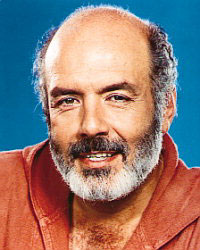
Pernell Roberts died of pancreatic cancer at his home in Malibu, California at the age of 81. Born Pernell Elvin Roberts on May 18, 1928 was best known for his roles as Ben Cartwright's eldest son, Adam Cartwright, on Bonanza from 1959 to 1965, and as chief surgeon, Dr. John MacIntyre, the title character on Trapper John, M.D. (1979-1986). He was also known for his activism, which included participation in the Selma to Montgomery marches in 1965, and pressuring NBC to refrain from hiring whites to portray minority characters.
In 1958, Roberts guest-starred as Captain Jacques Chavez on the NBC adventure series Northwest Passage based on the life of Major Robert Rogers in the French and Indian War. He appeared with fellow guest star Fay Spain in the 1958 episode "Pick up the Gun" of Tombstone Territory. In 1958 he played the lead villain in the 31st episode of Have Gun - Will Travel, portraying a killer boss exploiter of Chinese Coolie laborers entitled "Hey Boy's Revenge." The episode drew critical acclaim for shedding some light on the contribution of indentured Chinese workers in building the U.S. west and for also carrying a socially conscious message "white man's laws can deliver justice for a minority" a "Paladin Parable" so typical of the series. In 1959, he co-starred in the film Ride Lonesome.
He came to prominence playing Ben Cartwright's urbane eldest son, Adam, in the Western television series Bonanza. Despite the show’s success, he left after the sixth season in 1965 due to disagreements with the writers and a desire to return to legitimate theatre. Among other complaints, Roberts argued that a 34-year-old, educated, Eastern-born man would not be calling his father "Pa". The writers tacitly agreed not to exceed three "Pa" references per episode.
I had six seasons of playing the eldest son on Bonanza. Six seasons of feeling like a damned idiot, going around -- me, like a middle-aged teenager, saying, "Yes, Pa," "No, Pa" on cue. It was downright disgusting -- such dialogue for a grown man. I felt I wasn't being taken seriously as an actor, and that's like death to one's talent...Stuck as Adam Cartwright, I was only able to use about one-tenth of my ability.
He regained star status in the early 1980s while starring in the television series Trapper John, M.D. (1979-86). Roberts played the character almost twice as long as Wayne Rogers did (1972–1975) on the CBSM*A*S*H series.
In 1988, Roberts co-starred with Milla Jovovich in the TV movie The Night Train to Kathmandu. A guest appearance as Hezekiah Horn in the Young Riders episode "Requiem for a Hero" won a Western Heritage Award for Roberts in 1991. In the 1980s/90s, playing off his Trapper John M.D. persona, Roberts was a TV spokesman for Ecotrin, a brand of analgesic tablets. He made his last TV appearance in 2001 on an episode of Diagnosis Murder, updating a Mannix character he had portrayed decades before.
Roberts married four times. His first marriage was in 1951 to Vera Mowry, a professor at Washington State University, with whom he had his only child (Jonathan Christopher Roberts); they later divorced. He married Judith Anna LeBreque on October 15, 1962; they divorced in 1971. His third marriage was to Kara Knack, whom he married in 1972; they divorced in 1996. He was married to Eleanor Criswell at the time of his death. Jonathan Roberts died in a motorcycle accident in 1989 at age 38.
As always, the further we go back in Hollywood history, the more that fact and legend become intertwined. It's hard to say where the truth really lies.
January 25, 1949 The National Academy of Television Arts and Sciences presents its first industry award at the Hollywood Athletic Club in Los Angeles. The Emmy for most popular program went to Pantomime Quiz Time, and puppeteer Shirley Dinsdale and her puppet Judy Splinters won an award for Outstanding TV Personality. Most of the awards were for programs produced by TV station KTLA. The station also won an award for Outstanding Overall Achievement.
January 27, 1976 The Happy Days spin-off Laverne and Shirley, featuring two Milwaukee women who work on a brewery assembly line preimers.
The show starred Penny Marshall, sister of producer Garry Marshall, and Cindy Williams. Fierce rivalry erupted between the two stars, and Williams left the show in 1982. The show lasted only one more season before its cancellation in 1983.
January 28, 1956 Young country-rock singer Elvis Presley makes his first-ever television appearance on the TV musical-variety program Stage Show.
Presley sang "Heartbreak Hotel," which quickly became a hit single. In total, Elvis appeared on six shows. The program was hosted by swing band leaders Tommy and Jimmy Dorsey. Elvis went on to appear on Ed Sullivan's immensely popular variety show, Toast of the Town, in the fall of 1956. The appearance made Elvis a household name.
January 28, 1978 Fantasy Island premieres Fantasy Island is created in early 1978 as a follow-up to ABC's surprise hit The Love Boat.
Screen actor Ricardo Montalban played the mysterious Mr. Roarke, and his diminutive sidekick, Tattoo, was played by Herve Villechaize.
January 28, 1996 Jerry Seigel, creator of Superman, dies at age 81. Writer Seigel created Superman with artist friend Joe Shuster when they were both teenagers in the 1930s. All the major newspaper syndicates rejected the character, who was born on the doomed planet Krypton and bundled off by his parents in a space capsule to Smallville USA, where he's raised by kindly earthlings. In 1938, however, Seigel and Shuster finally landed a comic book deal, and Superman's adventures as mild-mannered reporter Clark Kent moonlighting as the Man of Steel became an instant hit. The comic book spawned a newspaper strip that ran for 28 years, as well as a radio series that ran from 1940 to 1951. The character, along with his friends cub reporter Jimmy Olson and ace newswoman Lois Lane, who never seem to penetrate Superman's Clark Kent disguise, appeared in movie serials from 1948 to 1950, and in a feature film in 1951. A popular Superman TV series ran from 1951 to 1957. Filmed on a shoestring budget, the show's special effects were limited to Superman crashing through walls, flying around, and witnessing fiery explosions. The same flying sequences were used repeatedly. Actor George Reeves was so well-known as Superman that he couldn't find other work when the series ended. The Man of Steel reappeared on the big screen in 1978, with Christopher Reeves in the role. The hit film launched three follow-ups. In 1993, Superman appeared again in the TV comedy Lois and Clark.
January 31, 1949 These Are My Children, the first daytime soap opera, debuts on NBC. The show, Staring Irna Phillips was only 15 minutes long, aired weekdays at 5 p.m. in January and February 1949.
To quote the Bicentennial Minute, "And that's the way it was".
Emmyand Golden Globe winner Jack Klugman will be our special guest on the next edition of TV CONFIDENTIAL with Ed Robertson and Frankie Montiforte, premiering Monday, Jan. 25 at 10pm ET, 7pm PT on Shokus Internet Radio, with a rebroadcast Tuesday, Jan. 26 at 11pm ET, 8pm PT on Share-a-Vision Radio, KSAV.org. Whether you think of him as New York sportswriter Oscar Madison in The Odd Couple, the crusading Los Angeles coroner in Quincy, M.E. or his stellar work in such classic series as The Twilight Zone, The Naked City and The Fugitive, Jack Klugman is hands down one of the best television actors ever to grace the medium. We’ll talk about his career as well as his book, Tony and Me, a poignant look at his 50-year friendship with actor Tony Randall. Jack Klugman will be joining us in our first hour.
Then in our second hour, we’ll shift gears as we remember Alias Smith and Jones,the popular Western series from the early 1970s starring Pete Duel and Ben Murphy. Though the history of the show is overshadowed by the suicide of Pete Duel in December 1971, Alias Smith and Jones brought a youthful spin to the Western genre that remains fresh and entertaining today. Joining us this hour will be author Paul Green,whose books include Pete Duel: A Biography and A History of Television’s The Virginian. TV CONFIDENTIAL with Ed Robertson and Frankie MontiforteMon-Sun 10pm ET, 7pm PT Shokus Internet Radio Every other Tuesday at 11pm ET, 8pm PTShare-a-Vision Radio, KSAV.org http://www.tvconfidential.net/blog.tvconfidential.net Also available as a podcast via iTunes and FeedBurner
Here is another "Mental Sorbet" that we could use to momentarily forget about those things that leave a bad taste in our mouths.
Because of my associations and affiliations I am connected and affected our new Late night talk show war so I outsourced the job of breaking down the situation to China.
Here is the English translation.
Back home in Hollywood my friends at POParitaville braved the raincovered to cover the Team Coco Rally last Monday.
It is a good thing that they didn't make the Conan rally a Tea Party. The L.A. River would be filled with Coco.
As always, the further we go back in Hollywood history, the more that fact and legend become intertwined. It's hard to say where the truth really lies.
January 18, 1948 Original Amateur Hour debuts One of TV's first talent shows was a spin-off of a popular radio show, Major Bowes' Amateur Hour, the program where Frank Sinatra was discovered in 1937.
The show, which aired for 12 years, was one of the few programs to be aired by all four early TV networks (ABC, CBS, NBC, and the ill-fated DuMont network) at different times. Seven-year-old Gladys Knight and 18-year-old Pat Boone were both grand prize winners on the show.
January 18, 1974 The Six Million Dollar Man debuts. The show was based on the novel Cyborg by Martin Caidin, and during pre-production, that was the proposed title of the series. The popularity of The Six Million Dollar Man, starring Lee Majors as Steve Austin, the world's first bionic man, inspires a superhero trend in the late 1970s, which spawns shows like Wonder Woman in 1976 and The Incredible Hulk in 1978.
In 1975 two-part episode entitled The Bionic Woman introduced the character of Jaime Sommers, a professional tennis player who rekindled an old romance with Austin, only to experience a parachuting accident that resulted in her being given bionic parts similar to Austin. Ultimately, however, her bionics failed and she died. The character was very popular, however, and the following season she was revived (having been cryogenically frozen) and was given her own spin-off series, The Bionic Woman, which lasted until 1978 when both it and The Six Million Dollar Man were simultaneously cancelled.
Steve Austin and Jaime Sommers returned in three subsequent made-for-television movies: The Return of the Six Million Dollar Man and the Bionic Woman (1987), Bionic Showdown (1989) — which featured Sandra Bullock in an early role as a new bionic woman; and Bionic Ever After? (1994) in which Austin and Sommers finally marry. Majors reprised the role of Steve Austin in all three productions, which also featured Richard Anderson and Martin E. Brooks.
January 19, 1953 Lucy gives birth to Little Ricky Episode #56, Lucy Goes to the Hospital, of hit 1950s sitcom I Love Lucy airs for the first time.
The episode, in which Lucy Ricardo, played by Lucille Ball, gives birth to a son, was one of the most popular in television history. The ground-breaking episode was one of the first American television programs to deal with the issue of pregnancy, a taboo subject in conservative 1950s America, when even married couples were not shown on television sharing the same bed. Forty-four million viewers, a full 72 percent of all U.S. homes with a television, tuned in; only 29 million viewers had watched President Dwight D. Eisenhower’s televised inauguration the previous night.
January 19, 1955 Dwight D. Eisenhower becomes the first president to hold news conferences to be filmed by TV and newsreels. On this day in 1955, Eisenhower gave a 33-minute conference in the treaty room at the State Department, recorded by NBC and shared with CBS, ABC, and the DuMont Network.
January 21, 1959 Carl Switzer, better known as Alfalfa from the Our Gang comedies, is shot and killed in a brawl.
Switzer, who became a hunting guide and bartender in Northern California after his acting career fizzled, was shot after an argument over a $50 debt. Authorities ruled the shooting "justifiable homicide."
January 22, 1947 The first television station west of the Mississippi River goes on the air. The station was KTLA-TV in Hollywood. The station began broadcasting at 8:30 p.m. from a converted garage. When the first Emmy Awards were handed out two years later, KTLA swept the awards for its original programming.
January 22, 1972 Emergency, produced by Dragnet star and producer Jack Webb, premieres, featuring the same semidocumentary style popularized by Webb's earlier police drama.Emergency was based on the paramedic program that started in Los Angeles, California in 1969. Senator Alan Cranston actually praised the show for informing the public about the value of funding such programs!The show focused on the adventures of paramedics Roy DeSoto and Johnny Gage. The show, which ran from 1972 to 1977, foreshadowed later hits like E.R., with its interwoven comic and serious subplots.
Julie London was married to fellow Emergency cast member Bobby Troup. In an earlier marriage, London was married to Jack Webb. Bobby Troup was a bandleader before becoming an actor.
January 23, 1977 The miniseries Roots debuts on ABC.
The show traced four generations of an African-American family based on the family of author Alex Haley. Running for eight consecutive days, the miniseries became the single most watched program in American history, drawing about 100 million viewers.
To quote the Bicentennial Minute, "And that's the way it was".

 Here is another "Mental Sorbet" that we could use to momentarily forget about those things that leave a bad taste in our mouths.